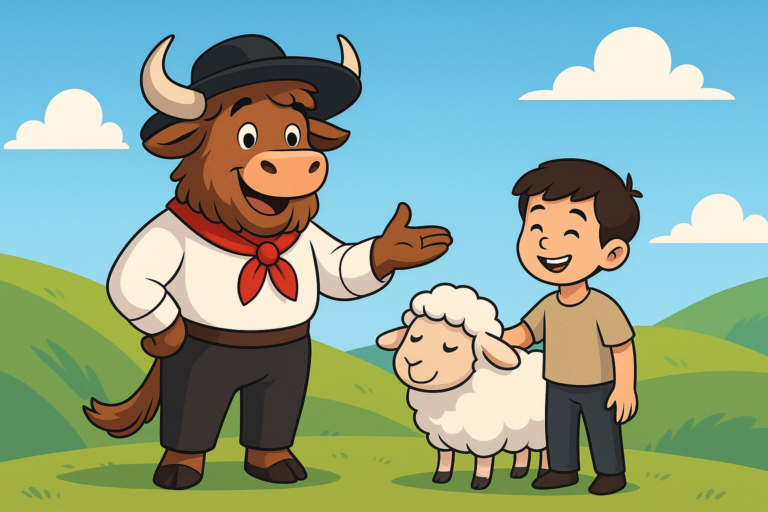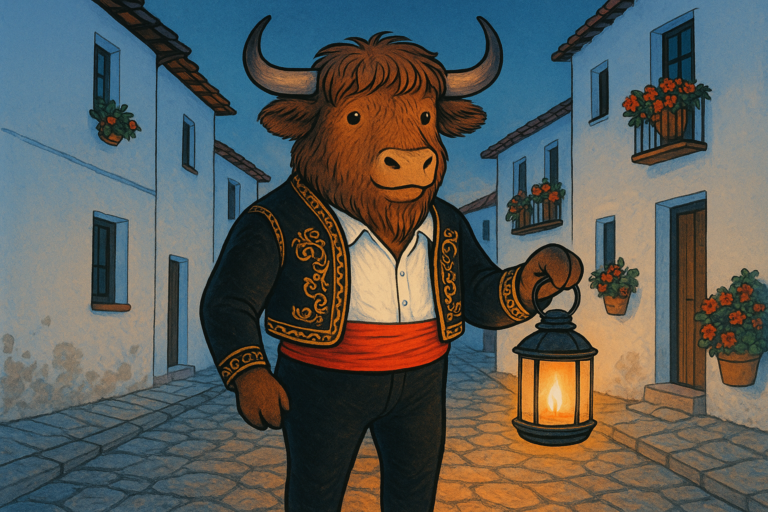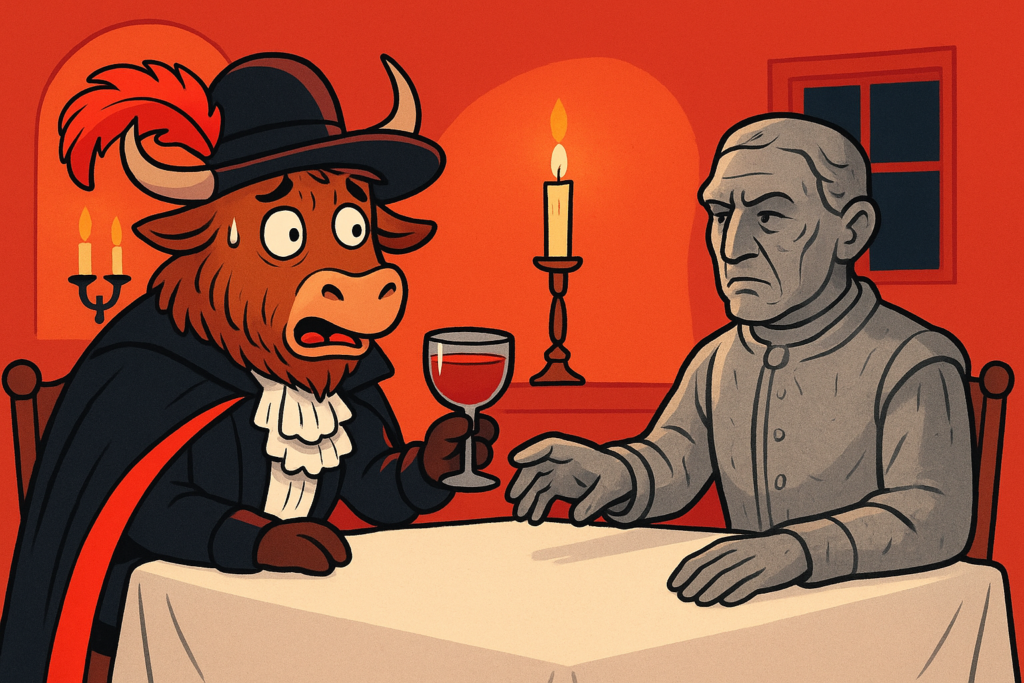
This B1 Intermediate retelling of Don Juan y la cena con la estatua keeps the plot clear for learners while still giving the story some atmosphere and momentum. Don Juan Tenorio era un joven noble y guapo. Vivía en la hermosa ciudad de Sevilla.
This version teaches Spanish through English and includes clickable word help inside the story, full story audio, and lesson notes after the reading. It is free to use on Yak Yacker and is designed to feel natural, readable, and manageable for learners.
Don Juan Tenorio era un y .
Vivía en la ciudad de .
Era muy con las palabras y gracias a eso, muchas mujeres se de él.
Pero Don Juan era un y un hombre sin .
Un día, Don Juan fue a un .
Vio a la joven Doña Ana y decidió .
Se a ella y le dijo:
"Eres la mujer más que he visto en mi vida."
Doña Ana sonrió, pero su padre, Don Gonzalo, .
Don Gonzalo era un hombre muy .
Se acercó a Don Juan y le :
" de mi hija. No eres un hombre de bien."
Don Juan se .
"Solo estamos , señor", respondió con falsa .
Esa noche, Don Juan fue al de Doña Ana.
Don Gonzalo lo y hubo una .
Don Juan, sin querer, a Don Gonzalo.
El viejo cayó al suelo y .
Don Juan del lugar, asustado.
Meses después, Don Juan volvió a su rutina y mujeres.
Estaba casi lo que había hecho.
Un día, caminando por la iglesia, vio una de Don Gonzalo.
Era una estatua de sobre su tumba.
Don Juan se .
"Viejo tonto, no puedes hacerme nada," dijo.
Luego, con , invitó a la estatua a cenar esa noche.
"Ven a cenar conmigo a las diez," le dijo .
Esa noche, Don Juan cenaba con sus amigos.
De repente, alguien a la puerta.
Los amigos se .
"Será algún invitado ", dijo Don Juan, sin miedo.
Un criado abrió la puerta y entró… la .
Era Don Gonzalo, de piedra, .
"Aquí estoy para cenar", dijo la estatua con voz profunda.
Don Juan se puso .
Pero trató de .
"Siéntate", dijo con dificultad.
La estatua se sentó.
Miró a Don Juan.
"Ahora tienes que venir tú a cenar conmigo mañana", dijo.
Don Juan quería , pero la estatua lo tomó del brazo.
Su mano estaba .
La estatua añadió: "Te espero mi tumba a la misma hora."
Don Juan, , aceptó.
Al día siguiente, Don Juan fue a la .
Estaba muy pero no quería parecer cobarde.
La estatua lo esperaba.
"", dijo señalando la tumba.
Don Juan entró y vio una mesa con
Pero la comida eran y .
La estatua lo sentó .
"Ahora pagarás por tus ", dijo.
Don Juan sintió mucho de repente.
Gritó pidiendo , pero ya era tarde.
La tierra se abrió y Don Juan desapareció .
Desde entonces, la estatua permanece en silencio en la iglesia de .
Some words from the story pop up all the time in Spanish conversations and narratives. Let’s get to know a few that will boost your storytelling skills and help you describe people and actions more vividly.
These words often carry a dramatic or emotional weight, perfect for talking about grand gestures, escapes, and supernatural events.
- conquistar – to conquer, to win someone’s heart. Example: ‘Quiere conquistar a María con serenatas.’
- huir – to flee, to run away. Example: ‘Los niños huyeron cuando vieron al perro grande.’
- burlarse (de) – to mock, to make fun of. Example: ‘No te burles de mí, por favor.’
- temblar – to tremble, to shiver. Example: ‘Temblaba de miedo al escuchar el ruido.’
To tell a story in Spanish, you need to know when to use the preterite and when to use the imperfect. The preterite handles completed, one-time events that push the plot forward. The imperfect sets the scene, describing ongoing states, habitual actions, or background details.
Look at these lines from the story: ‘Don Juan fue a un baile’ (preterite—a specific, completed action) vs. ‘Vivía en la hermosa ciudad de Sevilla’ (imperfect—background description). Mixing the two gives your story depth and rhythm.
- Preterite: ‘Vio a la joven Doña Ana’ (he saw her—a sudden, completed event).
- Imperfect: ‘Era un mentiroso’ (he was a liar—ongoing characteristic).
- Together: ‘Mientras bailaba, sonrió’ (while she was dancing, she smiled—imperfect sets the scene, preterite the action).
The story uses direct speech to reveal character and build tension. Notice tags like ‘le dijo’ and ‘respondió con falsa cortesía’. These aren’t just ‘said’; they add tone and mood, showing you how words are delivered.
Vivid verbs and adverbs also keep the action moving: ‘hirió gravemente’, ‘caminando lentamente’, ‘temblando’. By choosing precise words, you make your Spanish more expressive and cinematic.
- Dialogue tags: ‘le advirtió’ (warned him), ‘se burló’ (he mocked), ‘añadió’ (she added).
- Expressive adverbs: ‘gravemente’ (seriously), ‘fijamente’ (fixedly), ‘repente’ (suddenly).
- Pro tip: Mix action with dialogue: ‘Se acercó a ella y le dijo: -Eres la mujer más bella-’.
Now that you’ve met the legendary Don Juan (stone guest and all!), you have the tools to tell your own stories with confidence. Try retelling what happened to Don Juan in your own words—focus on using the right past tenses and slipping in some of the power vocabulary.
For a fun challenge, imagine a different ending or add a new character. Write or speak just a few lines, and pay attention to how you mix preterite and imperfect. The more you play with narrative, the more natural it will feel.
Don Juan y la cena con la estatua comes from an older public-domain story tradition and is best known as a public_domain_legend_retelling. This Yak Yacker article is an original learner retelling based on public-domain source material, so the wording here is simplified for modern learners rather than copied from one old edition.
Older printings, translations, and retellings of this story can vary quite a bit. This version is adapted for B1 Intermediate learners studying Spanish.
If you want to keep going, browse more in our Spanish section and review the B1 Spanish Vocabulary List. After that, try Spanish Subjunctive Phrases for another useful next step.