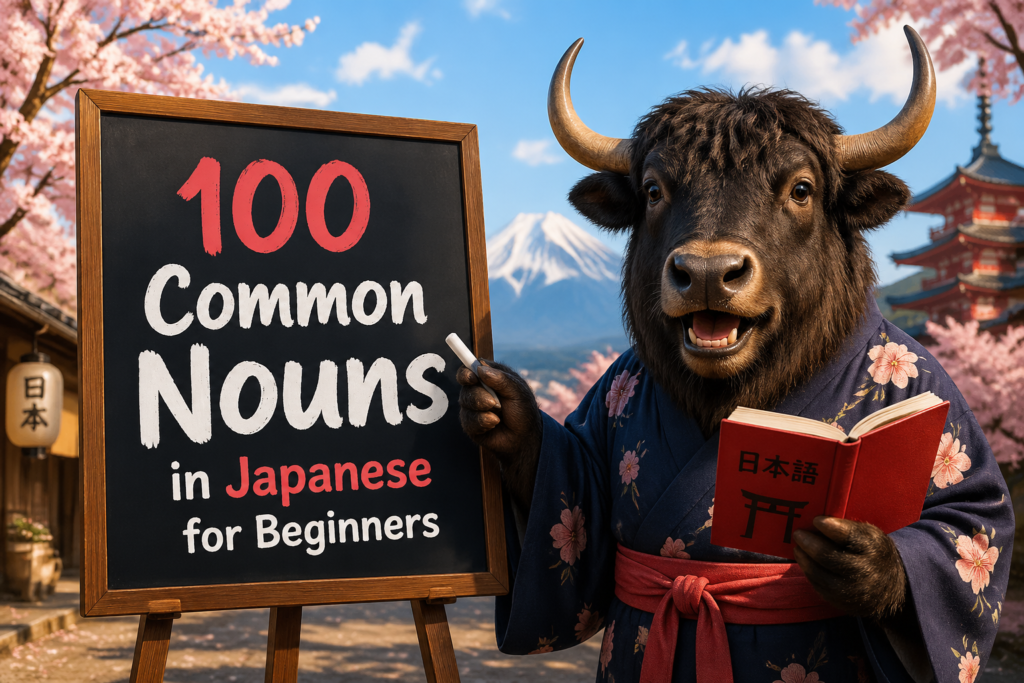
Japanese nouns are wonderfully low-drama. They do not change for singular or plural, they do not have grammatical gender, and they do not demand a tiny paperwork ceremony every time you use them.
One 本 hon can be “a book,” and two 本 hon can be “books.” Context does the heavy lifting. Very polite of it.
This beginner-friendly list gives you 100 of the most common Japanese nouns, with Rōmaji, English meanings, and real example sentences. If you are just starting, you may also like 100 Japanese Words And Phrases To Start Learning, then come back here and collect these nouns like vocabulary snacks.
How Japanese Nouns Work
Japanese nouns usually stay the same. You use particles like は wa, が ga, を o, and に ni to show what the noun is doing in the sentence.
| Pattern | Rōmaji | Meaning | Example | Example Rōmaji | Translation |
|---|---|---|---|---|---|
| これは〜です | Kore wa 〜 desu | This is 〜 | これは本です。 | Kore wa hon desu. | This is a book. |
| 〜があります | 〜 ga arimasu | There is 〜 / I have 〜 | 机があります。 | Tsukue ga arimasu. | There is a desk. |
| 〜が好きです | 〜 ga suki desu | I like 〜 | 音楽が好きです。 | Ongaku ga suki desu. | I like music. |
| 〜をください | 〜 o kudasai | Please give me 〜 | 水をください。 | Mizu o kudasai. | Please give me water. |
| 〜はどこですか | 〜 wa doko desu ka | Where is 〜? | 駅はどこですか。 | Eki wa doko desu ka. | Where is the station? |
| 〜に行きます | 〜 ni ikimasu | I go to 〜 | 学校に行きます。 | Gakkō ni ikimasu. | I go to school. |
| 〜を見ます | 〜 o mimasu | I see/watch 〜 | 写真を見ます。 | Shashin o mimasu. | I look at a photo. |
| 〜を食べます | 〜 o tabemasu | I eat 〜 | ご飯を食べます。 | Gohan o tabemasu. | I eat rice/a meal. |
| 〜を飲みます | 〜 o nomimasu | I drink 〜 | お茶を飲みます。 | Ocha o nomimasu. | I drink tea. |
| 〜を勉強します | 〜 o benkyō shimasu | I study 〜 | 日本語を勉強します。 | Nihongo o benkyō shimasu. | I study Japanese. |
People And Basic Identity Nouns
Start with people. Conversations tend to involve humans, annoyingly enough.
| Kanji | Rōmaji | Meaning | Example | Example Rōmaji | Translation |
|---|---|---|---|---|---|
| 私 | Watashi | I; me | 私は学生です。 | Watashi wa gakusei desu. | I am a student. |
| あなた | Anata | You | あなたの名前は何ですか。 | Anata no namae wa nan desu ka. | What is your name? |
| 彼 | Kare | He; boyfriend | 彼は先生です。 | Kare wa sensei desu. | He is a teacher. |
| 彼女 | Kanojo | She; girlfriend | 彼女は日本語を話します。 | Kanojo wa Nihongo o hanashimasu. | She speaks Japanese. |
| 友達 | Tomodachi | Friend | 友達が来ます。 | Tomodachi ga kimasu. | A friend is coming. |
| 先生 | Sensei | Teacher | 先生に聞きます。 | Sensei ni kikimasu. | I will ask the teacher. |
| 学生 | Gakusei | Student | 学生は図書館にいます。 | Gakusei wa toshokan ni imasu. | The student is in the library. |
| 子供 | Kodomo | Child | 子供が公園で遊びます。 | Kodomo ga kōen de asobimasu. | A child plays in the park. |
| 人 | Hito | Person | あの人は親切です。 | Ano hito wa shinsetsu desu. | That person is kind. |
| 名前 | Namae | Name | 名前を書いてください。 | Namae o kaite kudasai. | Please write your name. |
Want more people vocabulary? The family tree gets its own little jungle in Family Members In Japanese.
Home And Everyday Object Nouns
These nouns are the “where did I put my keys?” survival set. Glamorous? No. Useful? Absolutely.
| Kanji | Rōmaji | Meaning | Example | Example Rōmaji | Translation |
|---|---|---|---|---|---|
| 家 | Ie | House; home | 家に帰ります。 | Ie ni kaerimasu. | I go home. |
| 部屋 | Heya | Room | 部屋は明るいです。 | Heya wa akarui desu. | The room is bright. |
| 机 | Tsukue | Desk | 机の上に本があります。 | Tsukue no ue ni hon ga arimasu. | There is a book on the desk. |
| 椅子 | Isu | Chair | 椅子に座ります。 | Isu ni suwarimasu. | I sit on a chair. |
| 本 | Hon | Book | 本を読みます。 | Hon o yomimasu. | I read a book. |
| 鞄 | Kaban | Bag | 鞄が重いです。 | Kaban ga omoi desu. | The bag is heavy. |
| 電話 | Denwa | Phone; telephone | 電話を使います。 | Denwa o tsukaimasu. | I use the phone. |
| 時計 | Tokei | Clock; watch | 時計を見ます。 | Tokei o mimasu. | I look at the clock. |
| 鍵 | Kagi | Key | 鍵を忘れました。 | Kagi o wasuremashita. | I forgot the key. |
| お金 | Okane | Money | お金がありません。 | Okane ga arimasen. | I do not have money. |
Time Nouns
Time words are tiny but powerful. They make your sentence stop floating around like a balloon with no plan.
| Kanji | Rōmaji | Meaning | Example | Example Rōmaji | Translation |
|---|---|---|---|---|---|
| 今日 | Kyō | Today | 今日は暑いです。 | Kyō wa atsui desu. | Today is hot. |
| 明日 | Ashita | Tomorrow | 明日、学校に行きます。 | Ashita, gakkō ni ikimasu. | Tomorrow, I will go to school. |
| 昨日 | Kinō | Yesterday | 昨日、映画を見ました。 | Kinō, eiga o mimashita. | Yesterday, I watched a movie. |
| 朝 | Asa | Morning | 朝にお茶を飲みます。 | Asa ni ocha o nomimasu. | I drink tea in the morning. |
| 昼 | Hiru | Noon; daytime | 昼にご飯を食べます。 | Hiru ni gohan o tabemasu. | I eat lunch at noon. |
| 夜 | Yoru | Night | 夜は静かです。 | Yoru wa shizuka desu. | The night is quiet. |
| 今 | Ima | Now | 今、忙しいです。 | Ima, isogashii desu. | I am busy now. |
| 時間 | Jikan | Time; hour | 時間があります。 | Jikan ga arimasu. | I have time. |
| 週 | Shū | Week | 来週、旅行します。 | Raishū, ryokō shimasu. | Next week, I will travel. |
| 年 | Toshi / Nen | Year | 今年は忙しい年です。 | Kotoshi wa isogashii toshi desu. | This year is a busy year. |
Place Nouns
If you can name places, you can ask directions, explain your plans, and look slightly less lost at a train station. Slightly.
| Kanji | Rōmaji | Meaning | Example | Example Rōmaji | Translation |
|---|---|---|---|---|---|
| 学校 | Gakkō | School | 学校は近いです。 | Gakkō wa chikai desu. | The school is near. |
| 会社 | Kaisha | Company; office | 会社に行きます。 | Kaisha ni ikimasu. | I go to the office. |
| 店 | Mise | Shop; store | 店でパンを買います。 | Mise de pan o kaimasu. | I buy bread at the store. |
| 駅 | Eki | Station | 駅はどこですか。 | Eki wa doko desu ka. | Where is the station? |
| 病院 | Byōin | Hospital | 病院に行きました。 | Byōin ni ikimashita. | I went to the hospital. |
| 銀行 | Ginkō | Bank | 銀行は駅の前です。 | Ginkō wa eki no mae desu. | The bank is in front of the station. |
| 公園 | Kōen | Park | 公園で友達に会います。 | Kōen de tomodachi ni aimasu. | I meet a friend at the park. |
| 図書館 | Toshokan | Library | 図書館で勉強します。 | Toshokan de benkyō shimasu. | I study at the library. |
| 国 | Kuni | Country | 日本は美しい国です。 | Nihon wa utsukushii kuni desu. | Japan is a beautiful country. |
| 町 | Machi | Town | この町は静かです。 | Kono machi wa shizuka desu. | This town is quiet. |
Once you know place nouns, question words become much more useful. Try pairing this section with Questions In Japanese.
Food And Drink Nouns
Food words matter because hunger does not wait for your grammar to become elegant.
| Kanji | Rōmaji | Meaning | Example | Example Rōmaji | Translation |
|---|---|---|---|---|---|
| 水 | Mizu | Water | 水を飲みます。 | Mizu o nomimasu. | I drink water. |
| お茶 | Ocha | Tea | お茶をください。 | Ocha o kudasai. | Please give me tea. |
| ご飯 | Gohan | Rice; meal | ご飯を食べます。 | Gohan o tabemasu. | I eat rice/a meal. |
| パン | Pan | Bread | パンはおいしいです。 | Pan wa oishii desu. | The bread is delicious. |
| 肉 | Niku | Meat | 肉を買います。 | Niku o kaimasu. | I buy meat. |
| 魚 | Sakana | Fish | 魚が好きです。 | Sakana ga suki desu. | I like fish. |
| 野菜 | Yasai | Vegetable | 野菜を食べましょう。 | Yasai o tabemashō. | Let’s eat vegetables. |
| 果物 | Kudamono | Fruit | 果物は甘いです。 | Kudamono wa amai desu. | Fruit is sweet. |
| 卵 | Tamago | Egg | 卵を二つ食べます。 | Tamago o futatsu tabemasu. | I eat two eggs. |
| 牛乳 | Gyūnyū | Milk | 牛乳を飲みません。 | Gyūnyū o nomimasen. | I do not drink milk. |
For a sweeter side quest, wander over to Fruits In Japanese.
Nature And Weather Nouns
Weather talk is the international language of “I want to say something, but not start chaos.” Japanese has plenty of gentle, useful nature nouns.
| Kanji | Rōmaji | Meaning | Example | Example Rōmaji | Translation |
|---|---|---|---|---|---|
| 天気 | Tenki | Weather | 天気がいいです。 | Tenki ga ii desu. | The weather is good. |
| 雨 | Ame | Rain | 雨が降っています。 | Ame ga futte imasu. | It is raining. |
| 雪 | Yuki | Snow | 雪が白いです。 | Yuki ga shiroi desu. | The snow is white. |
| 風 | Kaze | Wind | 風が強いです。 | Kaze ga tsuyoi desu. | The wind is strong. |
| 空 | Sora | Sky | 空が青いです。 | Sora ga aoi desu. | The sky is blue. |
| 山 | Yama | Mountain | 山が見えます。 | Yama ga miemasu. | I can see a mountain. |
| 川 | Kawa | River | 川で泳ぎます。 | Kawa de oyogimasu. | I swim in the river. |
| 海 | Umi | Sea; ocean | 海に行きたいです。 | Umi ni ikitai desu. | I want to go to the sea. |
| 花 | Hana | Flower | 花がきれいです。 | Hana ga kirei desu. | The flowers are beautiful. |
| 木 | Ki | Tree; wood | 木の下で休みます。 | Ki no shita de yasumimasu. | I rest under a tree. |
Travel And Transportation Nouns
These are the nouns that help you move around. They also help you panic more politely when you miss your train.
| Kanji | Rōmaji | Meaning | Example | Example Rōmaji | Translation |
|---|---|---|---|---|---|
| 車 | Kuruma | Car | 車があります。 | Kuruma ga arimasu. | There is a car. |
| 電車 | Densha | Train | 電車に乗ります。 | Densha ni norimasu. | I ride the train. |
| バス | Basu | Bus | バスを待ちます。 | Basu o machimasu. | I wait for the bus. |
| 自転車 | Jitensha | Bicycle | 自転車で学校に行きます。 | Jitensha de gakkō ni ikimasu. | I go to school by bicycle. |
| 道 | Michi | Road; way | この道は長いです。 | Kono michi wa nagai desu. | This road is long. |
| 地図 | Chizu | Map | 地図を見てください。 | Chizu o mite kudasai. | Please look at the map. |
| 切符 | Kippu | Ticket | 切符を買いました。 | Kippu o kaimashita. | I bought a ticket. |
| 空港 | Kūkō | Airport | 空港は遠いです。 | Kūkō wa tōi desu. | The airport is far. |
| ホテル | Hoteru | Hotel | ホテルに泊まります。 | Hoteru ni tomarimasu. | I will stay at a hotel. |
| 旅行 | Ryokō | Travel; trip | 旅行が好きです。 | Ryokō ga suki desu. | I like travel. |
School, Work, And Culture Nouns
These nouns show up constantly in beginner lessons, daily life, and small talk. Yes, even 宿題 shukudai. Homework follows us all.
| Kanji | Rōmaji | Meaning | Example | Example Rōmaji | Translation |
|---|---|---|---|---|---|
| 仕事 | Shigoto | Work; job | 仕事は忙しいです。 | Shigoto wa isogashii desu. | Work is busy. |
| 勉強 | Benkyō | Study | 勉強は大切です。 | Benkyō wa taisetsu desu. | Study is important. |
| 宿題 | Shukudai | Homework | 宿題をしました。 | Shukudai o shimashita. | I did my homework. |
| 質問 | Shitsumon | Question | 質問があります。 | Shitsumon ga arimasu. | I have a question. |
| 答え | Kotae | Answer | 答えが分かりません。 | Kotae ga wakarimasen. | I do not know the answer. |
| 言葉 | Kotoba | Word; language | 新しい言葉を覚えます。 | Atarashii kotoba o oboemasu. | I learn a new word. |
| 日本語 | Nihongo | Japanese language | 日本語を勉強しています。 | Nihongo o benkyō shite imasu. | I am studying Japanese. |
| 英語 | Eigo | English language | 英語を話します。 | Eigo o hanashimasu. | I speak English. |
| 写真 | Shashin | Photo | 写真を撮ります。 | Shashin o torimasu. | I take a photo. |
| 音楽 | Ongaku | Music | 音楽を聞きます。 | Ongaku o kikimasu. | I listen to music. |
For more everyday activities, try Hobbies In Japanese.
Body And Health Nouns
Body words are useful for doctors, gym talk, compliments, complaints, and dramatic declarations like “my head is full.” Same, honestly.
| Kanji | Rōmaji | Meaning | Example | Example Rōmaji | Translation |
|---|---|---|---|---|---|
| 体 | Karada | Body | 体が疲れています。 | Karada ga tsukarete imasu. | My body is tired. |
| 頭 | Atama | Head | 頭が痛いです。 | Atama ga itai desu. | My head hurts. |
| 手 | Te | Hand | 手を洗います。 | Te o araimasu. | I wash my hands. |
| 足 | Ashi | Foot; leg | 足が長いです。 | Ashi ga nagai desu. | The legs are long. |
| 目 | Me | Eye | 目が大きいです。 | Me ga ōkii desu. | The eyes are big. |
| 耳 | Mimi | Ear | 耳が痛いです。 | Mimi ga itai desu. | My ear hurts. |
| 口 | Kuchi | Mouth | 口を開けてください。 | Kuchi o akete kudasai. | Please open your mouth. |
| 心 | Kokoro | Heart; mind | 心が温かいです。 | Kokoro ga atatakai desu. | The heart is warm. |
| 病気 | Byōki | Illness; sickness | 病気で休みます。 | Byōki de yasumimasu. | I will rest because of illness. |
| 薬 | Kusuri | Medicine | 薬を飲みます。 | Kusuri o nomimasu. | I take medicine. |
Common Abstract And General Nouns
These nouns are flexible little tools. They help you talk about things, reasons, feelings, problems, and meaning. Basically, the stuff language was invented for, before we used it to argue online.
| Kanji | Rōmaji | Meaning | Example | Example Rōmaji | Translation |
|---|---|---|---|---|---|
| 物 | Mono | Thing; object | これは大切な物です。 | Kore wa taisetsu na mono desu. | This is an important thing. |
| 事 | Koto | Thing; matter; event | いい事がありました。 | Ii koto ga arimashita. | A good thing happened. |
| 問題 | Mondai | Problem; question | 問題は難しいです。 | Mondai wa muzukashii desu. | The problem is difficult. |
| 理由 | Riyū | Reason | 理由を教えてください。 | Riyū o oshiete kudasai. | Please tell me the reason. |
| 意味 | Imi | Meaning | 意味が分かります。 | Imi ga wakarimasu. | I understand the meaning. |
| 気持ち | Kimochi | Feeling | 気持ちがいいです。 | Kimochi ga ii desu. | It feels good. |
| 夢 | Yume | Dream | 大きな夢があります。 | Ōkina yume ga arimasu. | I have a big dream. |
| 声 | Koe | Voice | 声が聞こえます。 | Koe ga kikoemasu. | I can hear a voice. |
| 色 | Iro | Color | この色が好きです。 | Kono iro ga suki desu. | I like this color. |
| 数 | Kazu | Number; amount | 数を数えます。 | Kazu o kazoemasu. | I count numbers. |
Beginner Notes That Save Confusion
- 本 hon can mean “book,” but it is also used as a counter for long thin things. Japanese enjoys multitasking.
- ご飯 gohan can mean “rice” or “meal,” depending on context.
- 人 hito means “person,” but in compounds it may be read じん jin or にん nin.
- 足 ashi can mean both “foot” and “leg.” Context saves the day again.
- 物 mono is a physical thing, while 事 koto is more like an event, idea, or matter.
Yak Wisdom: Do not try to memorize all 100 nouns in one heroic sitting. Your brain is not a vending machine. Learn ten, use them, then add ten more.
Simple Practice With These Nouns
Use the nouns above with these simple sentence frames. Swap the noun, read it aloud, and enjoy sounding slightly more powerful each time.
| Sentence Frame | Rōmaji | Meaning | Your Practice Example | Example Rōmaji | Translation |
|---|---|---|---|---|---|
| これは〜です。 | Kore wa 〜 desu. | This is 〜. | これは鞄です。 | Kore wa kaban desu. | This is a bag. |
| 〜があります。 | 〜 ga arimasu. | There is 〜. | 鍵があります。 | Kagi ga arimasu. | There is a key. |
| 〜が好きです。 | 〜 ga suki desu. | I like 〜. | 音楽が好きです。 | Ongaku ga suki desu. | I like music. |
| 〜をください。 | 〜 o kudasai. | Please give me 〜. | 水をください。 | Mizu o kudasai. | Please give me water. |
| 〜はどこですか。 | 〜 wa doko desu ka. | Where is 〜? | 図書館はどこですか。 | Toshokan wa doko desu ka. | Where is the library? |
Quick Review List
Here is the fast mental checklist: people, home objects, time, places, food, nature, travel, study, body, and abstract nouns. That is a strong beginner base. Not “fluent by Friday” strong, but “I can build real sentences now” strong.
- Use これは〜です kore wa 〜 desu to identify things.
- Use 〜があります 〜 ga arimasu for objects, places, time, and ideas that exist.
- Use 〜が好きです 〜 ga suki desu to talk about likes.
- Use 〜はどこですか 〜 wa doko desu ka to ask where a place or thing is.
- Return to the Learn Japanese hub when you are ready for more beginner-friendly lessons.
Yak Takeaway
These 100 common Japanese nouns give you a practical starter kit for real sentences. Do not just stare at them lovingly. Pick five nouns, plug them into これは〜です kore wa 〜 desu and 〜が好きです 〜 ga suki desu, then say them out loud. The yak approves. Probably loudly.
More Japanese to explore
The Spider’s Thread: A2 Elementary Japanese Story with Audio
Golden Boy in Japanese: A1 Beginner Story with Audio, Tap-to-Translate Help & Free Lesson Notes

Learn Japanese with The Tale of the Bamboo Cutter – An A2 Graded Reader with Audio