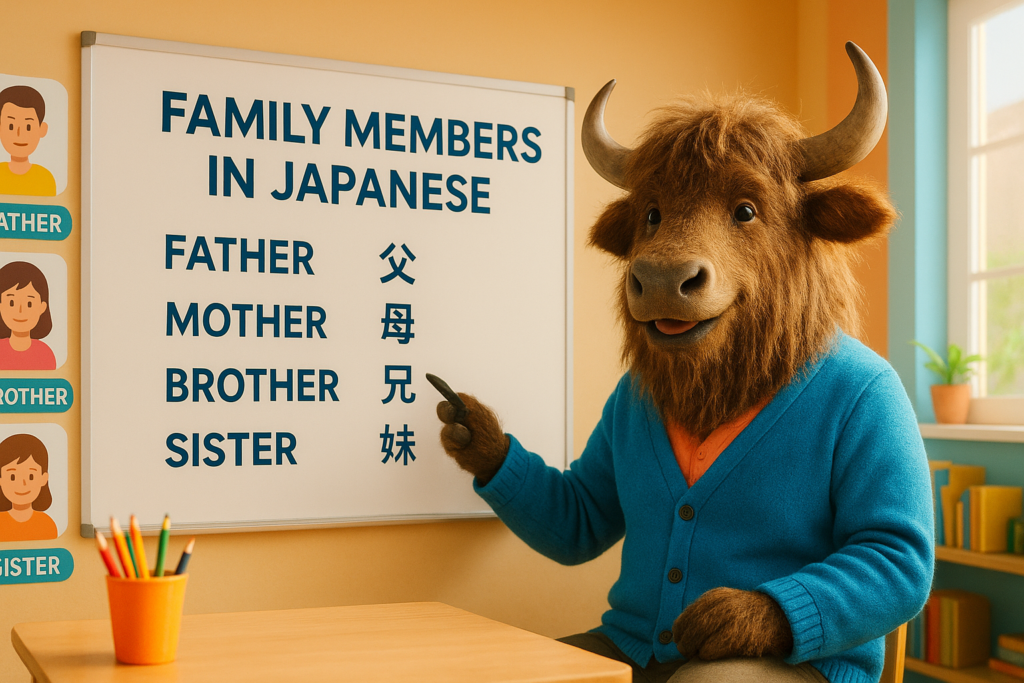
Family Members In Japanese: 60+ Easy Words And Real-Life Phrases For Beginners
Learn 家族(かぞく)kazoku words the way real conversations actually work: your family, someone else’s family, and what you really say at home.
The first time I tried to say “I have a brother” in Japanese, the language basically squinted at me and said, “Cool. Older or younger?” English lets you stay vague and get away with it. Japanese absolutely does not. It wants the family gossip, neatly sorted.
That is why family words feel trickier than they look. You are not just memorizing nouns like father or sister. You are choosing whether it is your family or someone else’s, whether the sibling is older or younger, and whether you are talking about them or speaking to them. Tiny difference, huge chance to sound odd. Let’s fix that cleanly.
Yak Tip: Japanese Family Words Have Three Lanes
Lane 1: how you talk about your own family to outsiders. Lane 2: how you talk about someone else’s family. Lane 3: what you call your family directly at home. Miss the lane, and the sentence still works, but it sounds a little wonky. Polite wonky is still wonky.
The 3 Forms You Need To Survive
| Situation | Japanese | Rōmaji | Meaning |
|---|---|---|---|
| Talking about my father to a teacher | 父(ちち) | chichi | my father |
| Talking to my dad at home | お父さん(おとうさん) | otōsan | Dad |
| Talking about your father | お父さん(おとうさん) | otōsan | your father / father |
| Talking about my older sister | 姉(あね) | ane | my older sister |
| Talking to my older sister or about yours | お姉さん(おねえさん) | onēsan | older sister / your older sister |
Quick Reality Check: 父 and 母 are great for talking about your parents to other people. But when you call out across the kitchen, you usually use お父さん and お母さん. Also, younger siblings are often called by their names at home, not by 弟 or 妹 like a tiny formal memo.
Visual Cards: The High-Utility Core
父
ちち / chichi
my father
母
はは / haha
my mother
兄
あに / ani
older brother
姉
あね / ane
older sister
弟
おとうと / otōto
younger brother
妹
いもうと / imōto
younger sister
両親
りょうしん / ryōshin
parents
家族
かぞく / kazoku
family
Useful Phrases And Real-Life Sentences
- 何人家族ですか。(なんにんかぞくですか)nan’nin kazoku desu ka — How many people are in your family?
- 四人家族です。(よにんかぞくです)yonin kazoku desu — We are a family of four.
- 家族は台北に住んでいます。(かぞくはたいぺいにすんでいます)kazoku wa Taipei ni sunde imasu — My family lives in Taipei.
- 父は会社員です。(ちちはかいしゃいんです)chichi wa kaishain desu — My father is an office worker.
- 母は料理が得意です。(はははりょうりがとくいです)haha wa ryōri ga tokui desu — My mother is good at cooking.
- 兄が一人います。(あにがひとりいます)ani ga hitori imasu — I have one older brother.
- 妹が二人います。(いもうとがふたりいます)imōto ga futari imasu — I have two younger sisters.
- ご家族はお元気ですか。(ごかぞくはおげんきですか)gokazoku wa ogenki desu ka — How is your family?
- ご両親も日本語を話しますか。(ごりょうしんもにほんごをはなしますか)goryōshin mo Nihongo o hanashimasu ka — Do your parents also speak Japanese?
- お母さん、ちょっと聞いて。(おかあさん、ちょっときいて)okāsan, chotto kiite — Mom, listen for a second.
- 息子さんは何歳ですか。(むすこさんはなんさいですか)musukosan wa nan-sai desu ka — How old is your son?
- 親戚が多いです。(しんせきがおおいです)shinseki ga ōi desu — I have a lot of relatives.
Small But Useful Pattern: when you count people in a family, you often hear 一人(ひとり)hitori, 二人(ふたり)futari, then 三人(さんにん)sannin, 四人(よにん)yonin, and so on. Nice little bonus, because family talk loves numbers.
Tables Of Words You Will Actually Use
Open the group you need. This keeps the article readable on mobile instead of turning it into one giant vocabulary pancake.
Own Family Reference Words
| Kanji | Rōmaji | Meaning | Example (JP) | Example (Rōmaji) | Translation (EN) |
|---|---|---|---|---|---|
| 家族(かぞく) | kazoku | family | 私の家族は四人です。 | Watashi no kazoku wa yonin desu. | My family has four people. |
| 親(おや) | oya | parent(s) | 親と一緒に住んでいます。 | Oya to issho ni sunde imasu. | I live with my parent(s). |
| 両親(りょうしん) | ryōshin | parents | 両親は大阪出身です。 | Ryōshin wa Ōsaka shusshin desu. | My parents are from Osaka. |
| 父(ちち) | chichi | my father | 父は先生です。 | Chichi wa sensei desu. | My father is a teacher. |
| 母(はは) | haha | my mother | 母は早起きです。 | Haha wa hayaoki desu. | My mother gets up early. |
| 兄(あに) | ani | older brother | 兄は背が高いです。 | Ani wa se ga takai desu. | My older brother is tall. |
| 姉(あね) | ane | older sister | 姉は看護師です。 | Ane wa kangoshi desu. | My older sister is a nurse. |
| 弟(おとうと) | otōto | younger brother | 弟は高校生です。 | Otōto wa kōkōsei desu. | My younger brother is a high school student. |
| 妹(いもうと) | imōto | younger sister | 妹は音楽が好きです。 | Imōto wa ongaku ga suki desu. | My younger sister likes music. |
| 兄弟(きょうだい) | kyōdai | siblings / brothers | 兄弟は三人います。 | Kyōdai wa sannin imasu. | I have three siblings. |
| 姉妹(しまい) | shimai | sisters | 姉妹はとても仲がいいです。 | Shimai wa totemo naka ga ii desu. | The sisters get along very well. |
| 子供(こども) | kodomo | child / children | 子供が二人います。 | Kodomo ga futari imasu. | I have two children. |
| 息子(むすこ) | musuko | son | 息子はサッカーをしています。 | Musuko wa sakkā o shite imasu. | My son plays soccer. |
| 娘(むすめ) | musume | daughter | 娘は絵を描くのが好きです。 | Musume wa e o kaku no ga suki desu. | My daughter likes drawing. |
Someone Else’s Family And Direct Address Words
| Kanji | Rōmaji | Meaning | Example (JP) | Example (Rōmaji) | Translation (EN) |
|---|---|---|---|---|---|
| ご家族(ごかぞく) | gokazoku | your family / someone else’s family | ご家族はお元気ですか。 | Gokazoku wa ogenki desu ka. | How is your family? |
| ご両親(ごりょうしん) | goryōshin | your parents / someone else’s parents | ご両親も旅行が好きですか。 | Goryōshin mo ryokō ga suki desu ka. | Do your parents also like traveling? |
| お父さん(おとうさん) | otōsan | Dad / your father | お父さんは今、家にいますか。 | Otōsan wa ima, ie ni imasu ka. | Is your father at home now? |
| お母さん(おかあさん) | okāsan | Mom / your mother | お母さんは優しそうですね。 | Okāsan wa yasashisō desu ne. | Your mother seems kind. |
| お兄さん(おにいさん) | onīsan | older brother / your older brother | お兄さんは大学生ですか。 | Onīsan wa daigakusei desu ka. | Is your older brother a university student? |
| お姉さん(おねえさん) | onēsan | older sister / your older sister | お姉さんは東京に住んでいます。 | Onēsan wa Tōkyō ni sunde imasu. | Your older sister lives in Tokyo. |
| 弟さん(おとうとさん) | otōtosan | your younger brother | 弟さんはスポーツが好きですか。 | Otōtosan wa supōtsu ga suki desu ka. | Does your younger brother like sports? |
| 妹さん(いもうとさん) | imōtosan | your younger sister | 妹さんは高校一年生です。 | Imōtosan wa kōkō ichinensei desu. | Your younger sister is a first-year high school student. |
| お子さん(おこさん) | okosan | your child / children | お子さんは何歳ですか。 | Okosan wa nan-sai desu ka. | How old is your child? |
| 息子さん(むすこさん) | musukosan | your son | 息子さんは元気ですか。 | Musukosan wa genki desu ka. | Is your son well? |
| 娘さん(むすめさん) | musumesan | your daughter | 娘さんはピアノを習っています。 | Musumesan wa piano o naratte imasu. | Your daughter is learning piano. |
Grandparents, Uncles, Aunts, And Relatives
| Kanji | Rōmaji | Meaning | Example (JP) | Example (Rōmaji) | Translation (EN) |
|---|---|---|---|---|---|
| 祖父(そふ) | sofu | my grandfather | 祖父は九州に住んでいます。 | Sofu wa Kyūshū ni sunde imasu. | My grandfather lives in Kyushu. |
| 祖母(そぼ) | sobo | my grandmother | 祖母はお茶が好きです。 | Sobo wa ocha ga suki desu. | My grandmother likes tea. |
| おじいさん | ojiisan | grandfather / grandpa | おじいさんは毎朝散歩します。 | Ojiisan wa maiasa sanpo shimasu. | Grandpa takes a walk every morning. |
| おばあさん | obāsan | grandmother / grandma | おばあさんは料理が上手です。 | Obāsan wa ryōri ga jōzu desu. | Grandma is good at cooking. |
| おじいちゃん | ojiichan | grandpa (casual) | おじいちゃん、ありがとう。 | Ojiichan, arigatō. | Grandpa, thanks. |
| おばあちゃん | obāchan | grandma (casual) | おばあちゃんは元気です。 | Obāchan wa genki desu. | Grandma is doing well. |
| 伯父(おじ) | oji | uncle older than your parent | 伯父は医者です。 | Oji wa isha desu. | My uncle is a doctor. |
| 叔父(おじ) | oji | uncle younger than your parent | 叔父は北海道にいます。 | Oji wa Hokkaidō ni imasu. | My uncle is in Hokkaido. |
| 伯母(おば) | oba | aunt older than your parent | 伯母は英語の先生です。 | Oba wa Eigo no sensei desu. | My aunt is an English teacher. |
| 叔母(おば) | oba | aunt younger than your parent | 叔母は映画が好きです。 | Oba wa eiga ga suki desu. | My aunt likes movies. |
| 従兄弟・従姉妹・従弟・従妹(いとこ) | itoko | cousin | いとこと京都で会いました。 | Itoko to Kyōto de aimashita. | I met my cousin in Kyoto. |
| 甥(おい) | oi | nephew | 甥は三歳です。 | Oi wa san-sai desu. | My nephew is three years old. |
| 姪(めい) | mei | niece | 姪は歌が上手です。 | Mei wa uta ga jōzu desu. | My niece sings well. |
| 孫(まご) | mago | grandchild | 孫の写真を見ました。 | Mago no shashin o mimashita. | I saw a photo of the grandchild. |
| 親戚(しんせき) | shinseki | relative(s) | 親戚が年末に集まります。 | Shinseki ga nenmatsu ni atsumarimasu. | Relatives gather at the end of the year. |
Marriage And In-Law Words
| Kanji | Rōmaji | Meaning | Example (JP) | Example (Rōmaji) | Translation (EN) |
|---|---|---|---|---|---|
| 夫(おっと) | otto | husband | 夫は料理が好きです。 | Otto wa ryōri ga suki desu. | My husband likes cooking. |
| 妻(つま) | tsuma | wife | 妻は中国語を話します。 | Tsuma wa Chūgokugo o hanashimasu. | My wife speaks Chinese. |
| 夫婦(ふうふ) | fūfu | married couple | その夫婦はとても仲がいいです。 | Sono fūfu wa totemo naka ga ii desu. | That married couple gets along very well. |
| ご夫婦(ごふうふ) | gofūfu | your married couple / a respected couple | ご夫婦で旅行しますか。 | Gofūfu de ryokō shimasu ka. | Will you travel as a couple? |
| 配偶者(はいぐうしゃ) | haigūsha | spouse (formal) | 書類に配偶者の名前を書きます。 | Shorui ni haigūsha no namae o kakimasu. | I write my spouse’s name on the form. |
| ご主人(ごしゅじん) | goshujin | your husband / someone else’s husband | ご主人はお元気ですか。 | Goshujin wa ogenki desu ka. | Is your husband doing well? |
| 奥さん(おくさん) | okusan | your wife / someone else’s wife | 奥さんも来ますか。 | Okusan mo kimasu ka. | Will your wife come too? |
| 義父(ぎふ) | gifu | father-in-law / stepfather | 義父は車が好きです。 | Gifu wa kuruma ga suki desu. | My father-in-law likes cars. |
| 義母(ぎぼ) | gibo | mother-in-law / stepmother | 義母に花を送りました。 | Gibo ni hana o okurimashita. | I sent flowers to my mother-in-law. |
| 義兄(ぎけい) | gikei | older brother-in-law | 義兄は銀行で働いています。 | Gikei wa ginkō de hataraite imasu. | My older brother-in-law works at a bank. |
| 義姉(ぎし) | gishi | older sister-in-law | 義姉は親切な人です。 | Gishi wa shinsetsu na hito desu. | My older sister-in-law is a kind person. |
| 義弟(ぎてい) | gitei | younger brother-in-law | 義弟は背が高いです。 | Gitei wa se ga takai desu. | My younger brother-in-law is tall. |
| 義妹(ぎまい) | gimai | younger sister-in-law | 義妹は学生です。 | Gimai wa gakusei desu. | My younger sister-in-law is a student. |
Useful Extra Family Words
| Kanji | Rōmaji | Meaning | Example (JP) | Example (Rōmaji) | Translation (EN) |
|---|---|---|---|---|---|
| 一人っ子(ひとりっこ) | hitorikko | only child | 私は一人っ子です。 | Watashi wa hitorikko desu. | I am an only child. |
| 双子(ふたご) | futago | twins | あの子たちは双子です。 | Ano kotachi wa futago desu. | Those children are twins. |
| 大家族(だいかぞく) | daikazoku | big family | 彼は大家族で育ちました。 | Kare wa daikazoku de sodachimashita. | He grew up in a big family. |
| 核家族(かくかぞく) | kakukazoku | nuclear family | 今は核家族が多いです。 | Ima wa kakukazoku ga ōi desu. | Nuclear families are common now. |
| 親子(おやこ) | oyako | parent and child | 親子で買い物に行きました。 | Oyako de kaimono ni ikimashita. | The parent and child went shopping together. |
| 家系(かけい) | kakei | family line | その病気は家系にあります。 | Sono byōki wa kakei ni arimasu. | That illness runs in the family. |
| 主人(しゅじん) | shujin | my husband (traditional) | 主人は出張中です。 | Shujin wa shucchōchū desu. | My husband is on a business trip. |
| 家内(かない) | kanai | my wife (traditional) | 家内は今、留守です。 | Kanai wa ima, rusu desu. | My wife is out right now. |
Curious Bits That Actually Help
- 伯父 / 叔父 are both read oji. The kanji tells you whether the uncle is older or younger than your parent.
- 伯母 / 叔母 work the same way and are both read oba.
- おじさん and おじいさん are not the same. That extra long vowel matters. One is usually uncle / middle-aged man; the other is grandfather / old man. Tiny sound, very different human.
- いとこ is easy in speech, messy in kanji. In conversation, just saying いとこ itoko is completely normal.
- 主人 and 家内 still exist, but they sound more traditional. For beginners, 夫(otto) and 妻(tsuma) are safer basics.
- 義父 and 義母 can mean in-law or step-parent. Context does the heavy lifting there.
Common Mistakes And Fast Fixes
- Mistake: Saying お父さん for your own father when talking to your teacher.
Fix: Use 父(chichi). - Mistake: Translating “brother” or “sister” without age.
Fix: Pick 兄 / 弟 / 姉 / 妹. Japanese wants the age difference. - Mistake: Using 弟 or 妹 to call your younger sibling directly all the time.
Fix: A first name is often more natural at home. - Mistake: Memorizing one big family list and forgetting context.
Fix: Study in pairs: 父 ↔ お父さん, 母 ↔ お母さん, 兄 ↔ お兄さん. - Mistake: Panicking over cousin kanji.
Fix: In speech, just use いとこ itoko and keep moving. Your sanity matters too.
Practice Section
Try these quickly before peeking at the answers. No drama. Just enough pain to make it stick.
- How do you say my mother when speaking to your boss?
- How do you say your father politely?
- How do you say older sister when talking about your own family?
- How do you say your younger brother?
- How do you say grandparents casually at home?
- How do you say I am an only child?
Practice Answers
- 母(はは)haha
- お父さん(おとうさん)otōsan
- 姉(あね)ane
- 弟さん(おとうとさん)otōtosan
- おじいちゃん・おばあちゃん(ojiichan / obāchan)
- 私は一人っ子です。(わたしはひとりっこです)Watashi wa hitorikko desu.
Quick Reference Summary
- Use plain forms like 父, 母, 兄, 姉 when talking about your own family to outsiders.
- Use polite forms like お父さん, お母さん, お兄さん, お姉さん for someone else’s family or when speaking directly at home.
- Japanese usually distinguishes older and younger siblings.
- Grandparents, aunts, uncles, spouse terms, and in-law terms all get easier once you stop treating them like one giant word pile.
- If you freeze, remember the pattern first. The pattern is the real cheat code.
Final Yak Box
If you only memorize eight items today, make them these: 父(chichi), 母(haha), 兄(ani), 姉(ane), 弟(otōto), 妹(imōto), お父さん(otōsan), and お母さん(okāsan). That tiny set already lets you talk about your family, ask about someone else’s, and avoid the most common beginner faceplants. Not bad for eight words.