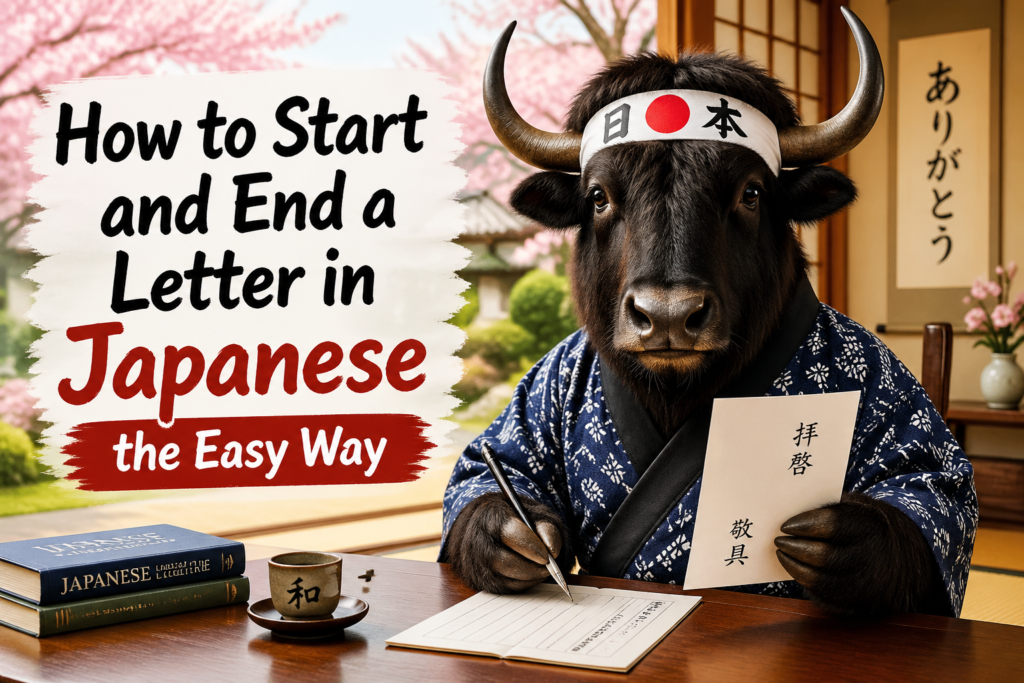
Japanese letters can look beautifully formal, slightly intimidating, and—let’s be honest—a bit like everyone else got a secret memo about how they work. The good news: the system is actually very learnable once you know the usual opening and closing lines. You do not need to sound like a 19th-century poet who owns six brushes and writes under moonlight.
If you can learn a few standard greetings, a couple of polite endings, and when to use casual versus formal language, you can start and end a letter in Japanese without panic-sweating onto the page. This guide gives you the core phrases, example sentences, and a few traps to avoid so your letter sounds natural, polite, and not accidentally weird. If you want more beginner-friendly Japanese study help, the Learn Japanese hub is a good next stop.
One fun thing about Japanese letters is that the opening and ending are often a little ritualized. That sounds stiff, but it actually makes life easier. Instead of inventing the perfect intro from scratch, you can lean on set phrases that native speakers already expect. Very civilized. Very efficient. A tiny gift from the language gods.
The Basic Shape of a Japanese Letter
At the simplest level, many Japanese letters and emails follow this pattern:
- Opening greeting
- A seasonal or polite phrase if the letter is formal
- Main message
- Closing phrase
- Name or signature
For casual letters, you can skip the extra-formal seasonal stuff. For formal letters, those phrases make your writing sound polished and respectful.
Useful Phrases To Start a Letter
Let’s begin with the openings you will actually use. Some are formal, some casual, and some fit both letters and emails.
拝啓 — Haikei — Dear Sir/Madam; Formal Opening
拝啓
Haikei
English meaning: a very formal opening used at the start of letters
Example sentence: 拝啓、秋晴の候、ますますご清祥のこととお喜び申し上げます。
Haikei, akibare no kō, masumasu goseishō no koto to oyorokobi mōshiagemasu.
Dear Sir/Madam, in this season of clear autumn weather, I am pleased to hear that you are doing well.
This is classic formal letter language. It often appears in business letters, thank-you letters, notices, and proper written correspondence. If you use 拝啓, the matching formal ending is usually 敬具. They are a pair. Split them up and the letter feels unfinished.
前略 — Zenryaku — Omitting The Formalities
前略
Zenryaku
English meaning: “forgive me for skipping the formal preliminaries”
Example sentence: 前略、お元気ですか。
Zenryaku, ogenki desu ka.
Forgive me for skipping the formalities—how are you?
This is less stiff than 拝啓. It is used when you want to get to the point quickly. It still sounds written and deliberate, though, not super casual.
こんにちは — Konnichiwa — Hello
こんにちは
Konnichiwa
English meaning: hello
Example sentence: こんにちは。お元気ですか。
Konnichiwa. Ogenki desu ka.
Hello. How are you?
Yes, this can work in friendly letters and especially casual emails. It is simple, warm, and safe. Not for a serious formal business letter, obviously, unless chaos is your personal brand.
お元気ですか — Ogenki Desu Ka — How Are You?
お元気ですか
Ogenki desu ka
English meaning: how are you?
Example sentence: お元気ですか。私は元気です。
Ogenki desu ka. Watashi wa genki desu.
How are you? I am well.
A classic opening line in personal letters. It is direct, friendly, and very common in beginner Japanese for a reason: it works.
お変わりありませんか — Okawari Arimasen Ka — Have You Been Well?
お変わりありませんか
Okawari arimasen ka
English meaning: have you been well? / I hope nothing has changed
Example sentence: その後、お変わりありませんか。
Sono go, okawari arimasen ka.
How have you been since then?
This sounds a little gentler and more mature than お元気ですか. Nice for letters to relatives, teachers, or someone you have not contacted in a while.
いかがお過ごしですか — Ikaga Osugoshi Desu Ka — How Have You Been Spending Your Time?
いかがお過ごしですか
Ikaga osugoshi desu ka
English meaning: how have you been? / how are you doing?
Example sentence: 皆様、いかがお過ごしですか。
Minasama, ikaga osugoshi desu ka.
How has everyone been?
This is more polished and polite than お元気ですか. Good for semi-formal letters.
久しぶりです — Hisashiburi Desu — Long Time No See
久しぶりです
Hisashiburi desu
English meaning: long time no see
Example sentence: 久しぶりです。お元気でしたか。
Hisashiburi desu. Ogenki deshita ka.
Long time no see. Have you been well?
Perfect for writing to a friend, classmate, or relative after a gap.
ご無沙汰しています — Gobusata Shiteimasu — Sorry It Has Been So Long
ご無沙汰しています
Gobusata shiteimasu
English meaning: it has been too long; sorry for not being in touch
Example sentence: 長い間、ご無沙汰しています。
Nagai aida, gobusata shiteimasu.
It has been a long time since I last contacted you.
This is a useful phrase when writing to someone you should probably have contacted sooner. Which, yes, is a very human situation.
突然のお手紙失礼します — Totsuzen No Otegami Shitsurei Shimasu — Sorry For Writing Out Of The Blue
突然のお手紙失礼します
Totsuzen no otegami shitsurei shimasu
English meaning: excuse me for writing to you suddenly
Example sentence: 突然のお手紙失礼します。ぜひお礼をお伝えしたくて書きました。
Totsuzen no otegami shitsurei shimasu. Zehi orei o otsutae shitakute kakimashita.
Sorry for writing to you suddenly. I wrote because I really wanted to express my thanks.
Great for first contact or unexpected contact, especially when being polite matters.
いつもお世話になっております — Itsumo Osewa Ni Natte Orimasu — Thank You For Your Continued Support
いつもお世話になっております
Itsumo osewa ni natte orimasu
English meaning: thank you for your continued support/help
Example sentence: いつもお世話になっております。山田です。
Itsumo osewa ni natte orimasu. Yamada desu.
Thank you for your continued support. This is Yamada.
This is extremely common in business emails and formal written communication. It is not a direct translation of a typical English opening, but in Japanese it sounds normal and professional.
先日はありがとうございました — Senjitsu Wa Arigatō Gozaimashita — Thank You For The Other Day
先日はありがとうございました
Senjitsu wa arigatō gozaimashita
English meaning: thank you for the other day
Example sentence: 先日はありがとうございました。とても楽しかったです。
Senjitsu wa arigatō gozaimashita. Totemo tanoshikatta desu.
Thank you for the other day. I had a great time.
This is a lovely natural opening when your letter follows a recent visit, meeting, dinner, event, or favor.
Useful Phrases To End a Letter
Now the part that often gets forgotten: how to land the plane. Japanese closing lines often show respect, wish someone well, or ask for continued goodwill.
敬具 — Keigu — Sincerely
敬具
Keigu
English meaning: sincerely; formal complimentary close
Example sentence: 拝啓、暑い日が続いておりますが、どうぞご自愛ください。敬具
Haikei, atsui hi ga tsuzuite orimasu ga, dōzo gojiai kudasai. Keigu.
Dear Sir/Madam, the hot days continue, so please take care of yourself. Sincerely.
Remember the pair: 拝啓 starts the formal letter, 敬具 ends it.
草々 — Sōsō — Yours Truly; Quick Closing
草々
Sōsō
English meaning: sincerely; a somewhat brisk formal close
Example sentence: 前略、取り急ぎご報告まで。草々
Zenryaku, toriisogi gohōkoku made. Sōsō.
Forgive the omitted formalities; I am writing quickly just to inform you. Yours truly.
This often pairs with 前略. It can feel efficient and a little brief.
よろしくお願いします — Yoroshiku Onegaishimasu — Thank You In Advance / Best Regards
よろしくお願いします
Yoroshiku onegaishimasu
English meaning: best regards; thank you in advance; please treat this favorably
Example sentence: それでは、よろしくお願いします。
Soredewa, yoroshiku onegaishimasu.
Well then, thank you in advance.
This is one of the most useful closings in modern Japanese writing. It is flexible, polite, and very common.
お返事お待ちしています — Ohenji Omachi Shiteimasu — I Look Forward To Your Reply
お返事お待ちしています
Ohenji omachi shiteimasu
English meaning: I look forward to your reply
Example sentence: お時間のあるときに、お返事お待ちしています。
Ojikan no aru toki ni, ohenji omachi shiteimasu.
I look forward to your reply when you have time.
Good for personal letters and many polite emails. Softer than demanding a response. Nobody likes being bossed around by stationery.
お体に気をつけてください — Okarada Ni Ki O Tsukete Kudasai — Please Take Care Of Yourself
お体に気をつけてください
Okarada ni ki o tsukete kudasai
English meaning: please take care of yourself
Example sentence: 寒くなってきましたので、お体に気をつけてください。
Samuku natte kimashita node, okarada ni ki o tsukete kudasai.
It has gotten colder, so please take care of yourself.
A warm and thoughtful closing, especially in seasonal letters.
ご自愛ください — Gojiai Kudasai — Please Take Good Care Of Yourself
ご自愛ください
Gojiai kudasai
English meaning: please take care of yourself
Example sentence: お忙しい毎日かと思いますが、どうぞご自愛ください。
Oisogashii mainichi ka to omoimasu ga, dōzo gojiai kudasai.
I imagine you are very busy every day, but please take good care of yourself.
This is more refined and formal than お体に気をつけてください.
またね — Mata Ne — See You
またね
Mata ne
English meaning: see you; talk to you later
Example sentence: またね。今度会おう。
Mata ne. Kondo aō.
See you. Let’s meet next time.
Very casual. Fine for close friends. Absolutely not for your professor, client, or city office.
では、失礼します — Dewa, Shitsurei Shimasu — Well Then, Goodbye
では、失礼します
Dewa, shitsurei shimasu
English meaning: well then, goodbye / excuse me
Example sentence: では、失礼します。
Dewa, shitsurei shimasu.
Well then, goodbye.
A handy polite close, especially in practical writing or shorter notes.
Ready-To-Use Letter Openings And Endings
Here are some easy combinations you can steal—sorry, learn from—right away.
- 拝啓 — Haikei — formal opening → 敬具 — Keigu — formal closing
- 前略 — Zenryaku — skipping formalities → 草々 — Sōsō — brisk formal closing
- 久しぶりです — Hisashiburi desu — long time no see → またね — Mata ne — see you
- ご無沙汰しています — Gobusata shiteimasu — sorry it has been so long → お体に気をつけてください — Okarada ni ki o tsukete kudasai — take care
- いつもお世話になっております — Itsumo osewa ni natte orimasu — thank you for your support → よろしくお願いします — Yoroshiku onegaishimasu — best regards
Sample Letter Openings And Closings
Casual Letter To A Friend
久しぶりです。元気ですか。
Hisashiburi desu. Genki desu ka.
Long time no see. How are you?
最近、新しい仕事を始めました。
Saikin, atarashii shigoto o hajimemashita.
I recently started a new job.
またね。今度ゆっくり話しましょう。
Mata ne. Kondo yukkuri hanashimashō.
See you. Let’s talk properly next time.
Polite Letter To A Teacher
ご無沙汰しています。お変わりありませんか。
Gobusata shiteimasu. Okawari arimasen ka.
It has been too long. Have you been well?
先日はご指導いただき、ありがとうございました。
Senjitsu wa goshidō itadaki, arigatō gozaimashita.
Thank you very much for your guidance the other day.
どうぞご自愛ください。
Dōzo gojiai kudasai.
Please take good care of yourself.
Formal Business Letter Style
拝啓、平素より大変お世話になっております。
Haikei, heiso yori taihen osewa ni natte orimasu.
Dear Sir/Madam, thank you very much for your continued support.
このたびは、資料をお送りいただきありがとうございました。
Kono tabi wa, shiryō o ookuri itadaki arigatō gozaimashita.
Thank you for sending the materials on this occasion.
今後ともよろしくお願い申し上げます。敬具
Kongo tomo yoroshiku onegai mōshiagemasu. Keigu.
I respectfully ask for your continued favor in the future. Sincerely.
Tables Of Common Opening Phrases
| Kanji | Rōmaji | Meaning | Example (JP) | Example (Rōmaji) | Translation (EN) |
|---|---|---|---|---|---|
| 拝啓 | Haikei | Formal opening | 拝啓、皆様ますますご清栄のこととお喜び申し上げます。 | Haikei, minasama masumasu goseiei no koto to oyorokobi mōshiagemasu. | Dear Sir/Madam, I am pleased to hear that everyone is flourishing. |
| 前略 | Zenryaku | Skipping formalities | 前略、取り急ぎお礼まで。 | Zenryaku, toriisogi orei made. | Forgive the omitted formalities; I am writing quickly to thank you. |
| お元気ですか | Ogenki desu ka | How are you? | お元気ですか。こちらは元気です。 | Ogenki desu ka. Kochira wa genki desu. | How are you? I am doing well here. |
| ご無沙汰しています | Gobusata shiteimasu | Sorry it has been so long | ご無沙汰しています。久しぶりにお便りします。 | Gobusata shiteimasu. Hisashiburi ni otayori shimasu. | It has been too long. I am writing after a long time. |
| いつもお世話になっております | Itsumo osewa ni natte orimasu | Thank you for your continued support | いつもお世話になっております。田中です。 | Itsumo osewa ni natte orimasu. Tanaka desu. | Thank you for your continued support. This is Tanaka. |
Tables Of Common Closing Phrases
| Kanji | Rōmaji | Meaning | Example (JP) | Example (Rōmaji) | Translation (EN) |
|---|---|---|---|---|---|
| 敬具 | Keigu | Sincerely | 末筆ながら、皆様のご健康をお祈り申し上げます。敬具 | Mappitsu nagara, minasama no gokenkō o oinori mōshiagemasu. Keigu. | In closing, I pray for everyone’s good health. Sincerely. |
| 草々 | Sōsō | Yours truly; brisk close | 前略、まずはご報告まで。草々 | Zenryaku, mazu wa gohōkoku made. Sōsō. | Forgive the omitted formalities; for now, I am simply informing you. Yours truly. |
| よろしくお願いします | Yoroshiku onegaishimasu | Best regards; thank you in advance | ご確認のほど、よろしくお願いします。 | Gokakunin no hodo, yoroshiku onegaishimasu. | Thank you in advance for your confirmation. |
| お返事お待ちしています | Ohenji omachi shiteimasu | I look forward to your reply | お忙しいと思いますが、お返事お待ちしています。 | Oisogashii to omoimasu ga, ohenji omachi shiteimasu. | I know you are busy, but I look forward to your reply. |
| ご自愛ください | Gojiai kudasai | Please take care of yourself | 季節の変わり目ですので、どうぞご自愛ください。 | Kisetsu no kawarime desu node, dōzo gojiai kudasai. | As the seasons are changing, please take good care of yourself. |
Common Mistakes And Easy Fixes
- Using casual endings in formal letters: またね (mata ne) is for friends, not formal writing. Use 敬具 (keigu) or よろしくお願いします (yoroshiku onegaishimasu) instead.
- Mixing opening and closing pairs badly: 拝啓 (haikei) usually goes with 敬具 (keigu). 前略 (zenryaku) often goes with 草々 (sōsō).
- Overdoing textbook politeness with close friends: If you write to a friend like a minor government department, the vibe gets strange fast.
- Skipping a warm line entirely: Even a simple お元気ですか (ogenki desu ka) makes a letter feel more natural.
- Forgetting audience: Teachers, older relatives, clients, and coworkers usually need more polite wording than best friends.
The easiest rule is this: match the opening and ending to the relationship. Friend? Keep it warm. Teacher or business contact? Keep it polite.
Quick Reference Summary
- Formal start: 拝啓 — Haikei — Dear Sir/Madam
- Formal end: 敬具 — Keigu — Sincerely
- Less formal written start: 前略 — Zenryaku — Forgive me for skipping formalities
- Matching end: 草々 — Sōsō — Yours truly
- Friendly start: 久しぶりです — Hisashiburi desu — Long time no see
- Friendly question: お元気ですか — Ogenki desu ka — How are you?
- Polite business start: いつもお世話になっております — Itsumo osewa ni natte orimasu — Thank you for your continued support
- Flexible close: よろしくお願いします — Yoroshiku onegaishimasu — Best regards / Thank you in advance
- Caring close: ご自愛ください — Gojiai kudasai — Please take care of yourself
- Casual close: またね — Mata ne — See you
Yak Takeaway
Starting and ending a letter in Japanese gets much easier once you stop trying to invent everything from scratch. Learn a few dependable opening lines, pair them with the right closing phrases, and choose your level of politeness based on who is reading. That is really the whole game. Start with simple combinations like 久しぶりです (Hisashiburi desu) and またね (Mata ne) for friends, or 拝啓 (Haikei) and 敬具 (Keigu) for formal writing, and you will already sound far more natural. Clean, clear, polite, done. No moonlight brush ceremony required.
More Japanese to explore

The Spider’s Thread: A2 Elementary Japanese Story with Audio

Golden Boy in Japanese: A1 Beginner Story with Audio, Tap-to-Translate Help & Free Lesson Notes

Learn Japanese with The Tale of the Bamboo Cutter – An A2 Graded Reader with Audio