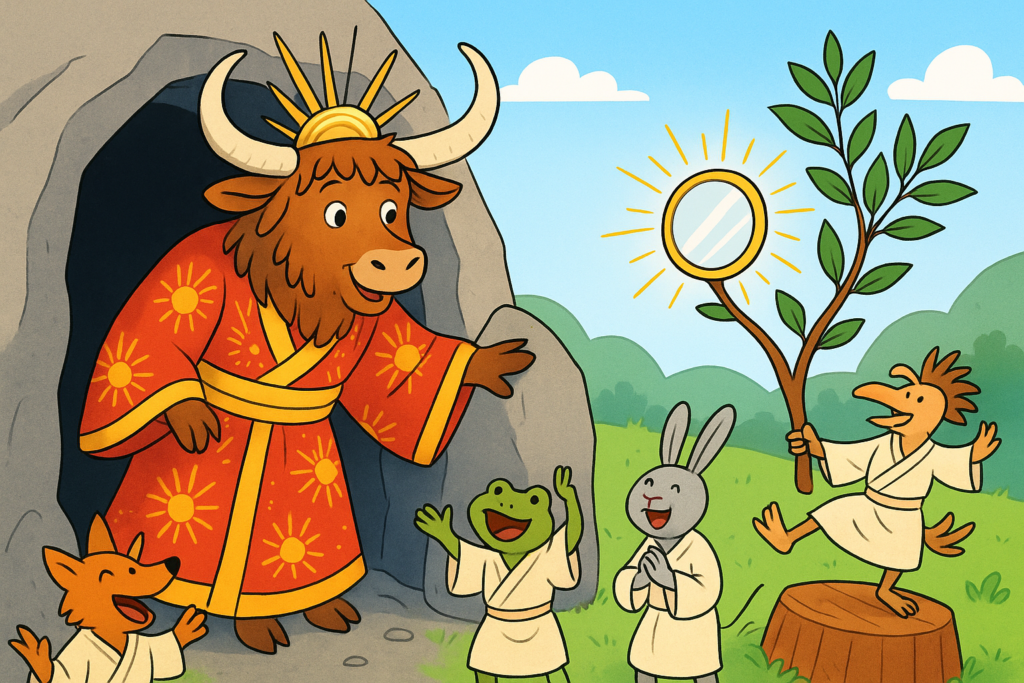
Step into the world of Japanese mythology with our A2 elementary retelling of Amaterasu and the Cave. This famous tale follows the sun goddess Amaterasu as she hides herself away in a cave, plunging the world into darkness. The other gods must find a clever way to bring back the light. It's a wonderful story for practicing Japanese while enjoying a timeless legend.
Read along with story audio by a native speaker, and tap any word for an instant translation. Whether you're a beginner moving into A2 or revising the basics, this interactive graded reader helps you understand every sentence with confidence. At the end, you'll find lesson notes with key vocabulary and grammar points. It's a free, self-contained reading experience – just click and start learning!
昔々、天の国に 女神 のアマテラスが 住んでいました。アマテラスは 太陽の 女神で、世界を 明るく していました。
ある日、アマテラスの 弟の スサノオが 天の国に 。スサノオは が 好きで、田んぼを 、大声で しました。
アマテラスは とても 。そして、 なりました。最初に、アマテラスは に 。次に、大きい 岩で 入口を ふさぎました。
洞窟の 中は なりました。外の 世界も なりました。みんなは 。「アマテラス、 きて ください!」と 神さまたちが 言いました。でも、アマテラスは 。
神さまたちは 。最初に、鏡を 。次に、美しい 玉を 。そして、洞窟の 近くに 大きな 木を 。
アメノウズメという 女神が 。みんなは 。「何が の?」と アマテラスは 思いました。
アマテラスは 少しだけ 岩を 、外を 。「なぜ みんなが の?」と 。
神さまたちは 言いました。「新しい 女神が !あなたより !」そして、鏡を アマテラスに 。アマテラスは 自分の を 見て、もっと よく 。
最後に、神さまたちは アマテラスの 手を 、洞窟から 。世界は また なりました。
Long ago, the goddess Amaterasu lived in the realm of heaven. She was the sun goddess and lit up the world.
One day, Susanoo, Amaterasu's younger brother, came to heaven. He was mischievous and destroyed rice fields and made loud noises.
Amaterasu became very angry and then grew frightened. First, she entered a cave. Then she blocked the entrance with a large boulder.
Inside the cave it turned dark. The world outside also grew dark. Everyone was troubled. "Amaterasu, please come out!" the gods said. But Amaterasu didn't come out.
The gods thought. First, they made a mirror. Next, they made beautiful jewels. Then they set up a large tree near the cave.
A goddess named Ame-no-Uzume danced merrily. Everyone laughed loudly. "What's going on?" Amaterasu wondered.
Amaterasu moved the boulder slightly and looked outside. "Why is everyone laughing?" she asked.
The gods said, "A new goddess has come! She's more lovely than you!" Then they showed the mirror to Amaterasu. She saw her own reflection and wanted to see more clearly.
Finally, the gods grabbed Amaterasu's hand and pulled her out of the cave. The world became bright again.
These words appear again and again in Japanese tales and everyday conversation. Let's pick a few to keep in your pocket.
Notice how the story contrasts 明るい (bright) and 暗い (dark) - a classic pair in mythology.
- 女神 (めがみ) - goddess
- 洞窟 (どうくつ) - cave
- 岩 (いわ) - rock
- 明るい (あかるい) - bright / 暗い (くらい) - dark
In Japanese storytelling, we use ~ました for one-time actions and ~ていました for ongoing states or habits. The myth uses both to paint a clear picture of what happened.
Try spotting the difference: 入りました (entered) is a single move, while 住んでいました (was living) describes where she stayed over time.
- ~ました: completed actions (e.g., 来ました came, 見せました showed)
- ~ていました: ongoing states or repeated actions (e.g., 住んでいました was living, 笑っていました was laughing)
The myth flows thanks to simple time-order words. Just like in English, they help your listener follow along step by step.
When you narrate, try stringing together 最初に… 次に… そして… 最後に… for a natural rhythm.
- 最初に (さいしょに) - first: 最初に、アマテラスは洞窟に入りました。
- 次に (つぎに) - next: 次に、岩で入口をふさぎました。
- そして - and then: そして、世界は暗くなりました。
- 最後に (さいごに) - finally: 最後に、神さまたちはアマテラスを洞窟から出しました。
You've got the words, the past forms, and the sequence markers. Now run with them!
Try retelling the Amaterasu story in your own words - or invent a mini myth about another character from the heavens. Keep it short, use a few ~ました and ~ていました, and don't forget those handy time-order words.
Amaterasu and the Cave comes from the Japanese / Kojiki myth tradition and is best known as a myth. This Yak Yacker article is an original learner retelling based on Ancient Shinto myth; public-domain source tradition, so the wording here is simplified for modern learners rather than copied from one old edition.
Older printings, translations, and retellings of this story can vary quite a bit. The original audience was usually general/kids, but this version is adapted for A2 Elementary learners studying Japanese. Religious/cultural myth; present neutrally.
If you want to look into the source tradition, start with Wikipedia.
If you want to keep going, browse more in our Japanese section and review the Geography Vocabulary in Japanese. After that, try Japanese Question Words for another useful next step.