This A2 Elementary retelling of まつやまのかがみ keeps the plot clear for learners while still giving the story some atmosphere and momentum.
This version teaches Japanese through English and includes clickable word help inside the story, full story audio, and lesson notes after the reading. It is free to use on Yak Yacker and is designed to feel natural, readable, and manageable for learners.
むかしむかし、まつやまに かぞくが いました。おとうさん、おかあさん、そして ちいさい が いました。おんなのこの なまえは でした。
あるひ、おかあさんは はなこに ちいさい を あげました。『はなこ、これは おかあさんが いちばん に している ものです。これから いつも ね。』はなこは うけとりました。
でも、それから すぐに おかあさんは に なりました。そして、。はなこは とても 。まいにち かがみを 、おかあさんを 。
なんねんか あと、おとうさんは おくさんを 。あたらしい おかあさんは とても で、はなこに しました。でも、はなこは すこし でした。
あるひ、あたらしい おかあさんは はなこの へやで かがみを 。『これは なにかしら?』おかあさんは かがみの なかの ひとを 、。『まあ!はなこより ずっと おんなの ひとが いる!』
あたらしい おかあさんは おとうさんに いいました。『はなこは どこかで おんなの ひとに ようです。』おとうさんは 。『それは かがみです。そこにいるのは、はなこが じぶんの かおです。』
でも、はなこは かがみを みて いいました。『いいえ、これは わたしの おかあさんです。』おとうさんは かがみを みました。そして、はなこの かおと かがみの なかの かおが ことに 。はなこは じぶんの かおの なかに、 おかあさんの かおを みていたのです。
あたらしい おかあさんは いいました。『はなこ、あなたの おかあさんは とても ひと だったのね。そして、あなたは おかあさんに だよ。』はなこは あたらしい おかあさんの てを 。『はい。でも、これからは あなたも わたしの おかあさんです。』
それから、はなこは かがみを しながら、あたらしい おかあさんと くらしました。かがみの なかには いつも おかあさんの が ありました。
Once upon a time, in Matsuyama, there lived a kind family: a father, a mother, and a little girl named Hanako.
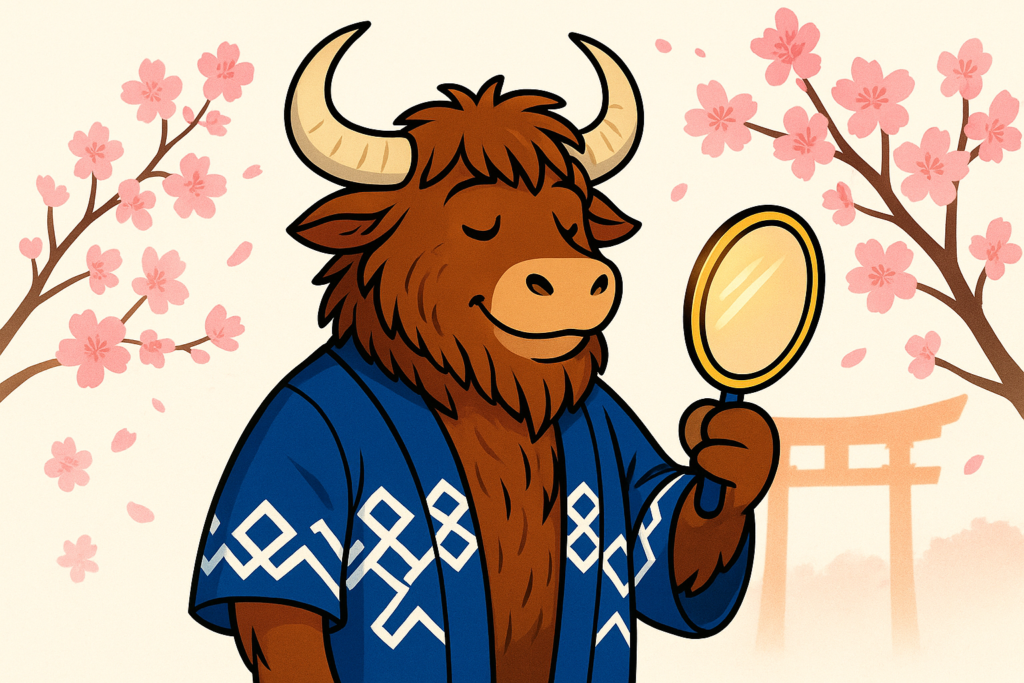
One day, the mother gave Hanako a small mirror. 'Hanako, this is my most treasured possession. Please always keep it with you.' Hanako happily received it.
But soon after, the mother fell ill and died. Hanako was very sad. Every day, she looked at the mirror and remembered her mother.
A few years later, the father remarried. The new wife was very kind to Hanako, but Hanako seemed a little sad.
One day, the new mother found an old mirror in Hanako's room. 'What's this?' She looked at the person in the mirror and was surprised. 'Oh! There's a woman much older than Hanako!'
The new mother told the father, 'It seems Hanako is meeting some unknown woman somewhere.' The father laughed. 'That's a mirror. What you see is Hanako's own face.'
But Hanako looked at the mirror and said, 'No, this is my mother.' The father looked at the mirror and noticed that Hanako's face resembled the face in the mirror. Hanako was seeing her deceased mother's face within her own face.
The new mother wept and said, 'Hanako, your mother was a very beautiful person. And you look just like her.' Hanako took the new mother's hand. 'Yes. But from now on, you are also my mother.'
From then on, Hanako cherished the mirror and lived happily with her new mother. In the mirror, there was always her mother's smile.
The story is filled with simple, heartfelt words that are perfect for everyday Japanese. Let's look at a few that appear again and again.
These are some of the easiest words to remember because they relate to family and feelings-things we all talk about.
- かがみ (kagami) - mirror
- おかあさん (okaasan) - mother; おとうさん (otousan) - father
- びょうき (byouki) - illness; なみだ (namida) - tears
- かなしい (kanashii) - sad; うれしい (ureshii) - happy
Japanese has special verbs for giving and receiving. In the story, the mother says 「かがみを あげました」-she *gives* the mirror to Hanako.
When someone gives to you or your close group, use くれる. For example, Hanako could say 「おかあさんが かがみを くれた」 (my mother gave me the mirror). When you receive, use もらう, like 「はなこは かがみを もらいました」.
- あげる (ageru) - give to someone else
- くれる (kureru) - give to me / my family (the giver is kind!)
- もらう (morau) - receive
- All three appear in polite past as ~ました: あげました, くれました, もらいました
You'll notice many verbs in the story end with ~ました. That's the polite past form. For example, みました (mimashita) means 'looked' or 'saw'.
When two actions happen in sequence, you can link them with the て-form. In 「かがみを みて、おどろきました」 (She looked in the mirror and was surprised), みて is the て-form of みます.
- Present polite: みます (mimasu) → Past polite: みました (mimashita)
- Common て-form pattern: みます → みて (mite)
- しんでしまいました (shinde shimaimashita) - 'sadly passed away', a softer way to say 'died'
- Try making your own pairs: よみます → よんで, かきます → かいて
Hanako's story reminds us how important family is. Now that you know words like おかあさん and おとうさん, try describing your own family in Japanese.
You could say something like 「わたしの かぞくは やさしいです」 (My family is kind) or 「おかあさんは かがみが すきです」 (My mother likes mirrors).
- わたしのおかあさんは ~ (My mother is…)
- かぞくを たいせつに してね (Cherish your family!)
- Use あげる/くれる when talking about gifts in your family
まつやまのかがみ comes from the Japanese / Ozaki collection tradition and is best known as a folk tale. This Yak Yacker article is an original learner retelling based on Yei Theodora Ozaki collection, 1908; public domain, so the wording here is simplified for modern learners rather than copied from one old edition.
Older printings, translations, and retellings of this story can vary quite a bit. The original audience was usually kids/general, but this version is adapted for A2 Elementary learners studying Japanese. Gentle family story; useful for home/family vocab.
If you want to look into the source tradition, start with Project Gutenberg.
If you want to keep going, browse more in our Japanese section and review the Geography Vocabulary in Japanese. After that, try Japanese Question Words for another useful next step.