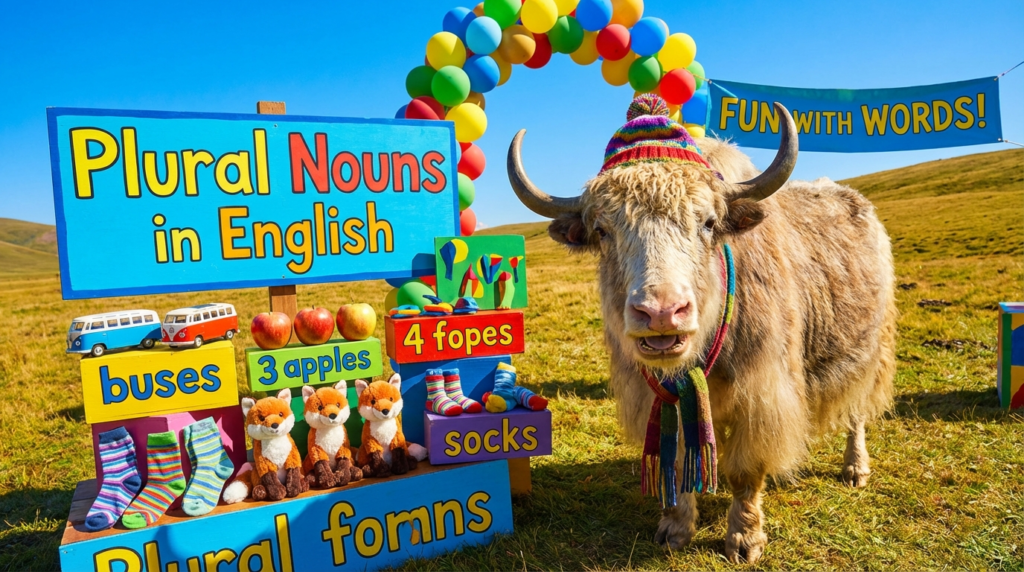
Most Common English Nouns is built for learners who want a clear study sheet: pronunciation, meaning, and context in one place.
Ready for a quick language workout? This giant set of words is here to help you build everyday confidence, so scroll to the bottom for the free printable english vocabulary list list PDF and the free downloadable printable english list flashcards.
If you want to turn vocabulary into speech, try the Yak Yacker English lesson course. Lesson 1 is a friendly place to start before you tackle longer word lists.
Quick Quiz
The quiz is optional, but it’s a nice way to spot words you still need to learn.
Keep building your English
Choose a practical next step when you are ready.
Browse the Full List
| Word | IPA | Meaning | Example | Audio |
|---|---|---|---|---|
| Library | /ˈlaɪbrɛri/ | A place with many books | The library is quiet. | |
| Life | /laɪf/ | The state of being alive | Life is good. | |
| lift | /lɪft/ | another word for elevator | Take the lift. | |
| lime | /laɪm/ | a sour green fruit | The lime is green. | |
| line | /laɪn/ | a long thin mark | Draw a straight line. | |
| lines | /laɪnz/ | long narrow marks | Draw two straight lines on the paper. | |
| links | /lɪŋks/ | clickable connections to other pages | The website has useful links. | |
| linux | /ˈlɪnəks/ | a computer operating system | My brother uses Linux on his laptop. | |
| lion | /ˈlaɪən/ | a large wild cat | The lion is very strong. | |
| List | /lɪst/ | A series of items | Make a shopping list. | |
| listing | /ˈlɪstɪŋ/ | an item in a list | I saw the apartment listing online. | |
| listings | /ˈlɪstɪŋz/ | items in a list | I checked the job listings online. | |
| living room | /ˈlɪvɪŋ rum/ | a room for relaxing in | We watch TV in the living room. | |
| lizard | /ˈlɪzərd/ | a small reptile | The lizard is on the rock. | |
| loans | /loʊnz/ | money people borrow and repay | The bank gives loans to some students. | |
| lock | /lɑk/ | a device to keep something closed | The door has a lock. | |
| log | /lɔɡ/ | a written record of events | Keep a log of your daily exercise. | |
| logo | /ˈloʊɡoʊ/ | a symbol for a company or group | The logo is printed on the box. | |
| london | /ˈlʌndən/ | the capital city of the UK | My sister lives in London now. | |
| lorry | /ˈlɔri/ | a large vehicle for carrying things | The lorry is big. | |
| los | /loʊs/ | part of some Spanish place names | Los Angeles is a large city. | |
| lot | /lɑt/ | a large amount | I have a lot of books. | |
| lunch | /lʌntʃ/ | the meal in the middle of the day | We have lunch at school. | |
| lyrics | /ˈlɪrɪks/ | the words of a song | I read the lyrics while listening to the song. | |
| m | /ɛm/ | the thirteenth letter of the alphabet | M is in the word "milk". |