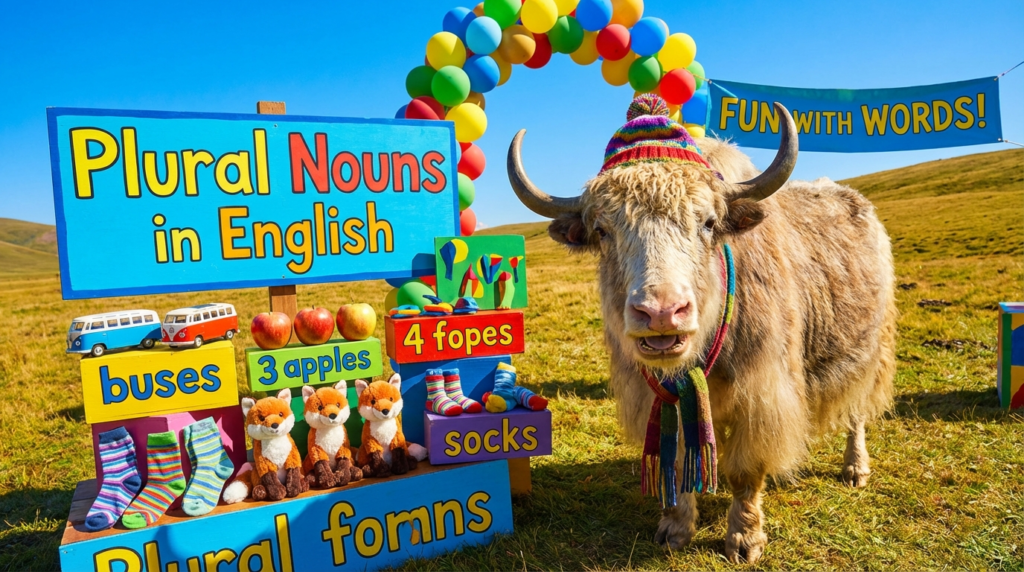
Most Common English Nouns is built for learners who want a clear study sheet: pronunciation, meaning, and context in one place.
Ready for a quick language workout? This giant set of words is here to help you build everyday confidence, so scroll to the bottom for the free printable english vocabulary list list PDF and the free downloadable printable english list flashcards.
If you want to turn vocabulary into speech, try the Yak Yacker English lesson course. Lesson 1 is a friendly place to start before you tackle longer word lists.
Quick Quiz
The quiz is optional, but it’s a nice way to spot words you still need to learn.
Keep building your English
Choose a practical next step when you are ready.
Browse the Full List
| Word | IPA | Meaning | Example | Audio |
|---|---|---|---|---|
| sand | /sænd/ | very small pieces of rock on a beach | Play in the sand. | |
| Sandwich | /ˈsændwɪtʃ/ | Bread with food inside | I have a cheese sandwich. | |
| Saturday | /ˈsætərdeɪ/ | the sixth day of the week | I go to the park on Saturday. | |
| sausage | /ˈsɔsɪdʒ/ | a long piece of meat | I have a sausage for breakfast. | |
| scarf | /skɑrf/ | clothing worn around the neck | The scarf is warm. | |
| School | /skul/ | A place for learning | I go to school by bus. | |
| schools | /skuːlz/ | places where students learn | The city has many good schools. | |
| screen | /skrin/ | the flat part of a computer or TV | Look at the screen. | |
| sea | /si/ | a large area of salt water | Swim in the sea. | |
| second | /ˈsɛkənd/ | a very short time | It takes one second. | |
| Secretary | /ˈsɛkrəˌtɛri/ | A person who works in an office | She is a secretary. | |
| seller | /ˈselɚ/ | a person who sells something | The seller answered my questions kindly. | |
| sellers | /ˈsɛlərz/ | people who sell things | The sellers opened their shops early. | |
| Sentence | /ˈsɛntəns/ | A group of words | Write a sentence. | |
| sep | /sɛp/ | September; the ninth month of the year. | School starts in Sep for many children. | |
| September | /sɛpˈtɛmbər/ | The ninth month of the year | School starts in September. | |
| services | /ˈsɝːvəsɪz/ | help or work for others | The hotel offers many services. | |
| Shark | /ʃɑrk/ | A large dangerous fish | The shark is in the sea. | |
| Sharpener | /ˈʃɑrpənər/ | Used for pencils | Where is my sharpener? | |
| sheep | /ʃip/ | an animal with thick wool | The sheep is white. | |
| Shelf | /ʃɛlf/ | Used for keeping books | The book is on the shelf. | |
| ship | /ʃɪp/ | a large boat | The ship is on the sea. | |
| shipping | /ˈʃɪpɪŋ/ | sending goods to a buyer | Shipping is free for this book. | |
| shirt | /ʃɜrt/ | a piece of clothing for the upper body | He is wearing a shirt. | |
| shoe | /ʃu/ | clothing for the feet | My shoes are black. |