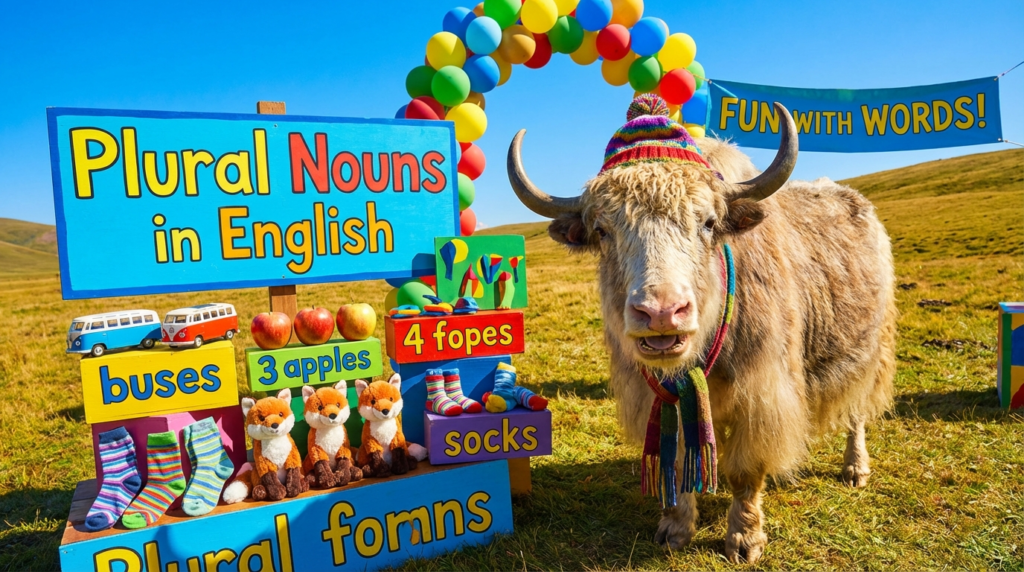
Most Common English Nouns is built for learners who want a clear study sheet: pronunciation, meaning, and context in one place.
Ready for a quick language workout? This giant set of words is here to help you build everyday confidence, so scroll to the bottom for the free printable english vocabulary list list PDF and the free downloadable printable english list flashcards.
If you want to turn vocabulary into speech, try the Yak Yacker English lesson course. Lesson 1 is a friendly place to start before you tackle longer word lists.
Quick Quiz
The quiz is optional, but it’s a nice way to spot words you still need to learn.
Keep building your English
Choose a practical next step when you are ready.
Browse the Full List
| Word | IPA | Meaning | Example | Audio |
|---|---|---|---|---|
| Costume | /ˈkɑstum/ | Clothes worn to look like someone else | I wore a pirate costume to the party. | |
| countries | /ˈkʌntriz/ | nations with their own governments | Many countries have different flags. | |
| country | /ˈkʌntri/ | a nation or land outside towns | I live in the country. | |
| Course | /kɔrs/ | A series of lessons | I am taking an English course. | |
| courses | /ˈkɔrsɪz/ | series of lessons on a subject | She takes English courses online. | |
| cousin | /ˈkʌzən/ | the child of your aunt or uncle | My cousin is playing with me. | |
| cow | /kaʊ/ | a large farm animal that gives milk | The cow is black and white. | |
| Cream | /kriːm/ | The thick part of milk | I like strawberries and cream. | |
| Cricket | /ˈkrɪkɪt/ | A game played with a bat and ball | Cricket is popular in England. | |
| crocodile | /ˈkrɑkəˌdaɪl/ | a large reptile with big teeth | The crocodile is green. | |
| cross | /krɔs/ | a mark with two lines crossing | Put a cross in the box. | |
| Crowd | /kraʊd/ | A large group of people | There was a big crowd at the stadium. | |
| Cucumber | /ˈkjukəmbər/ | A long green vegetable | I eat cucumber. | |
| cup | /kʌp/ | a small container for drinking | I drink tea from a cup. | |
| cupboard | /ˈkʌbərd/ | a piece of furniture with doors | The cups are in the cupboard. | |
| Curtain | /ˈkɜrtən/ | A piece of cloth used to cover a window | Please close the curtains; it's getting dark. | |
| Customer | /ˈkʌstəmər/ | A person who buys goods or services | The shop was full of customers. | |
| customers | /ˈkʌstəmɚz/ | people who buy things | The shop helps its customers quickly. | |
| Cycling | /ˈsaɪklɪŋ/ | Riding a bicycle | Cycling is fun. | |
| d | /diː/ | the fourth letter of the alphabet | D is in the word "dog". | |
| dad | /dæd/ | a father | My dad is tall. | |
| Damage | /ˈdæmɪdʒ/ | Physical harm caused to something | The storm caused a lot of damage. | |
| Dancer | /ˈdænsər/ | A person who dances | She is a professional ballet dancer. | |
| Dancing | /ˈdænsɪŋ/ | The activity of moving to music | We went dancing last night. | |
| Date | /deɪt/ | A specific day of the month | What is the date today? |