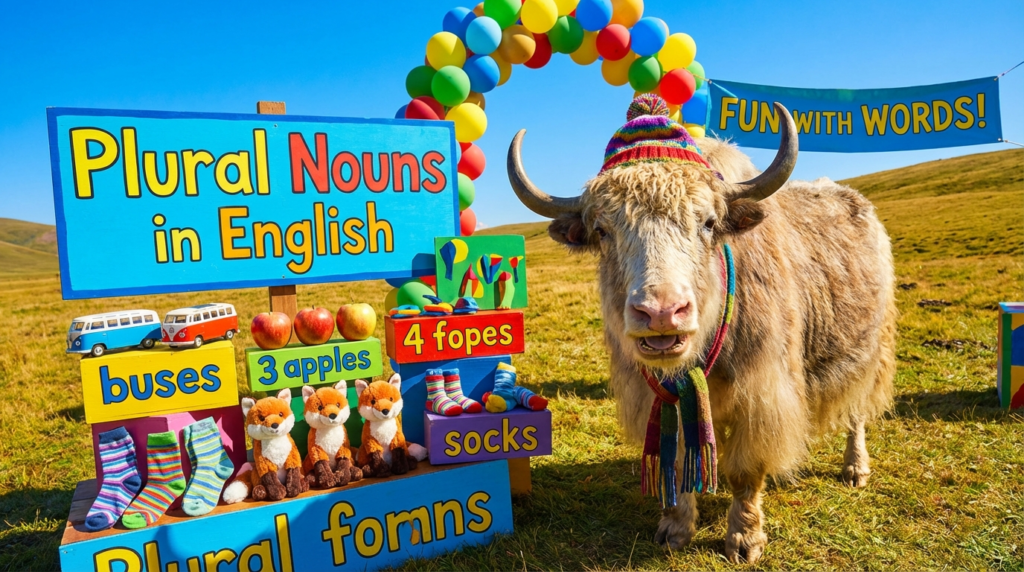
Most Common English Nouns is built for learners who want a clear study sheet: pronunciation, meaning, and context in one place.
Ready for a quick language workout? This giant set of words is here to help you build everyday confidence, so scroll to the bottom for the free printable english vocabulary list list PDF and the free downloadable printable english list flashcards.
If you want to turn vocabulary into speech, try the Yak Yacker English lesson course. Lesson 1 is a friendly place to start before you tackle longer word lists.
Quick Quiz
The quiz is optional, but it’s a nice way to spot words you still need to learn.
Keep building your English
Choose a practical next step when you are ready.
Browse the Full List
| Word | IPA | Meaning | Example | Audio |
|---|---|---|---|---|
| West | /wɛst/ | A direction | Go west. | |
| Whale | /weɪl/ | A very large sea animal | The whale is big. | |
| wind | /wɪnd/ | moving air | The wind is strong. | |
| window | /ˈwɪndoʊ/ | an opening in a wall | Open the window. | |
| windows | /ˈwɪndoʊz/ | glass openings in a wall | Please open the windows for fresh air. | |
| Wolf | /wʊlf/ | A wild dog | The wolf is grey. | |
| woman | /ˈwʊmən/ | an adult female human | The woman is nice. | |
| women | /ˈwɪmɪn/ | adult female people | The women are waiting outside. | |
| wood | /wʊd/ | material from trees | The table is made of wood. | |
| word | /wɜrd/ | a group of letters that has meaning | Spell the word. | |
| words | /wɝdz/ | units of language with meaning | She wrote three new words in her notebook. | |
| world | /wɜrld/ | the earth and all people | The world is big. | |
| Worm | /wɜrm/ | A long thin animal in soil | The worm is pink. | |
| x | /ɛks/ | the twenty-fourth letter of the alphabet | X is in the word "box". | |
| yahoo | /jəˈhu/ | a well-known internet company | He still uses his Yahoo email account. | |
| yard | /jɑrd/ | the area outside a house | Play in the yard. | |
| year | /jɪr/ | 12 months | I am 10 years old. | |
| years | /jɪrz/ | periods of twelve months | She lived there for two years. | |
| Yesterday | /ˈjɛstərˌdeɪ/ | The day before today | I was busy yesterday. | |
| Yogurt | /ˈjoʊgərt/ | A food made from milk | I eat yogurt. | |
| york | /jɔrk/ | a city name used in English | My friend visited York last summer. | |
| z | /zi/ | the letter Z | Z is the last letter of the alphabet. | |
| zebra | /ˈzibrə/ | an animal with black and white stripes | The zebra has stripes. | |
| zip | /zɪp/ | a fastener on clothes or bags | Please close the zip on your jacket. | |
| zoo | /zu/ | a place to see wild animals | See the lions at the zoo. |