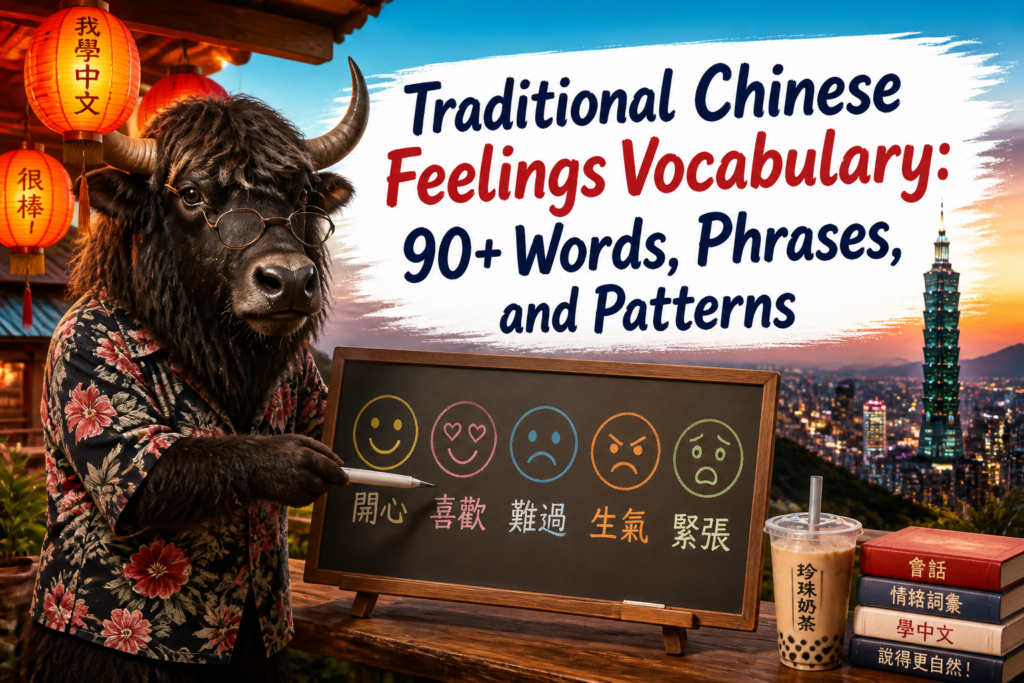
If feelings in English already get messy, Mandarin happily joins the chaos with style. Sometimes one word can mean “sad,” “upset,” “heartbroken,” or “my day is ruined because my drink spilled.” This guide gives you the useful Traditional Chinese feelings vocabulary you actually need, with pinyin, English meaning, and real example sentences so the words stop floating around like confused little balloons.
For the broader learning path, visit our parent guide.
By the end, you’ll be able to talk about moods, emotions, stress, surprise, worry, excitement, and more in natural Traditional Chinese. We’ll keep it practical, Taiwan-friendly, and free of weird textbook drama. Because nobody needs another sentence about a smiling student under a tree.
For a quick extra tool, you can also check the Traditional Chinese Vocabulary Test when you want to quiz yourself later, and the TOCFL placement test if you want to see where your Chinese level sits. Tiny ego boosts are allowed.
Everyday Feeling Words
| Traditional Chinese | Pinyin | Meaning | Example (ZH) | Example (Pinyin) | Translation (EN) |
|---|---|---|---|---|---|
| 開心 | kāixīn | happy; glad | 今天不用上班,我很開心。 | Jīntiān bú yòng shàngbān, wǒ hěn kāixīn. | I don’t have to work today, so I’m very happy. |
| 快樂 | kuàilè | happy; joyful | 祝你生日快樂! | Zhù nǐ shēngrì kuàilè! | Happy birthday! |
| 高興 | gāoxìng | glad; pleased | 很高興認識你。 | Hěn gāoxìng rènshi nǐ. | Nice to meet you. |
| 喜歡 | xǐhuān | to like | 我很喜歡喝珍珠奶茶。 | Wǒ hěn xǐhuān hē zhēnzhū nǎichá. | I really like drinking bubble tea. |
| 愛 | ài | to love | 我愛我的家人。 | Wǒ ài wǒ de jiārén. | I love my family. |
| 滿足 | mǎnzú | satisfied; content | 吃完熱炒後,我很滿足。 | Chī wán rèchǎo hòu, wǒ hěn mǎnzú. | After eating Taiwanese stir-fried dishes, I felt satisfied. |
| 舒服 | shūfu | comfortable; at ease | 坐在咖啡廳裡很舒服。 | Zuò zài kāfēitīng lǐ hěn shūfu. | Sitting in the café feels comfortable. |
| 平靜 | píngjìng | calm; peaceful | 她的聲音很平靜。 | Tā de shēngyīn hěn píngjìng. | Her voice is very calm. |
| 放鬆 | fàngsōng | relaxed; to relax | 週末我想在家放鬆。 | Zhōumò wǒ xiǎng zài jiā fàngsōng. | On the weekend, I want to relax at home. |
| 安心 | ānxīn | at ease; reassured | 聽到你平安回家,我就安心了。 | Tīngdào nǐ píng’ān huíjiā, wǒ jiù ānxīn le. | After hearing you got home safely, I felt relieved. |
| 期待 | qīdài | look forward to; expect | 我很期待明天的聚餐。 | Wǒ hěn qīdài míngtiān de jùcān. | I’m really looking forward to tomorrow’s gathering. |
| 興奮 | xīngfèn | excited; thrilled | 他聽到錄取消息後很興奮。 | Tā tīngdào lùqǔ xiāoxi hòu hěn xīngfèn. | He was thrilled after hearing the acceptance news. |
Notice that 喜歡 and 愛 are verbs, while words like 開心 and 快樂 are adjectives. Mandarin likes to mix emotions and grammar just enough to keep learners alert. Very considerate.
Sad, Down, and Upset Feelings
| Traditional Chinese | Pinyin | Meaning | Example (ZH) | Example (Pinyin) | Translation (EN) |
|---|---|---|---|---|---|
| 難過 | nánguò | sad; upset | 我聽到這個消息很難過。 | Wǒ tīngdào zhège xiāoxi hěn nánguò. | I feel very sad after hearing this news. |
| 傷心 | shāngxīn | heartbroken; sad | 她分手後很傷心。 | Tā fēnshǒu hòu hěn shāngxīn. | She was heartbroken after the breakup. |
| 失望 | shīwàng | disappointed | 我對結果有點失望。 | Wǒ duì jiéguǒ yǒudiǎn shīwàng. | I’m a little disappointed with the result. |
| 沮喪 | jǔsàng | discouraged; depressed | 考試考不好,他很沮喪。 | Kǎoshì kǎo bù hǎo, tā hěn jǔsàng. | He felt discouraged after doing badly on the test. |
| 低落 | dīluò | down; low | 今天心情有點低落。 | Jīntiān xīnqíng yǒudiǎn dīluò. | My mood is a bit low today. |
| 心煩 | xīnfán | bothered; irritated | 一直聽到噪音,我很心煩。 | Yìzhí tīngdào zàoyīn, wǒ hěn xīnfán. | Hearing noise all the time really bothers me. |
| 煩惱 | fánnǎo | worry; trouble | 他有很多工作煩惱。 | Tā yǒu hěn duō gōngzuò fánnǎo. | He has a lot of work worries. |
| 生氣 | shēngqì | angry | 媽媽看到我沒收衣服,很生氣。 | Māma kàndào wǒ méi shōu yīfu, hěn shēngqì. | Mom was angry when she saw I hadn’t taken in the clothes. |
| 氣死了 | qì sǐ le | so angry; furious | 他遲到三十分鐘,我快氣死了。 | Tā chídào sānshí fēnzhōng, wǒ kuài qì sǐ le. | He was 30 minutes late, and I was almost furious. |
| 委屈 | wěiqū | wronged; aggrieved | 我不是故意的,真的很委屈。 | Wǒ bú shì gùyì de, zhēn de hěn wěiqū. | I didn’t mean it; I really feel wronged. |
| 孤單 | gūdān | lonely | 一個人住的時候,有時候會很孤單。 | Yí gè rén zhù de shíhou, yǒushíhou huì hěn gūdān. | Living alone can sometimes feel lonely. |
| 寂寞 | jìmò | lonely; lonely and quiet | 晚上太安靜,我覺得有點寂寞。 | Wǎnshàng tài ānjìng, wǒ juéde yǒudiǎn jìmò. | It’s too quiet at night, and I feel a little lonely. |
Quick nuance: 難過 is the most common everyday “sad/upset” word in Taiwan. 傷心 is stronger and more emotional. 失望 is “disappointed,” not “sad” in general. That difference matters, even if your face is doing the same thing.
Stress, Anxiety, and Pressure
| Traditional Chinese | Pinyin | Meaning | Example (ZH) | Example (Pinyin) | Translation (EN) |
|---|---|---|---|---|---|
| 緊張 | jǐnzhāng | nervous; tense | 面試前我很緊張。 | Miànshì qián wǒ hěn jǐnzhāng. | I was nervous before the interview. |
| 壓力 | yālì | pressure | 最近工作壓力很大。 | Zuìjìn gōngzuò yālì hěn dà. | Work pressure has been heavy lately. |
| 焦慮 | jiāolǜ | anxious | 他對未來很焦慮。 | Tā duì wèilái hěn jiāolǜ. | He feels anxious about the future. |
| 擔心 | dānxīn | worried | 你不用擔心,我會幫你。 | Nǐ bú yòng dānxīn, wǒ huì bāng nǐ. | You don’t need to worry. I’ll help you. |
| 害怕 | hàipà | afraid; scared | 我有點害怕坐雲霄飛車。 | Wǒ yǒudiǎn hàipà zuò yúnxiāofēichē. | I’m a little scared to ride the roller coaster. |
| 恐懼 | kǒngjù | fear; terror | 他對狗有明顯的恐懼。 | Tā duì gǒu yǒu míngxiǎn de kǒngjù. | He has a clear fear of dogs. |
| 不安 | bù’ān | uneasy; restless | 聽到壞消息後,她很不安。 | Tīngdào huàixiāo xī hòu, tā hěn bù’ān. | After hearing the bad news, she felt uneasy. |
| 慌 | huāng | panicked; flustered | 看到手機不見了,我有點慌。 | Kàndào shǒujī bú jiàn le, wǒ yǒudiǎn huāng. | When I saw my phone was missing, I panicked a little. |
| 著急 | zháojí | anxious; worried in a hurry | 別著急,慢慢來。 | Bié zháojí, mànmàn lái. | Don’t rush. Take your time. |
| 煩躁 | fánzào | irritated; restless | 天氣太熱,我整個人都很煩躁。 | Tiānqì tài rè, wǒ zhěng ge rén dōu hěn fánzào. | The weather is too hot, and I feel irritated all over. |
| 受不了 | shòu bùliǎo | can’t stand it | 這個味道我真的受不了。 | Zhège wèidào wǒ zhēn de shòu bùliǎo. | I really can’t stand this smell. |
| 快瘋了 | kuài fēng le | almost crazy; overwhelmed | 工作太多,我快瘋了。 | Gōngzuò tài duō, wǒ kuài fēng le. | There’s too much work, and I’m going crazy. |
Surprise, Shock, and Real-Life Reactions
| Traditional Chinese | Pinyin | Meaning | Example (ZH) | Example (Pinyin) | Translation (EN) |
|---|---|---|---|---|---|
| 驚訝 | jīngyà | surprised | 他突然出現,我很驚訝。 | Tā túrán chūxiàn, wǒ hěn jīngyà. | I was surprised when he suddenly showed up. |
| 嚇到 | xià dào | to be startled; shocked | 你不要突然叫我,我會嚇到。 | Nǐ bú yào túrán jiào wǒ, wǒ huì xià dào. | Don’t suddenly call out to me. I’ll get startled. |
| 震驚 | zhènjīng | shocked | 這個消息讓大家都很震驚。 | Zhège xiāoxi ràng dàjiā dōu hěn zhènjīng. | This news shocked everyone. |
| 意外 | yìwài | unexpected; surprising | 結果很意外。 | Jiéguǒ hěn yìwài. | The result was unexpected. |
| 傻眼 | shǎyǎn | speechless; stunned | 看到價格後,我直接傻眼。 | Kàndào jiàgé hòu, wǒ zhíjiē shǎyǎn. | After seeing the price, I was speechless. |
| 嚇死 | xià sǐ | to be scared to death | 那隻貓突然跳出來,嚇死我了。 | Nà zhī māo túrán tiào chūlái, xià sǐ wǒ le. | That cat suddenly jumped out and scared me to death. |
| 不敢相信 | bù gǎn xiāngxìn | can’t believe it | 我不敢相信他真的來了。 | Wǒ bù gǎn xiāngxìn tā zhēn de lái le. | I can’t believe he actually came. |
Useful Feeling Patterns
These patterns help you sound natural instead of just tossing vocabulary into a sentence and hoping grammar politely forgives you.
| Pattern | Meaning | Example (ZH) | Pinyin | English |
|---|---|---|---|---|
| 很 + feeling word | very / quite + emotion | 我今天很開心。 | Wǒ jīntiān hěn kāixīn. | I’m very happy today. |
| 有點 + feeling word | a little bit + emotion | 我有點緊張。 | Wǒ yǒudiǎn jǐnzhāng. | I’m a little nervous. |
| 對……很 + feeling word | feel a certain way about something | 我對這件事很失望。 | Wǒ duì zhè jiàn shì hěn shīwàng. | I’m disappointed about this matter. |
| 讓 + person + feeling word | make someone feel… | 這個消息讓我很安心。 | Zhège xiāoxi ràng wǒ hěn ānxīn. | This news made me feel relieved. |
| 覺得 + feeling word | feel / think that… | 我覺得很累,也有點煩。 | Wǒ juéde hěn lèi, yě yǒudiǎn fán. | I feel tired and also a bit annoyed. |
| 心情 + adjective | mood is… | 她今天心情很好。 | Tā jīntiān xīnqíng hěn hǎo. | Her mood is very good today. |
| 心裡 + feeling word | inside, emotionally | 我心裡很難過。 | Wǒ xīnlǐ hěn nánguò. | I feel sad inside. |
| 越來越 + feeling word | more and more… | 我越來越焦慮。 | Wǒ yuèláiyuè jiāolǜ. | I’m getting more and more anxious. |
If you want to connect feeling clauses more smoothly, the guide on linking connectors in Traditional Chinese is a useful next stop. Emotions and sentence glue go together more than most textbooks admit.
Emotions With 了, 很, And 不
Some feelings shift meaning depending on grammar. A tiny particle can change the whole mood. Mandarin does love a plot twist.
| Pattern | Meaning | Example (ZH) | Pinyin | English |
|---|---|---|---|---|
| 很 + adjective | natural way to say a state | 我很累。 | Wǒ hěn lèi. | I’m tired. |
| 不 + feeling word | not feeling… | 我不開心。 | Wǒ bù kāixīn. | I’m not happy. |
| 有點 + negative feeling | slightly negative state | 我有點不舒服。 | Wǒ yǒudiǎn bù shūfu. | I feel a little unwell. |
| 了 | change of state | 我不緊張了。 | Wǒ bù jǐnzhāng le. | I’m not nervous anymore. |
| 一下子就……了 | quick emotional change | 他一下子就生氣了。 | Tā yíxiàzi jiù shēngqì le. | He got angry very quickly. |
Tone And Usage Notes You Actually Need
- 高興 gāoxìng means “glad” or “pleased.” In everyday Taiwan speech, 開心 kāixīn is often more common for “happy.”
- 難過 nánguò is a very useful all-purpose word for sadness, upset feelings, or emotional discomfort.
- 擔心 dānxīn is “worry” as a verb. 擔心 can mean “to worry about” or “to be worried about.”
- 害怕 hàipà is fear. If you are 怕 pà something, that is shorter and very common in speech.
- 生氣 shēngqì is the standard “angry” word. 氣死了 qì sǐ le is expressive, casual, and a bit dramatic. Naturally.
- 兩 liǎng is used with counting: 兩個 liǎng ge. If you say 二個, it sounds odd in normal speech.
- 一 yī changes tone before fourth tones and sometimes before numbers in speech, like 一點 yìdiǎn in natural pronunciation.
More Useful Feelings And Near-Feelings
| Traditional Chinese | Pinyin | Meaning | Example (ZH) | Example (Pinyin) | Translation (EN) |
|---|---|---|---|---|---|
| 累 | lèi | tired | 我今天工作很累。 | Wǒ jīntiān gōngzuò hěn lèi. | I’m very tired from work today. |
| 疲倦 | píjuàn | exhausted; weary | 他看起來很疲倦。 | Tā kàn qǐlái hěn píjuàn. | He looks very weary. |
| 麻木 | mámù | numb; emotionally numb | 她已經對這件事麻木了。 | Tā yǐjīng duì zhè jiàn shì mámù le. | She is already numb to this matter. |
| 尷尬 | gāngà | awkward; embarrassed | 場面有點尷尬。 | Chǎngmiàn yǒudiǎn gāngà. | The situation is a little awkward. |
| 羞愧 | xiūkuì | ashamed | 他因為說謊而感到羞愧。 | Tā yīnwèi shuōhuǎng ér gǎndào xiūkuì. | He felt ashamed because he lied. |
| 內疚 | nèijiù | guilty | 我沒去幫忙,心裡有點內疚。 | Wǒ méi qù bāngmáng, xīnlǐ yǒudiǎn nèijiù. | I didn’t go help, so I feel a bit guilty. |
| 感動 | gǎndòng | moved; touched | 她聽完故事很感動。 | Tā tīng wán gùshì hěn gǎndòng. | She was very moved after hearing the story. |
| 佩服 | pèifú | admire | 我很佩服她的耐心。 | Wǒ hěn pèifú tā de nàixīn. | I really admire her patience. |
| 羨慕 | xiànmù | envy; admire with jealousy | 我很羨慕你會說三種語言。 | Wǒ hěn xiànmù nǐ huì shuō sān zhǒng yǔyán. | I envy you for speaking three languages. |
| 害羞 | hàixiū | shy | 她第一次上台,覺得很害羞。 | Tā dì yī cì shàngtái, juéde hěn hàixiū. | It was her first time on stage, and she felt shy. |
| 勇敢 | yǒnggǎn | brave | 你很勇敢,真的。 | Nǐ hěn yǒnggǎn, zhēn de. | You’re really brave. |
| 自在 | zìzài | comfortable; at ease | 跟朋友在一起,我很自在。 | Gēn péngyǒu zài yìqǐ, wǒ hěn zìzài. | When I’m with friends, I feel at ease. |
Mini Practice
Try these before scrolling on. Yes, the feelings police are watching.
- Change the sentence to “I’m a little nervous”: 我很緊張 → 我有點緊張。
- Change the sentence to “I’m not happy anymore”: 我很不開心 → 我不開心了。
- Translate: “I’m looking forward to the weekend.” → 我很期待週末。
- Translate: “This news made me sad.” → 這個消息讓我很難過。
- Swap the feeling word: 我對這件事很失望 → 我對這件事很生氣 / 很難過 / 很安心。
Want to build these into full sentences with pronouns and subject switching? A refresher on pronouns in Traditional Chinese can help keep “I,” “you,” and “he/she/they” from turning into soup.
Common Mistakes And Easy Fixes
| Mistake | Better Way | Why |
|---|---|---|
| 我是開心。 | 我很開心。 | Use 很 with adjectives like 開心. |
| 我有開心。 | 我很開心。 | 有 is not used for “I am happy.” |
| 我擔心你。 | 我擔心你。 | This one is actually correct. Good job. A rare success. |
| 我很擔心你。 | 我很擔心你。 | Also correct; it sounds stronger and more natural in speech. |
| 我怕到。 | 我嚇到了。 | 怕 is “afraid.” 嚇到 is “to get startled.” |
| 他讓我生氣。 | 他讓我很生氣。 | Need 很 or another intensifier in natural speech. |
| 我對這很喜歡。 | 我很喜歡這個。 | 對 is not needed here. |
If you want to keep building a solid everyday base, the lesson on Traditional Chinese basic words and phrases pairs nicely with this one. Feelings sound much better when your basic sentence structure is already behaving.
Quick Reference Summary
- Happy: 開心 kāixīn, 快樂 kuàilè, 高興 gāoxìng
- Sad / upset: 難過 nánguò, 傷心 shāngxīn, 失望 shīwàng
- Worried / nervous: 擔心 dānxīn, 緊張 jǐnzhāng, 焦慮 jiāolǜ
- Angry / irritated: 生氣 shēngqì, 煩躁 fánzào, 心煩 xīnfán
- Surprised: 驚訝 jīngyà, 傻眼 shǎyǎn, 震驚 zhènjīng
- Relieved / calm: 安心 ānxīn, 平靜 píngjìng, 放鬆 fàngsōng
- Useful patterns: 很 + feeling word, 有點 + feeling word, 讓 + person + feeling word
For a more test-style review, you can also use the TOCFL placement test. If you want a dull-but-useful reference for a standard dictionary check, the 教育部重編國語辭典修訂本 is about as official as it gets, which is perfect when you want the facts and absolutely no excitement.
Yak takeaway: feelings in Traditional Chinese are easier once you stop trying to force English grammar onto them. Learn the core words, watch the patterns, and your sentences will go from “uh… mood?” to actually sounding like a person. Not a robot. Not even a sad robot.