Internet abbreviations and meanings in Traditional Chinese

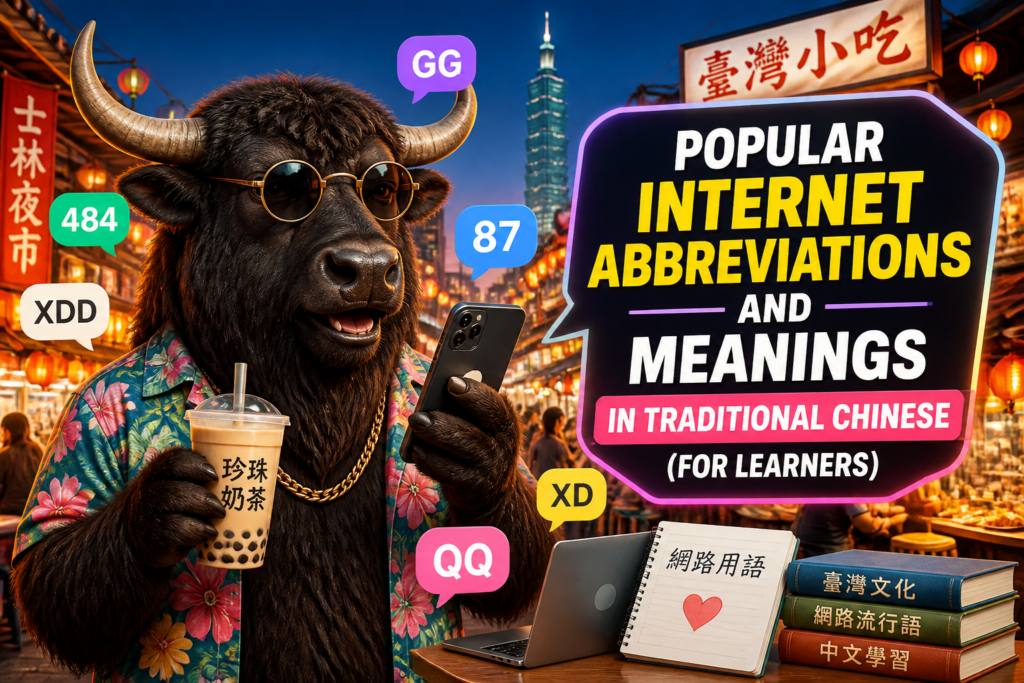
Popular Internet Abbreviations And Meanings In Traditional Chinese (For Learners)

If you read Taiwanese chats, comments, or game chats long enough, you will see tiny shorthand everywhere. People are lazy. Efficient, sure. Lazy, also yes. Internet abbreviations in Traditional Chinese can look confusing at first, but once you learn the common ones, online Mandarin becomes much easier to follow.

This guide teaches popular internet abbreviations in Traditional Chinese with pinyin, English meanings, and real example sentences. The examples use natural Taiwan-style Mandarin, so you are learning the kind of Chinese people actually type, not weird textbook robot Chinese.

By the end, you should be able to spot common chat abbreviations, understand casual online tone, and use a few of them without sounding like a confused auntie at a LINE group chat.

Quick Note Before We Start

Internet abbreviations in Traditional Chinese usually fall into a few patterns: English-style acronyms, number-based wordplay, emoji-like shorthand, and shortcuts for common phrases. Some are used in Taiwan, some are shared across Chinese-speaking spaces, and some are more common in gaming or social media.

For dictionary-style checking, you can also look at boring but useful references like Internet slang on Wikipedia, or compare your study progress with the Traditional Chinese vocabulary test and the Traditional Chinese placement test TOCFL.

Most Common Internet Abbreviations

Traditional ChinesePinyinMeaningExample (ZH)Example (Pinyin)Translation (EN)
XDn/alaughing face / very funny這個梗太好笑了,XDZhège gěng tài hǎoxiào le, XD.This meme is so funny, XD.
哭哭kū kūcry cry; mock sadness; “sob sob”我又遲到了,哭哭。Wǒ yòu chídào le, kū kū.I was late again, sob sob.
哈哈hā hāhaha; laugh哈哈,這也太誇張了。Hā hā, zhè yě tài kuāzhāng le.Haha, that is way too over the top.
QQn/acrying face; sad reaction假期結束了,QQ。Jiàqī jiéshù le, QQ.The holiday is over, QQ.
87bā qīidiot / silly person; online insult你怎麼那麼87?Nǐ zěnme nàme bāqī?Why are you so dumb?
4“death”; used jokingly online我看到這消息直接4了。Wǒ kàndào zhè xiāoxī zhíjiē sì le.I saw this news and instantly died inside.
ㄍㄧㄥgīngto force it; to push through; to keep going我先ㄍㄧㄥ一下,等下再休息。Wǒ xiān gīng yīxià, děngxià zài xiūxí.I’ll push through for a bit, then rest later.
kàodarn / damn; surprised reaction靠,這也太貴了吧。Kào, zhè yě tài guì le ba.Damn, this is way too expensive.
有梗yǒu gěngfunny; clever; meme-worthy這影片很有梗。Zhè yǐngpiàn hěn yǒu gěng.This video is really funny and clever.
léibad; disappointing; avoid it這家店很雷,不推薦。Zhè jiā diàn hěn léi, bù tuījiàn.This place is bad. Not recommended.
tuīrecommend; endorse這本書我很推。Zhè běn shū wǒ hěn tuī.I strongly recommend this book.
已讀yǐ dúseen; message read他已讀不回,超煩。Tā yǐdú bù huí, chāo fán.He read it but didn’t reply. So annoying.

Notice how some items are not really “abbreviations” in the classic sense. Online language is messy. That is part of the fun, and also part of the headache.

Abbreviations You Will See In Chats And Comments

Traditional ChinesePinyinMeaningExample (ZH)Example (Pinyin)Translation (EN)
méino; not have; often used in quick replies你要去嗎?沒。Nǐ yào qù ma? Méi.Are you going? No.
ńg / ēnokay; yes; casual acknowledgment嗯,我知道了。Ńg, wǒ zhīdào le.Okay, I know.
OKōu kēiokayOK,明天見。OK, míngtiān jiàn.Okay, see you tomorrow.
收到shōu dàoreceived; got it收到,我晚點處理。Shōudào, wǒ wǎndiǎn chǔlǐ.Got it, I’ll handle it later.
了解liǎo jiěunderstood了解,我再確認一下。Liǎojiě, wǒ zài quèrèn yīxià.Understood, I’ll double-check.
哈哈哈hā hā hāloud laughter哈哈哈,你也太會講了。Hā hā hā, nǐ yě tài huì jiǎng le.Hahaha, you’re really good at talking.
笑死xiào sǐliterally “laughed to death”; very funny這句話真的笑死我。Zhè jù huà zhēn de xiào sǐ wǒ.This sentence really cracked me up.
哭啊kū acrying; strong emotional reaction分數太低了,哭啊。Fēnshù tài dī le, kū a.The score is too low, cry.
母湯bōng-tāng / mǔ tāngTaiwanese internet slang for “don’t” or “not okay”這樣做真的母湯。Zhèyàng zuò zhēn de mǔ tāng.Doing that is really not okay.
真香zhēn xiāng“so good” after changing your mind我本來不吃,結果吃了之後真香。Wǒ běnlái bù chī, jiéguǒ chī le zhīhòu zhēn xiāng.I didn’t want to eat it at first, but after trying it, it was really good.

小提醒
Pinyin for online slang can be a little slippery, because some items are written more for sound and vibe than for formal spelling. That is normal. Internet language does not always care about your feelings, or your dictionary.

Popular Number And Letter Abbreviations

These are very common in Chinese internet language. Numbers are used because they can sound like words in Mandarin. It is basically wordplay with a keyboard and too much free time.

Traditional ChinesePinyinMeaningExample (ZH)Example (Pinyin)Translation (EN)
520wǔ èr língI love you520快樂!Wǔ èr líng kuàilè!Happy 520! / I love you!
1314yī sān yī sìfor a lifetime; forever我們要一直好下去,1314。Wǒmen yào yīzhí hǎo xiàqù, yī sān yī sì.We should keep getting along forever, 1314.
5201314wǔ èr líng yī sān yī sìI love you forever這組數字很常拿來告白,5201314。Zhè zǔ shùzì hěn cháng ná lái gàobái, wǔ èr líng yī sān yī sì.This number combo is often used to confess love, 5201314.
88bā bābye-bye我要先走了,88!Wǒ yào xiān zǒu le, bā bā!I have to go now, bye-bye!
666liù liù liùawesome; skillful; impressive你這操作很666。Nǐ zhè cāozuò hěn liù liù liù.Your move is awesome.
3Qsān kùthank you3Q你的幫忙。Sān kù nǐ de bāngmáng.Thanks for your help.
4nisì nǐ“die you” joking insult; not polite不要亂講啦,4ni喔?Búyào luàn jiǎng la, sì nǐ ō?Don’t talk nonsense, are you trying to “die you”?
886bā bā liùbye-bye; see you好啦,我先下線,886。Hǎo la, wǒ xiān xiàxiàn, bā bā liù.Alright, I’m logging off first, bye-bye.
99jiǔ jiǔhelp; save me; also “long long” in some contexts我快來不及了,99!Wǒ kuài láibují le, jiǔ jiǔ!I’m almost out of time, help!
95jiǔ wǔto save; rescue快95我,我忘記帶錢包。Kuài jiǔ wǔ wǒ, wǒ wàngjì dài qiánbāo.Help me quickly, I forgot my wallet.

Curious bit: 520 and 1314 are especially common in online gifting posts, romantic messages, and social media captions. If you see them together, the meaning is usually emotional, not mathematical. Romance has a weird relationship with arithmetic.

Taiwan Internet Slang That Learners Will Actually Hear

Some online words are especially common in Taiwan. These are useful because they also appear in speech, not just in text messages.

Traditional ChinesePinyinMeaningExample (ZH)Example (Pinyin)Translation (EN)
母湯mǔ tāngnot okay; don’t do that這樣熬夜真的母湯。Zhèyàng áoyè zhēn de mǔ tāng.Staying up late like that is really not okay.
森七七sēn qī qīvery angry; furious他一聽就森七七。Tā yī tīng jiù sēn qī qī.He got furious as soon as he heard it.
傻眼shǎ yǎnspeechless; stunned我看到價格直接傻眼。Wǒ kàndào jiàgé zhíjiē shǎyǎn.I was stunned when I saw the price.
很扯hěn chěridiculous; outrageous這消息也太扯了吧。Zhè xiāoxī yě tài chě le ba.This news is way too ridiculous.
白目bái mùinsensitive; tactless他有時候真的很白目。Tā yǒushíhòu zhēn de hěn báimù.He is really tactless sometimes.
雷包léi bāoproblematic person; troublemaker; poor performer那個隊友超雷包。Nàgè duìyǒu chāo léi bāo.That teammate was a total liability.
爆雷bào léispoiler; to spoil不要爆雷,我還沒看。Búyào bào léi, wǒ hái méi kàn.No spoilers, I haven’t watched it yet.
開箱kāi xiāngunboxing; to open and show something new我今天要開箱新耳機。Wǒ jīntiān yào kāixiāng xīn ěrjī.Today I’m unboxing my new headphones.
追劇zhuī jùbinge-watch a series我週末都在追劇。Wǒ zhōumò dōu zài zhuījù.I binge-watch shows every weekend.
洗版xǐ bǎnto flood a page; spam a feed這個話題已經洗版了。Zhège huàtí yǐjīng xǐ bǎn le.This topic has already flooded the feed.

Yak wisdom: If a word sounds funny, dramatic, and a little chaotic, it is probably online slang. If it looks like a math problem, it may also be romance. Chinese internet language likes to keep everyone slightly off balance.

Useful Chat Phrases With Real-Life Sentences

These are not always “abbreviations” in the strict sense, but they are part of everyday online communication. Learn them together, because internet Chinese is a whole mood, not a neat little grammar chapter.

Traditional ChinesePinyinMeaningExample (ZH)Example (Pinyin)Translation (EN)
已讀不回yǐ dú bù huíread but do not reply他已讀不回,我有點不爽。Tā yǐdú bù huí, wǒ yǒudiǎn bù shuǎng.He read it but didn’t reply, and I’m a bit annoyed.
先這樣xiān zhèyànglet’s stop here for now我先這樣,有空再聊。Wǒ xiān zhèyàng, yǒu kòng zài liáo.I’ll stop here for now. Let’s chat later.
有空再說yǒu kòng zài shuōwe’ll talk later when free這件事有空再說。Zhè jiàn shì yǒu kòng zài shuō.We’ll talk about this later when we have time.
先不要xiān bú yàonot right now這個我先不要。Zhège wǒ xiān bú yào.I don’t want this right now.
可以欸kě yǐ èsounds good; surprisingly okay這個方案可以欸。Zhège fāng’àn kěyǐ è.This plan actually works.
太扯了tài chě letoo ridiculous你竟然忘記帶手機,太扯了。Nǐ jìngrán wàngjì dài shǒujī, tài chě le.You actually forgot your phone. That’s ridiculous.
有夠yǒu gòuvery; super; extremely這家店有夠好吃。Zhè jiā diàn yǒu gòu hǎochī.This place is super delicious.
完全沒問題wánquán méi wèntíabsolutely no problem你明天來,完全沒問題。Nǐ míngtiān lái, wánquán méi wèntí.You can come tomorrow, absolutely no problem.
真的嗎zhēn de mareally?真的嗎?我第一次聽到。Zhēn de ma? Wǒ dì yī cì tīngdào.Really? This is my first time hearing it.
真的假的zhēn de jiǎ dereally? no way?真的假的,你要搬去台南?Zhēn de jiǎ de, nǐ yào bān qù Táinán?No way, you’re moving to Tainan?

How To Read Internet Abbreviations Without Panicking

Use this simple rule: look at the context first. If someone posts 88 at the end of a chat, it usually means “bye-bye.” If they post 520 on a romantic day, it probably means “I love you.” If someone says , they are warning you that something is bad or disappointing.

In other words, the meaning is often not literal. Online Chinese loves short forms, jokes, and sound-based shortcuts. If you try to translate every item word-for-word, you will suffer a little. Which is tradition, apparently.

PatternMeaningExample (ZH)PinyinEnglish
Number soundsNumbers stand for words with similar sound520 = 我愛你Wǔ èr líng = wǒ ài nǐ520 = I love you
Emoji-like lettersLetters show mood or facial expressionXD / QQXD / QQlaughing face / crying face
Taiwan slangCasual local wording in speech and text母湯、森七七、傻眼mǔ tāng, sēn qī qī, shǎ yǎnnot okay, furious, stunned
Short repliesFast chat answers收到、了解、OKshōu dào, liǎo jiě, OKgot it, understood, okay

Common Mistakes Learners Make

MistakeBetter VersionWhy
Thinking QQ is only a keyboard faceUse context to see sadness or complaintIt often means “crying” or “sad.”
Using 87 in serious conversationUse it only in casual online talkIt is playful or insulting, not formal.
Assuming 520 always means the date May 20Check the context for romanceIt often means “I love you.”
Translating 母湯 literallyUnderstand it as “don’t do that” or “not okay”It is slang, not standard textbook Mandarin.
Overusing slang too earlyStart by understanding firstUsing slang well takes timing. Otherwise it can sound awkward. Or suspiciously try-hard. Nobody wants that.
Pronunciation Tip: And In Fast Speech


yī → yì / yí depending on tone sandhi and context


bù → bú before a fourth tone

These tone changes show up in fast speech and everyday online phrases like 不是 (bú shì) and 不回 (bù huí). If you hear them in a chat video or voice message, that is normal. Mandarin likes to make simple things slightly annoying, just to stay in shape.

Mini Practice

Try these quick drills. Say the meaning out loud before checking the answer. Yes, out loud. Silent learning is fine, but your brain remembers better when you actually use your mouth.

  • 1. What does 88 usually mean in chat?
  • 2. What does 520 usually mean?
  • 3. What does 已讀不回 describe?
  • 4. What does 母湯 mean in Taiwan slang?
  • 5. What does QQ express?

Answers: 1. bye-bye / see you, 2. I love you, 3. read but not reply, 4. not okay / don’t do that, 5. crying / sadness

Swap practice: Replace the English idea with the Chinese abbreviation you learned.

  • Goodbye → 88 / 886
  • I love you → 520
  • That is really bad / not okay → 母湯
  • Read but did not reply → 已讀不回
  • Very funny → XD or 笑死

Related Everyday Pages To Keep Studying

If you want more practical Traditional Chinese, these guides go well with internet slang. You will see real-life words in signs, short expressions, and everyday communication.

Also, if you are serious about checking your level, the TOCFL placement test can help you see where your reading stands. Internet slang is fun, but exams still exist. Rudely.

Quick Reference Summary

Traditional ChinesePinyinMeaning
XDn/alaughing face
QQn/acrying / sad
88bā bābye-bye
520wǔ èr língI love you
1314yī sān yī sìforever
已讀不回yǐ dú bù huíread but not reply
母湯mǔ tāngnot okay
森七七sēn qī qīfurious
傻眼shǎ yǎnstunned
tuīrecommend
léibad / disappointing
笑死xiào sǐvery funny

Yak takeaway: internet abbreviations in Traditional Chinese are a mix of sound, speed, and attitude. Learn the common ones, read the context, and suddenly chats stop looking like encrypted goblin messages.