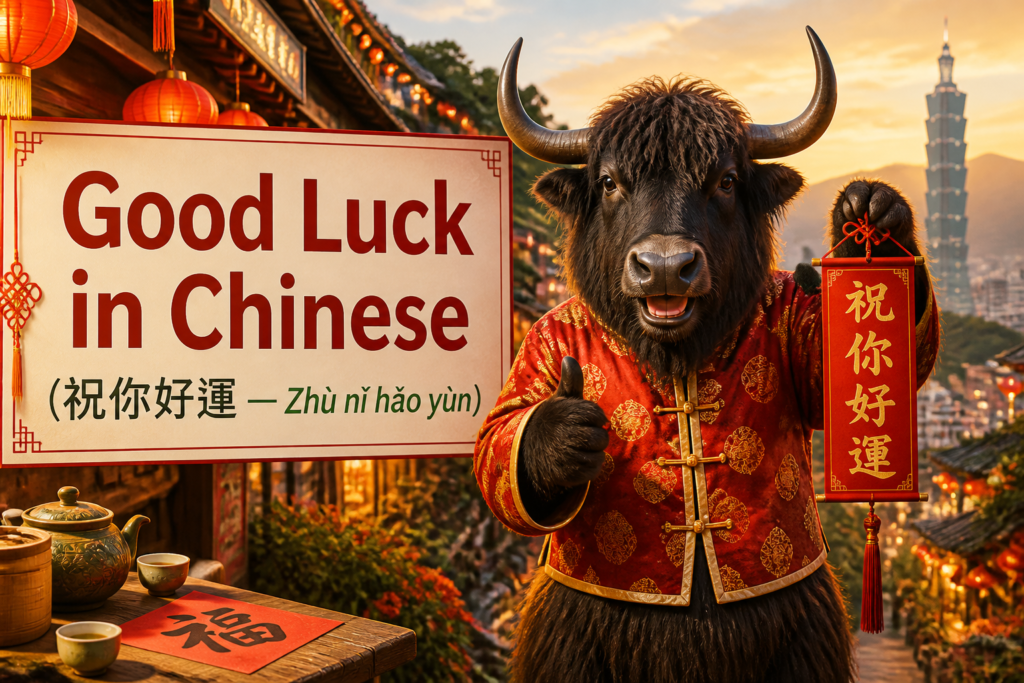
If you want to wish someone good luck in Traditional Chinese, 祝你好運 zhù nǐ hǎo yùn is the clean, direct version. It means “I wish you good luck.” Simple. Useful. Very hard to overthink—unless you are determined to make a one-line phrase into a life project.
For the broader learning path, visit our parent guide.
In real life, people in Taiwan also use lots of other lucky phrases depending on the moment: before an exam, before a job interview, before a trip, before a performance, or even before someone tries something slightly risky, like asking for a refund in person.
So this guide will show you how to say good luck in Traditional Chinese, how to use it naturally, and which phrases sound warmer, more casual, or more Taiwan-style.
If you want more practice after this, you can also check the Traditional Chinese Vocabulary Test or the Traditional Chinese Placement Test TOCFL.
Core Phrase: 祝你好運
祝你好運 zhù nǐ hǎo yùn = good luck to you / I wish you good luck.
This is the most straightforward way to say it. It works in many situations, and it is easy to remember because the meaning is almost exactly what it says.
| Traditional Chinese | Pinyin | Meaning | Example (ZH) | Example (Pinyin) | Translation (EN) |
|---|---|---|---|---|---|
| 祝你好運 | zhù nǐ hǎo yùn | I wish you good luck | 祝你好運,明天考試順利。 | Zhù nǐ hǎo yùn, míngtiān kǎoshì shùnlì. | Good luck, and I hope your exam goes smoothly tomorrow. |
| 祝你成功 | zhù nǐ chénggōng | I wish you success | 祝你成功,面試加油! | Zhù nǐ chénggōng, miànshì jiāyóu! | Wishing you success—good luck with the interview! |
| 祝你順利 | zhù nǐ shùnlì | I wish things go smoothly for you | 祝你一路順利。 | Zhù nǐ yílù shùnlì. | Wishing you a smooth trip. |
One small note: in Chinese, people often say 順利 shùnlì more than “luck” in everyday situations. It feels natural, practical, and not too dramatic. Very Taiwanese. Very normal. Very useful.
Everyday Good-Luck Phrases
Here are the phrases you will actually hear. Some are direct wishes. Some are encouragement. Some are the kind of thing you say because humans like comforting each other before stressful events.
| Traditional Chinese | Pinyin | Meaning | Example (ZH) | Example (Pinyin) | Translation (EN) |
|---|---|---|---|---|---|
| 加油 | jiāyóu | Come on / You’ve got this / Do your best | 明天要考試了,加油! | Míngtiān yào kǎoshì le, jiāyóu! | Your exam is tomorrow—do your best! |
| 祝福你 | zhùfú nǐ | I bless you / I wish you well | 我們都祝福你。 | Wǒmen dōu zhùfú nǐ. | We all wish you well. |
| 一路順風 | yílù shùnfēng | Have a safe trip / Bon voyage | 回台北路上一路順風。 | Huí Táiběi lùshàng yílù shùnfēng. | Have a safe trip back to Taipei. |
| 考試順利 | kǎoshì shùnlì | Good luck on your exam | 明天考試順利喔。 | Míngtiān kǎoshì shùnlì o. | Good luck on your exam tomorrow. |
| 工作順利 | gōngzuò shùnlì | Hope work goes smoothly | 新工作工作順利。 | Xīn gōngzuò gōngzuò shùnlì. | Hope your new job goes smoothly. |
| 面試順利 | miànshì shùnlì | Good luck with the interview | 祝你面試順利。 | Zhù nǐ miànshì shùnlì. | Good luck with your interview. |
| 演出順利 | yǎnchū shùnlì | Hope the performance goes well | 今天演出順利! | Jīntiān yǎnchū shùnlì! | Hope today’s performance goes well! |
| 旅途愉快 | lǚtú yúkuài | Have a pleasant journey | 祝你旅途愉快。 | Zhù nǐ lǚtú yúkuài. | Wishing you a pleasant trip. |
| 平安 | píng’ān | Safe and well | 希望你平安到家。 | Xīwàng nǐ píng’ān dào jiā. | I hope you arrive home safely. |
| 心想事成 | xīn xiǎng shì chéng | May all your wishes come true | 新年快樂,心想事成。 | Xīnnián kuàilè, xīn xiǎng shì chéng. | Happy New Year, and may all your wishes come true. |
| 萬事如意 | wàn shì rú yì | May everything go as you wish | 祝你萬事如意。 | Zhù nǐ wàn shì rú yì. | May everything go your way. |
| 旗開得勝 | qí kāi dé shèng | May you win right from the start | 比賽開始就旗開得勝。 | Bǐsài kāishǐ jiù qí kāi dé shèng. | May you win right from the beginning of the competition. |
When To Use Each Phrase
Chinese lucky phrases are not one-size-fits-all. If you use 加油 jiāyóu, you sound encouraging and warm. If you use 祝你好運 zhù nǐ hǎo yùn, you sound a little more direct. If you use 順利 shùnlì, you sound practical and natural.
| Phrase | Best For | Tone | Quick Note |
|---|---|---|---|
| 祝你好運 zhù nǐ hǎo yùn | General good luck | Neutral, direct | Good all-purpose phrase. |
| 加油 jiāyóu | Encouragement before effort | Warm, energetic | Very common in Taiwan. |
| 祝你順利 zhù nǐ shùnlì | Work, travel, tasks, events | Natural, kind | Often sounds more native than “luck.” |
| 考試順利 kǎoshì shùnlì | Exams | Specific, friendly | Great for students. |
| 一路順風 yílù shùnfēng | Traveling | Warm, polite | Used when someone is leaving. |
| 心想事成 xīn xiǎng shì chéng | New Year, celebrations | Festive | More formal or holiday-style. |
In Taiwan, 加油 jiāyóu is a powerhouse phrase. It can mean “good luck,” “hang in there,” “do your best,” or “you can do it.” One tiny phrase, many jobs. Efficient. Almost suspiciously efficient.
Useful Grammar Pieces Inside Lucky Phrases
To sound natural, it helps to know the little grammar bits that show up in these phrases. No need to panic. Mandarin grammar is not trying to steal your lunch money. It just likes compact expressions.
| Grammar Part | Meaning | Example | Pinyin | English |
|---|---|---|---|---|
| 祝 zhù | to wish | 祝你生日快樂。 | Zhù nǐ shēngrì kuàilè. | Happy birthday to you. |
| 你 nǐ | you | 祝你成功。 | Zhù nǐ chénggōng. | I wish you success. |
| 好運 hǎo yùn | good luck | 希望你有好運。 | Xīwàng nǐ yǒu hǎo yùn. | I hope you have good luck. |
| 順利 shùnlì | smoothly / go well | 今天一切順利。 | Jīntiān yīqiè shùnlì. | Everything goes smoothly today. |
| 加油 jiāyóu | to cheer on, encourage | 比賽快開始了,加油! | Bǐsài kuài kāishǐ le, jiāyóu! | The competition is about to start. Go for it! |
| 心想事成 xīn xiǎng shì chéng | wishes come true | 祝你心想事成。 | Zhù nǐ xīn xiǎng shì chéng. | May all your wishes come true. |
Notice how 祝你 zhù nǐ starts many wishes. It is basically the “I hope you…” machine in Chinese. Very handy. Very polite. Very repeatable.
Tone And Usage Notes
- 好運 hǎo yùn uses the third tone on 好 and the fourth tone on 運.
- 祝你 zhù nǐ is a full phrase, and it often sounds more formal or written than 加油 jiāyóu.
- 順利 shùnlì is extremely common in Taiwan for exams, work, travel, and daily tasks.
- 加油 jiāyóu is not literally “put gasoline,” even though the characters say that. Mandarin enjoys being a little weird like that.
- 一路順風 yílù shùnfēng is for someone leaving or traveling, not for every situation.
Also, do not worry if a phrase feels “too direct” in English. Chinese good-luck expressions often sound shorter and more flexible than English equivalents. That is normal.
Real-Life Examples You Can Actually Use
Here are natural examples in everyday Taiwan-style situations. These are the kind of lines people actually say before school, work, travel, or a slightly stressful social event.
| Traditional Chinese | Pinyin | English Meaning |
|---|---|---|
| 明天面試,祝你好運! | Míngtiān miànshì, zhù nǐ hǎo yùn! | You have an interview tomorrow—good luck! |
| 考試要到了,加油! | Kǎoshì yào dào le, jiāyóu! | The exam is coming up—do your best! |
| 祝你工作順利。 | Zhù nǐ gōngzuò shùnlì. | Wishing you smooth work / good luck at work. |
| 今天演出順利喔! | Jīntiān yǎnchū shùnlì o! | Hope the performance goes well today! |
| 一路順風,到了再跟我說。 | Yílù shùnfēng, dào le zài gēn wǒ shuō. | Have a safe trip, and message me when you arrive. |
| 祝你心想事成。 | Zhù nǐ xīn xiǎng shì chéng. | May all your wishes come true. |
| 希望你今天一切順利。 | Xīwàng nǐ jīntiān yīqiè shùnlì. | I hope everything goes smoothly for you today. |
| 比賽加油! | Bǐsài jiāyóu! | Good luck with the competition! |
| 新年快樂,萬事如意。 | Xīnnián kuàilè, wàn shì rú yì. | Happy New Year, and may everything go your way. |
| 祝你旅途愉快。 | Zhù nǐ lǚtú yúkuài. | Wishing you a pleasant trip. |
Yak wisdom: In Chinese, “good luck” is often less about random fortune and more about wishing someone smooth progress. Life is apparently a road, not a slot machine.
Common Mistakes And Fixes
| Mistake | Better | Why |
|---|---|---|
| 我祝你有好運 | 祝你好運 / 希望你有好運 | 祝你好運 is cleaner and more natural. |
| 加汽油 meaning encouragement | 加油 | 加油 is the set phrase for encouragement. No extra fuel station drama needed. |
| Using 祝你好運 for everything | Use 加油, 順利, or 一路順風 when suitable | Different situations call for different phrases. |
| 祝你順利 for a trip without context | 一路順風 or 旅途愉快 | These sound more natural for travel. |
| Dropping the tone marks in study materials | Write zhù nǐ hǎo yùn | Tone marks help pronunciation and learning. |
A lot of learners memorize 祝你好運 and then try to force it into every situation. That works… until it doesn’t. For example, before an exam, 加油 often sounds more natural. For a trip, 一路順風 is a better fit. Context is doing a lot of work here.
Short Practice
Try these quick swaps. No need to be fancy. The goal is to make your brain stop treating each phrase like a separate mythical creature.
| English | Try In Chinese | Answer |
|---|---|---|
| Good luck! | _____ _____ _____ | 祝你好運 zhù nǐ hǎo yùn |
| Do your best! | _____ _____ | 加油 jiāyóu |
| Have a smooth exam. | _____ _____ _____ | 考試順利 kǎoshì shùnlì |
| Have a safe trip. | _____ _____ _____ | 一路順風 yílù shùnfēng |
| May all your wishes come true. | _____ _____ _____ _____ | 心想事成 xīn xiǎng shì chéng |
Now try making your own sentence:
祝你____。 Zhù nǐ ________. = “Wishing you ______.”
Examples:
| Traditional Chinese | Pinyin | English |
|---|---|---|
| 祝你考試順利。 | Zhù nǐ kǎoshì shùnlì. | Good luck with your exam. |
| 祝你旅行愉快。 | Zhù nǐ lǚxíng yúkuài. | Have a pleasant trip. |
| 祝你今天面試成功。 | Zhù nǐ jīntiān miànshì chénggōng. | Wishing you success in today’s interview. |
Related Phrases For Greetings And Everyday Politeness
If you are building a practical Mandarin phrase set, it helps to learn the nearby “daily language” items too. Good luck phrases live in the same neighborhood as greetings, farewells, and friendly small talk. Yes, language has neighborhoods. Stay with it.
- Good Morning in Traditional Chinese
- Good Afternoon in Traditional Chinese
- Good Night in Traditional Chinese
These are especially useful if you want to make your Mandarin sound warmer and more natural in daily conversation, not just textbook-correct.
Quick Reference Summary
| Phrase | Pinyin | Meaning | Best Use |
|---|---|---|---|
| 祝你好運 | zhù nǐ hǎo yùn | Good luck | General good-luck wish |
| 加油 | jiāyóu | Do your best / You’ve got this | Encouragement |
| 祝你順利 | zhù nǐ shùnlì | Hope it goes smoothly | Work, tasks, events |
| 考試順利 | kǎoshì shùnlì | Good luck on your exam | Students |
| 一路順風 | yílù shùnfēng | Have a safe trip | Travel and leaving |
| 心想事成 | xīn xiǎng shì chéng | May your wishes come true | Festive / formal wishes |
| 萬事如意 | wàn shì rú yì | May everything go your way | New Year / celebrations |
One last useful reminder: if you are not sure which phrase fits, 加油 jiāyóu and 祝你順利 zhù nǐ shùnlì are both safe, warm choices in many everyday situations. And if someone is leaving, 一路順風 yílù shùnfēng does the job beautifully.
Yak takeaway: In Traditional Chinese, “good luck” is not just 祝你好運 zhù nǐ hǎo yùn. In real life, 加油, 順利, and 一路順風 often sound even more natural. Learn the phrase, learn the situation, and suddenly your Mandarin stops sounding like a dictionary wearing a tie.