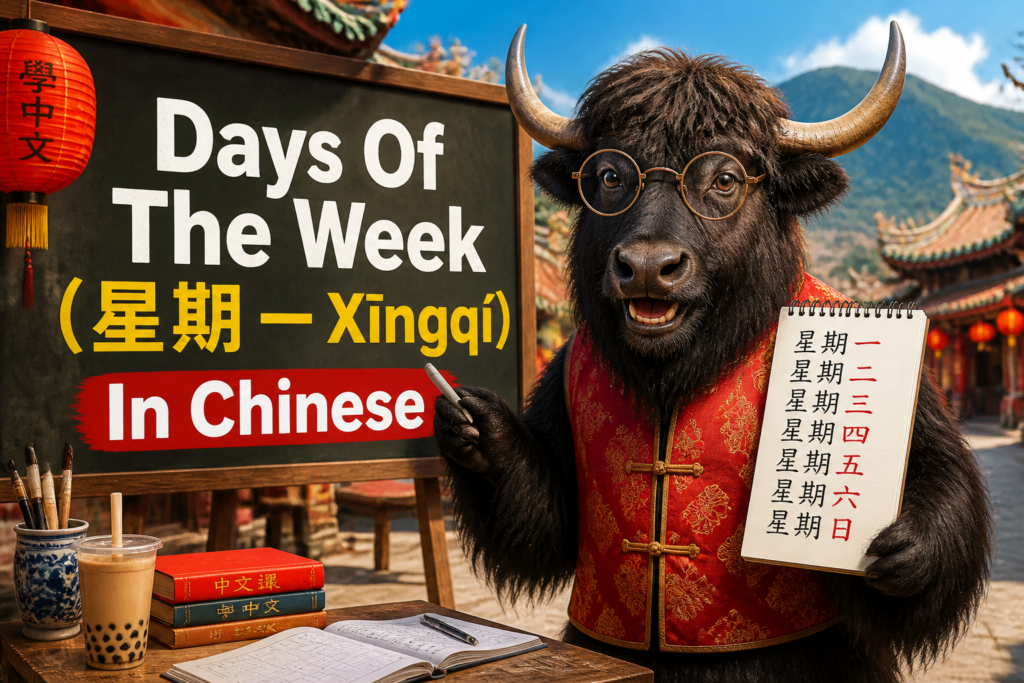
星期(xīngqí)is one of those everyday Chinese topics that looks simple until you actually need to say “Thursday” and suddenly your brain stages a small protest. The good news: Chinese weekday names are very logical, very learnable, and much less dramatic than they first appear.
For the broader learning path, visit our parent guide.
In Traditional Chinese, weekdays are built around a clean pattern: 星期 + number. So once you know the numbers, the whole week opens up like a neat little calendar drawer. No secret ritual. No weird exceptions. Mandarin rarely gives you that kind of mercy, so enjoy it.
By the end of this guide, you’ll know how to say each day of the week in Traditional Chinese, how to use them in real sentences, and how to avoid the classic “Wait, is Sunday day 1 or day 7?” confusion.
Core Pattern: 星期 + Number
The most common weekday pattern in Taiwan Mandarin is:
| Pattern | Meaning | Example (ZH) | Pinyin | English |
|---|---|---|---|---|
| 星期 + 一 | Monday | 星期一是上班日。 | xīngqí yī shì shàngbān rì. | Monday is a work day. |
| 星期 + 二 | Tuesday | 星期二我有中文課。 | xīngqí èr wǒ yǒu Zhōngwén kè. | I have Chinese class on Tuesday. |
| 星期 + 三 | Wednesday | 星期三通常很忙。 | xīngqí sān tōngcháng hěn máng. | Wednesday is usually busy. |
| 星期 + 四 | Thursday | 星期四要交作業。 | xīngqí sì yào jiāo zuòyè. | Homework is due on Thursday. |
| 星期 + 五 | Friday | 星期五晚上去夜市。 | xīngqí wǔ wǎnshàng qù yèshì. | Go to the night market on Friday night. |
| 星期 + 六 | Saturday | 星期六我們想睡晚一點。 | xīngqí liù wǒmen xiǎng shuì wǎn yī diǎn. | On Saturday, we want to sleep in a little. |
| 星期 + 天/日 | Sunday | 星期天我通常休息。 | xīngqí tiān wǒ tōngcháng xiūxí. | On Sunday, I usually rest. |
In Taiwan, you’ll hear 星期天 and 星期日. Both mean Sunday. 星期天 is often the more casual, everyday choice. If you’re talking to friends, family, or classmates, that’s the safer one.
Yak Tip: In Chinese, weekdays are not a mystery box. They are basically numbers wearing calendar clothes.
The Weekday Names
Here are the most useful weekday words in one place. Notice the pattern: 一, 二, 三, 四, 五, 六. Then Sunday is the odd one out, because of course it is.
| Traditional Chinese | Pinyin | Meaning | Example (ZH) | Example (Pinyin) | Translation (EN) |
|---|---|---|---|---|---|
| 星期一 | xīngqí yī | Monday | 星期一我早上有會議。 | xīngqí yī wǒ zǎoshang yǒu huìyì. | I have a meeting on Monday morning. |
| 星期二 | xīngqí èr | Tuesday | 星期二你有空嗎? | xīngqí èr nǐ yǒu kòng ma? | Are you free on Tuesday? |
| 星期三 | xīngqí sān | Wednesday | 星期三我想去圖書館。 | xīngqí sān wǒ xiǎng qù túshūguǎn. | I want to go to the library on Wednesday. |
| 星期四 | xīngqí sì | Thursday | 星期四我們要考試。 | xīngqí sì wǒmen yào kǎoshì. | We have a test on Thursday. |
| 星期五 | xīngqí wǔ | Friday | 星期五下班後去吃飯。 | xīngqí wǔ xiàbān hòu qù chī fàn. | Go eat after work on Friday. |
| 星期六 | xīngqí liù | Saturday | 星期六我想睡到自然醒。 | xīngqí liù wǒ xiǎng shuì dào zìrán xǐng. | I want to sleep until I wake up naturally on Saturday. |
| 星期天 | xīngqí tiān | Sunday | 星期天常常是家人時間。 | xīngqí tiān chángcháng shì jiārén shíjiān. | Sunday is often family time. |
Useful Words And Phrases For Talking About Days
Weekdays usually show up with date words, schedules, plans, and invitations. Here are the phrases you’ll actually use instead of just nodding politely and pretending you understood the calendar.
| Traditional Chinese | Pinyin | English Meaning | Example Sentence |
|---|---|---|---|
| 禮拜一 | lǐbài yī | Monday | 禮拜一開始上班。 |
| 禮拜五 | lǐbài wǔ | Friday | 禮拜五晚上最適合聚餐。 |
| 這個星期 | zhè ge xīngqí | this week | 這個星期我很忙。 |
| 下個星期 | xià ge xīngqí | next week | 下個星期我們再約。 |
| 上個星期 | shàng ge xīngqí | last week | 上個星期我去了台北。 |
| 哪一天 | nǎ yì tiān | which day | 你想約哪一天? |
| 週末 | zhōumò | weekend | 週末我想休息。 |
| 平日 | píngrì | weekday; regular days | 平日比較容易訂位。 |
| 工作日 | gōngzuòrì | workday | 工作日不要約太晚。 |
| 放假 | fàngjià | to have a holiday; to be off | 我星期五放假。 |
| 排班 | páibān | to make a work schedule | 我們要先看排班表。 |
A small Taiwan note: 禮拜(lǐbài)is very common in casual speech. You’ll hear 禮拜一, 禮拜二, and so on, especially in conversation. 星期 is also absolutely normal and widely used. Both are good. Mandarin, surprisingly, is not trying to trick you this time.
How To Ask “What Day Is It?”
If you want to ask the day of the week, the key question is:
| Traditional Chinese | Pinyin | Meaning | Example (ZH) | Example (Pinyin) | Translation (EN) |
|---|---|---|---|---|---|
| 今天星期幾? | jīntiān xīngqí jǐ? | What day of the week is it today? | 今天星期幾?我忘了。 | jīntiān xīngqí jǐ? wǒ wàng le. | What day is it today? I forgot. |
| 今天是星期幾? | jīntiān shì xīngqí jǐ? | What day is it today? | 今天是星期幾?是星期三。 | jīntiān shì xīngqí jǐ? shì xīngqí sān. | What day is it today? It is Wednesday. |
| 今天是禮拜幾? | jīntiān shì lǐbài jǐ? | What day is it today? casual | 今天是禮拜幾?我想一下。 | jīntiān shì lǐbài jǐ? wǒ xiǎng yí xià. | What day is it today? Let me think. |
Notice the word 幾(jǐ)here. It asks “which one” or “what number” in a limited set. For weekdays, it’s the standard choice. You are not asking for a random math problem. You are asking for a day.
How To Say When Something Happens
To talk about plans, just place the day before the action. Easy, clean, and blessedly not upside down.
| Pattern | Meaning | Example (ZH) | Pinyin | English |
|---|---|---|---|---|
| 星期 + day + verb | on X day, do something | 星期一我去上班。 | xīngqí yī wǒ qù shàngbān. | On Monday, I go to work. |
| 星期五晚上 | Friday night | 星期五晚上我想看電影。 | xīngqí wǔ wǎnshàng wǒ xiǎng kàn diànyǐng. | On Friday night, I want to watch a movie. |
| 星期六早上 | Saturday morning | 星期六早上我們去運動。 | xīngqí liù zǎoshang wǒmen qù yùndòng. | On Saturday morning, we go exercise. |
| 星期天中午 | Sunday noon | 星期天中午一起吃飯吧。 | xīngqí tiān zhōngwǔ yìqǐ chī fàn ba. | Let’s eat together on Sunday at noon. |
| 每個星期 | every week | 每個星期我都學中文。 | měi ge xīngqí wǒ dōu xué Zhōngwén. | I study Chinese every week. |
In Chinese, time expressions usually come before the verb. So 星期三我有課 is natural. It literally means “Wednesday I have class.” English needs a few extra helpers. Chinese just walks in and gets to the point.
Quick Meaning Differences: 星期, 禮拜, 週
These three all show up in real life. They overlap a lot, but there are small style differences.
| Traditional Chinese | Pinyin | Meaning | Common Use | Example |
|---|---|---|---|---|
| 星期 | xīngqí | week; weekday set | neutral, standard | 星期三我有空。 |
| 禮拜 | lǐbài | week; weekday set | very common in Taiwan speech | 禮拜三再見。 |
| 週 | zhōu | week | more formal, written, or in set phrases | 週三開會。 |
星期三, 禮拜三, and 週三 can all mean Wednesday. In everyday conversation in Taiwan, 禮拜三 is very natural. In writing, 週三 may look a bit more concise. 星期三 stays the safest all-purpose choice for learners.
One Important Pronunciation Note: 一 Changes Sound
When 一 is used in weekday names like 星期一, it is usually pronounced yī in careful speech, though in fast speech the tone may sound lighter depending on the sentence. For learners, the safest habit is simple: say xīngqí yī.
That matters because 一 also changes tone in other situations. Chinese likes tiny pronunciation rules that feel very important at 8 a.m. and slightly less important by lunch.
Useful Real-Life Sentences
Here are practical sentence patterns you can reuse immediately. Copy the structure, swap the day, and suddenly you sound much more alive in Mandarin.
| Traditional Chinese | Pinyin | English Meaning |
|---|---|---|
| 我星期一要上班。 | wǒ xīngqí yī yào shàngbān. | I have to work on Monday. |
| 你星期二有空嗎? | nǐ xīngqí èr yǒu kòng ma? | Are you free on Tuesday? |
| 我們星期三去吃火鍋。 | wǒmen xīngqí sān qù chī huǒguō. | We’re going to eat hot pot on Wednesday. |
| 星期四我有中文課。 | xīngqí sì wǒ yǒu Zhōngwén kè. | I have Chinese class on Thursday. |
| 星期五晚上去夜市最棒。 | xīngqí wǔ wǎnshàng qù yèshì zuì bàng. | Friday night is the best time to go to the night market. |
| 星期六早上我想睡覺。 | xīngqí liù zǎoshang wǒ xiǎng shuìjiào. | On Saturday morning, I want to sleep. |
| 星期天我們去看家人。 | xīngqí tiān wǒmen qù kàn jiārén. | We go see family on Sunday. |
| 這個星期很忙。 | zhè ge xīngqí hěn máng. | This week is very busy. |
| 下個星期再說。 | xià ge xīngqí zài shuō. | Let’s talk about it next week. |
| 上個星期我感冒了。 | shàng ge xīngqí wǒ gǎnmào le. | Last week I caught a cold. |
Grammar Mini Note: Time Goes First
Chinese often places time before the action:
- 星期一我上班。 = On Monday, I work.
- 下星期我們見面。 = Next week, we meet.
- 星期五晚上他要回台中。 = Friday night, he is going back to Taichung.
This order is very useful. It helps the listener understand when something happens before you even get to what happens. Efficient. Almost suspiciously efficient.
Practice: Swap The Day
Try changing only the day word. Keep the sentence pattern the same. That’s how real learners build speed without melting their brains.
- 星期一我有課。 → Change to Tuesday, Wednesday, Thursday, Friday, Saturday, or Sunday.
- 我們星期五去吃飯。 → Swap the day and keep the rest.
- 下個星期我很忙。 → Change 下個星期 to 這個星期 or 上個星期.
- 你星期天有空嗎? → Change the day and make a new question.
Example answers:
- 星期二我有課。
- 我們星期六去吃飯。
- 這個星期我很忙。
- 你星期三有空嗎?
Common Mistakes And Easy Fixes
| Mistake | Why It Happens | Fix | Better Example |
|---|---|---|---|
| Mixing up 星期天 and 星期日 | Both mean Sunday | Use 星期天 in casual speech; both are correct | 星期天我去買菜。 |
| Saying “Monday = day one” in a way that causes confusion | Different languages count differently | Memorize the Chinese sequence directly: 一二三四五六天 | 星期一、星期二、星期三… |
| Using 號 for weekdays | Mixing date and day words | Use 號 for month dates, not weekdays | 3月5號, but 星期三 |
| Putting the time phrase too late | English sentence order creeping in | Put the day first | 星期五我去台北。 |
| Forgetting 幾 in the question | English says “what day,” not “which number” | Use 星期幾 or 禮拜幾 | 今天星期幾? |
One more useful reminder: the weekday words are often used with calendars, schedules, and appointments. If you want help with dates too, check how to write the date in Traditional Chinese and the related guide for months of the year in Traditional Chinese.
Very Short Reference Summary
If your brain wants the quick version, here it is:
- 星期(xīngqí)= week / weekday set
- 禮拜(lǐbài)= week / weekday set, very common in Taiwan speech
- 星期一 = Monday
- 星期二 = Tuesday
- 星期三 = Wednesday
- 星期四 = Thursday
- 星期五 = Friday
- 星期六 = Saturday
- 星期天 / 星期日 = Sunday
- 今天星期幾? = What day is it today?
For a full-day learning path, it also helps to practice with a date topic and a speaking prompt. Try the related guides on asking what day it is in Traditional Chinese, then test yourself with the Traditional Chinese vocabulary test or the Traditional Chinese placement test for TOCFL.
Try Saying These Out Loud
- 星期一(xīngqí yī)= Monday
- 星期二(xīngqí èr)= Tuesday
- 星期三(xīngqí sān)= Wednesday
- 星期四(xīngqí sì)= Thursday
- 星期五(xīngqí wǔ)= Friday
- 星期六(xīngqí liù)= Saturday
- 星期天(xīngqí tiān)= Sunday
Once you can say the days smoothly, you can start making real plans, real schedules, and real excuses for why Wednesday is always somehow the busiest day. That’s the real universal language.
Yak Takeaway: Learn 星期 + number, and you’ve basically unlocked the week. Simple, tidy, and far less annoying than trying to remember seven unrelated words. For the boring official version of weekday structure in Chinese, a reliable place to peek is Wikipedia’s Days of the week page.