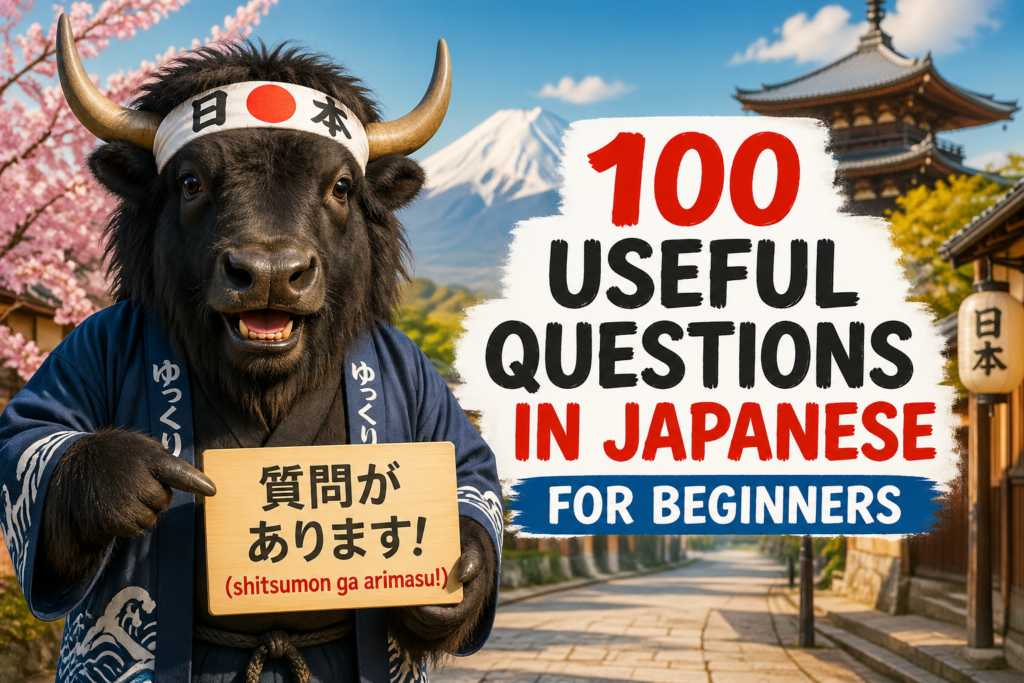
Questions are tiny language keys. One good question can unlock directions, food, friendships, help, train platforms, and the mystery of why every convenience store snack looks like it was designed by a genius with no sleep.
This guide gives you 100 useful beginner questions in Japanese, each with Rōmaji, clear English meaning, and a natural example answer. If you are still building your base, pair this with 100 Japanese words and phrases to start learning, then come back here and ask away like a polite little language goblin.
For more beginner structure, the main Learn Japanese page is a good home base.
How Japanese Questions Usually Work
In polite Japanese, many questions end with か ka. It works like a question mark you can hear. Japanese also drops words like “I” and “you” when the meaning is obvious, because Japanese enjoys being efficient and slightly mysterious.
ですか
desu ka
“Is it?” / “Are you?” / “Do you?” depending on the sentence. Context does the heavy lifting. Very Japanese. Very useful.
First Questions For Everyday Survival
| Question In Japanese | Rōmaji | English Meaning | Example Answer In Japanese | Answer Rōmaji | Answer Translation |
|---|---|---|---|---|---|
| これは何ですか。 | Kore wa nan desu ka. | What is this? | それはお箸です。 | Sore wa ohashi desu. | Those are chopsticks. |
| これはいくらですか。 | Kore wa ikura desu ka. | How much is this? | 五百円です。 | Gohyaku-en desu. | It is 500 yen. |
| トイレはどこですか。 | Toire wa doko desu ka. | Where is the bathroom? | あちらです。 | Achira desu. | It is over there. |
| 大丈夫ですか。 | Daijōbu desu ka. | Are you okay? / Is it okay? | はい、大丈夫です。 | Hai, daijōbu desu. | Yes, I am okay. |
| もう一度お願いします。 | Mō ichido onegai shimasu. | Could you say it one more time? | はい、もう一度言います。 | Hai, mō ichido iimasu. | Yes, I will say it again. |
| 英語を話せますか。 | Eigo o hanasemasu ka. | Can you speak English? | 少し話せます。 | Sukoshi hanasemasu. | I can speak a little. |
| 日本語が分かりますか。 | Nihongo ga wakarimasu ka. | Do you understand Japanese? | 少し分かります。 | Sukoshi wakarimasu. | I understand a little. |
| 手伝ってくれますか。 | Tetsudatte kuremasu ka. | Can you help me? | はい、手伝います。 | Hai, tetsudaimasu. | Yes, I will help. |
| 写真を撮ってもいいですか。 | Shashin o totte mo ii desu ka. | May I take a photo? | はい、いいですよ。 | Hai, ii desu yo. | Yes, that is okay. |
| ここに座ってもいいですか。 | Koko ni suwatte mo ii desu ka. | May I sit here? | はい、どうぞ。 | Hai, dōzo. | Yes, please go ahead. |
Names, Introductions, And Basic Personal Questions
For greetings before the questions begin, try ways to say hello in Japanese. A good hello makes every question sound less like an interrogation by a cheerful vending machine.
| Question In Japanese | Rōmaji | English Meaning | Example Answer In Japanese | Answer Rōmaji | Answer Translation |
|---|---|---|---|---|---|
| お名前は何ですか。 | Onamae wa nan desu ka. | What is your name? | 私の名前はユキです。 | Watashi no namae wa Yuki desu. | My name is Yuki. |
| どこから来ましたか。 | Doko kara kimashita ka. | Where did you come from? | アメリカから来ました。 | Amerika kara kimashita. | I came from America. |
| 出身はどこですか。 | Shusshin wa doko desu ka. | Where are you from? | 出身は大阪です。 | Shusshin wa Ōsaka desu. | I am from Osaka. |
| 何歳ですか。 | Nan-sai desu ka. | How old are you? | 二十歳です。 | Hatachi desu. | I am 20 years old. |
| 学生ですか。 | Gakusei desu ka. | Are you a student? | はい、学生です。 | Hai, gakusei desu. | Yes, I am a student. |
| 仕事は何ですか。 | Shigoto wa nan desu ka. | What is your job? | 教師です。 | Kyōshi desu. | I am a teacher. |
| どこに住んでいますか。 | Doko ni sunde imasu ka. | Where do you live? | 東京に住んでいます。 | Tōkyō ni sunde imasu. | I live in Tokyo. |
| 電話番号は何ですか。 | Denwa bangō wa nan desu ka. | What is your phone number? | 番号はこれです。 | Bangō wa kore desu. | The number is this. |
| メールアドレスは何ですか。 | Mēru adoresu wa nan desu ka. | What is your email address? | メールはこれです。 | Mēru wa kore desu. | My email is this. |
| また会えますか。 | Mata aemasu ka. | Can we meet again? | はい、また会いましょう。 | Hai, mata aimashō. | Yes, let’s meet again. |
Location And Direction Questions
| Question In Japanese | Rōmaji | English Meaning | Example Answer In Japanese | Answer Rōmaji | Answer Translation |
|---|---|---|---|---|---|
| 駅はどこですか。 | Eki wa doko desu ka. | Where is the station? | 駅は右です。 | Eki wa migi desu. | The station is on the right. |
| ここはどこですか。 | Koko wa doko desu ka. | Where am I? / Where is this? | ここは渋谷です。 | Koko wa Shibuya desu. | This is Shibuya. |
| 入口はどこですか。 | Iriguchi wa doko desu ka. | Where is the entrance? | 入口はあそこです。 | Iriguchi wa asoko desu. | The entrance is over there. |
| 出口はどこですか。 | Deguchi wa doko desu ka. | Where is the exit? | 出口は左です。 | Deguchi wa hidari desu. | The exit is on the left. |
| 近いですか。 | Chikai desu ka. | Is it near? | はい、とても近いです。 | Hai, totemo chikai desu. | Yes, it is very near. |
| 遠いですか。 | Tōi desu ka. | Is it far? | いいえ、遠くないです。 | Iie, tōku nai desu. | No, it is not far. |
| 歩いて行けますか。 | Aruite ikemasu ka. | Can I go on foot? | はい、歩いて行けます。 | Hai, aruite ikemasu. | Yes, you can walk there. |
| どの道ですか。 | Dono michi desu ka. | Which road is it? | この道です。 | Kono michi desu. | It is this road. |
| 地図がありますか。 | Chizu ga arimasu ka. | Do you have a map? | はい、地図があります。 | Hai, chizu ga arimasu. | Yes, there is a map. |
| ここで降りますか。 | Koko de orimasu ka. | Do I get off here? | はい、ここで降ります。 | Hai, koko de orimasu. | Yes, get off here. |
Time, Date, And Schedule Questions
| Question In Japanese | Rōmaji | English Meaning | Example Answer In Japanese | Answer Rōmaji | Answer Translation |
|---|---|---|---|---|---|
| 今、何時ですか。 | Ima, nan-ji desu ka. | What time is it now? | 今、三時です。 | Ima, san-ji desu. | It is three o’clock now. |
| 今日は何曜日ですか。 | Kyō wa nan-yōbi desu ka. | What day of the week is today? | 今日は月曜日です。 | Kyō wa getsuyōbi desu. | Today is Monday. |
| 明日は何日ですか。 | Ashita wa nan-nichi desu ka. | What date is tomorrow? | 明日は十日です。 | Ashita wa tōka desu. | Tomorrow is the tenth. |
| いつ行きますか。 | Itsu ikimasu ka. | When will you go? | 明日行きます。 | Ashita ikimasu. | I will go tomorrow. |
| 何時に始まりますか。 | Nan-ji ni hajimarimasu ka. | What time does it start? | 七時に始まります。 | Shichi-ji ni hajimarimasu. | It starts at seven. |
| 何時に終わりますか。 | Nan-ji ni owarimasu ka. | What time does it end? | 九時に終わります。 | Ku-ji ni owarimasu. | It ends at nine. |
| 今、時間がありますか。 | Ima, jikan ga arimasu ka. | Do you have time now? | はい、少しあります。 | Hai, sukoshi arimasu. | Yes, I have a little time. |
| 何分かかりますか。 | Nan-pun kakarimasu ka. | How many minutes does it take? | 十分かかります。 | Juppun kakarimasu. | It takes ten minutes. |
| 予約は何時ですか。 | Yoyaku wa nan-ji desu ka. | What time is the reservation? | 予約は六時です。 | Yoyaku wa roku-ji desu. | The reservation is at six. |
| 今日は忙しいですか。 | Kyō wa isogashii desu ka. | Are you busy today? | はい、少し忙しいです。 | Hai, sukoshi isogashii desu. | Yes, I am a little busy. |
Food, Drink, And Restaurant Questions
Japanese food questions are powerful. They protect you from ordering something mysterious, expensive, or still staring at you. A noble skill.
| Question In Japanese | Rōmaji | English Meaning | Example Answer In Japanese | Answer Rōmaji | Answer Translation |
|---|---|---|---|---|---|
| メニューはありますか。 | Menyū wa arimasu ka. | Do you have a menu? | はい、こちらです。 | Hai, kochira desu. | Yes, here it is. |
| おすすめは何ですか。 | Osusume wa nan desu ka. | What do you recommend? | おすすめはラーメンです。 | Osusume wa rāmen desu. | The recommendation is ramen. |
| これは辛いですか。 | Kore wa karai desu ka. | Is this spicy? | はい、少し辛いです。 | Hai, sukoshi karai desu. | Yes, it is a little spicy. |
| 水をください。 | Mizu o kudasai. | Can I have water? | はい、水です。 | Hai, mizu desu. | Yes, here is water. |
| これは何が入っていますか。 | Kore wa nani ga haitte imasu ka. | What is in this? | 卵が入っています。 | Tamago ga haitte imasu. | It has egg in it. |
| 肉が入っていますか。 | Niku ga haitte imasu ka. | Does it have meat? | いいえ、肉は入っていません。 | Iie, niku wa haitte imasen. | No, it does not have meat. |
| ベジタリアン料理はありますか。 | Bejitarian ryōri wa arimasu ka. | Do you have vegetarian food? | はい、あります。 | Hai, arimasu. | Yes, we have it. |
| 注文してもいいですか。 | Chūmon shite mo ii desu ka. | May I order? | はい、どうぞ。 | Hai, dōzo. | Yes, please go ahead. |
| お会計をお願いします。 | Okaikei o onegai shimasu. | Can I have the bill, please? | はい、少々お待ちください。 | Hai, shōshō omachi kudasai. | Yes, please wait a moment. |
| 持ち帰りできますか。 | Mochikaeri dekimasu ka. | Can I get this to go? | はい、持ち帰りできます。 | Hai, mochikaeri dekimasu. | Yes, takeout is possible. |
Shopping And Money Questions
| Question In Japanese | Rōmaji | English Meaning | Example Answer In Japanese | Answer Rōmaji | Answer Translation |
|---|---|---|---|---|---|
| カードは使えますか。 | Kādo wa tsukaemasu ka. | Can I use a card? | はい、使えます。 | Hai, tsukaemasu. | Yes, you can use it. |
| 現金だけですか。 | Genkin dake desu ka. | Is it cash only? | はい、現金だけです。 | Hai, genkin dake desu. | Yes, cash only. |
| 安いですか。 | Yasui desu ka. | Is it cheap? | はい、とても安いです。 | Hai, totemo yasui desu. | Yes, it is very cheap. |
| 高いですか。 | Takai desu ka. | Is it expensive? | いいえ、高くないです。 | Iie, takaku nai desu. | No, it is not expensive. |
| もっと大きいサイズはありますか。 | Motto ōkii saizu wa arimasu ka. | Do you have a bigger size? | はい、あります。 | Hai, arimasu. | Yes, we have one. |
| もっと小さいサイズはありますか。 | Motto chiisai saizu wa arimasu ka. | Do you have a smaller size? | すみません、ありません。 | Sumimasen, arimasen. | Sorry, we do not. |
| 試着してもいいですか。 | Shichaku shite mo ii desu ka. | May I try it on? | はい、どうぞ。 | Hai, dōzo. | Yes, please go ahead. |
| レシートをください。 | Reshīto o kudasai. | Can I have a receipt? | はい、レシートです。 | Hai, reshīto desu. | Yes, here is the receipt. |
| 袋はありますか。 | Fukuro wa arimasu ka. | Do you have a bag? | はい、袋があります。 | Hai, fukuro ga arimasu. | Yes, we have a bag. |
| これをください。 | Kore o kudasai. | Can I have this? | はい、かしこまりました。 | Hai, kashikomarimashita. | Yes, certainly. |
Understanding, Language, And Clarifying Questions
These are the questions that save conversations when your brain decides to buffer. For more rescue phrases, see how to say I don’t know and I don’t understand in Japanese.
| Question In Japanese | Rōmaji | English Meaning | Example Answer In Japanese | Answer Rōmaji | Answer Translation |
|---|---|---|---|---|---|
| これは日本語で何と言いますか。 | Kore wa Nihongo de nan to iimasu ka. | How do you say this in Japanese? | 日本語で「本」と言います。 | Nihongo de “hon” to iimasu. | In Japanese, we say “hon.” |
| これは英語で何ですか。 | Kore wa Eigo de nan desu ka. | What is this in English? | 英語で「book」です。 | Eigo de “book” desu. | In English, it is “book.” |
| どういう意味ですか。 | Dō iu imi desu ka. | What does it mean? | 「早い」は「quick」という意味です。 | “Hayai” wa “quick” to iu imi desu. | “Hayai” means “quick.” |
| もう少しゆっくり話してくれますか。 | Mō sukoshi yukkuri hanashite kuremasu ka. | Could you speak a little more slowly? | はい、ゆっくり話します。 | Hai, yukkuri hanashimasu. | Yes, I will speak slowly. |
| 書いてくれますか。 | Kaite kuremasu ka. | Could you write it? | はい、ここに書きます。 | Hai, koko ni kakimasu. | Yes, I will write it here. |
| 読んでくれますか。 | Yonde kuremasu ka. | Could you read it? | はい、読みます。 | Hai, yomimasu. | Yes, I will read it. |
| 漢字が分かりますか。 | Kanji ga wakarimasu ka. | Do you understand kanji? | 少し分かります。 | Sukoshi wakarimasu. | I understand a little. |
| 発音は合っていますか。 | Hatsuon wa atte imasu ka. | Is my pronunciation correct? | はい、合っています。 | Hai, atte imasu. | Yes, it is correct. |
| この言葉は丁寧ですか。 | Kono kotoba wa teinei desu ka. | Is this word polite? | はい、とても丁寧です。 | Hai, totemo teinei desu. | Yes, it is very polite. |
| 質問してもいいですか。 | Shitsumon shite mo ii desu ka. | May I ask a question? | はい、どうぞ。 | Hai, dōzo. | Yes, go ahead. |
People, Family, Work, And School Questions
If you want more building blocks for people, places, and things, the guide to Japanese nouns is a helpful next stop.
| Question In Japanese | Rōmaji | English Meaning | Example Answer In Japanese | Answer Rōmaji | Answer Translation |
|---|---|---|---|---|---|
| 家族は何人ですか。 | Kazoku wa nan-nin desu ka. | How many people are in your family? | 家族は四人です。 | Kazoku wa yo-nin desu. | There are four people in my family. |
| 兄弟がいますか。 | Kyōdai ga imasu ka. | Do you have siblings? | はい、妹がいます。 | Hai, imōto ga imasu. | Yes, I have a younger sister. |
| 友達はどこにいますか。 | Tomodachi wa doko ni imasu ka. | Where is your friend? | 友達は学校にいます。 | Tomodachi wa gakkō ni imasu. | My friend is at school. |
| 先生は誰ですか。 | Sensei wa dare desu ka. | Who is the teacher? | 田中先生です。 | Tanaka-sensei desu. | It is Teacher Tanaka. |
| 会社はどこですか。 | Kaisha wa doko desu ka. | Where is your company? | 会社は新宿です。 | Kaisha wa Shinjuku desu. | My company is in Shinjuku. |
| 何時に仕事に行きますか。 | Nan-ji ni shigoto ni ikimasu ka. | What time do you go to work? | 八時に行きます。 | Hachi-ji ni ikimasu. | I go at eight. |
| 学校は楽しいですか。 | Gakkō wa tanoshii desu ka. | Is school fun? | はい、楽しいです。 | Hai, tanoshii desu. | Yes, it is fun. |
| 同僚は親切ですか。 | Dōryō wa shinsetsu desu ka. | Are your coworkers kind? | はい、とても親切です。 | Hai, totemo shinsetsu desu. | Yes, they are very kind. |
| 今日は授業がありますか。 | Kyō wa jugyō ga arimasu ka. | Do you have class today? | はい、授業があります。 | Hai, jugyō ga arimasu. | Yes, I have class. |
| 明日働きますか。 | Ashita hatarakimasu ka. | Will you work tomorrow? | いいえ、休みます。 | Iie, yasumimasu. | No, I will rest. |
Likes, Hobbies, And Free Time Questions
Small talk gets much easier when you can ask about likes and hobbies. For a bigger list, visit hobbies in Japanese.
| Question In Japanese | Rōmaji | English Meaning | Example Answer In Japanese | Answer Rōmaji | Answer Translation |
|---|---|---|---|---|---|
| 何が好きですか。 | Nani ga suki desu ka. | What do you like? | 音楽が好きです。 | Ongaku ga suki desu. | I like music. |
| 好きな食べ物は何ですか。 | Suki na tabemono wa nan desu ka. | What is your favorite food? | 好きな食べ物は寿司です。 | Suki na tabemono wa sushi desu. | My favorite food is sushi. |
| 趣味は何ですか。 | Shumi wa nan desu ka. | What is your hobby? | 趣味は読書です。 | Shumi wa dokusho desu. | My hobby is reading. |
| 映画が好きですか。 | Eiga ga suki desu ka. | Do you like movies? | はい、映画が好きです。 | Hai, eiga ga suki desu. | Yes, I like movies. |
| 週末に何をしますか。 | Shūmatsu ni nani o shimasu ka. | What do you do on weekends? | 友達と会います。 | Tomodachi to aimasu. | I meet friends. |
| スポーツをしますか。 | Supōtsu o shimasu ka. | Do you play sports? | はい、テニスをします。 | Hai, tenisu o shimasu. | Yes, I play tennis. |
| 音楽を聞きますか。 | Ongaku o kikimasu ka. | Do you listen to music? | はい、毎日聞きます。 | Hai, mainichi kikimasu. | Yes, I listen every day. |
| 本を読みますか。 | Hon o yomimasu ka. | Do you read books? | はい、よく読みます。 | Hai, yoku yomimasu. | Yes, I read often. |
| 何を見たいですか。 | Nani o mitai desu ka. | What do you want to watch? | アニメを見たいです。 | Anime o mitai desu. | I want to watch anime. |
| 一緒に行きませんか。 | Issho ni ikimasen ka. | Would you like to go together? | はい、行きましょう。 | Hai, ikimashō. | Yes, let’s go. |
Travel, Hotel, And Transportation Questions
| Question In Japanese | Rōmaji | English Meaning | Example Answer In Japanese | Answer Rōmaji | Answer Translation |
|---|---|---|---|---|---|
| 切符はどこで買えますか。 | Kippu wa doko de kaemasu ka. | Where can I buy a ticket? | 駅で買えます。 | Eki de kaemasu. | You can buy it at the station. |
| この電車は京都に行きますか。 | Kono densha wa Kyōto ni ikimasu ka. | Does this train go to Kyoto? | はい、京都に行きます。 | Hai, Kyōto ni ikimasu. | Yes, it goes to Kyoto. |
| 次の電車は何時ですか。 | Tsugi no densha wa nan-ji desu ka. | What time is the next train? | 次の電車は十時です。 | Tsugi no densha wa jū-ji desu. | The next train is at ten. |
| この席は空いていますか。 | Kono seki wa aite imasu ka. | Is this seat open? | はい、空いています。 | Hai, aite imasu. | Yes, it is open. |
| タクシー乗り場はどこですか。 | Takushī noriba wa doko desu ka. | Where is the taxi stand? | 外にあります。 | Soto ni arimasu. | It is outside. |
| 空港までいくらですか。 | Kūkō made ikura desu ka. | How much is it to the airport? | 三千円ぐらいです。 | Sanzen-en gurai desu. | It is about 3,000 yen. |
| ホテルはどこですか。 | Hoteru wa doko desu ka. | Where is the hotel? | ホテルは駅の近くです。 | Hoteru wa eki no chikaku desu. | The hotel is near the station. |
| チェックインできますか。 | Chekku-in dekimasu ka. | Can I check in? | はい、できます。 | Hai, dekimasu. | Yes, you can. |
| 荷物を預けてもいいですか。 | Nimotsu o azukete mo ii desu ka. | May I leave my luggage? | はい、こちらで預かります。 | Hai, kochira de azukarimasu. | Yes, we will keep it here. |
| 観光案内所はどこですか。 | Kankō annaijo wa doko desu ka. | Where is the tourist information center? | 駅の中にあります。 | Eki no naka ni arimasu. | It is inside the station. |
Feelings, Health, And Help Questions
| Question In Japanese | Rōmaji | English Meaning | Example Answer In Japanese | Answer Rōmaji | Answer Translation |
|---|---|---|---|---|---|
| 気分はどうですか。 | Kibun wa dō desu ka. | How do you feel? | 気分はいいです。 | Kibun wa ii desu. | I feel good. |
| 疲れていますか。 | Tsukarete imasu ka. | Are you tired? | はい、少し疲れています。 | Hai, sukoshi tsukarete imasu. | Yes, I am a little tired. |
| お腹が空いていますか。 | Onaka ga suite imasu ka. | Are you hungry? | はい、お腹が空いています。 | Hai, onaka ga suite imasu. | Yes, I am hungry. |
| 喉が渇いていますか。 | Nodo ga kawaite imasu ka. | Are you thirsty? | はい、水が飲みたいです。 | Hai, mizu ga nomitai desu. | Yes, I want to drink water. |
| 寒いですか。 | Samui desu ka. | Is it cold? / Are you cold? | はい、少し寒いです。 | Hai, sukoshi samui desu. | Yes, it is a little cold. |
| 暑いですか。 | Atsui desu ka. | Is it hot? / Are you hot? | はい、とても暑いです。 | Hai, totemo atsui desu. | Yes, it is very hot. |
| 医者はどこですか。 | Isha wa doko desu ka. | Where is a doctor? | 病院は近くにあります。 | Byōin wa chikaku ni arimasu. | There is a hospital nearby. |
| 薬局はどこですか。 | Yakkyoku wa doko desu ka. | Where is the pharmacy? | 薬局は向こうです。 | Yakkyoku wa mukō desu. | The pharmacy is over there. |
| 救急車を呼んでくれますか。 | Kyūkyūsha o yonde kuremasu ka. | Can you call an ambulance? | はい、すぐ呼びます。 | Hai, sugu yobimasu. | Yes, I will call right away. |
| 何か問題がありますか。 | Nanika mondai ga arimasu ka. | Is there any problem? | いいえ、問題ありません。 | Iie, mondai arimasen. | No, there is no problem. |
Fast Question Words To Remember
These question words appear everywhere. Learn them early, and Japanese menus, signs, and conversations become much less “beautiful wall of mystery.”
| Question Word In Japanese | Rōmaji | English Meaning | Example In Japanese | Example Rōmaji | Example Translation |
|---|---|---|---|---|---|
| 何 | Nani / Nan | What | 何を食べますか。 | Nani o tabemasu ka. | What will you eat? |
| 誰 | Dare | Who | 誰と行きますか。 | Dare to ikimasu ka. | Who will you go with? |
| どこ | Doko | Where | どこに行きますか。 | Doko ni ikimasu ka. | Where will you go? |
| いつ | Itsu | When | いつ来ますか。 | Itsu kimasu ka. | When will you come? |
| どう | Dō | How | どう行きますか。 | Dō ikimasu ka. | How will you go? |
| どれ | Dore | Which one | どれが好きですか。 | Dore ga suki desu ka. | Which one do you like? |
Common Mistakes With Beginner Japanese Questions
| Mistake | Better Japanese | Rōmaji | Meaning |
|---|---|---|---|
| Using あなた anata too much | お名前は何ですか。 | Onamae wa nan desu ka. | What is your name? |
| Forgetting か ka in polite questions | 学生ですか。 | Gakusei desu ka. | Are you a student? |
| Using casual speech with strangers too early | どこですか。 | Doko desu ka. | Where is it? |
| Speaking too fast when asking for help | ゆっくりお願いします。 | Yukkuri onegai shimasu. | Slowly, please. |
Practice: Swap The Word
Use these patterns and swap one word. This is how beginner Japanese starts feeling less like memorizing and more like building tiny, useful robots.
| Pattern In Japanese | Rōmaji | Meaning | Swap Example In Japanese | Swap Rōmaji | Translation |
|---|---|---|---|---|---|
| ___はどこですか。 | ___ wa doko desu ka. | Where is ___? | 駅はどこですか。 | Eki wa doko desu ka. | Where is the station? |
| ___はありますか。 | ___ wa arimasu ka. | Do you have ___? / Is there ___? | メニューはありますか。 | Menyū wa arimasu ka. | Do you have a menu? |
| ___が好きですか。 | ___ ga suki desu ka. | Do you like ___? | 映画が好きですか。 | Eiga ga suki desu ka. | Do you like movies? |
| ___してもいいですか。 | ___ shite mo ii desu ka. | May I do ___? | 写真を撮ってもいいですか。 | Shashin o totte mo ii desu ka. | May I take a photo? |
Yak Takeaway
If you learn only one thing from these 100 Japanese questions, make it this: polite question patterns are reusable. Once you know どこですか doko desu ka, ありますか arimasu ka, and してもいいですか shite mo ii desu ka, you can survive a surprising number of real situations.
Start with ten questions you truly need, say them out loud, and use the example answers as your training wheels. Tiny questions, big language power. Very efficient. Very yak-approved.