Japanese Body Words Chart with Common Pain and Health Expressions
Learning body words in Japanese is one of those things that feels boring right up until your knee starts acting like a dramatic actor. Then suddenly, 頭 (atama) and お腹 (onaka) become very important very fast.
This guide keeps things practical. You will learn the most useful body parts, pain words, and health phrases in simple Japanese, with Rōmaji and English meaning. If you want to keep going after this, the larger learning path at Learn Japanese is a good place to continue the grind without making it weird.
And yes, Japanese speakers often describe pain in a direct, everyday way. No fancy drama needed. The body just hurts, and the language says so.
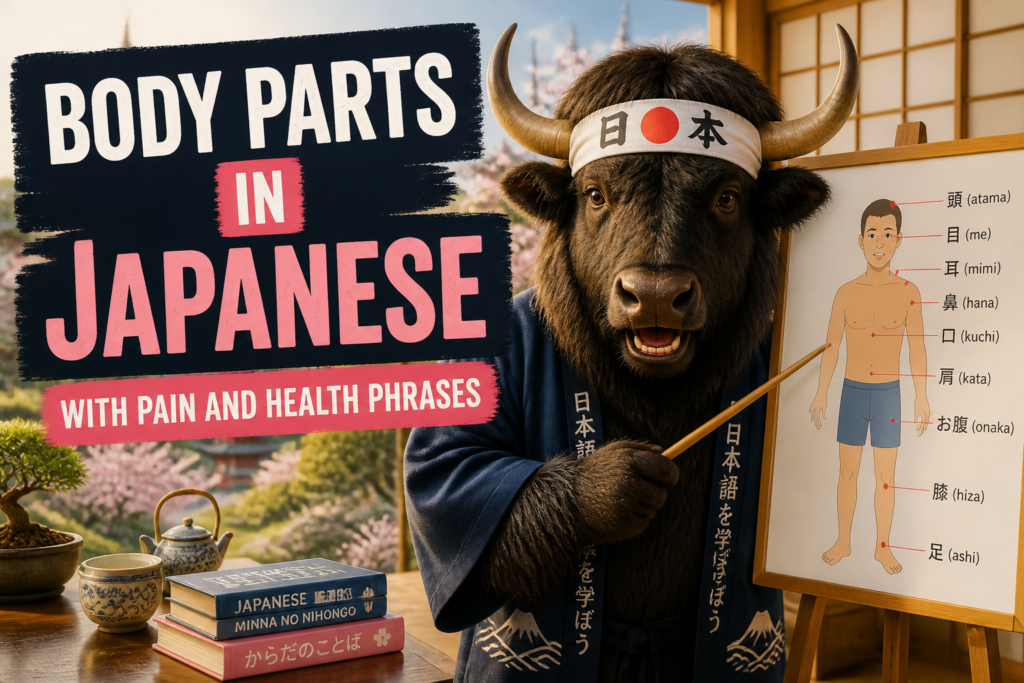
Common Body Words And Health Phrases
| Kanji | Rōmaji | English Meaning |
|---|---|---|
| 頭 | atama | head |
| 目 | me | eye |
| 耳 | mimi | ear |
| 鼻 | hana | nose |
| 口 | kuchi | mouth |
| 歯 | ha | tooth / teeth |
| 首 | kubi | neck |
| 肩 | kata | shoulder |
| 腕 | ude | arm |
| 手 | te | hand |
| 指 | yubi | finger |
| 胸 | mune | chest |
| 背中 | senaka | back |
| 腰 | koshi | lower back / waist |
| お腹 | onaka | stomach / belly |
| 足 | ashi | leg / foot |
| 膝 | hiza | knee |
| かかと | kakato | heel |
| 心 | kokoro | heart / mind |
| 体 | karada | body |
Useful Pain And Health Phrases
| Kanji | Rōmaji | English Meaning |
|---|---|---|
| 頭が痛い | atama ga itai | I have a headache / My head hurts |
| お腹が痛い | onaka ga itai | My stomach hurts |
| 歯が痛い | ha ga itai | I have a toothache |
| 喉が痛い | nodo ga itai | My throat hurts |
| 肩がこる | kata ga koru | My shoulders are stiff |
| 腰が痛い | koshi ga itai | My lower back hurts |
| 熱がある | netsu ga aru | I have a fever |
| 咳が出る | seki ga deru | I am coughing |
| 鼻水が出る | hanamizu ga deru | My nose is running |
| めまいがする | memai ga suru | I feel dizzy |
| 気分が悪い | kibun ga warui | I feel sick / I feel bad |
| 具合が悪い | guai ga warui | I am not feeling well |
| 病院へ行きます | byōin e ikimasu | I will go to the hospital |
| 薬を飲みます | kusuri o nomimasu | I will take medicine |
| 休みたいです | yasumitai desu | I want to rest |
頭が痛い (atama ga itai) is the classic one. Simple. Useful. No need to make a whole novel about your suffering.
具合が悪い (guai ga warui) is especially handy because it sounds polite and general. It works when you do not want to explain every miserable detail of your body’s betrayal.
Body Parts You Will Hear All The Time
| Kanji | Rōmaji | Meaning | Example (JP) | Rōmaji | English |
|---|---|---|---|---|---|
| 頭 | atama | head | 頭が痛いです。 | Atama ga itai desu. | My head hurts. |
| 目 | me | eye | 目が疲れました。 | Me ga tsukaremashita. | My eyes are tired. |
| 耳 | mimi | ear | 耳が痛いです。 | Mimi ga itai desu. | My ear hurts. |
| 鼻 | hana | nose | 鼻がつまっています。 | Hana ga tsumatte imasu. | My nose is blocked. |
| 口 | kuchi | mouth | 口を開けてください。 | Kuchi o akete kudasai. | Please open your mouth. |
| 歯 | ha | tooth / teeth | 歯が痛いです。 | Ha ga itai desu. | My tooth hurts. |
| 首 | kubi | neck | 首が回りません。 | Kubi ga mawarimasen. | I cannot turn my neck. |
| 肩 | kata | shoulder | 肩がこっています。 | Kata ga kotte imasu. | My shoulders are stiff. |
| 腕 | ude | arm | 腕をけがしました。 | Ude o kegashimashita. | I injured my arm. |
| 手 | te | hand | 手を洗いました。 | Te o araimashita. | I washed my hands. |
| 指 | yubi | finger | 指を切りました。 | Yubi o kirimashita. | I cut my finger. |
| 胸 | mune | chest | 胸が苦しいです。 | Mune ga kurushii desu. | My chest feels tight. |
| 背中 | senaka | back | 背中が痛いです。 | Senaka ga itai desu. | My back hurts. |
| 腰 | koshi | lower back / waist | 腰をひねりました。 | Koshi o hinemashita. | I twisted my lower back. |
| お腹 | onaka | stomach / belly | お腹がすきました。 | Onaka ga sukimashita. | I am hungry. |
| 足 | ashi | leg / foot | 足が痛いです。 | Ashi ga itai desu. | My leg/foot hurts. |
| 膝 | hiza | knee | 膝をけがしました。 | Hiza o kegashimashita. | I injured my knee. |
| かかと | kakato | heel | かかとが痛いです。 | Kakato ga itai desu. | My heel hurts. |
| 体 | karada | body | 体を大切にしてください。 | Karada o taisetsu ni shite kudasai. | Please take care of your body. |
Health And Pain Expressions That Sound Natural
| Kanji | Rōmaji | Meaning | Example (JP) | Rōmaji | English |
|---|---|---|---|---|---|
| 痛い | itai | painful / hurts | 痛いです。 | Itai desu. | It hurts. |
| 熱 | netsu | fever | 熱があります。 | Netsu ga arimasu. | I have a fever. |
| 咳 | seki | cough | 咳が出ます。 | Seki ga demasu. | I am coughing. |
| 鼻水 | hanamizu | runny nose / nasal mucus | 鼻水が止まりません。 | Hanamizu ga tomarimasen. | My runny nose will not stop. |
| 吐き気 | hakike | nausea | 吐き気がします。 | Hakike ga shimasu. | I feel nauseous. |
| めまい | memai | dizziness | めまいがします。 | Memai ga shimasu. | I feel dizzy. |
| 疲れる | tsukareru | to get tired | 疲れました。 | Tsukaremashita. | I am tired. |
| 気分 | kibun | feeling / mood | 気分が悪いです。 | Kibun ga warui desu. | I feel sick. |
| 具合 | guai | condition / state of health | 具合が悪いです。 | Guai ga warui desu. | I am not feeling well. |
| 休む | yasumu | to rest | 今日は休みます。 | Kyō wa yasumimasu. | I will rest today. |
Sentence Patterns For Real Life
Japanese often uses the pattern [body part] + が + 痛い for pain. That little が (ga) marks the thing that hurts. Tiny particle, big usefulness. Very rude of it to be so important.
| Pattern | Meaning | Example (JP) | Rōmaji | English |
|---|---|---|---|---|
| 頭が痛い | My head hurts | 頭が痛いです。 | Atama ga itai desu. | My head hurts. |
| 肩がこる | My shoulders get stiff | 肩がこります。 | Kata ga korimasu. | My shoulders get stiff. |
| 熱がある | I have a fever | 熱があります。 | Netsu ga arimasu. | I have a fever. |
| ~をけがする | to injure ~ | 足をけがしました。 | Ashi o kegashimashita. | I injured my foot/leg. |
| ~がつらい | ~ is painful / hard to bear | 背中がつらいです。 | Senaka ga tsurai desu. | My back is painful. |
Real-Life Example Sentences
| Kanji | Rōmaji | English Meaning |
|---|---|---|
| 頭が痛いです。 | Atama ga itai desu. | I have a headache. |
| お腹が痛いです。 | Onaka ga itai desu. | My stomach hurts. |
| 歯が痛いです。 | Ha ga itai desu. | My tooth hurts. |
| 喉が痛いです。 | Nodo ga itai desu. | My throat hurts. |
| 肩がこっています。 | Kata ga kotte imasu. | My shoulders are stiff. |
| 背中が痛いです。 | Senaka ga itai desu. | My back hurts. |
| 熱があります。 | Netsu ga arimasu. | I have a fever. |
| 咳が出ます。 | Seki ga demasu. | I am coughing. |
| 鼻水が出ます。 | Hanamizu ga demasu. | My nose is running. |
| 気分が悪いです。 | Kibun ga warui desu. | I feel sick. |
| 病院へ行きます。 | Byōin e ikimasu. | I will go to the hospital. |
| 薬を飲みます。 | Kusuri o nomimasu. | I will take medicine. |
Small Nuance Notes
足 (ashi) can mean leg or foot depending on context. Japanese does this a lot, because apparently one word was enough chaos for the day.
お腹 (onaka) is the everyday word for stomach or belly. It is softer and more natural than using a more technical word in casual conversation.
肩がこる (kata ga koru) does not mean your shoulders are floating somewhere else. It means they feel stiff or tense, usually from desk work, stress, or sitting like a gremlin for too long.
気分が悪い (kibun ga warui) can mean you feel sick, but it can also mean you feel mentally off or uncomfortable. Context does the heavy lifting here.
When Japanese pain phrases are used, the body part usually comes first, then が, then the feeling. Clean. Direct. Slightly unforgiving. Very efficient.
Quick Practice
Try swapping the body part in these patterns. Keep the sentence shape the same. Your brain may complain, but that is normal.
- 頭が痛いです。 → Change 頭 to お腹 and say “My stomach hurts.”
- 肩がこっています。 → Change 肩 to 背中 and say “My back is stiff.”
- 熱があります。 → Say it as a simple sickness report: “I have a fever.”
- 薬を飲みます。 → Make it past tense: “I took medicine.”
- 病院へ行きます。 → Change the meaning to future or current plan: “I will go to the hospital.”
Common Mistakes And Easy Fixes
| Common Mistake | Better Version | Why It Helps |
|---|---|---|
| Using only the English body part name | 頭が痛いです。 | Japanese needs the Japanese body word, not a loan word in casual health talk. |
| Forgetting が | 頭が痛いです。 | が connects the hurting body part to the adjective. |
| Using 足 without context | 足が痛いです。 | Context decides leg or foot, so the pain sentence makes it clear. |
| Saying 私は熱です | 熱があります。 | You have a fever. You are not a fever. Important difference. |
| Using a too-strong word too early | 具合が悪いです。 | Polite, safe, and flexible when you do not want to over-explain. |
Quick Reference Summary
- 頭 (atama) = head
- 肩 (kata) = shoulder
- 背中 (senaka) = back
- お腹 (onaka) = stomach / belly
- 足 (ashi) = leg / foot
- 頭が痛いです (Atama ga itai desu) = I have a headache
- 熱があります (Netsu ga arimasu) = I have a fever
- 具合が悪いです (Guai ga warui desu) = I am not feeling well
- 病院へ行きます (Byōin e ikimasu) = I will go to the hospital
If you want to keep building your vocabulary, the next useful stop is Japanese Vocabulary Test. If you are checking your level, try the Japanese Placement Test JLPT. And if you want another useful set of starter words, 100 Japanese Words and Phrases to Start Learning is a solid follow-up.
For a different kind of everyday vocabulary, compare this topic with Emotions in Japanese. Health, feelings, and body language like to travel in the same little suitcase.
The big takeaway: learn the body part, pair it with が痛い (ga itai), and you can describe common pain fast. That is real-world Japanese, not textbook decoration.