Japanese last names are a tiny language lesson hiding in plain sight. They often come from nature, land features, and old family history, which means a surname can quietly tell you something about mountains, rice fields, rivers, or directions. Japan really said, “Let’s make everyday geography do the work.”
If you already know a few Japanese first names, this will feel even more useful. Last names in Japanese are not just labels. They are full of meaning, and once you start noticing the patterns, they become weirdly satisfying to learn. A lot of them are built from the same common kanji, so you can start guessing meanings before you even look them up.
For a broader look at names in Japanese, see the main learn Japanese page, and if you want to compare family names with given names, it also helps to check Japanese first names after this. Names are more fun when they stop looking like random puzzle pieces.
Useful Japanese Last Names
Here are some of the most common Japanese last names, with kanji, rōmaji, English meaning, and a real example sentence for each one.
| Kanji | Rōmaji | English Meaning | Example Sentence |
|---|---|---|---|
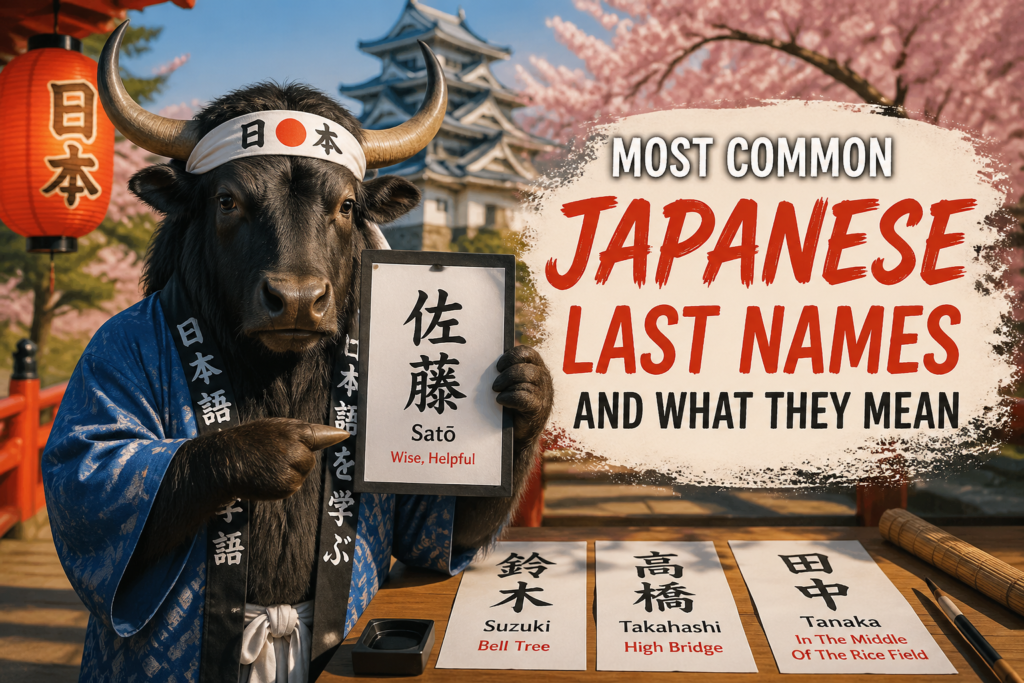
| 佐藤 | Satō | Usually explained as “help” + “wisteria.” One of the most common Japanese surnames. | 佐藤さんは会社にいます。 Satō-san wa kaisha ni imasu. Mr./Ms. Satō is at the company. |
| 鈴木 | Suzuki | “Bell tree” or “bell wood.” A classic surname that is easy to recognize. | 鈴木さんは先生です。 Suzuki-san wa sensei desu. Ms. Suzuki is a teacher. |
| 高橋 | Takahashi | “High bridge” or “tall bridge.” | 高橋さんは東京に住んでいます。 Takahashi-san wa Tōkyō ni sunde imasu. Mr./Ms. Takahashi lives in Tokyo. |
| 田中 | Tanaka | “Middle of the rice field.” | 田中さんは忙しいです。 Tanaka-san wa isogashii desu. Mr./Ms. Tanaka is busy. |
| 渡辺 | Watanabe | Often linked to “crossing” or “ferry” + “edge / side.” | 渡辺さんは日本語が上手です。 Watanabe-san wa Nihongo ga jōzu desu. Mr./Ms. Watanabe is good at Japanese. |
| 伊藤 | Itō | “That” + “wisteria,” traditionally connected with an old family name. | 伊藤さんは図書館にいます。 Itō-san wa toshokan ni imasu. Mr./Ms. Itō is at the library. |
| 山本 | Yamamoto | “Base of the mountain.” | 山本さんは山の近くに住んでいます。 Yamamoto-san wa yama no chikaku ni sunde imasu. Mr./Ms. Yamamoto lives near the mountain. |
| 中村 | Nakamura | “Middle village.” | 中村さんは駅に行きました。 Nakamura-san wa eki ni ikimashita. Mr./Ms. Nakamura went to the station. |
| 小林 | Kobayashi | “Small forest.” | 小林さんの家は静かです。 Kobayashi-san no ie wa shizuka desu. Mr./Ms. Kobayashi’s house is quiet. |
| 加藤 | Katō | Often explained as “add” + “wisteria.” Another very common surname. | 加藤さんは会議に出ます。 Katō-san wa kaigi ni demasu. Mr./Ms. Katō will attend the meeting. |
Why So Many Surnames Use Nature Words?
Because old surnames were often based on places people lived. Mountains, fields, rivers, forests, bridges, villages, and edges of towns all became part of family names. That is why Japanese surnames can feel like tiny landscape paintings.
One helpful pattern is that many names use the same kanji again and again. If you learn 山 (yama, mountain), 田 (ta, rice field), 中 (naka, middle), 本 (moto, base/origin), and 村 (mura, village), you suddenly unlock a lot of surnames very fast. Not magic. Just efficient language design.
| Kanji | Rōmaji | Meaning | Common Surname Examples | Example Sentence |
|---|---|---|---|---|
| 山 | yama | mountain | 山本, 山田 | 山田さんは学生です。 Yamada-san wa gakusei desu. Mr./Ms. Yamada is a student. |
| 田 | ta / da | rice field | 田中, 山田 | 山田さんは京都に住んでいます。 Yamada-san wa Kyōto ni sunde imasu. Mr./Ms. Yamada lives in Kyoto. |
| 中 | naka | middle | 田中, 中村 | 田中さんは友だちです。 Tanaka-san wa tomodachi desu. Mr./Ms. Tanaka is a friend. |
| 村 | mura | village | 中村, 岩村 | 村田さんは朝早く来ます。 Murata-san wa asa hayaku kimasu. Mr./Ms. Murata comes early in the morning. |
More Common Japanese Last Names
These names are also widely seen in real life, textbooks, newspapers, and the occasional anime cast list that seems determined to teach you five surnames before episode three.
| Kanji | Rōmaji | English Meaning | Example Sentence |
|---|---|---|---|
| 山田 | Yamada | “Mountain rice field.” | 山田さんは日本人です。 Yamada-san wa Nihon-jin desu. Mr./Ms. Yamada is Japanese. |
| 吉田 | Yoshida | Often read as “good fortune” + “rice field.” | 吉田さんは親切です。 Yoshida-san wa shinsetsu desu. Mr./Ms. Yoshida is kind. |
| 斎藤 | Saitō | Traditionally tied to a formal or ritual family name element plus wisteria. | 斎藤さんは日本語を勉強しています。 Saitō-san wa Nihongo o benkyō shite imasu. Mr./Ms. Saitō is studying Japanese. |
| 加藤 | Katō | “Add” + “wisteria.” | 加藤さんは大阪に行きます。 Katō-san wa Ōsaka ni ikimasu. Mr./Ms. Katō is going to Osaka. |
| 吉川 | Yoshikawa | “Good fortune” + “river.” | 吉川さんは川の近くに住んでいます。 Yoshikawa-san wa kawa no chikaku ni sunde imasu. Mr./Ms. Yoshikawa lives near a river. |
| 清水 | Shimizu | “Clear water” or “pure water.” | 清水さんは水が好きです。 Shimizu-san wa mizu ga suki desu. Mr./Ms. Shimizu likes water. |
| 石川 | Ishikawa | “Stone river.” | 石川さんは川を見ています。 Ishikawa-san wa kawa o mite imasu. Mr./Ms. Ishikawa is looking at the river. |
| 橋本 | Hashimoto | “Base of the bridge.” | 橋本さんは橋の近くにいます。 Hashimoto-san wa hashi no chikaku ni imasu. Mr./Ms. Hashimoto is near the bridge. |
| 森 | Mori | “Forest.” | 森さんは公園にいます。 Mori-san wa kōen ni imasu. Mr./Ms. Mori is in the park. |
| 前田 | Maeda | “Front rice field.” | 前田さんは前の席に座っています。 Maeda-san wa mae no seki ni suwatte imasu. Mr./Ms. Maeda is sitting in the front seat. |
Common Meanings You’ll Keep Seeing
- 山 (yama) = mountain
- 川 (kawa) = river
- 田 (ta / da) = rice field
- 中 (naka) = middle
- 本 (moto) = origin, base
- 村 (mura) = village
- 林 (hayashi) = woods, small forest
- 森 (mori) = forest
- 橋 (hashi) = bridge
- 水 (mizu) = water
- 石 (ishi) = stone
- 高 (taka) = high, tall
These kanji show up so often that they are worth learning as survival gear. Once you know them, surnames stop feeling mysterious and start feeling like a scavenger hunt with a grammar prize at the end.
Useful Name-Related Phrases
Here are practical phrases you may hear or use when talking about Japanese names. They are simple, polite, and very likely to show up in daily conversation.
| Kanji | Rōmaji | Meaning | Example Sentence |
|---|---|---|---|
| お名前は何ですか | Onamae wa nan desu ka | What is your name? | お名前は何ですか。 Onamae wa nan desu ka. What is your name? |
| 苗字 | Myōji | family name, surname | 苗字は佐藤です。 Myōji wa Satō desu. My surname is Satō. |
| 名字 | Myōji | surname, family name | 名字を教えてください。 Myōji o oshiete kudasai. Please tell me your family name. |
| 姓 | Sei | surname, family name | 姓は鈴木です。 Sei wa Suzuki desu. The surname is Suzuki. |
| 名前 | Namae | name | 名前を書いてください。 Namae o kaite kudasai. Please write your name. |
| 〜さん | -san | polite honorific after a name | 田中さんは先生です。 Tanaka-san wa sensei desu. Mr./Ms. Tanaka is a teacher. |
| 〜様 | -sama | very polite honorific | 鈴木様、ありがとうございます。 Suzuki-sama, arigatō gozaimasu. Thank you, Mr./Ms. Suzuki. |
Small But Important Nuance
Not every Japanese surname has a meaning that feels obvious today. Some names come from older spellings, historic family lines, or regional readings. So if a surname looks simple but the explanation feels a little fuzzy, that is normal. Japanese names enjoy being helpful and slightly annoying at the same time.
Also, pronunciation matters. The same kanji can appear in different names with different readings. For example, 藤 often appears in surnames like 佐藤, 伊藤, and 加藤, but the reading can change depending on the name. That is one reason names are such a good listening exercise.
Quick Comparison: Common Surname Parts
| Kanji | Rōmaji | Meaning | Seen In | Example Sentence |
|---|---|---|---|---|
| 藤 | tō / fuji | wisteria | 佐藤, 伊藤, 加藤, 斎藤 | 藤は名前によく出ます。 Fuji wa namae ni yoku demasu. 藤 appears often in names. |
| 橋 | hashi | bridge | 高橋, 橋本 | 橋の近くに家があります。 Hashi no chikaku ni ie ga arimasu. There is a house near the bridge. |
| 木 | ki / gi | tree, wood | 小林, 木村 | 木村さんは木が好きです。 Kimura-san wa ki ga suki desu. Mr./Ms. Kimura likes trees. |
| 村 | mura | village | 中村, 木村 | 村は静かです。 Mura wa shizuka desu. The village is quiet. |
Practice: Match The Name To The Meaning
- 山田 — mountain field
- 中村 — middle village
- 小林 — small forest
- 高橋 — high bridge
- 石川 — stone river
- 前田 — front rice field
- 清水 — clear water
- 橋本 — base of the bridge
Try covering the meanings first and guessing from the kanji. If you miss a few, no drama. Name reading is one of those areas where Japanese quietly tests your patience and rewards your memory.
Japanese surnames are like little maps. Learn the common kanji, and suddenly the map stops looking like static.
Common Mistakes And Fixes
| Mistake | Fix | Why It Matters |
|---|---|---|
| Reading every kanji with only one sound | Learn surname readings separately | Names often use special readings |
| Assuming the meaning is always literal | Check the surname history or common explanation | Some meanings are historical, not modern |
| Forgetting honorifics | Use -san for polite speech | It sounds natural and respectful |
| Confusing family name and first name | Remember Japanese often puts surname first | Order changes depending on language context |
If you want to compare family names with given names, the pair of guides on popular boy names in Japanese and popular girl names in Japanese is a good next stop. Surname meanings become even clearer when you see how Japanese names are built on both sides of the family-name / first-name split.
Extra Note On Famous Surname Patterns
Many of the most common surnames share endings like -tō, -mura, -ta, or -hashi. That is not random. Japanese names often preserve old place-based patterns, so these endings can show up again and again across different families and regions.
For example, 田 appears in 田中, 山田, 前田, and 吉田. 藤 appears in several famous surnames too, especially ones that look elegant and old-fashioned. If you enjoy language patterns, surnames are basically a treasure chest with a lot of repeat items. Which, honestly, is kind of kind.
Quick Reference Summary
- 佐藤 (Satō) — help + wisteria
- 鈴木 (Suzuki) — bell tree
- 高橋 (Takahashi) — high bridge
- 田中 (Tanaka) — middle of the rice field
- 渡辺 (Watanabe) — crossing / ferry edge
- 伊藤 (Itō) — old family element + wisteria
- 山本 (Yamamoto) — base of the mountain
- 中村 (Nakamura) — middle village
- 小林 (Kobayashi) — small forest
- 加藤 (Katō) — add + wisteria
You can explore more Japanese language topics in Japanese proverbs, where the language gets even more vivid and a little more smug about how wise it sounds. For now, just remember this: the most common Japanese last names are not just names. They are a shortcut into Japanese history, geography, and everyday speech.