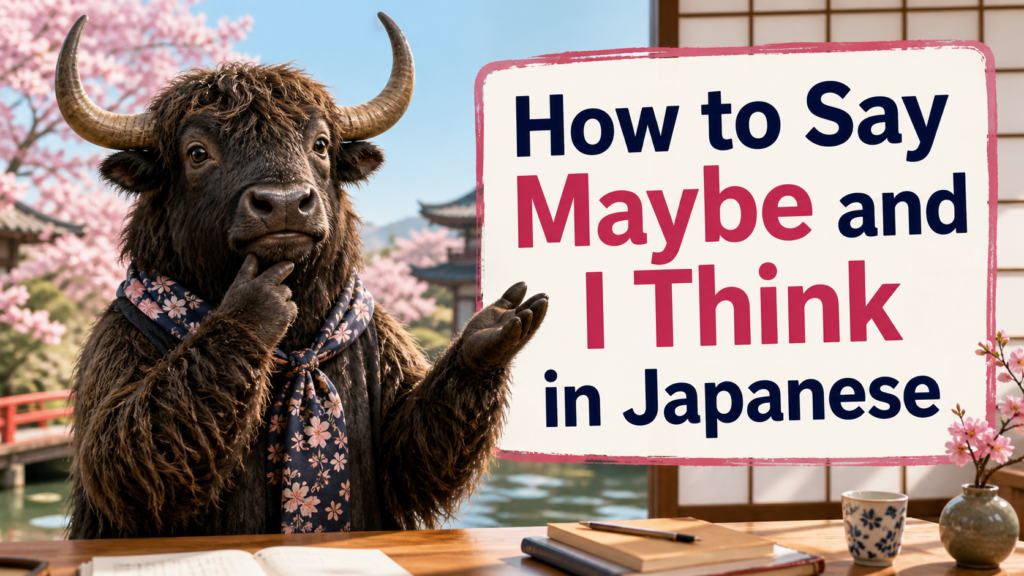
Japanese has a whole toolbox for sounding unsure, pretty sure, absolutely sure, or politely “this is just my opinion, please do not throw tomatoes.” That is why words like “maybe,” “probably,” “of course,” and “I think” matter so much. They do more than add meaning. They soften, strengthen, and shape the vibe of the sentence.
A learner might start with one magic word for “maybe” and then use it for everything. Very relatable. Also slightly chaotic. In real Japanese, 多分 (tabun) and かもしれません (kamoshiremasen) are not the same thing, and もちろん (mochiron) does not always fit where English says “of course.” Tiny differences, big payoff.
This guide walks through the most useful ways to say maybe, probably, of course, and I think in natural Japanese, with example sentences you can actually use. If uncertainty is your thing, congratulations: Japanese is weirdly good at it.
If you want a broader foundation first, the main Learn Japanese hub is a good place to keep the useful stuff in one spot.
Why These Words Matter So Much
In English, “maybe,” “probably,” and “I think” often work like simple add-ons. In Japanese, they often affect politeness, confidence, and how direct you sound. Saying something too strongly can feel blunt. Saying it too weakly can make you sound unsure even when you are not.
So the goal is not just translation. It is choosing the right level of certainty.
Japanese loves nuance. One word can mean “maybe,” but the real question is: how maybe is your maybe?
Useful Phrases And Real-Life Sentences
Here are the core expressions you will meet all the time. The table keeps things tidy and mobile-friendly, because giant walls of text are nobody’s idea of fun.
| Kanji | Rōmaji | Meaning | Example (JP) | Example (Rōmaji) | Translation (EN) |
|---|---|---|---|---|---|
| 多分 | tabun | probably / maybe | 多分、明日は雨です。 | Tabun, ashita wa ame desu. | It will probably rain tomorrow. |
| もしかしたら | moshikashitara | maybe / perhaps | もしかしたら、彼はもう帰ったかもしれません。 | Moshikashitara, kare wa mou kaetta kamo shiremasen. | Maybe he already went home. |
| かもしれません | kamoshiremasen | might / may / maybe | 今日は忙しいかもしれません。 | Kyou wa isogashii kamo shiremasen. | I might be busy today. |
| でしょう | deshou | probably / I suppose / right? | 彼は来るでしょう。 | Kare wa kuru deshou. | He will probably come. |
| だろう | darou | probably (casual) | あの店はまだ開いているだろう。 | Ano mise wa mada aite iru darou. | That shop is probably still open. |
| きっと | kitto | surely / certainly / probably | 彼女はきっと喜びます。 | Kanojo wa kitto yorokobimasu. | She will surely be happy. |
| もちろん | mochiron | of course | もちろん、手伝います。 | Mochiron, tetsudaimasu. | Of course, I’ll help. |
| 当たり前 | atarimae | natural / obvious / of course | 毎日練習するのは当たり前です。 | Mainichi renshuu suru no wa atarimae desu. | Practicing every day is only natural. |
| と思います | to omoimasu | I think | これは便利だと思います。 | Kore wa benri da to omoimasu. | I think this is useful. |
| と思う | to omou | I think (casual) | たぶん大丈夫だと思う。 | Tabun daijoubu da to omou. | I think it’s probably okay. |
| ではないでしょうか | dewa nai deshou ka | wouldn’t it be…? / I think perhaps… | これはいい方法ではないでしょうか。 | Kore wa ii houhou dewa nai deshou ka. | Wouldn’t this be a good method? |
| おそらく | osoraku | probably / likely | おそらく彼は遅れます。 | Osoraku kare wa okuremasu. | He will probably be late. |
How To Say Maybe In Japanese
English “maybe” gets spread across a few different Japanese expressions. The big three are 多分 (tabun), もしかしたら (moshikashitara), and かもしれません (kamoshiremasen).
多分
多分
tabun
probably / maybe
多分 is extremely common. In many situations, it feels closer to “probably” than “maybe.” It suggests a decent guess, not just random uncertainty.
Example: 多分、彼は来ません。
Tabun, kare wa kimasen.
He probably will not come.
Example: 多分、それで大丈夫です。
Tabun, sore de daijoubu desu.
That is probably fine.
もしかしたら
もしかしたら
moshikashitara
maybe / perhaps / possibly
This has a more “it is possible that…” feeling. It often appears with かもしれません. The pair is common because Japanese enjoys making uncertainty extra clear.
Example: もしかしたら、間違っているかもしれません。
Moshikashitara, machigatte iru kamo shiremasen.
Maybe I might be wrong.
Example: もしかしたら、電車が遅れているのかもしれません。
Moshikashitara, densha ga okurete iru no kamo shiremasen.
Maybe the train might be delayed.
かもしれません
かもしれません
kamoshiremasen
might / may / maybe
This attaches to the end of a sentence and means “might be” or “may be.” It is one of the most useful ways to sound careful and natural.
Example: 日本語は難しいかもしれません。
Nihongo wa muzukashii kamo shiremasen.
Japanese may be difficult.
Example: 今日は行けないかもしれません。
Kyou wa ikenai kamo shiremasen.
I might not be able to go today.
In casual speech, people often shorten it to かも (kamo).
Example: 明日、雨かも。
Ashita, ame kamo.
It might rain tomorrow.
How To Say Probably In Japanese
The most useful choices here are 多分 (tabun), おそらく (osoraku), でしょう (deshou), and sometimes きっと (kitto), depending on confidence.
おそらく
おそらく
osoraku
probably / likely
おそらく sounds a bit more formal or written than 多分. It is useful in news, presentations, careful speech, or anything slightly less casual.
Example: おそらく明日には終わります。
Osoraku ashita ni wa owarimasu.
It will probably be finished by tomorrow.
Example: おそらく彼はそのことを知っています。
Osoraku kare wa sono koto o shitte imasu.
He probably knows about that.
でしょう
でしょう
deshou
probably / I expect / right?
This one is sneaky because it has more than one job. It can mean “probably,” but it can also seek agreement, like “right?” Context does the heavy lifting.
Example: 明日は寒いでしょう。
Ashita wa samui deshou.
It will probably be cold tomorrow.
Example: 彼も知っているでしょう。
Kare mo shitte iru deshou.
He probably knows too.
Its casual form is だろう (darou).
Example: もうすぐ着くだろう。
Mou sugu tsuku darou.
We will probably arrive soon.
きっと
きっと
kitto
surely / certainly / probably
This is stronger than 多分. It sounds like the speaker really believes something. Depending on context, it can feel like “definitely” or “I’m sure.”
Example: 彼はきっと来ます。
Kare wa kitto kimasu.
He will surely come.
Example: 練習すれば、きっと上手になります。
Renshuu sureba, kitto jouzu ni narimasu.
If you practice, you will surely get better.
How To Say Of Course In Japanese
The cleanest everyday translation is もちろん (mochiron). But Japanese also uses other expressions depending on whether “of course” means agreement, something obvious, or something expected.
もちろん
もちろん
mochiron
of course
This is the standard, friendly, useful choice. If someone asks for help, permission, or confirmation, もちろん works beautifully.
Example: もちろん、一緒に行きます。
Mochiron, issho ni ikimasu.
Of course, I’ll go with you.
Example: もちろん覚えています。
Mochiron oboete imasu.
Of course I remember.
当たり前
当たり前
atarimae
natural / obvious / of course
This can mean “of course,” but be careful. It often sounds more like “that is obvious” or “naturally.” Used in the wrong tone, it can come off a little sharp. Not evil. Just… pointier than you may intend.
Example: 家族だから助けるのは当たり前です。
Kazoku dakara tasukeru no wa atarimae desu.
Because we are family, helping is only natural.
Example: そんなの当たり前だよ。
Sonna no atarimae da yo.
That is obvious.
If you want a softer “of course,” stick with もちろん.
How To Say I Think In Japanese
This one matters constantly. Japanese often uses と思います (to omoimasu) to present opinions in a softer, more polite way. It can make direct statements sound less pushy, which is usually a good move.
と思います
と思います
to omoimasu
I think
You add it after a plain statement.
- これはいいです。 → This is good.
- これはいいと思います。 → I think this is good.
Example: 日本語は面白いと思います。
Nihongo wa omoshiroi to omoimasu.
I think Japanese is interesting.
Example: その考えはいいと思います。
Sono kangae wa ii to omoimasu.
I think that idea is good.
と思う
と思う
to omou
I think (casual)
This is the plain form used in casual speech.
Example: 彼はまだ寝てると思う。
Kare wa mada neteru to omou.
I think he is still sleeping.
Example: それはちょっと難しいと思う。
Sore wa chotto muzukashii to omou.
I think that is a little difficult.
ではないでしょうか
ではないでしょうか
dewa nai deshou ka
wouldn’t it be…? / I think perhaps…
This is more formal and indirect. You hear it in business settings, presentations, essays, and polite discussion. It is perfect when you want to sound thoughtful instead of blunt.
Example: これが最善の方法ではないでしょうか。
Kore ga saizen no houhou dewa nai deshou ka.
Wouldn’t this be the best method?
Example: 今は待つべきではないでしょうか。
Ima wa matsu beki dewa nai deshou ka.
I think perhaps we should wait now.
Quick Difference Table: Maybe Vs Probably Vs I Think
| Expression | Rōmaji | Main Feeling | Best Use |
|---|---|---|---|
| 多分 | tabun | probably | Everyday guesses |
| もしかしたら | moshikashitara | maybe / perhaps | Possible but uncertain situations |
| かもしれません | kamoshiremasen | might / may | Sentence-ending uncertainty |
| おそらく | osoraku | probably / likely | More formal guesses |
| きっと | kitto | surely | Strong confidence |
| もちろん | mochiron | of course | Agreement, willingness, certainty |
| と思います | to omoimasu | I think | Polite opinions |
Common Natural Sentence Patterns
These patterns show up constantly in real conversation.
| Pattern | Meaning | Example (JP) | Rōmaji | Translation |
|---|---|---|---|---|
| 多分 + sentence | probably… | 多分、今日は暇です。 | Tabun, kyou wa hima desu. | I’m probably free today. |
| sentence + かもしれません | might… | 彼は忘れたかもしれません。 | Kare wa wasureta kamo shiremasen. | He might have forgotten. |
| きっと + sentence | surely… | きっと間に合います。 | Kitto maniaimasu. | We will surely make it in time. |
| sentence + と思います | I think… | それは必要だと思います。 | Sore wa hitsuyou da to omoimasu. | I think that is necessary. |
| もちろん + sentence | of course… | もちろん参加します。 | Mochiron sanka shimasu. | Of course I’ll join. |
| ではないでしょうか | wouldn’t it be…? | こちらのほうが便利ではないでしょうか。 | Kochira no hou ga benri dewa nai deshou ka. | Wouldn’t this option be more convenient? |
Common Mistakes And Easy Fixes
| Common Issue | What Goes Wrong | Better Choice |
|---|---|---|
| Using 多分 for every kind of maybe | It can sound too confident when you mean “might” | Use かもしれません for softer uncertainty |
| Using 当たり前 like friendly “of course” | It can sound too obvious or blunt | Use もちろん for warm agreement |
| Forgetting と before 思います | いい思います is wrong | Say いいと思います |
| Overusing きっと | It sounds stronger than “probably” | Use 多分 if you are less certain |
| Using casual だろう in polite situations | It can feel rough or too direct | Use でしょう instead |
A Curious Bit: Why Japanese Sounds Less Direct
Japanese often prefers softer opinion markers, especially in group settings, work, or polite conversation. That is one reason と思います appears everywhere. Instead of saying “This is wrong,” a speaker may say, 少し違うと思います (Sukoshi chigau to omoimasu) — “I think it is a little different.” Same basic idea, much gentler landing.
That softening does not mean the speaker lacks confidence. It often means they know how to sound human.
Practice: Pick The Best Expression
Try these quick mini-drills.
- You are fairly sure it will rain tomorrow.
多分、明日は雨です。
Tabun, ashita wa ame desu.
It will probably rain tomorrow. - You want to say “I might be late.”
遅れるかもしれません。
Okureru kamo shiremasen.
I might be late. - A friend asks, “Can you help me?”
もちろん。
Mochiron.
Of course. - You want to say “I think this is delicious.”
これはおいしいと思います。
Kore wa oishii to omoimasu.
I think this is delicious. - You are very confident he will pass the test.
彼はきっと試験に合格します。
Kare wa kitto shiken ni goukaku shimasu.
He will surely pass the test.
More Useful Sentences You Can Steal Immediately
| Kanji | Rōmaji | Meaning | Example (JP) | Example (Rōmaji) | Translation (EN) |
|---|---|---|---|---|---|
| 多分無理です | tabun muri desu | probably impossible | 今日は多分無理です。 | Kyou wa tabun muri desu. | Today is probably not possible. |
| 行けるかもしれません | ikeru kamo shiremasen | might be able to go | 午後なら行けるかもしれません。 | Gogo nara ikeru kamo shiremasen. | I might be able to go in the afternoon. |
| もちろんです | mochiron desu | of course | もちろんです、問題ありません。 | Mochiron desu, mondai arimasen. | Of course, no problem. |
| そうだと思います | sou da to omoimasu | I think so | 私もそうだと思います。 | Watashi mo sou da to omoimasu. | I think so too. |
| 違うと思います | chigau to omoimasu | I think it is different / wrong | それは少し違うと思います。 | Sore wa sukoshi chigau to omoimasu. | I think that is a little different. |
| たぶんそうです | tabun sou desu | probably so | A: 彼ですか。B: たぶんそうです。 | A: Kare desu ka. B: Tabun sou desu. | A: Is that him? B: Probably. |
| きっと大丈夫です | kitto daijoubu desu | it will surely be okay | 心配しないで。きっと大丈夫です。 | Shinpai shinaide. Kitto daijoubu desu. | Don’t worry. It will surely be okay. |
| そうかもしれません | sou kamo shiremasen | that may be so | あなたの言う通り、そうかもしれません。 | Anata no iu toori, sou kamo shiremasen. | You may be right, that may be so. |
Polite And Casual Variants Table
| Meaning | Polite | Casual | Note |
|---|---|---|---|
| maybe / might | かもしれません | かも | かも is very common in speech |
| probably | でしょう | だろう | だろう is rougher and more direct |
| I think | と思います | と思う | Same meaning, different register |
| of course | もちろんです | もちろん | Both are friendly and useful |
When You Are Not Sure At All
Sometimes you do not want “maybe.” You want “I do not know” or “I am not sure.” In that case, it helps to learn expressions that admit uncertainty more directly. For that, the guide on how to say don’t know and understand in Japanese fits nicely with the phrases in this article.
If you want another related lesson to keep the momentum going, this Japanese phrase guide is also handy for building everyday conversation patterns.
Quick Reference Summary
- 多分 — tabun — probably / maybe
- もしかしたら — moshikashitara — maybe / perhaps
- かもしれません — kamoshiremasen — might / may
- おそらく — osoraku — probably / likely
- でしょう — deshou — probably / I suppose
- だろう — darou — probably (casual)
- きっと — kitto — surely / certainly
- もちろん — mochiron — of course
- 当たり前 — atarimae — obvious / only natural
- と思います — to omoimasu — I think
- と思う — to omou — I think (casual)
- ではないでしょうか — dewa nai deshou ka — wouldn’t it be…? / I think perhaps…
Yak Takeaway
If you remember just four core items, make them 多分 (tabun), かもしれません (kamoshiremasen), もちろん (mochiron), and と思います (to omoimasu). Those four carry a shocking amount of real conversation. Then add きっと when you feel confident and でしょう when you want a more natural “probably.”
Japanese does not just ask what you mean. It asks how strongly you mean it. And honestly, that is rude in theory but very useful in practice.