Japanese honorifics can look tiny, but they do a lot of heavy lifting. One little ending can say “friendly,” “respectful,” “cute,” “higher status,” or “please do not embarrass me in public.” Japanese is very efficient like that.
If you have ever heard someone say 田中さん (Tanaka-san) or 先生 (sensei), you already know the system is not random. It is a social map. This Japanese Honorifics Chart for San, Chan, Kun, Sama, Sensei, and Senpai will help you read that map without stepping on the wrong social shoe.
For a broader study path, this lesson fits neatly into the Japanese learning section, and there is also a useful related lesson here: related Japanese guide.
The Big Idea: Honorifics Show Relationship
Honorifics are suffixes or titles used after a name or role. They help show politeness, distance, age, status, closeness, or professional respect. In other words: they tell the listener how the speaker sees the relationship.
Most learners start with さん (san), then quickly meet the rest of the gang: ちゃん (chan), くん (kun), さま (sama), 先生 (sensei), and 先輩 (senpai). They are not interchangeable. Using the wrong one can sound awkward, overly formal, or a little too casual. Which is a very polite way of saying “oops.”
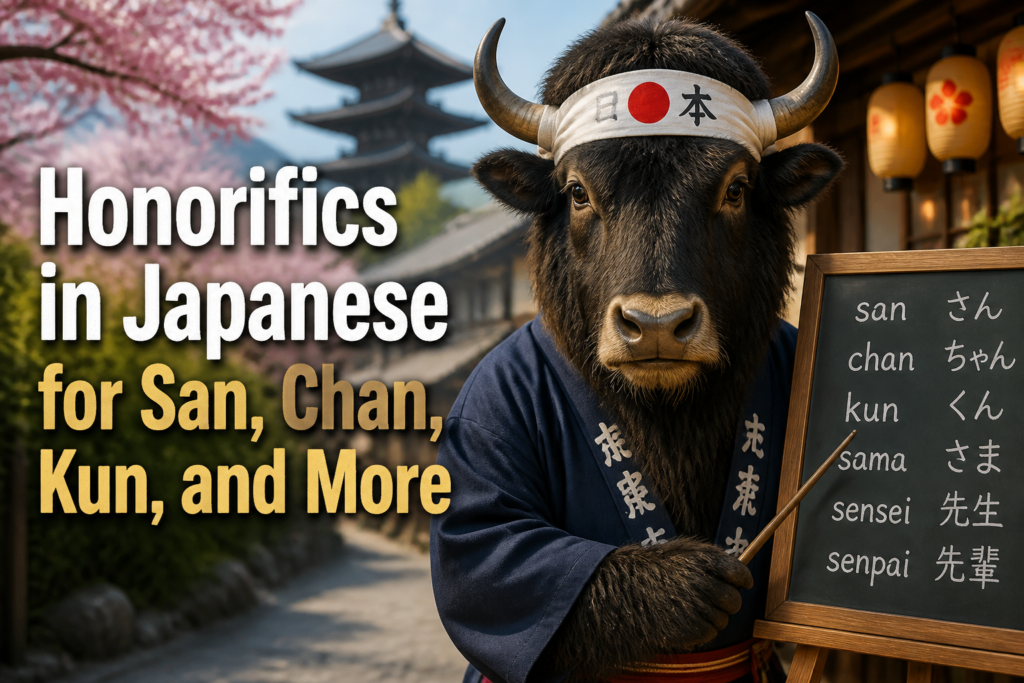
Honorifics Chart
| Kanji / Kana | Rōmaji | English Meaning | Typical Use |
|---|---|---|---|
| さん | san | Mr., Ms., Mrs.; polite default | Most names in normal polite speech |
| ちゃん | chan | cute, affectionate; often “little [name]” | Children, close friends, pets, sometimes cute or familiar tone |
| くん | kun | young man; junior; familiar masculine tone | Boys, male juniors, coworkers in some workplaces |
| さま | sama | very respectful title; dear customer, sir/ma’am | Customers, formal letters, highly respectful situations |
| 先生 | sensei | teacher; master; doctor; expert | Teachers, doctors, lawyers, artists, respected experts |
| 先輩 | senpai | senior; upperclassman; experienced member | School, clubs, companies, sports teams |
Small note: さん is not the same as “Mr.” in a strict English way. It is more flexible. You can use it for men and women, and even for some businesses or shops when you are being respectful.
Useful Phrases And Real-Life Sentences
| Japanese | Rōmaji | English |
|---|---|---|
| 田中さん | Tanaka-san | Mr./Ms. Tanaka |
| 山田さんはいますか。 | Yamada-san wa imasu ka. | Is Ms./Mr. Yamada here? |
| 花子ちゃん | Hanako-chan | little Hanako / cute Hanako |
| 花子ちゃんはかわいいです。 | Hanako-chan wa kawaii desu. | Hanako-chan is cute. |
| 太郎くん | Tarō-kun | Tarō-kun / young Tarō / junior Tarō |
| 太郎くんは学生です。 | Tarō-kun wa gakusei desu. | Tarō-kun is a student. |
| お客様 | okyaku-sama | honored customer |
| お客様、こちらへどうぞ。 | Okyaku-sama, kochira e dōzo. | Honored customer, this way please. |
| 先生 | sensei | teacher / doctor / expert |
| 田中先生は教室にいます。 | Tanaka-sensei wa kyōshitsu ni imasu. | Teacher Tanaka is in the classroom. |
| 先輩 | senpai | senior / upperclassman |
| 先輩はやさしいです。 | Senpai wa yasashii desu. | The senior is kind. |
| 鈴木さん、こんにちは。 | Suzuki-san, konnichiwa. | Hello, Mr./Ms. Suzuki. |
| お母さん | okaasan | mother |
| お母さんは料理が上手です。 | Okaasan wa ryōri ga jōzu desu. | Mom is good at cooking. |
Yes, さん appears everywhere because it is the safest starting point. Japanese learners often overcomplicate things, then discover that the humble default was the answer all along. Classic language-learning plot twist.
How To Use さん
さん (san) is the most common honorific. Use it after a person’s family name or full name in polite situations.
- 田中さん (Tanaka-san) — Mr./Ms. Tanaka
- 中村さん (Nakamura-san) — Mr./Ms. Nakamura
- 友達の佐藤さん (tomodachi no Satō-san) — my friend Sato, politely
Use さん when you do not want to be rude, weird, or accidentally too familiar. That covers a lot of daily life.
How To Use ちゃん
ちゃん (chan) sounds affectionate, cute, or close. It is often used for young children, close friends, pets, and sometimes women or girls in informal affectionate speech.
- ゆいちゃん (Yui-chan) — Yui, in a cute or close way
- 猫ちゃん (neko-chan) — kitty cat
- 妹ちゃん (imōto-chan) — little sister, in a cute tone
Do not toss ちゃん onto everyone and hope for the best. It can sound sweet, or it can sound childish, overly familiar, or just plain odd if the relationship does not fit.
How To Use くん
くん (kun) is often used for boys and young men, especially by teachers, bosses, or older people speaking to juniors. It can also be used in some workplaces for male employees, and occasionally for women in specific settings, though that is more nuanced.
- 健太くん (Kenta-kun) — Kenta, with a junior or familiar tone
- 部下の田中くん (buka no Tanaka-kun) — subordinate Tanaka
- 山本くんは元気です。 (Yamamoto-kun wa genki desu.) — Yamamoto-kun is doing well.
くん can sound warm and normal in school or work, but it should not be used carelessly with someone who expects more distance or respect.
How To Use さま
さま (sama) is the respectful, elevated version. It is used for customers, clients, formal letters, gods, and some very respectful contexts.
- お客様 (okyaku-sama) — honored customer
- 神様 (kami-sama) — god / deity
- 山田様 (Yamada-sama) — Mr./Ms. Yamada, very formally
In everyday conversation, さま is usually too formal for normal personal names. If you use it where it does not belong, you may sound like a robot with very good manners. Not always bad, but definitely noticeable.
How To Use 先生
先生 (sensei) means teacher, but it also refers to doctors, lawyers, authors, martial arts instructors, artists, and other respected professionals.
- 田中先生 (Tanaka-sensei) — Teacher Tanaka / Dr. Tanaka
- 先生、質問があります。 (Sensei, shitsumon ga arimasu.) — Teacher, I have a question.
- この絵は先生の作品です。 (Kono e wa sensei no sakuhin desu.) — This picture is the teacher’s work.
You do not usually call yourself 先生. That would be a tiny confidence festival, and Japanese tends to be less dramatic about self-praise.
How To Use 先輩
先輩 (senpai) means senior, upperclassman, or someone with more experience in the same school, club, or workplace.
- 佐藤先輩 (Satō-senpai) — Senior Sato
- 先輩は親切です。 (Senpai wa shinsetsu desu.) — The senior is kind.
- 先輩に聞きました。 (Senpai ni kikimashita.) — I asked the senior.
In anime, senpai gets a lot of attention. In real life, it mostly means “someone ahead of you in the system.” Less drama, more paperwork. Very Japanese.
Common Honorifics And Their English Feel
| Japanese | Rōmaji | English Feel | When To Use |
|---|---|---|---|
| さん | san | polite neutral | Default for people you are speaking to or about politely |
| ちゃん | chan | cute, affectionate | Children, close friends, pets, sweet/familiar tone |
| くん | kun | junior, familiar, often male | Boys, juniors, workplace/school settings |
| さま | sama | very respectful | Customers, formal letters, high respect |
| 先生 | sensei | teacher/expert | Teachers, doctors, professionals |
| 先輩 | senpai | senior/mentor-ish | Older members of the same group or system |
Nuance Notes You Really Want To Know
さん can be used with family names almost everywhere. It is the safest option.
ちゃん is not “female only.” It is about closeness or cuteness. Still, it is used more often for girls and young children.
くん can be used for boys, male juniors, or people in a lower position in a workplace hierarchy. It is also a title of familiarity, not simple “male = kun.”
先生 is a title for profession and respect, not just a classroom job. A doctor can absolutely be 先生.
先輩 refers to someone senior in the same environment. The opposite is 後輩 (kōhai), meaning junior, but you usually do not call someone that as a name title.
For more background on Japanese honorific language and social relationships, a plain but useful reference is Japanese honorifics.
Quick Practice
Choose the best honorific for each situation. No peeking. Fine, a little peeking is allowed, but try first.
- A friendly polite way to address Mr. Tanaka: 田中____ → さん
- A cute way to call a little girl named Yui: ゆい____ → ちゃん
- A way to address a junior male student named Ken: けん____ → くん
- A very respectful way to address a customer: お客様 → さま
- A respectful title for a teacher: 田中____ → 先生
- A title for an older club member: 鈴木____ → 先輩
Now try changing the tone:
- 田中さん → polite neutral
- 田中ちゃん → too familiar or cute, depending on context
- 田中様 → very formal and respectful
Common Mistakes And Fixes
| Mistake | Why It’s Off | Better Choice |
|---|---|---|
| Using ちゃん with strangers | Can sound too personal | Use さん |
| Using くん for everyone | Mostly junior or familiar male tone | Use さん unless the context clearly fits くん |
| Using さま in casual chat | Way too formal | Use さん |
| Calling your teacher only by name | Can sound rude | Use 先生 |
| Calling a senior classmate by name only | Too blunt in many settings | Use 先輩 |
When in doubt, さん. Japanese learners love a neat rule, and this one is actually useful.
Quick Reference Summary
- さん = polite default
- ちゃん = cute, affectionate, familiar
- くん = junior, often male, familiar
- さま = very respectful/formal
- 先生 = teacher, doctor, expert, respected professional
- 先輩 = senior, upperclassman, experienced member
If you remember only one thing, remember this: honorifics are about relationship, not just grammar. Once you start noticing who uses what, Japanese conversations become much easier to read. And honestly, much harder to accidentally mess up in front of a teacher, boss, or customer.
That is the real win here. Learn the honorific, learn the relationship, and the rest starts to click.