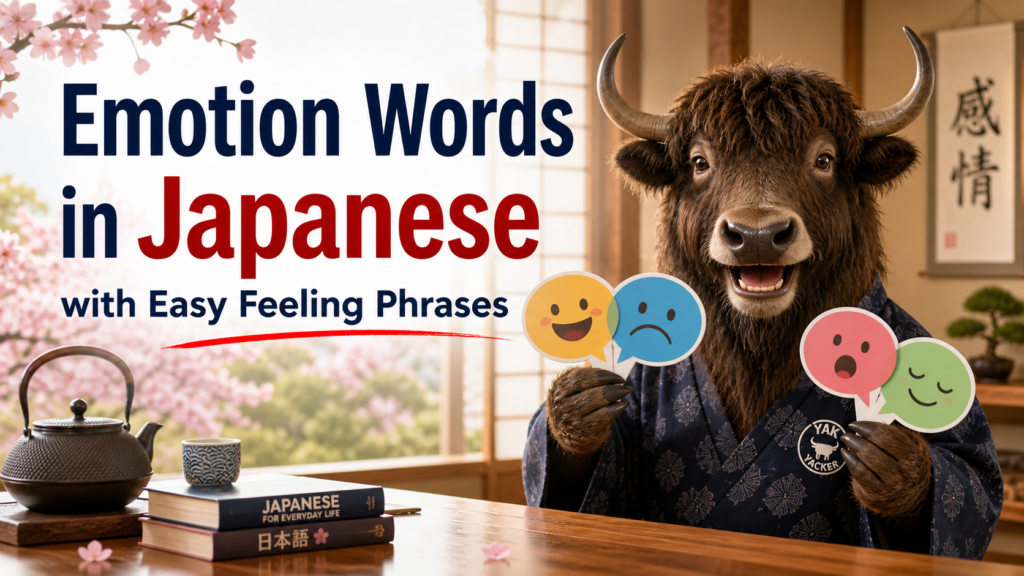
Japanese feelings can be wonderfully precise. One moment you are 嬉しい (ureshii) and the next you are 困る (komaru) because the battery died, the train left, and your snack disappeared. Very rude behavior from the universe.
This chart gives you the most useful Japanese emotion words, plus easy phrases you can actually use in real life. You will learn how to say happy, sad, nervous, angry, tired, embarrassed, relieved, and a few more feelings that show up when life gets messy. For a broader study path, the main Japanese learning hub at Learn Japanese is a handy place to keep going.
Japanese often describes feelings with simple adjective forms, and that makes them easy to reuse. Once you know the base word, you can build a lot of natural sentences without sounding like a robot from a school textbook. Which, honestly, is a good thing.
Common Emotion Words In Japanese
| Kanji | Rōmaji | English Meaning | Example Sentence |
|---|---|---|---|
| 嬉しい | ureshii | happy; glad | 合格して嬉しい。 Goukaku shite ureshii. I’m happy I passed. |
| 楽しい | tanoshii | fun; enjoyable | この映画は楽しい。 Kono eiga wa tanoshii. This movie is fun. |
| 悲しい | kanashii | sad | その話は悲しい。 Sono hanashi wa kanashii. That story is sad. |
| 怒る | okoru | to get angry | 先生は怒った。 Sensei wa okotta. The teacher got angry. |
| 怖い | kowai | scary; afraid | 暗い道は怖い。 Kurai michi wa kowai. Dark roads are scary. |
| 恥ずかしい | hazukashii | embarrassed; shy | みんなの前で話すのは恥ずかしい。 Minna no mae de hanasu no wa hazukashii. Speaking in front of everyone is embarrassing. |
| 心配 | shinpai | worried; concern | 試験が心配です。 Shiken ga shinpai desu. I’m worried about the exam. |
| 安心する | anshin suru | to feel relieved | 無事だと聞いて安心した。 Buji da to kiite anshin shita. I felt relieved to hear they were safe. |
| 疲れる | tsukareru | to feel tired | 今日はとても疲れた。 Kyou wa totemo tsukareta. I’m very tired today. |
| 退屈 | taikutsu | bored | 待ち時間が退屈だ。 Machi jikan ga taikutsu da. The waiting time is boring. |
| 驚く | odoroku | to be surprised | そのニュースに驚いた。 Sono nyuusu ni odoroita. I was surprised by that news. |
| ほっとする | hotto suru | to feel relieved | 道が分かってほっとした。 Michi ga wakatte hotto shita. I felt relieved because I knew the way. |
Easy Feeling Phrases You Can Reuse
| Kanji | Rōmaji | English Meaning | Example Sentence |
|---|---|---|---|
| 私は嬉しいです。 | Watashi wa ureshii desu. | I’m happy. | プレゼントをもらって、私は嬉しいです。 Purezento o moratte, watashi wa ureshii desu. I got a present, so I’m happy. |
| とても楽しいです。 | Totemo tanoshii desu. | It’s very fun. | このパーティーはとても楽しいです。 Kono paatii wa totemo tanoshii desu. This party is very fun. |
| 少し悲しいです。 | Sukoshi kanashii desu. | I’m a little sad. | 別れの場面で少し悲しいです。 Wakare no bamen de sukoshi kanashii desu. I’m a little sad at the goodbye scene. |
| 今は心配です。 | Ima wa shinpai desu. | I’m worried now. | 結果がまだなので今は心配です。 Kekka ga mada nano de ima wa shinpai desu. The results are not out yet, so I’m worried now. |
| 少し疲れました。 | Sukoshi tsukaremashita. | I’m a little tired. | 会議が長くて少し疲れました。 Kaigi ga nagakute sukoshi tsukaremashita. The meeting was long, so I’m a little tired. |
| びっくりしました。 | Bikkuri shimashita. | I was surprised. | 急に名前を呼ばれてびっくりしました。 Kyuu ni namae o yobarete bikkuri shimashita. I was surprised when my name was called suddenly. |
| ほっとしました。 | Hotto shimashita. | I felt relieved. | 財布が見つかってほっとしました。 Saifu ga mitsukatte hotto shimashita. I felt relieved when I found my wallet. |
| ちょっと恥ずかしいです。 | Chotto hazukashii desu. | I’m a little embarrassed. | 名前を間違えてちょっと恥ずかしいです。 Namae o machigaete chotto hazukashii desu. I mixed up the name, so I’m a little embarrassed. |
| あまり好きではありません。 | Amari suki de wa arimasen. | I don’t really like it. | 辛すぎる料理はあまり好きではありません。 Karasugiru ryouri wa amari suki de wa arimasen. I don’t really like food that is too spicy. |
| 気分がいいです。 | Kibun ga ii desu. | I feel good. | よく眠れて気分がいいです。 Yoku nemurete kibun ga ii desu. I slept well, so I feel good. |
| 気分が悪いです。 | Kibun ga warui desu. | I feel sick / bad | 乗り物で気分が悪いです。 Norimono de kibun ga warui desu. I feel sick on vehicles. |
| 落ち着きます。 | Ochitsukimasu. | I calm down; I relax | 静かな場所だと落ち着きます。 Shizuka na basho da to ochitsukimasu. I calm down in quiet places. |
How Japanese Often Describes Feelings
Japanese emotion words often work in two main ways. Some are i-adjectives, like 嬉しい (ureshii) and 悲しい (kanashii). Others are verbs, like 怒る (okoru) and 驚く (odoroku). That means sometimes you say “I am happy,” and sometimes you say “I got surprised.” Japanese likes variety. Very efficient, annoyingly so.
| Pattern | Meaning | Example | Rōmaji | English |
|---|---|---|---|---|
| 私は + emotion adjective + です | I am feeling… | 私は嬉しいです。 | Watashi wa ureshii desu. | I’m happy. |
| noun + が + emotion word + です | The situation makes me feel… | 試験が心配です。 | Shiken ga shinpai desu. | I’m worried about the exam. |
| verb te-form + て + ほっとする | Feel relieved after something happens | 聞いてほっとしました。 | Kiite hotto shimashita. | I felt relieved after hearing it. |
| adverb + emotion word | Add intensity | とても嬉しいです。 | Totemo ureshii desu. | I’m very happy. |
For more practice with Japanese word meanings and test-style review, try the Japanese Vocabulary Test or the Japanese Placement Test JLPT. Tiny quiz energy. Big brain payoff.
Useful Feeling Verbs And Related Words
| Kanji | Rōmaji | Meaning | Example Sentence |
|---|---|---|---|
| 感じる | kanjiru | to feel; to sense | 寒さを感じる。 Samusa o kanjiru. I feel the cold. |
| 思う | omou | to think; to feel that | 今日は少し違うと思う。 Kyou wa sukoshi chigau to omou. I feel today is a little different. |
| 喜ぶ | yorokobu | to rejoice; to be pleased | みんなは結果を喜んだ。 Minna wa kekka o yorokonda. Everyone was pleased with the result. |
| 悲しむ | kanashimu | to grieve; to be sad about | 別れを悲しむ。 Wakare o kanashimu. To grieve a goodbye. |
| 緊張する | kinchou suru | to feel nervous | 面接で緊張しました。 Mensetsu de kinchou shimashita. I felt nervous in the interview. |
| 安心 | anshin | relief; peace of mind | 結果を聞いて安心した。 Kekka o kiite anshin shita. I felt relieved after hearing the result. |
| 不安 | fuan | anxious; uneasy | 明日の天気が不安です。 Ashita no tenki ga fuan desu. I’m uneasy about tomorrow’s weather. |
| 元気 | genki | well; energetic; feeling good | 今日は元気です。 Kyou wa genki desu. I feel good today. |
| 眠い | nemui | sleepy | 授業中に眠いです。 Jugyou-chuu ni nemui desu. I’m sleepy during class. |
| イライラする | iraira suru | to feel irritated | 遅い電車でイライラする。 Osoi densha de iraira suru. I get irritated by the late train. |
| ワクワクする | wakuwaku suru | to feel excited | 旅行の前日はワクワクする。 Ryokou no zenjitsu wa wakuwaku suru. The day before a trip feels exciting. |
| がっかりする | gakkari suru | to feel disappointed | 雨で予定が変わってがっかりした。 Ame de yotei ga kawatte gakkari shita. I was disappointed when the plan changed because of rain. |
Curious Bit: Emotion Words And Body Clues
Japanese often connects feelings to the body. If you want to say your stomach hurts from stress, or your head feels heavy from worry, those body words matter. A useful companion guide is Body Parts in Japanese, because feelings and body language show up together a lot more than learners expect.
気分 (kibun) means mood or feeling, while 感情 (kanjou) means emotion. One is your current vibe. The other is the bigger emotional package. Yes, languages do enjoy making life slightly complicated.
You may also notice that Japanese can use sound words to show emotional texture, like sighs, shock, or frustration. That is where Onomatopoeia in Japanese becomes very useful. Feelings and sound effects are weirdly close friends in Japanese.
Simple Conversation Phrases For Feelings
| Kanji | Rōmaji | Meaning | Example Sentence |
|---|---|---|---|
| 今日はどうですか。 | Kyou wa dou desu ka. | How are you today? | 今日はどうですか。— 元気です。 Kyou wa dou desu ka. — Genki desu. How are you today? — I’m fine. |
| 気分はどうですか。 | Kibun wa dou desu ka. | How do you feel? | 気分はどうですか。— 少し疲れています。 Kibun wa dou desu ka. — Sukoshi tsukarete imasu. How do you feel? — I’m a little tired. |
| 嬉しいです。 | Ureshii desu. | I’m happy. | 合格できて嬉しいです。 Goukaku dekite ureshii desu. I’m happy I passed. |
| 悲しいです。 | Kanashii desu. | I’m sad. | 友だちが引っ越して悲しいです。 Tomodachi ga hikkoshite kanashii desu. I’m sad my friend moved away. |
| 大丈夫ですか。 | Daijoubu desu ka. | Are you okay? | 顔色が悪いですが、大丈夫ですか。 Kaoiro ga warui desu ga, daijoubu desu ka. You look pale, are you okay? |
| ちょっと疲れました。 | Chotto tsukaremashita. | I’m a little tired. | 歩きすぎてちょっと疲れました。 Arukisugite chotto tsukaremashita. I walked too much, so I’m a little tired. |
| すごく嬉しいです。 | Sugoku ureshii desu. | I’m super happy. | 友だちに会えてすごく嬉しいです。 Tomodachi ni aete sugoku ureshii desu. I’m super happy to see my friend. |
| 少し不安です。 | Sukoshi fuan desu. | I’m a little anxious. | 初めてなので少し不安です。 Hajimete na no de sukoshi fuan desu. I’m a little anxious because it’s my first time. |
| びっくりしました。 | Bikkuri shimashita. | I was surprised. | 後ろから声をかけられてびっくりしました。 Ushiro kara koe o kakerarete bikkuri shimashita. I was surprised when someone called to me from behind. |
| 安心しました。 | Anshin shimashita. | I felt relieved. | 無事だと分かって安心しました。 Buji da to wakatte anshin shimashita. I felt relieved when I knew they were safe. |
Practice: Swap The Feeling Word
Try replacing the emotion word in each sentence. That is how vocabulary starts acting useful instead of just being “things you saw once in a chart.”
- 私は嬉しいです。 → change 嬉しい (ureshii) to 悲しい (kanashii).
- 今日は楽しいです。 → change 楽しい (tanoshii) to 退屈 (taikutsu).
- 試験が心配です。 → change 心配 (shinpai) to 安心 (anshin).
- とてもワクワクします。 → change ワクワクする (wakuwaku suru) to がっかりする (gakkari suru).
- 少し恥ずかしいです。 → change 恥ずかしい (hazukashii) to 嬉しい (ureshii).
More review never hurts. If you want another round of self-checking, the Japanese Vocabulary Test is a clean way to see what is sticking and what is still hiding in the bushes.
Common Mistakes And Quick Fixes
| Mistake | Why It Feels Wrong | Better Version |
|---|---|---|
| 私は心配です。 | Possible, but often vague if you want to say “I’m worried about something.” | 試験が心配です。 Shiken ga shinpai desu. I’m worried about the exam. |
| 私は嬉しい。 | Grammatically okay in casual speech, but with no context it can sound abrupt. | 私は嬉しいです。 Watashi wa ureshii desu. I’m happy. |
| 私は怒るです。 | 怒る is a verb, not an i-adjective. | 私は怒っています。 Watashi wa okotte imasu. I’m angry. |
| 私は疲れるです。 | 疲れる is usually used as 疲れた or 疲れています in feelings. | 疲れました。 Tsukaremashita. I’m tired. |
| 気分が良いです。 | Correct, but usually written more naturally as 気分がいいです in everyday Japanese. | 気分がいいです。 Kibun ga ii desu. I feel good. |
Quick Reference Summary
- 嬉しい (ureshii) = happy, glad
- 悲しい (kanashii) = sad
- 楽しい (tanoshii) = fun, enjoyable
- 心配 (shinpai) = worried
- 安心する (anshin suru) = to feel relieved
- 怖い (kowai) = scared, scary
- 恥ずかしい (hazukashii) = embarrassed, shy
- 疲れる (tsukareru) = to feel tired
- 驚く (odoroku) = to be surprised
- ワクワクする (wakuwaku suru) = to feel excited
- がっかりする (gakkari suru) = to feel disappointed
- 気分 (kibun) = mood, feeling
If you want a quick self-check after studying this chart, try the Japanese practice tools at Japanese Placement Test JLPT. A small test can expose exactly which feeling words are ready to stay, and which ones are still pretending to be familiar.
Japanese emotion words are powerful because they are simple, flexible, and easy to reuse. Learn the main adjectives, add a few verbs, and you can describe real feelings in a natural way without panicking over fancy grammar. That is the good news. The slightly annoying news is that you will now notice emotion words everywhere. Welcome to the club.