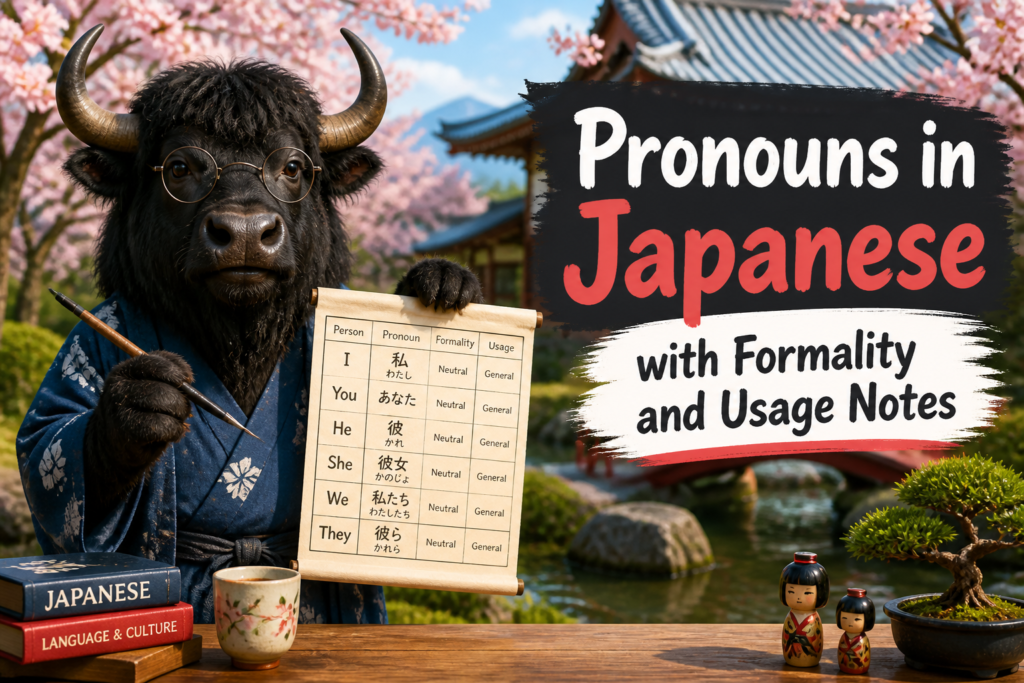
Japanese pronouns look simple at first. Then you meet a few that are polite, a few that are casual, and a few that sound like you stepped out of a samurai drama. Cute. The tricky part is that Japanese often drops pronouns when the meaning is clear, so the real skill is not just memorizing words, but knowing when to use them at all.
This Japanese Pronouns Chart with Formality, Gender, and Natural Usage Notes will help you see the big picture fast. You will learn the common pronouns, how polite they are, how they can sound masculine or feminine, and which ones are safest in everyday Japanese.
For a simple reference on pronouns in Japanese, you can also check the Japanese learning hub and a basic overview on this Japanese language guide.
One useful fact: in natural Japanese conversation, people often avoid pronouns completely. Instead of saying “I went to the store,” Japanese may simply say “Went to the store.” The subject is understood from context. Yes, Japanese likes to keep things a little mysterious.
Quick Pronoun Chart
| Kanji / Form | Rōmaji | Meaning | Formality / Note | Example |
|---|---|---|---|---|
| 私 | watashi | I; me | Polite, neutral, safe | 私は学生です。 / Watashi wa gakusei desu. / I am a student. |
| 僕 | boku | I; me | Casual, usually male | 僕は行きます。 / Boku wa ikimasu. / I will go. |
| 俺 | ore | I; me | Very casual, masculine, rough | 俺は大丈夫。 / Ore wa daijōbu. / I’m fine. |
| あたし | atashi | I; me | Casual, feminine | あたしは疲れた。 / Atashi wa tsukareta. / I’m tired. |
| わたくし | watakushi | I; me | Very polite, formal | わたくしは田中です。 / Watakushi wa Tanaka desu. / I am Tanaka. |
First-Person Pronouns: “I”
The biggest mistake learners make is treating Japanese pronouns like English pronouns. In English, “I” is just “I.” In Japanese, the word you choose can change the feeling of the sentence a lot.
私
わたし / watashi / I; me
私 is the safest all-purpose pronoun. It works in polite speech, in formal writing, and in many neutral situations. It is not overly feminine, despite what some beginner books imply. Both men and women use it.
Example: 私は日本語を勉強します。
Watashi wa Nihongo o benkyō shimasu.
I study Japanese.
僕
ぼく / boku / I; me
僕 sounds casual, gentle, and often masculine. Boys and men use it a lot, especially in everyday conversation. It can sound friendly and modest, not aggressive.
Example: 僕はラーメンが好きです。
Boku wa rāmen ga suki desu.
I like ramen.
俺
おれ / ore / I; me
俺 is very casual and strongly masculine. It can sound confident, rough, or friendly depending on the situation. Use it carefully. In the wrong setting, it can sound too blunt, like your sentence showed up wearing boots.
Example: 俺は先に帰る。
Ore wa saki ni kaeru.
I’m heading home first.
あたし
atashi / I; me
あたし is a casual feminine form of “I.” It sounds relaxed and familiar. It is common in spoken Japanese, especially in friendly conversation.
Example: あたしは今日忙しい。
Atashi wa kyō isogashii.
I’m busy today.
わたくし
watakushi / I; me
わたくし is the very formal version of “I.” It appears in business, speeches, announcements, and extremely polite situations. If 私 is neat, わたくし is dressed for a ceremony.
Example: わたくしがご案内します。
Watakushi ga go-annai shimasu.
I will guide you.
Second-Person Pronouns: “You”
In Japanese, “you” is often avoided because it can sound too direct. Many speakers prefer names, titles, or no subject at all. So yes, the language politely side-steps the problem instead of staring at it.
あなた
anata / you
あなた is a common “you” pronoun, but it is not always the best choice in real conversation. It can sound warm in a spouse-to-spouse context, but also distant or blunt in other situations.
Example: あなたは元気ですか。
Anata wa genki desu ka.
Are you well?
君
きみ / kimi / you
君 is casual and can sound friendly, equal, or slightly superior depending on tone and context. Men often use it in informal speech. It can also sound sweet or old-fashioned in songs and fiction.
Example: 君はどう思う?
Kimi wa dō omou?
What do you think?
お前
おまえ / omae / you
お前 is highly casual and can sound rough, intimate, or bossy. Among close friends it may be fine. In other situations, it can sound rude. Tone matters a lot here, which is very Japanese and very annoying in the best possible way.
Example: お前、早いな。
Omae, hayai na.
You’re early.
そちら
sochira / you; that way; your side
そちら is a polite, indirect way to refer to “you” or “your side.” It is common in business, emails, and respectful conversation. It also helps avoid sounding too direct.
Example: そちらはお元気ですか。
Sochira wa o-genki desu ka.
How are you doing over there?
Third-Person Pronouns: “He,” “She,” And “They”
Japanese does have pronouns for other people, but names are often preferred. In natural speech, people usually say the person’s name, job title, or relationship instead of “he” or “she.”
彼
かれ / kare / he; boyfriend
彼 can mean “he,” but it can also mean “boyfriend.” Context decides everything. Japanese loves context. Context does most of the work and never complains.
Example: 彼は先生です。
Kare wa sensei desu.
He is a teacher.
彼女
かのじょ / kanojo / she; girlfriend
彼女 can mean “she,” but it can also mean “girlfriend.” Again, context matters. If the sentence is about people in general, it may mean “she.” If it is about romance, it may mean “girlfriend.”
Example: 彼女は日本語が上手です。
Kanojo wa Nihongo ga jōzu desu.
She is good at Japanese.
彼ら
かれら / karera / they; them
彼ら means “they” when referring to people. It is useful in writing and more formal explanation. In speech, people often just repeat the noun or use context instead.
Example: 彼らは学生です。
Karera wa gakusei desu.
They are students.
Demonstratives That Can Act Like Pronouns
Japanese often uses demonstratives as pronoun-like words. These are very important because they show distance, both physical and emotional.
これ
kore / this; this one
Example: これは私の本です。
Kore wa watashi no hon desu.
This is my book.
それ
sore / that; that one
Example: それは高いです。
Sore wa takai desu.
That is expensive.
あれ
are / that over there; that one
Example: あれは駅です。
Are wa eki desu.
That over there is the station.
どれ
dore / which one
Example: どれがあなたのですか。
Dore ga anata no desu ka.
Which one is yours?
Natural Usage Notes
- 私
わたし / watashi is the safest default for “I.” - 僕
ぼく / boku sounds casual and usually masculine. - 俺
おれ / ore sounds rougher and more strongly masculine. - あなた
anata is not always the best way to say “you.” - 君
きみ / kimi can be friendly, casual, or sound superior. - お前
おまえ / omae can sound rude unless the relationship is very close. - 彼
かれ / kare and 彼女
かのじょ / kanojo may mean boyfriend and girlfriend too. - Japanese often skips pronouns completely when the meaning is clear.
In Japanese, the best pronoun is often the one you do not need to say.
Formality And Gender At A Glance
| Pronoun | Common Tone | Gender Note | Safe For Learners? |
|---|---|---|---|
| 私 | Neutral, polite | No strong gender feeling | Yes |
| 僕 | Casual, gentle | Usually masculine | Yes, if male or matching the tone |
| 俺 | Very casual, rough | Masculine | Usually no, unless you really know the style |
| あたし | Casual, friendly | Feminine | Use carefully |
| わたくし | Formal, very polite | Neutral | Yes, in formal situations |
| あなた | Neutral to blunt | Neutral | Sometimes |
| 君 | Casual | Often masculine in speech | Use with care |
| お前 | Very casual, rough | Masculine or blunt casual speech | No for beginners |
Mini Practice
Try swapping in the most natural pronoun. If no pronoun is needed, that is often the best answer. Japanese does love a graceful omission.
- Polite “I” in a job interview: 私
watashi - Casual “I” from a teenage boy: 僕
boku - Very formal “I” in a speech: わたくし
watakushi - Casual “you” to a close friend: 君
kimi - Rough “you” in a heated argument: お前
omae - Polite “that person”: use a name, or 彼 / 彼女 if needed
Now make these sound natural:
| Japanese | Rōmaji | English |
|---|---|---|
| 私は忙しいです。 | Watashi wa isogashii desu. | I am busy. |
| 僕は行かない。 | Boku wa ikanai. | I’m not going. |
| あなたは学生ですか。 | Anata wa gakusei desu ka. | Are you a student? |
| 彼は医者です。 | Kare wa isha desu. | He is a doctor. |
| これは何ですか。 | Kore wa nan desu ka. | What is this? |
Common Mistakes And Fixes
| Common Mistake | Better Choice | Why |
|---|---|---|
| Using あなた for every “you” | Use the person’s name or title | It often sounds too direct |
| Using 俺 too early | Start with 私 or 僕 | 俺 can sound rough or overly casual |
| Thinking 彼女 only means “she” | Check context carefully | It can also mean “girlfriend” |
| Forgetting that pronouns can be dropped | Leave them out when clear | That is often more natural |
| Assuming pronouns work exactly like English | Think about tone and relationship | Japanese pronouns carry social meaning |
Quick Reference Summary
- 私
watashi = polite, neutral “I.” - 僕
boku = casual, gentle “I,” often masculine. - 俺
ore = rough, casual “I,” strongly masculine. - あなた
anata = “you,” but often avoid it in natural speech. - 君
kimi = casual “you,” friendly or superior depending on tone. - お前
omae = rough “you,” use with care. - 彼
kare = “he” or “boyfriend.” - 彼女
kanojo = “she” or “girlfriend.” - これ・それ・あれ・どれ
kore, sore, are, dore = very useful pronoun-like words.
If you remember just one thing, make it this: Japanese pronouns are not only about grammar. They are about relationship, tone, and timing. Choose carefully, and when in doubt, keep it simple. Often, the most natural Japanese sentence is the one that quietly skips the pronoun altogether.