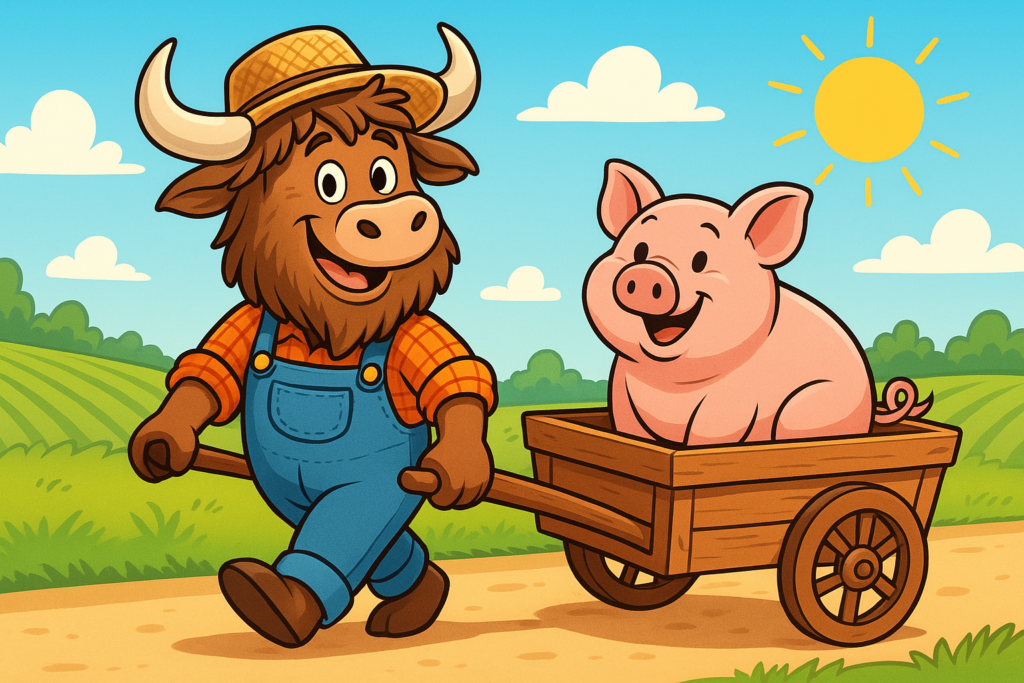
This A1 Beginner retelling of To Market, To Market keeps the plot clear for learners while still giving the story some atmosphere and momentum. At the market, he sees a big, fat pig. The pig is in the cart.
This version is written for English-speaking learners and includes clickable word help inside the story, full story audio, and lesson notes after the reading. It is free to use on Yak Yacker and is designed to feel natural, readable, and manageable in English.
"I need ," says the farmer. "I will ."
He his cart. . He goes to the market.
At the market, he sees a pig. "I want that pig," he says. He the pig.
The pig is in the cart. "Home again, home again, !" says the farmer.
But the pig ! "Stop, pig, stop!" cries the farmer. He the pig.
The pig by a tree. The farmer takes the pig. "You are a pig," he says. But he smiles.
They go home. The pig is good now. The farmer gives the pig an apple. "Oink, oink, thank you!" says the pig. The farmer . "To market, to market. What a day!"
The farmer says he needs food and will go to the market.
He takes his cart and goes clip-clop to the market.
At the market, he sees a big fat pig. He says he wants it and buys it.
The pig is in the cart. The farmer says, "Home again, jiggety jig!"
But the pig jumps out. The farmer cries, "Stop, pig!" and runs after it.
The pig stops by a tree. The farmer catches it. He says, "You are a bad pig," but he smiles.
They go home. The pig is good now. The farmer gives it an apple. The pig oinks thank you. The farmer laughs and says, "To market, to market, what a day!"
Let's look at some important words from the story. Read them aloud and try to remember.
- market: a place where you buy food and things
- cart: a small vehicle with wheels, pulled by a person or animal
- pig: a fat pink animal that makes the sound 'oink'
- farmer: a person who grows food or keeps animals
- jump: to push yourself off the ground into the air
In the story, the farmer moves around. Notice the little words that show where or in what direction.
These are called prepositions of movement. They help you describe actions clearly.
- "go to the market" - use to when you have a destination
- "run after the pig" - after means following or chasing someone
- "stop by a tree" - by here means next to or near something
- Try it yourself: "I walk ___ the park." (Answer: to)
English has special words for sounds. In the story, we hear "clip-clop" and "oink, oink". These are called onomatopoeia - words that sound like the noise they describe. They make the story more lively!
- "clip-clop" is the sound of a horse's feet or a cart on the road
- "oink, oink" is the sound a pig makes
- Other animals have their own English noises: a cow says "moo", a dog says "woof", a cat says "meow".
- Saying these sounds can help you remember the animal words and have fun with English!
You've learned new words, movement words, and funny sounds. Now it's time to use them. Here are some ideas to keep practicing.
- Read the story again, and act it out. Make the pig noises!
- Draw a picture of the market. Label the things: farmer, cart, pig, apple, tree.
- Tell the story in your own words to a friend or family member.
- Watch for prepositions like to, after, and by in other easy English stories.
To Market, To Market comes from the English / nursery rhyme tradition and is best known as a nursery rhyme. This Yak Yacker article is an original learner retelling based on Traditional nursery rhyme; public domain, so the wording here is simplified for modern learners rather than copied from one old edition.
Older printings, translations, and retellings of this story can vary quite a bit. The original audience was usually kids, but this version is adapted for A1 Beginner learners studying English. Shopping/food vocabulary.
If you want to look into the source tradition, start with Wikisource.
If you want to keep going, browse more in our English section and review the A1 English Vocabulary List. After that, try Basic English Question Words for another useful next step.