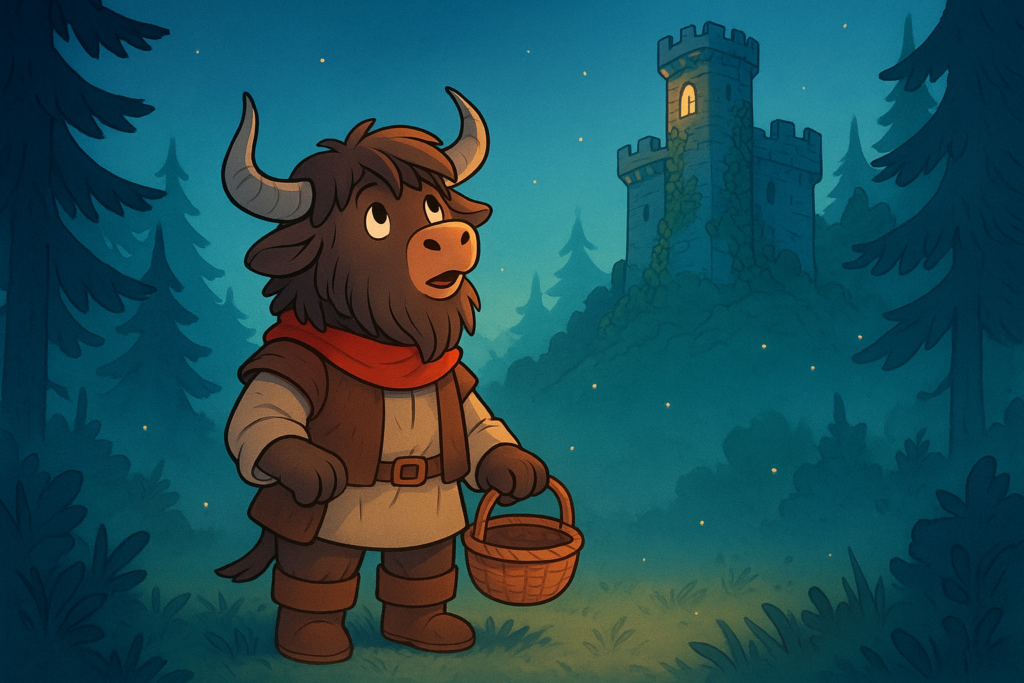
Welcome to Yak Yacker! Today's free B1 English story takes you deep into an ancient forest, where a curious young woodcutter named Finn stumbles upon a mysterious castle that only appears at twilight. Inside, he meets a silent princess trapped by a powerful spell. To free her, Finn must stay with her until sunrise-without speaking a single word. Can he keep quiet long enough to break the magic?
This interactive graded reader is perfect for intermediate learners (CEFR B1). As you read, you'll naturally pick up useful vocabulary for describing places, feelings, and magical events. If you get stuck on a word, just tap or click it for an instant definition. Plus, listen to the full story audio to improve your pronunciation and listening skills.
Each chapter comes with teaching notes and a short lesson to help you practice key language points. Enjoy a free, immersive English reading experience that feels like a real fairy tale. Let's step into the castle!
Elara lived in a small village at the foot of a hill. On top of the hill stood an old castle. Everyone said it was empty and dangerous.
But Elara was . She often looked up at the . "What is inside?" she wondered.
One sunny morning, she made a . "I will go today," she told herself. Her heart beat fast with both and .
She walked up the through the forest. The trees were tall and quiet. Birds sang softly, but the air felt strange.
Finally, she reached the big wooden gate of the castle. It was open a little. She pushed it slowly with a .
Inside, the was full of . The stones were old and grey, but the sun made them warm. "So quiet," Elara whispered.
She stepped into the great hall. in the sunlight from high windows. Suddenly, she heard a : "Hello?"
Elara . A young man stood in the . He wore simple old clothes and smiled kindly. "Don't be afraid," he said.
"Who are you?" Elara asked, her voice shaking. "My name is Leo. I this castle. You are the first in many years."
"But people say the castle is ," Elara said. Leo laughed gently. "Maybe I am the ghost! But I am a ."
They walked through the castle together. Leo showed her the tower with a . "This was my favourite place when I was alive," he said.
Elara stared. "When you were alive? So you really are a ghost?" Leo nodded, looking a little . "I died here long ago. But I stayed because I love this place. It was once full of and music."
Elara felt a mix of fear and sadness. "Are you ?" she asked. "Sometimes," Leo said. "But not today. You came."
They sat by a . Elara promised to visit again. "I will bring flowers," she said. Leo's smile returned. "The castle has been waiting for a friend."
As the sun went down, Elara walked home. The castle no longer looked dark and scary. It looked like a place with a .
From that day on, Elara visited often. She and Leo became true friends. The old castle was with stories and laughter.
Elara lived in a village near a hill. On the hill was an old castle. People said it was empty and unsafe.
But Elara was curious. She often looked at the dark towers and wondered what was inside.
One sunny morning, she decided to go. Her heart beat fast from fear and excitement.
She walked up a narrow path through a forest. Tall quiet trees surrounded her. Birds sang softly, but the air felt odd.
She reached the castle's big wooden gate. It was slightly open. She pushed it, and it creaked.
Inside, wildflowers filled the courtyard. The old grey stones felt warm in the sun. "So quiet," she whispered.
She entered the great hall. Dust floated in sunlight from high windows. Then she heard a soft voice say, "Hello?"
Elara froze. A young man stood in the shadows. He wore old clothes and smiled. "Don't be afraid," he said.
"Who are you?" she asked, shaking. "I'm Leo. I care for this castle. You're the first visitor in years."
"But people say the castle is haunted," Elara said. Leo laughed softly. "Maybe I'm the ghost! But a friendly one."
They walked through the castle. Leo showed her a tower with a sea view. "This was my favourite place when I was alive," he said.
Elara stared. "When you were alive? So you're a ghost?" Leo nodded sadly. "I died here long ago. I stayed because I love this place. It was once full of laughter."
Elara felt scared and sad. "Are you lonely?" "Sometimes," Leo said. "But not today. You came."
They sat by a dusty fireplace. Elara promised to visit again and bring flowers. Leo smiled. "The castle has been waiting for a friend."
At sunset, Elara walked home. The castle didn't look scary anymore. It seemed like a place with a heart.
After that, Elara visited often. She and Leo became good friends. The old castle came alive with stories and laughter.
The story uses the past simple to move events forward: 'Elara lived in a small village', 'She walked up the narrow path'. You'll notice past continuous for background atmosphere: 'Birds sang softly, but the air felt strange.'
Using these two tenses together helps the listener feel the sequence and the mood at the same time. Try reading a paragraph aloud and notice how the past simple verbs advance the action, while past continuous forms hold you inside the scene.
- Past simple for main events: made, walked, reached, pushed, stepped, heard.
- Past continuous for background details: was open, were tall and quiet, sang (ongoing), felt (state).
- Time markers: 'One sunny morning', 'Finally', 'Suddenly', 'As the sun went down' - they guide the narrative flow.
Rich vocabulary turns a simple walk into an experience. Look at how the story describes the castle: 'big wooden gate', 'courtyard full of wild flowers', 'dust floated in sunlight'.
Adjectives and sensory details make the old castle feel real. Words like 'creak', 'shadows', 'dusty fireplace' appeal to sight and sound, while emotional words like 'curious', 'fear and excitement' let us share Elara's journey.
- Sight: dark towers, tall and quiet trees, old and grey stones, sunlight from high windows.
- Sound: creak, soft voice, whispered, laughed gently.
- Feeling: heart beat fast, fear and excitement, mix of fear and sadness, lonely.
The characters come alive through what they say. Leo's friendly ghost joke - 'Maybe I am the ghost! But I am a friendly one' - shows kindness and a hint of loneliness. Elara's trembling 'Who are you?' reveals her bravery despite fear.
Short exchanges move the story forward. Notice how questions and promises ('Are you lonely?' 'I will bring flowers') build the friendship. The language is simple, but each line carries emotion.
- Speech verbs: said, asked, whispered, laughed, told - they replace plain 'said' to add feeling.
- Contractions: 'Don't be afraid', 'That's funny' (not in the story, but typical) - they keep dialogue natural.
- Ellipsis and hesitation: 'So you really are a ghost?' - shows realisation and surprise.
Now that you've seen how past tenses, descriptive words, and dialogue work together, think about a place you know - maybe a park, a childhood home, or even a room. What if it had a secret?
Write a short paragraph using past simple for actions and past continuous for atmosphere. Add two or three sensory details, and include a bit of dialogue. You don't need a ghost - just a moment that feels real. Share it with someone or keep it as your own little story.
- Start with a quiet setting: 'The garden lay still under the old tree.'
- Add a change: 'Suddenly, a bird called from the shadows.'
- Bring in a voice: '"Hello?" a small voice said.'
The Castle comes from the Czech / Franz Kafka tradition and is best known as a modernist novel. This Yak Yacker article is an original learner retelling based on Kafka novel/early English translation now public domain in U.S. as of 2026, so the wording here is simplified for modern learners rather than copied from one old edition.
Older printings, translations, and retellings of this story can vary quite a bit. The original audience was usually adult, but this version is adapted for B1 Intermediate learners studying English. Use public-domain translation only; note translation rights.
If you want to look into the source tradition, start with Library of Congress.
If you want to keep going, browse more in our English section and review the B1 English Vocabulary List. After that, try English Adjectives and Adverbs for another useful next step.