Welcome to The Elves and the Shoemaker, a classic fairy tale retold in simple English for beginners. In this story, a poor shoemaker gets magical help from two tiny elves at night. You will read about shoes, leather, and a big surprise!
This interactive A1 story comes with audio so you can listen and read along. Tap any word to see its meaning right away. Plus, you get free lesson notes to help you learn new words and grammar.
Start reading now and enjoy learning English with this happy tale!
There was a shoemaker. He had only a .
One night, he the leather. He . 'I will make shoes tomorrow,' he said. Then he .
In the morning, he saw ! 'Who made these shoes?' he said. A man came and the shoes.
The shoemaker got . He . He cut it and again. The next morning, were there!
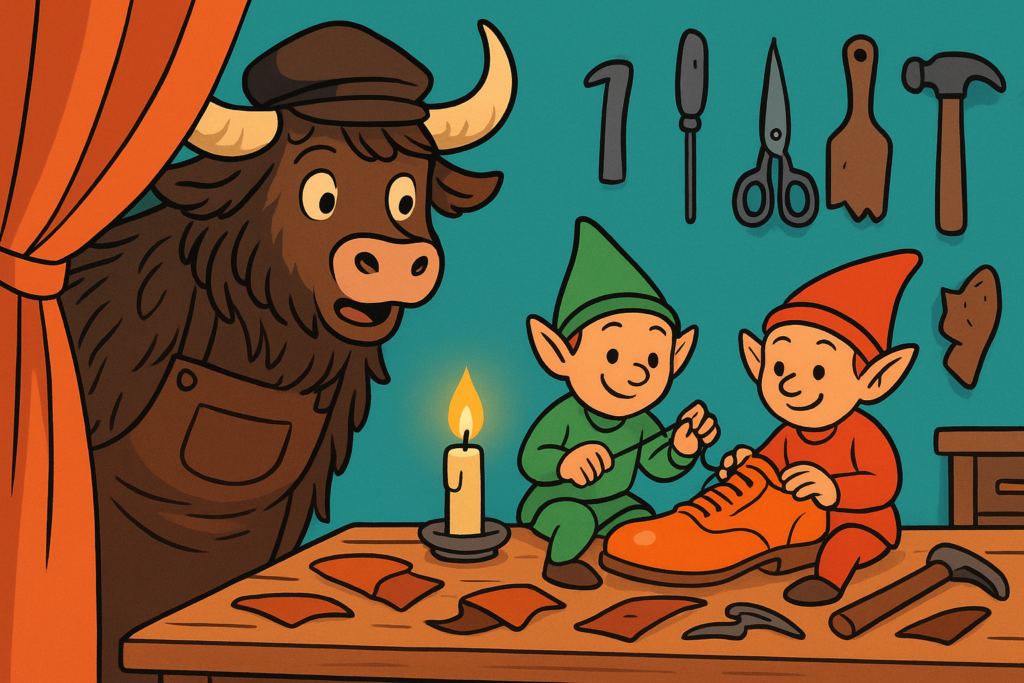
The shoemaker and his wife said, 'Who us?' One night, they did not . They . Then two little came. The elves and made .
The wife said, 'The elves have no clothes. They . Let us .' She tiny clothes and made tiny shoes for the elves.
That night, they on the table. The elves came and saw the clothes. They were so ! They put on the clothes and . Then they , and the shoemaker was never poor again.
A poor shoemaker had little leather.
One night, he cut the leather, put it on the table, and said he would make shoes tomorrow. Then he went to bed.
In the morning, he found new shoes. He asked who made them. A man bought the shoes.
He got money and bought more leather. He cut it and left it out. The next morning, there were more new shoes.
He and his wife wondered who helped them. One night, they stayed awake, hid, and watched. Two little elves came and quickly made beautiful shoes.
The wife said the elves had no clothes and they should help them. She sewed tiny clothes and shoes for the elves.
That night, they left the gifts. The elves saw the clothes, were happy, put them on, and danced. Then they left, and the shoemaker was never poor again.
This story uses simple, everyday words that are perfect for beginners. Let's look at some of the most important ones so you can use them too.
- shoemaker - a person who makes shoes
- leather - strong material for shoes and bags
- elves - small, magical helpers
- sewed - made clothes using a needle and thread
The story tells us what happened in the past. Notice the past tense verbs - they show finished actions.
- cut → cut (the same word!)
- put → put (the same word!)
- go → went
- see → saw
- make → made
- buy → bought
This fairy tale is all about helping each other. You can use these kind phrases in your own life.
- "Who helps us?" - asking about help
- "Let us help them." - suggesting to help
- "They helped us." - saying someone helped
- "They were so happy!" - showing feelings
Now it's your turn! Use what you learned to share the story or describe helping someone. Keep it simple and have fun.
- Draw the elves and label their clothes in English.
- Find three more past tense verbs in the story.
- Make a sentence with "Who helps you?"
The Elves and the Shoemaker comes from the German / Grimm tradition and is best known as a fairy tale. This Yak Yacker article is an original learner retelling based on Grimm/traditional; public domain, so the wording here is simplified for modern learners rather than copied from one old edition.
Older printings, translations, and retellings of this story can vary quite a bit. The original audience was usually kids, but this version is adapted for A1 Beginner learners studying English. Good for clothing/work vocabulary.
If you want to look into the source tradition, start with Project Gutenberg.
If you want to keep going, browse more in our English section and review the A1 English Vocabulary. After that, try English Question Words for another useful next step.