Welcome, adventurous reader! Are you ready to travel deep under the ground? Our B1 intermediate English story takes you on an exciting trip from an old volcano in Iceland all the way to the mysterious center of the Earth. You'll follow the brave Professor Lidenbrock, his worried nephew Axel, and their strong guide Hans as they climb down into the darkness. They discover a hidden world filled with strange oceans, giant mushrooms, and ancient animals that should be extinct. It's a classic adventure story, reimagined just for English learners at the B1 level.
This interactive graded reader isn't just fun to read-it's built to help you learn English naturally. Every difficult word is clickable for instant help, so you won't get stuck. You can listen to the full story audio to improve your pronunciation and listening skills. Plus, we've added clear lesson notes to explain grammar and vocabulary in a simple way. Best of all? Reading is completely free. So take a deep breath, and let's begin the journey down, down, down into the earth!
My name is Axel, and I live in Hamburg with my uncle, Professor Lidenbrock. He is a scientist, and I am his assistant. One day, I found an old book with a piece of inside.
The parchment had . My uncle tried to for hours. Suddenly, he shouted, 'I've done it, Axel! The message says: Go down into the of Snaefellsjökull, and you will reach the center of the Earth!'
My uncle's eyes were . 'We must leave !' he cried. I felt my heart sink-I was both and curious.
We to Iceland and met a guide called Hans. He was tall and quiet, but he looked very . Uncle said, 'Hans will go with us into the volcano.'
We the snowy mountain and stood at the crater's edge. Uncle pointed down and said, 'This is the door to the centre of the Earth!' We began our into the darkness.
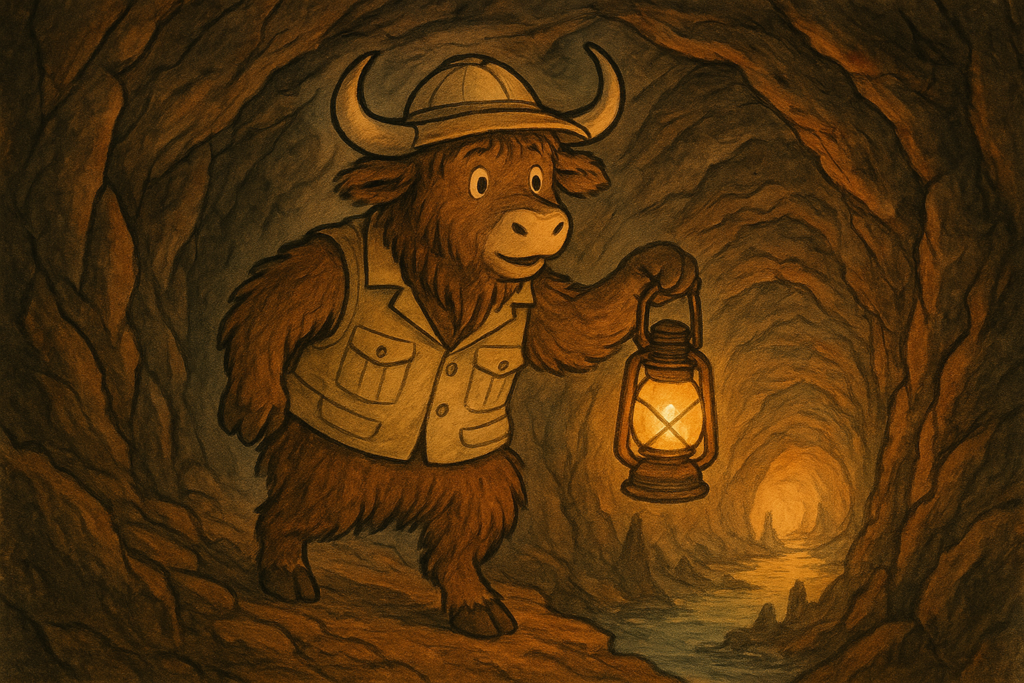
As we went deeper, the walls shone with . Strange rock shapes surrounded us. I whispered to Hans, 'Have you ever seen anything like this?' He just shook his head.
Soon we . I felt so that I wanted to give up. But Hans suddenly stopped and pressed his ear to the rock. 'Water,' he said. He found an !
We followed the stream and came to a huge . In front of us was an underground sea! 'It's an ocean!' I shouted. My uncle smiled. 'We must build a raft.'
We sailed across the dark water. Giant mushrooms grew on the shores, and fern trees reached high above. The air was . It was a world from long ago.
One day while we were sailing, two great sea monsters . They were ! Their long necks twisted together. Hans steered the raft away, and we watched in terror.
A few days later, a terrible storm hit us. Lightning flashed, and waves the raft. We held on for our lives. 'We are lost!' I cried.
After many hours, the storm threw us onto a beach. My uncle studied his . 'Axel, we are not at the centre-somehow we are !'
We found a tall chimney in the rock, but a huge stone . 'We must !' my uncle said. He prepared gunpowder, and we hid behind a wall.
BOOM! The explosion shot us into the chimney. Hot water and steam at incredible speed. We flew up and up through the dark.
Finally, we burst out of a volcano in Italy! The bright sun blinded us. 'We are alive!' I shouted. My uncle laughed. 'What an adventure, my boy!'
We returned home as heroes. People everywhere wanted to hear our story. But my uncle was already looking at . 'Where shall we go next?' he asked with a .
The story is full of useful words for describing adventures, emotions, and scientific discoveries. Let's explore some of them so you can use them confidently.
- crater - the bowl-shaped opening at the top of a volcano
- descent - the act of moving downward (opposite of ascent)
- cavern - a large, natural underground space
- raft - a simple, flat boat made of logs or planks
In English, we use different past tenses to show the order of events and to add drama. The past simple is for finished actions in the past. The past continuous sets the scene or describes an action in progress when another action happened. The past perfect shows which action happened first when you need to make the timeline clear.
- Past simple: 'We climbed the snowy mountain.' (main events)
- Past continuous: 'We were sailing when two sea monsters rose from the water.' (ongoing action interrupted by a sudden event)
- Past perfect: 'Uncle had prepared the gunpowder before we hid.' (action completed before another past action)
Jules Verne's story feels real because of the carefully chosen adjectives. These words help us imagine the strange, beautiful, and dangerous underground world. Notice how strong adjectives can change the feeling of a simple noun. For example, an 'ocean' is interesting, but an 'enormous underground sea' is unforgettable.
- brilliant scientist - shows intelligence and admiration
- strange letters - creates mystery
- enormous underground sea - emphasizes size and wonder
- dark water and giant mushrooms - builds a prehistoric, eerie atmosphere
Now it's your turn to play with language. Close your eyes and imagine you are Axel. Retell one part of the journey using past tenses and descriptive adjectives. You could describe the moment you first saw the underground sea, or the terrifying storm at sea. Try to use at least one adjective from each bullet above, and mix past tenses as you tell the story. After that, you could even write a short paragraph about where you think the professor wants to go next!
Journey to the Center of the Earth comes from an older public-domain story tradition and is best known as a public_domain_story_retelling. This Yak Yacker article is an original learner retelling based on public-domain source material, so the wording here is simplified for modern learners rather than copied from one old edition.
Older printings, translations, and retellings of this story can vary quite a bit. This version is adapted for B1 Intermediate learners studying English.
If you want to keep going, browse more in our English section and review the B1 English Vocabulary List. After that, try English Adjectives and Adverbs for another useful next step.