



I’ve been yacking about language apps on this site long enough that I figured I should finally sit down and do a proper italki review. If you’ve ever gone looking for a human to actually speak Spanish with, you’ve bumped into italki.
It’s the one that shows up in every “best way to learn a language” thread, usually in the second or third reply, right after someone says “just move to the country” and someone else says “Duolingo got me nothing.”
So I did the thing. Two weeks of it.
Three trial lessons with three different tutors, then regular 45-minute sessions with the one who fit. Mixed community and professional tutors, video on italki Classroom and one detour through Zoom, and a credit wallet I now understand better than I understand my actual bank account.
I want to be clear about what this is and isn’t. It isn’t a lab study.
Nobody paid me, nobody gave me free lessons, and italki isn’t a school with a household plan anyway. It’s me, a 40-year-old Ontarian with high school French, a Duolingo streak I’m weirdly protective of, and a stubborn need to actually speak Spanish instead of just tapping owls.
If you want the broader landscape, I keep a running list over at the reviews hub, and I’ve done the app-side comparison in the best language learning apps roundup. This one’s about the humans.
Quick verdict before the long version: italki is a marketplace where you book video lessons with real tutors, you pay per lesson, prices are set by the tutors, and the whole thing works shockingly well once you find your person. Finding your person takes a few tries and a few dollars.
That’s the deal.
8 out of 10 Yaks



Strong recommend, with footnotes. Let’s get into it.
What italki actually is
The simplest way I can put it: italki is a marketplace, not a school. There’s no curriculum, no subscription, no “semester.”
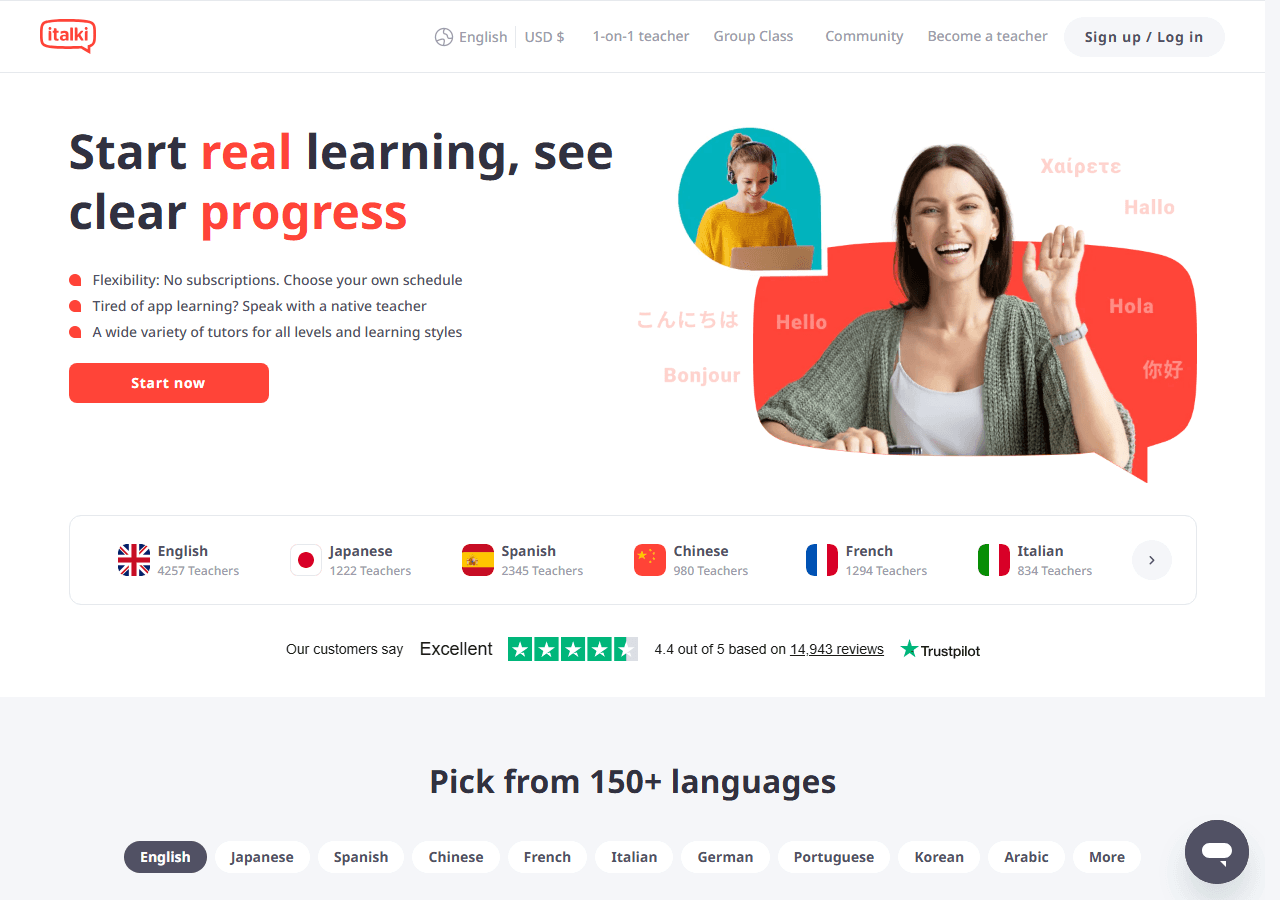
You browse teachers, you pick one, you book a slot, you show up on video, you pay per lesson. That’s it.
It’s closer to booking a massage or a haircut than enrolling in a course, except the haircut teaches you Spanish.
The official numbers: over 150 languages, more than 30,000 teachers, and 10 million-plus learners since it started back in 2007. I can’t verify any of that from my couch, but the Spanish section alone is genuinely huge.
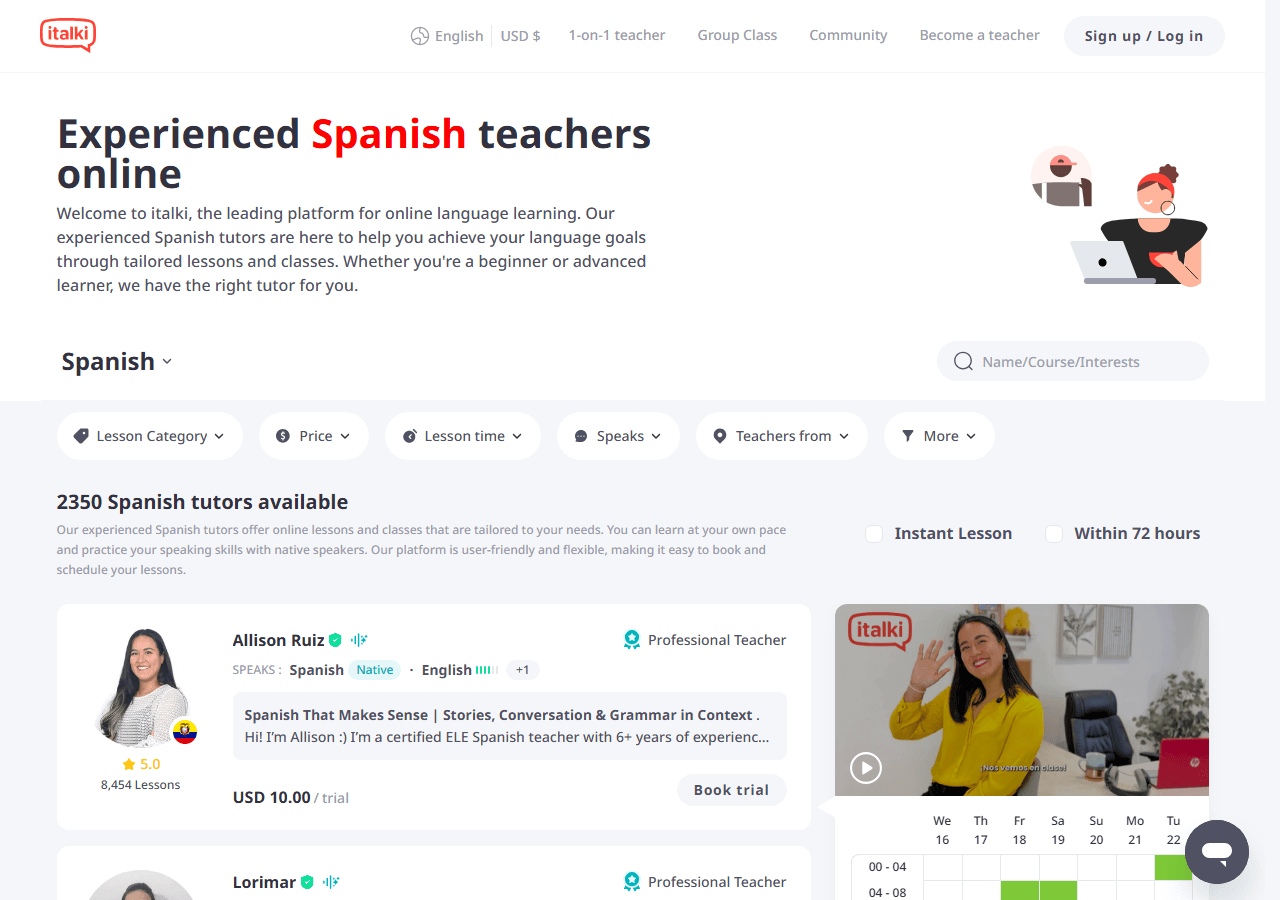
I filtered Spanish teachers by a few criteria and still had pages and pages of options. Mexico, Spain, Colombia, Argentina, tutors who teach kids, tutors who do exam prep, tutors whose intro video is just them laughing at their own joke.
All of it.
Lessons run 30, 45, or 90 minutes over video, usually on italki’s built-in Classroom or Zoom. Prices are all over the map because tutors set them individually.
The typical range is roughly $4 to $30 an hour, with most reviews clustering around $10 an hour and outliers up to $60 for the premium end. A $5 an hour tutor is usually just conversation.
Which, honestly, might be exactly what you need. More on that later.
The key mental model: italki doesn’t teach you anything. It connects you to someone who does, takes a cut (around 15% off the teachers’ side), and handles the money and scheduling.
Whether you learn anything depends almost entirely on who you book. That’s either the feature or the bug, depending on your week.
How we used it: two weeks and three trials
Here’s the honest timeline, awkward bits included.
Trial one was rough. I picked a professional teacher mostly because her intro video was polished and she had a ton of reviews, which in hindsight is like picking a restaurant because it has a big parking lot. The connection dropped twice in italki Classroom, we migrated to Zoom mid-lesson, and she spent a good chunk of the 30 minutes walking me through a PDF about her methodology.
Her methodology seemed fine. I have no memory of it.

I spoke maybe four sentences of Spanish total, one of which was “¿puedes repetir?” about six times in a row. Thirty minutes of mostly listening to a sales pitch about lessons I hadn’t bought yet.
Not a disaster, just… not a conversation.
Trial two was a community tutor, and he saved the whole experiment. Cheap, laid-back, no PDF, and within two minutes he was just… talking to me. Slowly, with gestures, typing new words into the chat as they came up.
It was uncomfortable in the way a good workout is uncomfortable. I butchered verb endings for half an hour and he just kept the ball rolling.
This is the thing nobody tells you: a lesson where you feel like an idiot can still be a great lesson, and a lesson where you feel comfortable might be a PowerPoint.
Trial three was a professional teacher who split the difference. Proper structure, an actual assessment of where my Spanish was falling apart (everywhere, but specifically the past tenses), and a plan for what we’d do going forward. Slightly more expensive than the community tutor, still very reasonable.
I ended up going back to the structured professional for regular 45-minute sessions, and booking the community guy occasionally as a cheap “just talk” session when I had budget left over. That combo, it turns out, is the actual product.
The platform is just the plumbing.
Two weeks isn’t a long time, but it’s long enough to learn the shape of the thing: italki front-loads all the work. Shopping, trialling, deciding.
Once you’ve picked someone, it’s just lessons.
Professional vs community tutors: the badge means less than you think
italki splits teachers into two types, and the difference confuses everyone at first.
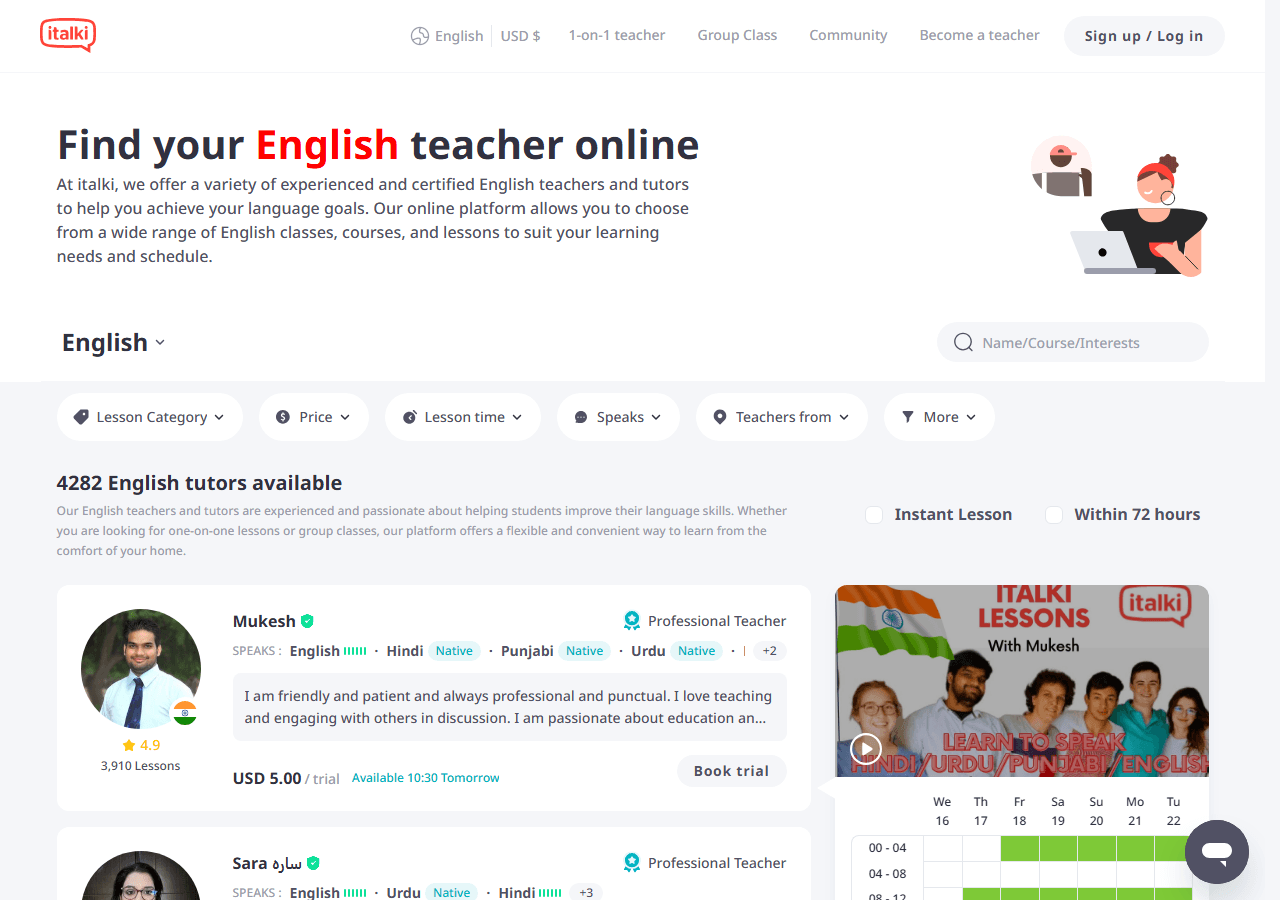
Professional teachers have verified credentials. Teaching certificates, degrees, the paperwork.
They tend to charge more, teach with structure, and handle things like exam prep or teaching from absolute zero.
Community tutors are native or fluent speakers who don’t have the credentialing. They’re cheaper, and the majority of them are best understood as conversation partners who’ll gently correct you.
Here’s the thing the badge doesn’t tell you: it’s a credential check, not a quality check. I had a professional whose main skill was explaining her own syllabus, and a community tutor who did more for my speaking in 30 minutes than a month of tapping owls.
Plenty of people end up preferring a good community tutor for conversation practice, because what you need at that stage isn’t pedagogy, it’s reps. Minutes of talking.
The flip side is real though. If you’re starting from nothing, structure matters, and structure is more likely (not guaranteed) to come from a professional.
My advice after two weeks: don’t overthink the badge. Read reviews, watch the intro videos, and book trials with a mix of both types.
The badge tells you what they’ve done, not whether you’ll mesh.
One filter I do recommend using deliberately: country. If you want Mexican Spanish, filter for Mexico.
Spain, filter for Spain. The dialects differ enough that you’ll notice, and it’s nice to have your ear trained on the accent you’ll actually hear.
Also, and I say this with love, don’t shop for tutors the way people shop on dating apps. The pretty intro video is not the lesson.
Ask me how I know.
Credits, fees, trials, and the 24-hour scare
This is the unglamorous part, but it’s where italki loses people, so let’s yack about it.

The credit wallet. You don’t pay tutors directly. You buy italki Credits, which are pegged roughly to the US dollar, and lessons get paid out of that wallet.
It’s a wallet system, which means fees, and it means your money is now italki’s money until you spend it. Credits are generally non-refundable, and they can lapse after roughly 12 months of account inactivity.
So don’t top up $200 because you got excited. Buy what you’ll spend in a few weeks.
Trials. Trial lessons are discounted, not free. They’re usually 30 minutes, and new users typically get access to a bunch of them, so you can audition several tutors cheaply.
Budget for two or three trials minimum. I did three, and even with one dud I considered that money well spent.
Think of trials as a shopping cost, not a lesson cost.
Cancellation. Here’s where I nearly ate it. I had a session booked, life happened, and I went to cancel maybe 20 hours before the lesson. italki’s rule: cancel inside roughly 24 hours of the start time and you still pay.
I caught it in time, barely, because I happened to check the app before bed instead of in the morning. If I’d waited, that’s a paid lesson I slept through.
The lesson (the meta lesson): popular tutors’ calendars fill up, which makes you want to book ahead, which makes you commit to time slots a week out, which means you need to actually look at your calendar before you book. The system is fair.
It’s just not forgiving.
Also worth knowing: teachers pay italki around a 15% cut. I mention this not because it changes your experience, but because it explains the vibe. italki is incentivized to get you booking, not to make sure any particular tutor is good.
The quality control is mostly the review system and the block button. Which is exactly how a marketplace works.
Just go in with open eyes.
A lesson, start to finish
So what does a good session actually look like? Here’s a typical one with my tutor, the structured professional.
Before: I’d get a calendar reminder, fire up italki Classroom in the browser (no app install needed, which I appreciated), and spend five minutes warming up by reading some Spanish out loud so my mouth wasn’t starting cold.
Video check, then talk. Two minutes of “how was your week,” which sounds like filler but is actually the lesson in disguise, because that’s the real-world skill. Then we’d dig into whatever we’d planned.
For me it was the past tenses, because apparently I had been living entirely in the present tense, which is very zen of me but not useful for storytelling.
She kept a running document of my mistakes and new vocabulary, shared corrections in the chat as we went so I didn’t lose the thread of the sentence, and pushed me to talk more than I wanted to. That last part is the whole job.
A tutor who lets you sit back and listen is taking your money to entertain you.
Homework. Yes, at 40, I had homework. Small stuff, between lessons: write five sentences about my weekend, review the vocab list.
It took maybe 20 minutes and it’s the difference between lessons being events and lessons being part of a chain.
After: the lesson ends, you get prompted to rate it, and the whole thing is seamless on the tech side. My trial-one connection issues were the only technical hiccup in two weeks, and I half suspect that was my Wi-Fi’s fault.
One honest note: the first lessons are awkward. There is no way around this.
You are a stranger, on video, speaking badly, to another stranger whose job is to watch you speak badly. The awkwardness drops fast.
By session three with my tutor I’d stopped performing and started just talking. If you bail after one awkward trial, you’re quitting right before it gets good.
The quality lottery, and how to shop for it
Here’s the honest downside of a marketplace with 30,000 teachers: it’s a lottery. The average is decent, the tails are long.
Some tutors are magic. Some will sell you a PDF about their methodology.
How to tilt the odds:
- Watch the intro videos, but discount polish. You’re looking for someone who talks like a person, not someone who’s clearly edited their video five times.
- Read the reviews, especially the medium ones. Five-star reviews are nice; the three-star ones where someone explains what didn’t work are gold.
- Look at availability before you fall in love. The perfect tutor who’s awake when you’re asleep is a fan, not a teacher.
- Book mixed trials. One professional, one community, maybe one wildcard. I did three and it took me exactly three to find the right one. Coincidence? Maybe.
- Filter by country for dialect. Cheap win, takes two clicks.
And here’s the strategic point that took me two weeks to really internalize: if you’re roughly A2 or better in the language, one-on-one video lessons are absurdly effective, because the thing holding you back is speaking minutes, and a tutor is pure speaking minutes. Below that, though, lessons can stall.
A total beginner needs a teacher who’ll structure things from zero, and not all of them will. If you’re at day one, either pick a professional who explicitly teaches beginners or build a base first with an app (the how to learn a language guide has my full rant on sequencing), then bring in the humans.
Pricing: is it actually expensive?
Let’s put numbers on it, because “marketplace with 30,000 teachers” tells you nothing about your wallet.
Trials
Discounted 30-minute trials, not free. Budget two or three of them.
Credits
Prepaid wallet, card fees, generally non-refundable, and they can lapse after about a year idle.
Lessons
Most tutors sit around $10 an hour. Typical range about $4 to $30, with premium outliers around $60.
The typical lesson. Most tutors sit around $10 an hour once you average it out, with the range running from about $4 to $30 and premium outliers around $60. My community tutor was near the bottom of that range.
My professional was comfortably below the middle. Three trials plus two weeks of regular sessions cost me less than a nice dinner out.
Per hour of actual speaking practice, nothing I’ve found touches this.
The comparison that matters. A group class at a local school or community centre runs you, in my experience, $15–$30 an hour for maybe 5 minutes of personal speaking time per session, because there are ten of you and one teacher. A private tutor found the old way (Craigslist, a university bulletin board, a friend of a friend) might be $30–$60 an hour. italki’s $10-ish gets you 100% of the attention, 100% of the speaking time, on your schedule.
That’s the core value proposition and it’s genuinely good.
Subscription math. Duolingo Super runs around $80–$90 a year; the Max tier is substantially more. Those are practice tools, not teachers, so it’s a bit apples-to-oranges, but here’s the useful frame: for roughly the cost of Super, you could buy 8–10 hours of live one-on-one tutoring on italki.
Depending on your goals, that’s a better trade. I lay out the full app comparison in the best language learning apps roundup, and I keep a running list of language courses if you want the classroom-style alternatives.
Where the costs sneak up. Trials add up if you’re indecisive. The credit wallet means you’ll probably always have $10–$20 parked with italki.
And if you trip the 24-hour cancellation window, that’s a real loss of real money. None of these are scams.
They’re just the friction of the model.
Is it expensive? No. It’s the cheapest speaking practice per dollar I’ve found that involves an actual human on the other end.
The expensive version of italki is the one where you don’t use it, because you bought credits and booked nothing. Ask my gym membership how that works.
What I liked about italki, and what wore me down
What I liked
Two weeks is not a long time, but it’s long enough for the honeymoon phase to wear off and for the real product to show up. Here’s what actually worked for me, and what started to grate.
The flexibility is genuinely great. No subscription, no package I’m locked into, no “cancel by Tuesday or we charge you again.” I booked a trial, booked another one two days later, skipped a weekend, booked a regular session when I felt like it.
If my Tuesday self doesn’t want to talk to anyone, my Thursday self can pick it back up. Compare that to a language school where you’re committed to a term.
The price of speaking minutes is unbeatable. This is the core value and I want to be clear about it. A 45-minute session with a good tutor cost me less than lunch.
In a group class at a local school, I’d get maybe 8 minutes of actual talking time in an hour, split with seven other people who all want to practice the same past tense. On italki, I got 45 minutes where the only person talking was me or the person correcting me.
Per minute of actual speaking, it’s not even close.
Instant feedback from a human. When I said something wrong, I found out in three seconds. Not in a week when the app’s algorithm finally circles back, not never.
A real person heard me mangle the subjunctive and gently rebuilt it with me. That loop, speak, get corrected, try again, is the whole reason to do this.
The choice is absurd. Thousands of Spanish tutors, and I could filter by country, price, availability, whether they teach kids, whether they have a badge, everything. If you want a tutor from Mexico City who’s free Sunday mornings and charges $9 an hour, that person exists.
That’s wild and I kept forgetting to appreciate it.
What wore me down
What wore me down.
The booking admin is a part-time job. Checking calendars, comparing time zones, reading video intros, scrolling reviews, rescheduling when life happened. Two weeks in, I’d sunk more time into choosing tutors than some people spend studying.
The marketplace model gives you freedom and it charges you for it in decision fatigue.
The 24-hour cancellation window bit me once. My second regular session, I had a work thing come up and tried to cancel about 20 hours before. Still paid.
The tutor was nice about it and offered a makeup at her discretion, but the policy is the policy: inside roughly 24 hours, you’re paying whether you show up or not. I knew this going in and it still stung.
Trial lesson lottery. Of my three trials, one was great, one was fine, one was a mismatch where I spent 30 minutes mostly nodding. That’s not italki’s fault exactly, it’s the nature of shopping for a human.
But it means the trial phase costs real money and real evenings, and there’s no shortcut around it.
The wallet system. italki Credits instead of dollars, card processing fees on top, credits that generally don’t come back to you once bought and can lapse after about a year of inactivity. None of it is a scam, but it’s friction, and friction designed to make you top up more than you need.
I’d rather just pay per lesson like a normal human.
Horror stories, and who it works for

The horror story
You don’t have to dig far to find italki complaints, and most of them follow a few patterns.
The no-show. Tutor doesn’t appear, you’re sitting in an empty video call at the appointed minute. Annoying, but italki’s resolution process generally refunds you if the teacher genuinely doesn’t show.
The worse version is the tutor who shows up ten minutes late and wants full pay.
The chat-only tutor. You book what you think is a lesson and get a pleasant 45-minute conversation about weekend plans with no structure, no corrections, no notes. If you paid $5, that’s arguably the deal.
If you paid $15 expecting teaching, it’s a letdown.
The disappearing tutor. This one’s the real risk of a marketplace. Your teacher stops logging in, and your schedule, your rapport, your custom lesson plan all evaporate.
There’s no school guaranteeing a replacement. It didn’t happen to me in two weeks, obviously, but it’s the structural weakness of the model and it’s why you shouldn’t get emotionally attached to exactly one tutor.
The flip side: italki works extremely well for a specific kind of person. Someone who’s already got some foundation (A2 and up), knows what they want out of a lesson, and is willing to shop a bit.
When it works
If that’s you, the horror stories are mostly avoidable with a bit of care, more on that in the shopping section below, which you already read because this is Part 2 and I trust you.
Who italki is for
- Self-studiers who need speaking practice. If you’ve been grinding Duolingo or Anki and can read way better than you can talk, italki is the missing half of your routine.
- Intermediate learners stuck at the plateau. This is the classic italki user. You can order food, you can’t hold a conversation. Thirty structured minutes of talking twice a week is the single best cure.
- Dialect hunters. Learning Spanish for Mexico specifically? Filter for Mexican tutors. Wanting Castilian Spanish before moving to Madrid? Same deal. Try getting that from an app.
- People with weird schedules. Nurses, shift workers, parents of small children. Someone on italki is available at 6 a.m. your time, in your language, at your price.
- Anyone who’s tried everything else and still can’t speak. If apps haven’t made you conversational after a year, this is the thing you’ve been avoiding because it’s scary. It works because it’s scary.
Who should skip it
- Total beginners with no tutor-shopping energy. At true zero, you need a teacher who’ll structure from nothing, and finding one takes effort. If you book three random cheap trials as a day-one learner, you’ll probably stall and blame the platform.
- Subscription lovers who want to fire and forget. italki has no subscription, which I count as a plus, but it also means every lesson is a decision you make. Some people genuinely want $13 a month and zero choices.
- The socially anxious, at least at first. A one-on-one video call in a language you barely speak is exposure therapy. Some people thrive on it. Some people book one lesson, sweat through it, and never come back. Know which one you are.
- Anyone who needs the credits back. Non-refundable wallet, potential to lapse after a year idle. If you’re the type with three dollars sitting in a defunct app wallet, factor that in before topping up $100.
italki vs Preply: an honest comparison
I don’t have a horse in this race. Preply is the other big name in tutor marketplaces and they’re both fine.
Here’s the actual difference.
italki is à la carte. You buy credits, you book individual lessons, no packages required.
It covers 150+ languages, so if you’re studying something rarer than Spanish, italki probably has someone and Preply might not. Trials are discounted rather than free.
Preply leans on hour packages and has a matching process plus a satisfaction guarantee. The guarantee is real and appealing: if your first lesson doesn’t work out, they’ll match you with someone else rather than leave you sorting through video intros alone.
The catch is the commitment: you’re generally buying a bundle of hours upfront.
So the honest framing: Preply is better if you want to be matched and you’re confident enough to commit, italki is better if you want total control and flexibility, or you’re studying a less common language. If you’re learning Spanish and you know you’ll do two lessons a week for six months, either one works and the price difference washes out.
If you’re not sure how committed you are, italki’s pay-as-you-go model is the safer first step.
One more thing Preply has going for it: the satisfaction guarantee means a bad first lesson costs you less in frustration. italki’s answer to that is cheaper trials and a deeper tutor pool. Pick your poison.
Pros and cons
Pros
- Real 1:1 speaking time with a human, which is the thing that actually makes you fluent
- Unbeatable speaking-minutes-per-dollar, especially vs group classes
- No subscription, no package lock-in
- 150+ languages, 30,000+ teachers, so the pool is enormous
- Filter by country for the exact dialect you want
- Trial lessons let you audition tutors cheaply
Cons
- Trial-and-error shopping takes time and money
- Credits wallet with card fees, non-refundable, can lapse after ~12 months idle
- Sub-24-hour cancellation still costs you full price
- Quality varies tutor to tutor; the professional badge is not a quality guarantee
- Teachers take roughly a 15% cut, which… fine, but it’s baked into prices
- No-show and disappearing-tutor risk inherent to any marketplace
What we'd use alongside it
italki shouldn’t be your only tool, and honestly it can’t be for most people. You get one or two hours a week of human contact; the other 167 hours are on you.
Here’s the stack I’d run:
- Duolingo for the daily habit and vocab volume. Free, gamified, keeps the streak alive. Its Super and Max tiers are a separate question, but the free tier does real work between lessons.
- Anki for the words your tutor corrects in-session. This is the killer combo: your italki lesson generates your Anki deck. Every correction becomes a card. Nothing I’ve found turns a tutoring session into long-term memory better.
- Yak Cards for structured practice between sessions, especially drilling the stuff you fumbled in your last lesson. It’s literally what we built them for.
- A proper language course if you want a curriculum spine under everything. italki tutors will happily work alongside one, and the good ones will build on whatever you’re using.
And if you want the whole map of how these pieces fit together, our how to learn a language guide covers the full system. For Spanish specifically, our learn Spanish page has the language-specific version.
The short version: tutor for speaking, app for habit, cards for retention. Any one alone and you’re leaving progress on the table.
What others are saying
I wasn’t the only one who spent two weeks on this. Other reviewers landed in roughly the same place:
Consensus across all of us: great platform, real value, quality varies, the shopping is the work.
FAQ
Prices, plan names, and features below are as of September 2026.
Is italki free?
No. There’s no subscription, but every lesson costs money. Trials are discounted, not free, though new users often get access to a few discounted trial lessons, which is how I did three.
Are the trial lessons free?
Discounted, not free. Usually 30 minutes at a reduced rate.
Budget for two or three of them, because one trial is a small sample size for deciding who gets your regular money.
Do italki credits expire?
They can. Generally, credits are non-refundable once purchased and can lapse after around 12 months of account inactivity.
So don’t top up $150 for a $12 lesson. Top up roughly what you’ll use in the near term.
italki or Preply?
italki if you want à la carte booking, more languages, and more control. Preply if you want to be matched with a tutor, don’t mind buying hour packages, and value the satisfaction guarantee.
I lean italki for flexibility, but both are legitimate.
Can beginners use italki?
Yes, but with an asterisk. Beginners need a teacher who’ll structure lessons from zero, and finding one takes more careful shopping.
Around A2 and up, italki shines, because you can spend the whole lesson talking. At true beginner level, pair it with self-study and pick a tutor who explicitly teaches from scratch.
Can I cancel a lesson last minute?
Inside roughly 24 hours of the start time, you generally still pay. Outside that window, you can cancel or reschedule normally.
Popular tutors’ calendars fill up too, so last-minute rescheduling isn’t always smooth even when it’s allowed.
After two weeks
So that’s the italki story: two weeks, three trials, a couple of regular sessions, one cancelled-too-late lesson I paid for, and a real improvement in my ability to actually open my mouth and produce Spanish sentences on demand.
Would I keep going? Yes, honestly.
The thing italki sells, uninterrupted speaking time with a patient human who corrects you, is the thing almost nothing else sells at this price. The friction is real: the shopping, the wallet, the cancellation rules, the occasional mismatch.
But the core transaction is sound, and once you find your tutor, the admin mostly disappears and you’re just… learning. Talking.
Getting better.
It’s not a magic system and it’s not a school. It’s a marketplace, and marketplaces reward people who shop well.
Shop well, and you get something genuinely valuable: cheap, abundant, one-on-one speaking practice in whatever language you want, with whatever accent you want, at whatever hour your weird life allows.
That’s worth a lot. Not perfect, occasionally annoying, worth it.
8 out of 10 Yaks
Check out the rest of our reviews, browse italki’s teacher search yourself, or go straight to the Spanish teachers and start auditioning. And if English is your target language instead, our 139-lesson English course starts here with Lesson 1.