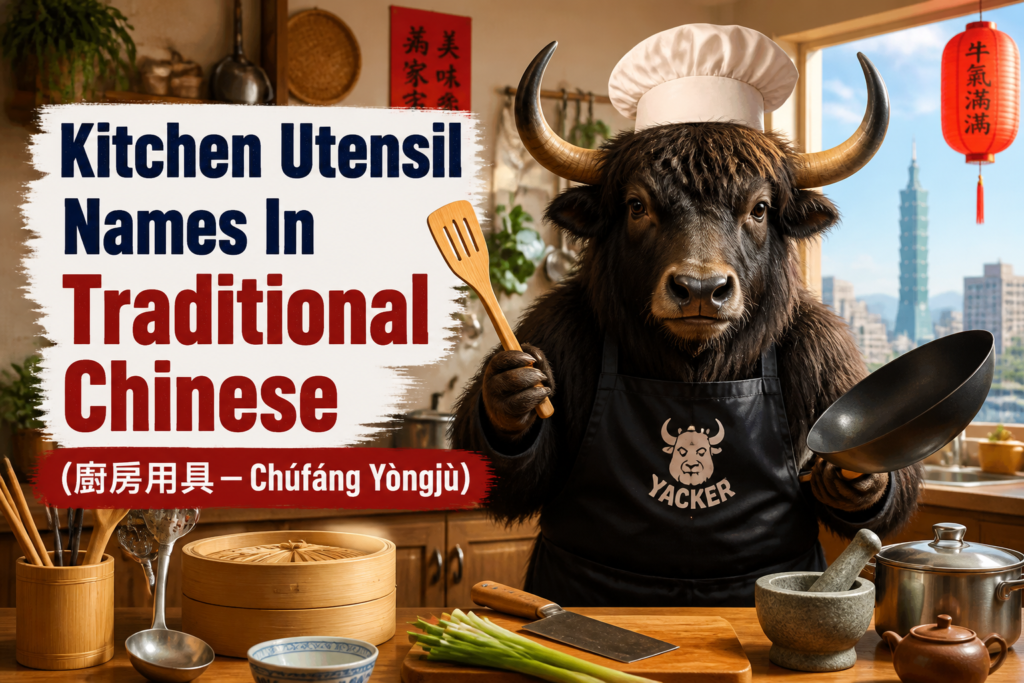
廚房用具 chúfáng yòngjù means kitchen utensils and kitchen tools. If you can name the stuff in a kitchen, suddenly recipes make sense, shopping gets easier, and you stop pointing at a ladle like it’s a rare museum artifact. That is a very good trade.
For the broader learning path, visit our parent guide.
This guide teaches the most useful kitchen utensil names in Traditional Chinese, with pinyin, English meanings, and real example sentences. The examples use natural Taiwan-style Mandarin, because nobody needs an awkward classroom sentence when they are trying to find the spatula.
If you also want more food words, you can pair this article with Kitchen Vocabulary in Traditional Chinese, and for more household words, try House Vocabulary in Traditional Chinese and Tool Names in Traditional Chinese.
By the end, you will be able to talk about common kitchen tools, understand simple directions, and shop with fewer mysterious hand gestures. Progress: delicious.
Quick Starter: The Most Useful Kitchen Utensils
| Traditional Chinese | Pinyin | Meaning | Example (ZH) | Example (Pinyin) | Translation (EN) |
|---|---|---|---|---|---|
| 鍋子 | guōzi | pot; pan | 這個鍋子很重。 | Zhè ge guōzi hěn zhòng. | This pot is very heavy. |
| 平底鍋 | píngdǐguō | frying pan; skillet | 我想買一個平底鍋。 | Wǒ xiǎng mǎi yí ge píngdǐguō. | I want to buy a frying pan. |
| 菜刀 | càidāo | kitchen knife | 菜刀在哪裡? | Càidāo zài nǎlǐ? | Where is the kitchen knife? |
| 砧板 | zhēnbǎn | cutting board | 請把砧板洗乾淨。 | Qǐng bǎ zhēnbǎn xǐ gānjìng. | Please wash the cutting board clean. |
| 湯匙 | tāngchí | spoon | 我需要一支湯匙。 | Wǒ xūyào yì zhī tāngchí. | I need a spoon. |
| 筷子 | kuàizi | chopsticks | 桌上有兩雙筷子。 | Zhuō shàng yǒu liǎng shuāng kuàizi. | There are two pairs of chopsticks on the table. |
| 碗 | wǎn | bowl | 這個碗可以微波嗎? | Zhè ge wǎn kěyǐ wēibō ma? | Can this bowl go in the microwave? |
| 盤子 | pánzi | plate | 盤子已經洗好了。 | Pánzi yǐjīng xǐ hǎo le. | The plates are already washed. |
| 鍋鏟 | guōchǎn | spatula | 用鍋鏟炒菜比較方便。 | Yòng guōchǎn chǎo cài bǐjiào fāngbiàn. | Using a spatula to stir-fry is more convenient. |
| 漏勺 | lòusháo | slotted spoon; strainer spoon | 把麵撈起來,用漏勺。 | Bǎ miàn lāo qǐlái, yòng lòusháo. | Lift the noodles out with a slotted spoon. |
Useful Kitchen Utensil Names
Here is a bigger set of common kitchen words. These are the names you actually hear in real life, not the dusty dictionary leftovers that show up only to make learners sigh.
| Traditional Chinese | Pinyin | Meaning | Example (ZH) | Example (Pinyin) | Translation (EN) |
|---|---|---|---|---|---|
| 湯鍋 | tāngguō | soup pot | 湯鍋裡正在煮雞湯。 | Tāngguō lǐ zhèngzài zhǔ jītāng. | Chicken soup is cooking in the soup pot. |
| 炒鍋 | chǎoguō | wok | 這個炒鍋很適合快炒。 | Zhè ge chǎoguō hěn shìhé kuàichǎo. | This wok is great for stir-frying. |
| 電鍋 | diànguō | rice cooker; electric cooker | 我把飯放進電鍋了。 | Wǒ bǎ fàn fàng jìn diànguō le. | I put the rice into the rice cooker. |
| 蒸籠 | zhēnglóng | steamer basket | 包子要用蒸籠蒸。 | Bāozi yào yòng zhēnglóng zhēng. | Steamed buns need to be cooked in a steamer basket. |
| 濾網 | lǜwǎng | strainer; mesh sieve | 先用濾網把湯渣過濾掉。 | Xiān yòng lǜwǎng bǎ tāng zhā guòlǜ diào. | First, strain the soup with a mesh sieve. |
| 打蛋器 | dǎdànqì | egg beater; whisk | 打蛋器在哪個抽屜? | Dǎdànqì zài nǎ ge chōutì? | Which drawer is the whisk in? |
| 削皮器 | xiāopíqì | peeler | 我用削皮器削蘿蔔。 | Wǒ yòng xiāopíqì xiāo luóbo. | I use a peeler to peel the carrot. |
| 開罐器 | kāiguànqì | can opener | 這罐打不開,拿開罐器來。 | Zhè guàn dǎ bù kāi, ná kāiguànqì lái. | This can won’t open, so bring the can opener. |
| 開瓶器 | kāipíngqì | bottle opener | 你有開瓶器嗎? | Nǐ yǒu kāipíngqì ma? | Do you have a bottle opener? |
| 量杯 | liángbēi | measuring cup | 做蛋糕需要量杯。 | Zuò dàngāo xūyào liángbēi. | Making cake requires a measuring cup. |
| 量匙 | liángchí | measuring spoon | 一小匙鹽用量匙比較準。 | Yì xiǎo chí yán yòng liángchí bǐjiào zhǔn. | A small spoon of salt is more accurate with a measuring spoon. |
| 保鮮盒 | bǎoxiānhé | food storage container | 把剩菜放進保鮮盒。 | Bǎ shèngcài fàng jìn bǎoxiānhé. | Put the leftovers into a food storage container. |
| 便當盒 | biàndānghé | lunch box; bento box | 我每天都帶便當盒上班。 | Wǒ měitiān dōu dài biàndānghé shàngbān. | I bring a lunch box to work every day. |
| 餐具 | cānjù | cutlery; tableware | 餐具在櫃子裡。 | Cānjù zài guìzi lǐ. | The cutlery is in the cabinet. |
| 刀叉 | dāochā | knife and fork | 西餐的刀叉放在右邊。 | Xīcān de dāochā fàng zài yòubiān. | The knife and fork for Western food are on the right. |
| 湯碗 | tāngwǎn | soup bowl | 幫我拿兩個湯碗。 | Bāng wǒ ná liǎng ge tāngwǎn. | Help me get two soup bowls. |
| 菜籃 | càilán | vegetable basket; shopping basket | 買菜時我會帶菜籃。 | Mǎi cài shí wǒ huì dài càilán. | When I buy groceries, I bring a basket. |
| 洗碗海綿 | xǐwǎn hǎimián | dishwashing sponge | 洗碗海綿有點舊了。 | Xǐwǎn hǎimián yǒudiǎn jiù le. | The dishwashing sponge is a bit old. |
| 菜瓜布 | càiguābù | scouring sponge; scrub pad | 鍋子很油,用菜瓜布比較好洗。 | Guōzi hěn yóu, yòng càiguābù bǐjiào hǎo xǐ. | The pan is greasy, so a scrub pad works better. |
Cooking Tools And Small Devices
Some kitchen words are not exactly “utensils,” but they are absolutely part of kitchen survival. If you cook, bake, or just reheat noodles at midnight, these matter.
| Traditional Chinese | Pinyin | Meaning | Example (ZH) | Example (Pinyin) | Translation (EN) |
|---|---|---|---|---|---|
| 攪拌機 | jiǎobànjī | blender | 我把水果丟進攪拌機。 | Wǒ bǎ shuǐguǒ diū jìn jiǎobànjī. | I put the fruit into the blender. |
| 果汁機 | guǒzhījī | juice blender; juicer-blender | 果汁機聲音有點大。 | Guǒzhījī shēngyīn yǒudiǎn dà. | The juice blender is a bit loud. |
| 烤箱 | kǎoxiāng | oven | 烤箱預熱好了嗎? | Kǎoxiāng yùrè hǎo le ma? | Is the oven preheated? |
| 微波爐 | wēibōlú | microwave | 便當可以放進微波爐嗎? | Biàndāng kěyǐ fàng jìn wēibōlú ma? | Can the lunch box go into the microwave? |
| 電磁爐 | diàncílú | induction cooker | 電磁爐比瓦斯爐更安全嗎? | Diàncílú bǐ wǎsīlú gèng ānquán ma? | Is an induction cooker safer than a gas stove? |
| 瓦斯爐 | wǎsīlú | gas stove | 瓦斯爐關了嗎? | Wǎsīlú guān le ma? | Did you turn off the gas stove? |
| 電熱水壺 | diànrèshuǐhú | electric kettle | 先用電熱水壺燒水。 | Xiān yòng diànrèshuǐhú shāo shuǐ. | First, use the electric kettle to boil water. |
| 保溫壺 | bǎowēnhú | thermos | 保溫壺裡有熱茶。 | Bǎowēnhú lǐ yǒu rè chá. | There is hot tea in the thermos. |
| 咖啡壺 | kāfēihú | coffee pot | 咖啡壺已經空了。 | Kāfēihú yǐjīng kōng le. | The coffee pot is already empty. |
| 磨豆機 | módòujī | coffee grinder | 早上我先用磨豆機磨咖啡豆。 | Zǎoshang wǒ xiān yòng módòujī mó kāfēidòu. | In the morning I first grind coffee beans with the grinder. |
Common Phrases You Will Actually Hear
In kitchens, words often come in useful little phrases. These are the kind of expressions that show up while cooking, cleaning, or asking someone where the thing is hiding.
- 拿湯匙 ná tāngchí — get a spoon
- 借我菜刀 jiè wǒ càidāo — lend me the kitchen knife
- 把砧板拿出來 bǎ zhēnbǎn ná chūlái — take out the cutting board
- 洗碗 xǐ wǎn — wash the dishes
- 收碗盤 shōu wǎnpán — clear the bowls and plates
- 把鍋子刷乾淨 bǎ guōzi shuā gānjìng — scrub the pot clean
- 把筷子放好 bǎ kuàizi fàng hǎo — put the chopsticks away properly
- 用漏勺撈起來 yòng lòusháo lāo qǐlái — lift it out with a strainer spoon
- 把食物裝進保鮮盒 bǎ shíwù zhuāng jìn bǎoxiānhé — pack the food into a container
- 把電鍋插上電 bǎ diànguō chā shàng diàn — plug in the rice cooker
- 先預熱烤箱 xiān yùrè kǎoxiāng — preheat the oven first
- 用削皮器削皮 yòng xiāopíqì xiāopí — peel with a peeler
Notice the pattern 把 + object + verb + result. Mandarin loves this structure because it is clear and practical. Unlike some kitchen drawers, which seem designed for emotional stress.
Rule: Tool Names Often End In 器, 具, 鍋, or 盒
Many kitchen-related words have predictable endings. That makes them easier to spot, even if you do not know the word yet.
| Ending | Usually Means | Examples | Quick Note |
|---|---|---|---|
| 器 qì | device, tool, utensil | 打蛋器, 開罐器, 攪拌機 | Very common for tools and machines. |
| 具 jù | equipment, utensil | 廚房用具, 餐具 | Often broader than one single item. |
| 鍋 guō | pot, pan, wok | 湯鍋, 炒鍋, 平底鍋 | Usually a cooking vessel. |
| 盒 hé | box, container | 保鮮盒, 便當盒 | Good for storage or carrying food. |
One small Taiwan note: 菜瓜布 càiguābù is commonly used for a scrub pad or scouring sponge. In other places, people may simply say 菜瓜布 for a rough dishwashing pad. Language, like soup, changes depending on the kitchen.
Pronunciation And Usage Notes
Some kitchen words are easy to mix up, so here are the ones worth watching.
| Word | Pinyin | Note | Example |
|---|---|---|---|
| 湯匙 | tāngchí | Literally “soup spoon.” In Taiwan, this is the normal word for spoon. | 給我一支湯匙。 Gěi wǒ yì zhī tāngchí. Give me a spoon. |
| 筷子 | kuàizi | Measure word is often 雙 shuāng for a pair. | 兩雙筷子 liǎng shuāng kuàizi two pairs of chopsticks |
| 菜刀 | càidāo | Usually means a kitchen knife, not a random knife from a toolbox. | 菜刀很鋒利。 Càidāo hěn fēnglì. The kitchen knife is sharp. |
| 電鍋 | diànguō | A very Taiwan-friendly word. It is more than a rice cooker in daily use. | 電鍋可以煮很多東西。 Diànguō kěyǐ zhǔ hěn duō dōngxi. A rice cooker can cook many things. |
| 鍋子 | guōzi | Very general word. Can mean pot or pan depending on context. | 把鍋子洗一洗。 Bǎ guōzi xǐ yī xǐ. Wash the pot/pan. |
Taiwan Usage Versus More General Mandarin
Some kitchen words are especially natural in Taiwan. If you are learning for real-life conversation, these are helpful.
| Taiwan Common Word | More General / Other Variant | Pinyin | Meaning | Example |
|---|---|---|---|---|
| 湯匙 | 匙子 | tāngchí / chízi | spoon | 我沒有湯匙。 Wǒ méiyǒu tāngchí. I do not have a spoon. |
| 菜瓜布 | 百潔布 | càiguābù / bǎijiébù | scrub pad | 用菜瓜布刷鍋子。 Yòng càiguābù shuā guōzi. Scrub the pan with a scrub pad. |
| 電鍋 | 電飯鍋 | diànguō / diànfànguō | rice cooker / electric cooker | 電鍋煮飯很方便。 Diànguō zhǔ fàn hěn fāngbiàn. A rice cooker is very convenient for cooking rice. |
| 便當盒 | 飯盒 | biàndānghé / fànhé | lunch box | 便當盒忘在公司了。 Biàndānghé wàng zài gōngsī le. I left the lunch box at the office. |
Yak wisdom: if a word has a kitchen and a life-saver feeling, it is probably one of the words you will actually use. The rest can wait politely in the back of the cupboard.
Mini Practice
Try these quick drills. Short, useful, and less painful than an overflowing sink.
- Fill in the blank: 我要一支 ________。
Answer: 湯匙 tāngchí - Fill in the blank: 這個 ________ 可以切菜。
Answer: 菜刀 càidāo - Fill in the blank: 請把飯放進 ________。
Answer: 電鍋 diànguō - Fill in the blank: 用 ________ 把水瀝掉。
Answer: 漏勺 lòusháo - Translate: “Can I borrow the cutting board?”
Possible answer: 我可以借砧板嗎?
Wǒ kěyǐ jiè zhēnbǎn ma? - Translate: “The pan is too heavy.”
Possible answer: 鍋子太重了。
Guōzi tài zhòng le. - Swap the tool: 我用削皮器削蘋果。 → change 蘋果 to 胡蘿蔔.
Answer: 我用削皮器削胡蘿蔔。
Wǒ yòng xiāopíqì xiāo húluóbo. - Swap the tool: 用鍋鏟炒菜。 → change 鍋鏟 to 湯匙 and explain the result.
Answer: 用湯匙炒菜不太方便。
Yòng tāngchí chǎo cài bú tài fāngbiàn.
Common Mistakes And Fixes
| Mistake | Better Version | Why |
|---|---|---|
| Using 筷子 for “chopstick” without a pair word | 一雙筷子 yì shuāng kuàizi | Chopsticks usually come as a pair, so 雙 is natural. |
| Saying 我有一個湯匙 | 我有一支湯匙 | 支 is the more natural measure word for long, thin objects like spoons and chopsticks. |
| Confusing 鍋子 with 碗 | 鍋子 = pot/pan, 碗 = bowl | One cooks the food; the other usually holds it after cooking. Very different jobs. |
| Using 菜刀 for any knife | 菜刀 = kitchen knife | Good for cooking context; not every knife in the world. |
| Forgetting tone marks in pinyin | càidāo, tāngchí, zhēnbǎn | Tone marks matter. Mandarin is not in the mood to guess. |
Quick Reference Summary
- Kitchen utensils = 廚房用具 chúfáng yòngjù
- Spoon = 湯匙 tāngchí
- Chopsticks = 筷子 kuàizi
- Kitchen knife = 菜刀 càidāo
- Cutting board = 砧板 zhēnbǎn
- Spatula = 鍋鏟 guōchǎn
- Strainer = 漏勺 lòusháo
- Rice cooker = 電鍋 diànguō
- Container = 保鮮盒 bǎoxiānhé
- Kitchen sink sponge/scrub pad = 菜瓜布 càiguābù
If you want to keep learning, try the Traditional Chinese Vocabulary Test or the Traditional Chinese Placement Test (TOCFL). If a word shows up in a test and also in your kitchen, that is when it starts paying rent.
For a boring-but-helpful general reference, you can also check Wikipedia’s Kitchen Utensil page. Not glamorous, but reliable enough to keep your language-learning life from falling into the sink.
Yak takeaway: Learn the tools first, and the kitchen starts speaking back in a way that makes sense. With words like 湯匙 tāngchí, 菜刀 càidāo, and 電鍋 diànguō, you are no longer guessing. You are cooking in Mandarin. Very fancy. Slightly dangerous. Very useful.