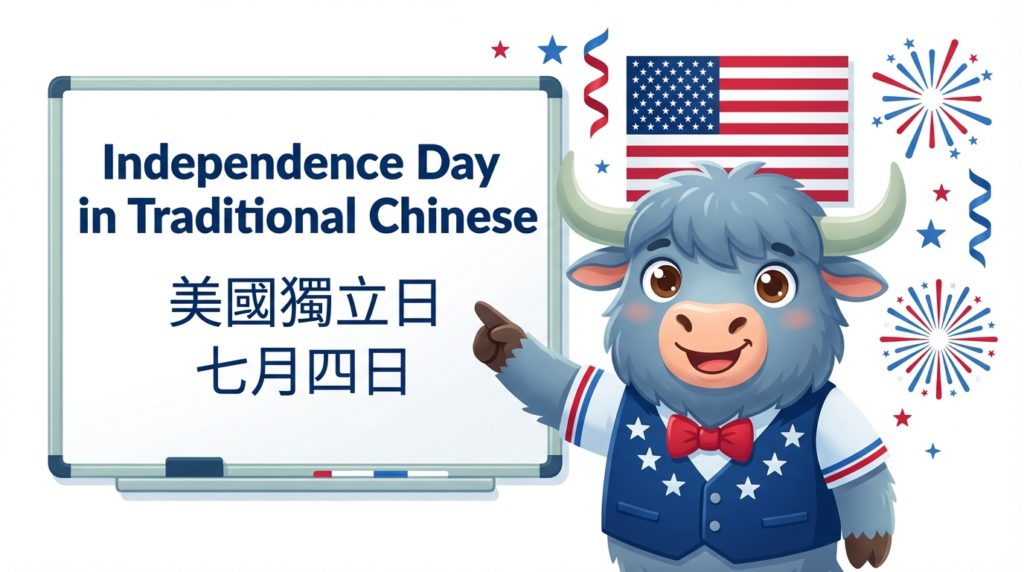
Independence Day in Traditional Chinese
Learn useful holiday words with pinyin + real-life examples. 獨立日/國慶常用中文(繁體)
Want to talk about Independence Day without sounding like a robot reading a history textbook? Here are high-utility Traditional Chinese words and phrases (with pinyin, meanings, and examples) so you can handle fireworks, parades, and “yes, I’ll take another hot dog” situations.
You’ll also see a quick note on naming: in Chinese, many countries use 獨立日 (Independence Day), while 國慶/國慶日 is “National Day.” You can be specific by adding the country name (like 美國獨立日).
國慶/國慶日/國慶節 = National Day (often official “birthday” celebrations).
In Taiwan you’ll also hear 雙十節 (October 10) as a common National Day nickname.
Core words you’ll use immediately
我們在獨立日看煙火。
Wǒmen zài dúlìrì kàn yānhuǒ.
We watch fireworks on Independence Day.
國慶日很多人掛國旗。
Guóqìngrì hěn duō rén guà guóqí.
On National Day, lots of people hang up flags.
今晚九點有煙火。
Jīnwǎn jiǔ diǎn yǒu yānhuǒ.
There are fireworks at 9 tonight.
市中心有遊行,路會封起來。
Shì zhōngxīn yǒu yóuxíng, lù huì fēng qǐlái.
There’s a parade downtown, so roads will be closed.
他把國旗插在門口。
Tā bǎ guóqí chā zài ménkǒu.
He put a flag by the doorway.
我們邊烤肉邊聊天。
Wǒmen biān kǎoròu biān liáotiān.
We BBQ while chatting.
大家一起慶祝這個節日。
Dàjiā yìqǐ qìngzhù zhège jiérì.
Everyone celebrates this holiday together.
明天放假,你要做什麼?
Míngtiān fàngjià, nǐ yào zuò shénme?
Tomorrow is a day off—what are you doing?
Independence Day phrases you can actually say
Copy-paste these into your brain. Or into a message. Same thing.
獨立日快樂!晚上一起去看煙火。
Dúlìrì kuàilè! Wǎnshang yìqǐ qù kàn yānhuǒ.
Happy Independence Day! Let’s watch fireworks tonight.
祝你獨立日快樂,也祝你吃到好吃的烤肉。
Zhù nǐ dúlìrì kuàilè, yě zhù nǐ chī dào hǎochī de kǎoròu.
Happy Independence Day—and may your BBQ be delicious.
國慶快樂!今天街上很熱鬧。
Guóqìng kuàilè! Jīntiān jiēshang hěn rènào.
Happy National Day! The streets are lively today.
我們去看煙火吧,越早去越好卡位。
Wǒmen qù kàn yānhuǒ ba, yuè zǎo qù yuè hǎo kǎwèi.
Let’s go watch fireworks—the earlier we go, the better our spot.
你要不要去看遊行?聽說有花車。
Nǐ yào bú yào qù kàn yóuxíng? Tīngshuō yǒu huāchē.
Want to see the parade? I heard there are floats.
今天是七月四日,美國很多地方放煙火。
Jīntiān shì qī yuè sì rì, Měiguó hěn duō dìfang fàng yānhuǒ.
Today is July 4th—many places in the U.S. set off fireworks.
美國獨立日是在七月四日,所以我們週末會聚會。
Měiguó dúlìrì shì zài qī yuè sì rì, suǒyǐ wǒmen zhōumò huì jùhuì.
U.S. Independence Day is July 4th, so we’ll get together on the weekend.
我們要升旗,請提早到。
Wǒmen yào shēngqí, qǐng tízǎo dào.
We’re raising the flag—please arrive early.
典禮開始時,我們一起唱國歌。
Diǎnlǐ kāishǐ shí, wǒmen yìqǐ chàng guógē.
When the ceremony starts, we sing the anthem together.
祝你連假玩得開心,別忘了防曬。
Zhù nǐ liánjià wán de kāixīn, bié wàngle fángshài.
Have fun on the long weekend—don’t forget sunscreen.
別靠太近,煙火很危險,尤其是小孩。
Bié kào tài jìn, yānhuǒ hěn wēixiǎn, yóuqí shì xiǎohái.
Don’t get too close—fireworks are dangerous, especially for kids.
我帶了紅白藍的衣服,拍照很有氣氛。
Wǒ dài le hóng bái lán de yīfu, pāizhào hěn yǒu qìfēn.
I brought red-white-blue clothes—great for photos.
我們晚上去烤肉,你負責買玉米。
Wǒmen wǎnshang qù kǎoròu, nǐ fùzé mǎi yùmǐ.
We’re BBQing tonight—you’re in charge of buying corn.
這是紀念獨立的日子,也是一個家庭聚會的理由。
Zhè shì jìniàn dúlì de rìzi, yě shì yí ge jiātíng jùhuì de lǐyóu.
It’s a day to remember independence—and a reason for a family gathering.
你家附近會封路嗎?我怕停車很麻煩。
Nǐ jiā fùjìn huì fēnglù ma? Wǒ pà tíngchē hěn máfan.
Will roads be closed near you? I’m worried parking will be annoying.
A tiny naming trick (so you don’t mix things up)
In English we say “Independence Day,” but in Chinese you’ll hear both “Independence Day” and “National Day,” depending on the country and the holiday. If you’re unsure, add the country name and you’ll be fine.
- 獨立日 = Independence Day (general)
- 國慶/國慶日/國慶節 = National Day (official celebration day)
- 美國獨立日 = U.S. Independence Day
More Independence Day vocabulary (with examples)
Holiday names, dates, and “official” words
| Traditional | Pinyin | Meaning (EN) | Example (ZH + pinyin) | Translation (EN) | Audio |
|---|---|---|---|---|---|
獨立 | dúlì | independence | 很多人把獨立看得很重要。 Hěn duō rén bǎ dúlì kàn de hěn zhòngyào. | Many people see independence as very important. | |
宣布 | xuānbù | to announce / declare | 市長宣布今晚九點開始放煙火。 Shìzhǎng xuānbù jīnwǎn jiǔ diǎn kāishǐ fàng yānhuǒ. | The mayor announced fireworks start at 9 tonight. | |
宣言 | xuānyán | declaration / manifesto | 他在台上讀了一段宣言。 Tā zài táishàng dú le yí duàn xuānyán. | He read a passage from a declaration on stage. | |
獨立宣言 | dúlì xuānyán | Declaration of Independence | 老師解釋了《獨立宣言》的背景。 Lǎoshī jiěshì le «Dúlì Xuānyán» de bèijǐng. | The teacher explained the background of the Declaration of Independence. | |
建國 | jiànguó | to found a nation | 這座紀念碑是為了紀念建國。 Zhè zuò jìniànbēi shì wèile jìniàn jiànguó. | This monument commemorates the founding of the nation. | |
建國紀念日 | jiànguó jìniànrì | Founding Day | 建國紀念日通常會有典禮。 Jiànguó jìniànrì tōngcháng huì yǒu diǎnlǐ. | On Founding Day, there’s usually a ceremony. | |
國慶節 | guóqìng jié | National Day (festival) | 國慶節街上會掛滿旗子。 Guóqìng jié jiēshang huì guà mǎn qízi. | On National Day, the streets are full of flags. | |
紀念 | jìniàn | to commemorate | 我們用煙火來紀念這個重要時刻。 Wǒmen yòng yānhuǒ lái jìniàn zhège zhòngyào shíkè. | We use fireworks to commemorate this important moment. | |
紀念日 | jìniànrì | anniversary / commemoration day | 這個紀念日每年都會辦活動。 Zhège jìniànrì měinián dōu huì bàn huódòng. | This anniversary has events every year. | |
國定假日 | guódìng jiàrì | public holiday | 獨立日是國定假日嗎? Dúlìrì shì guódìng jiàrì ma? | Is Independence Day a public holiday? | |
連假 | liánjià | long weekend / consecutive days off | 連假期間飯店常常很滿。 Liánjià qījiān fàndiàn chángcháng hěn mǎn. | Hotels are often full during long weekends. | |
日期 | rìqī | date | 你知道活動的日期嗎? Nǐ zhīdào huódòng de rìqī ma? | Do you know the date of the event? |
Events, crowds, and city logistics
| Traditional | Pinyin | Meaning (EN) | Example (ZH + pinyin) | Translation (EN) | Audio |
|---|---|---|---|---|---|
煙花 | yānhuā | fireworks (literally “fire flowers”) | 孩子看到煙花就尖叫。 Háizi kàn dào yānhuā jiù jiānjiào. | The kids squealed when they saw the fireworks. | |
煙火秀 | yānhuǒ xiù | fireworks show | 我們提早去等煙火秀開始。 Wǒmen tízǎo qù děng yānhuǒ xiù kāishǐ. | We went early to wait for the fireworks show to start. | |
花車 | huāchē | parade float | 那台花車上有音樂和舞者。 Nà tái huāchē shàng yǒu yīnyuè hé wǔzhě. | That float has music and dancers on it. | |
花車遊行 | huāchē yóuxíng | float parade | 花車遊行下午三點出發。 Huāchē yóuxíng xiàwǔ sān diǎn chūfā. | The float parade starts at 3 p.m. | |
表演 | biǎoyǎn | performance | 主舞台有很多表演。 Zhǔ wǔtái yǒu hěn duō biǎoyǎn. | There are lots of performances on the main stage. | |
慶典 | qìngdiǎn | celebration event | 這場慶典免費入場。 Zhè chǎng qìngdiǎn miǎnfèi rùchǎng. | This celebration event is free to enter. | |
典禮 | diǎnlǐ | ceremony | 典禮結束後大家去吃東西。 Diǎnlǐ jiéshù hòu dàjiā qù chī dōngxī. | After the ceremony, everyone went to eat. | |
升旗 | shēngqí | to raise the flag | 早上八點在廣場升旗。 Zǎoshang bā diǎn zài guǎngchǎng shēngqí. | They raise the flag at the square at 8 a.m. | |
國歌 | guógē | national anthem | 唱國歌時請站好。 Chàng guógē shí qǐng zhàn hǎo. | Please stand properly when the anthem is sung. | |
演說 | yǎnshuō | speech | 總統的演說很短。 Zǒngtǒng de yǎnshuō hěn duǎn. | The president’s speech was short. | |
群眾 | qúnzhòng | the crowd (people) | 群眾一直拍手。 Qúnzhòng yìzhí pāishǒu. | The crowd kept clapping. | |
人潮 | réncháo | crowds (flow of people) | 人潮太多,我們改走小路。 Réncháo tài duō, wǒmen gǎi zǒu xiǎolù. | There were too many people, so we took a side path. | |
排隊 | páiduì | to line up | 想買熱狗要排隊。 Xiǎng mǎi règǒu yào páiduì. | If you want to buy a hot dog, you have to line up. | |
封路 | fēnglù | road closure | 遊行的時候會封路。 Yóuxíng de shíhou huì fēnglù. | They close roads during the parade. | |
交通管制 | jiāotōng guǎnzhì | traffic control | 今天有交通管制,請提早出門。 Jīntiān yǒu jiāotōng guǎnzhì, qǐng tízǎo chūmén. | There’s traffic control today—please leave early. |
Values and “patriotic-ish” words
| Traditional | Pinyin | Meaning (EN) | Example (ZH + pinyin) | Translation (EN) | Audio |
|---|---|---|---|---|---|
自由 | zìyóu | freedom | 大家談到自由時都很認真。 Dàjiā tán dào zìyóu shí dōu hěn rènzhēn. | People get serious when talking about freedom. | |
平等 | píngděng | equality | 他說平等也很重要。 Tā shuō píngděng yě hěn zhòngyào. | He said equality is also important. | |
民主 | mínzhǔ | democracy | 很多人把這天當作民主的象徵。 Hěn duō rén bǎ zhè tiān dàngzuò mínzhǔ de xiàngzhēng. | Many people see this day as a symbol of democracy. | |
主權 | zhǔquán | sovereignty | 主權這個詞在新聞裡很常見。 Zhǔquán zhège cí zài xīnwén lǐ hěn chángjiàn. | The word “sovereignty” is common in the news. | |
獨立自主 | dúlì zìzhǔ | independent & self-reliant | 他希望國家能獨立自主。 Tā xīwàng guójiā néng dúlì zìzhǔ. | He hopes the country can be independent and self-reliant. | |
愛國 | àiguó | patriotic | 他穿著很愛國的衣服。 Tā chuānzhe hěn àiguó de yīfu. | He’s wearing very patriotic clothes. | |
團結 | tuánjié | unity | 大家一起喊口號,感覺很團結。 Dàjiā yìqǐ hǎn kǒuhào, gǎnjué hěn tuánjié. | Everyone chanted slogans together—it felt very united. | |
國家 | guójiā | country / nation | 每個國家都有自己的節日。 Měi ge guójiā dōu yǒu zìjǐ de jiérì. | Every country has its own holidays. | |
公民 | gōngmín | citizen | 公民可以參加社區活動。 Gōngmín kěyǐ cānjiā shèqū huódòng. | Citizens can join community events. | |
歷史 | lìshǐ | history | 了解歷史會更懂這個節日。 Liǎojiě lìshǐ huì gèng dǒng zhège jiérì. | Understanding the history helps you get this holiday. | |
驕傲 | jiāo’ào | proud | 他說他很驕傲能在這裡。 Tā shuō tā hěn jiāo’ào néng zài zhèlǐ. | He said he’s proud to be here. | |
感謝 | gǎnxiè | to thank | 我們感謝前人的努力。 Wǒmen gǎnxiè qiánrén de nǔlì. | We thank those who came before us for their efforts. |
Food, BBQ, and “let’s hang out” words
| Traditional | Pinyin | Meaning (EN) | Example (ZH + pinyin) | Translation (EN) | Audio |
|---|---|---|---|---|---|
派對 | pàiduì | party | 朋友家辦了一個派對。 Péngyǒu jiā bàn le yí ge pàiduì. | My friend’s place hosted a party. | |
聚會 | jùhuì | get-together | 我們晚點在公園聚會。 Wǒmen wǎndiǎn zài gōngyuán jùhuì. | We’ll meet up at the park later. | |
野餐 | yěcān | picnic | 天氣好就去野餐。 Tiānqì hǎo jiù qù yěcān. | If the weather’s good, we’ll go on a picnic. | |
燒烤 | shāokǎo | grilling / BBQ | 晚上大家一起燒烤。 Wǎnshang dàjiā yìqǐ shāokǎo. | Everyone grilled together at night. | |
烤肉架 | kǎoròu jià | grill (rack/grill set) | 烤肉架要先清乾淨。 Kǎoròu jià yào xiān qīng gānjìng. | The grill should be cleaned first. | |
熱狗 | règǒu | hot dog | 我想吃一個熱狗。 Wǒ xiǎng chī yí ge règǒu. | I want to eat a hot dog. | |
漢堡 | hànbǎo | hamburger | 他點了兩個漢堡。 Tā diǎn le liǎng ge hànbǎo. | He ordered two burgers. | |
玉米 | yùmǐ | corn | 烤玉米很香。 Kǎo yùmǐ hěn xiāng. | Grilled corn smells amazing. | |
沙拉 | shālā | salad | 我做了馬鈴薯沙拉。 Wǒ zuò le mǎlíngshǔ shālā. | I made potato salad. | |
汽水 | qìshuǐ | soda | 別喝太多汽水。 Bié hē tài duō qìshuǐ. | Don’t drink too much soda. | |
冰塊 | bīngkuài | ice cubes | 可以再加點冰塊嗎? Kěyǐ zài jiā diǎn bīngkuài ma? | Can we add a bit more ice? | |
西瓜 | xīguā | watermelon | 西瓜很適合夏天。 Xīguā hěn shìhé xiàtiān. | Watermelon is perfect for summer. | |
紙盤 | zhǐpán | paper plate | 用紙盤比較好收拾。 Yòng zhǐpán bǐjiào hǎo shōushí. | Paper plates are easier to clean up. | |
垃圾袋 | lājīdài | trash bag | 記得帶垃圾袋。 Jìde dài lājīdài. | Remember to bring trash bags. |
Safety and common rules
| Traditional | Pinyin | Meaning (EN) | Example (ZH + pinyin) | Translation (EN) | Audio |
|---|---|---|---|---|---|
安全 | ānquán | safety | 安全第一,別亂放煙火。 Ānquán dì yī, bié luàn fàng yānhuǒ. | Safety first—don’t set off fireworks randomly. | |
危險 | wēixiǎn | dangerous | 這樣做很危險。 Zhèyàng zuò hěn wēixiǎn. | Doing that is dangerous. | |
小心 | xiǎoxīn | be careful | 小心!地上很滑。 Xiǎoxīn! Dìshàng hěn huá. | Careful! The ground is slippery. | |
禁止 | jìnzhǐ | prohibited | 這裡禁止抽菸。 Zhèlǐ jìnzhǐ chōuyān. | Smoking is prohibited here. | |
禁放煙火 | jìn fàng yānhuǒ | no fireworks allowed | 公園裡寫著「禁放煙火」。 Gōngyuán lǐ xiězhe “jìn fàng yānhuǒ”. | The park says “No fireworks allowed.” | |
耳塞 | ěr sāi | earplugs | 看煙火時我會帶耳塞。 Kàn yānhuǒ shí wǒ huì dài ěr sāi. | I wear earplugs when watching fireworks. | |
防曬 | fángshài | sun protection | 出門前先做防曬。 Chūmén qián xiān zuò fángshài. | Put on sun protection before going out. | |
防曬乳 | fángshài rǔ | sunscreen | 我忘了帶防曬乳。 Wǒ wàng le dài fángshài rǔ. | I forgot to bring sunscreen. | |
防蚊液 | fángwén yè | insect repellent | 晚上有蚊子,噴點防蚊液。 Wǎnshang yǒu wénzi, pēn diǎn fángwén yè. | There are mosquitoes at night—spray some repellent. | |
緊急 | jǐnjí | emergency | 如果有緊急狀況就打電話。 Rúguǒ yǒu jǐnjí zhuàngkuàng jiù dǎ diànhuà. | If there’s an emergency, call. | |
急救 | jíjiù | first aid | 現場有急救人員。 Xiànchǎng yǒu jíjiù rényuán. | There are first-aid staff on site. | |
警察 | jǐngchá | police | 警察在路口指揮交通。 Jǐngchá zài lùkǒu zhǐhuī jiāotōng. | The police are directing traffic at the intersection. |
Useful variants and measure-word combos
Because Chinese loves being specific. (And measure words love being unavoidable.)
| Traditional | Pinyin | Meaning / When to use | Example (ZH + pinyin) | Translation (EN) | Audio |
|---|---|---|---|---|---|
美國獨立日 | měiguó dúlì rì | U.S. Independence Day (be specific) | 美國獨立日通常很熱鬧。 Měiguó dúlìrì tōngcháng hěn rènào. | U.S. Independence Day is usually very lively. | |
國慶 | guóqìng | short for National Day (casual) | 國慶那天我們要出去玩。 Guóqìng nà tiān wǒmen yào chūqù wán. | On National Day, we’re going out to have fun. | |
煙火 | yānhuǒ | common everyday “fireworks” | 聽到煙火聲,我就知道開始了。 Tīng dào yānhuǒ shēng, wǒ jiù zhīdào kāishǐ le. | When I heard the fireworks, I knew it started. | |
煙花 | yānhuā | also “fireworks,” a bit more visual/poetic | 煙花在夜空裡真的很美。 Yānhuā zài yèkōng lǐ zhēn de hěn měi. | Fireworks in the night sky are truly beautiful. | |
烤肉 | kǎoròu | BBQ (often the food itself) | 我最期待的是烤肉,不是人潮。 Wǒ zuì qídài de shì kǎoròu, bú shì réncháo. | I’m most looking forward to the BBQ, not the crowds. | |
一面國旗 | yí miàn guóqí | “one flag” (面 for flat things) | 他買了一面國旗掛在窗邊。 Tā mǎi le yí miàn guóqí guà zài chuāngbiān. | He bought a flag and hung it by the window. | |
一場煙火秀 | yì chǎng yānhuǒ xiù | “one fireworks show” (場 for events) | 我們想看一場煙火秀再回家。 Wǒmen xiǎng kàn yì chǎng yānhuǒ xiù zài huíjiā. | We want to watch a fireworks show before going home. | |
一場遊行 | yì chǎng yóuxíng | “one parade” (also 場) | 我第一次現場看一場遊行。 Wǒ dì yī cì xiànchǎng kàn yì chǎng yóuxíng. | It’s my first time watching a parade in person. | |
一次聚會 | yí cì jùhuì | “one get-together” (次 for occurrences) | 這次聚會大家都很開心。 Zhè cì jùhuì dàjiā dōu hěn kāixīn. | Everyone was happy at this get-together. | |
一支熱狗 | yì zhī règǒu | “one hot dog” (支 is common for stick-like items) | 我只要一支熱狗就好。 Wǒ zhǐ yào yì zhī règǒu jiù hǎo. | I just want one hot dog. |