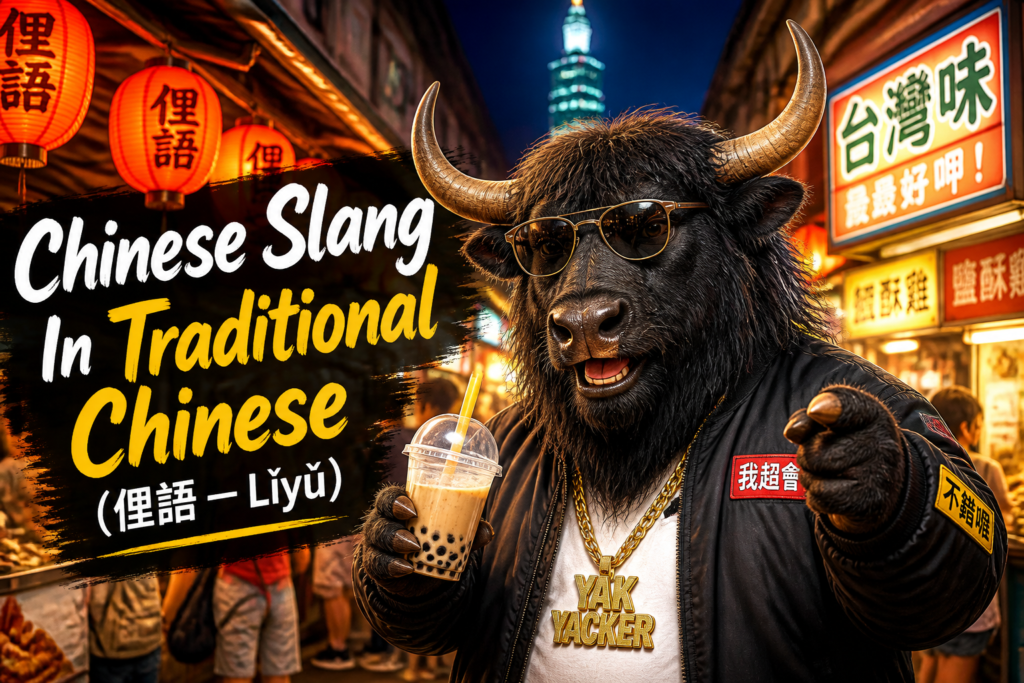
俚語 lǐyǔ means slang or informal sayings in Chinese. It is the stuff people actually use when they are relaxed, joking, annoyed, or trying not to sound like a textbook that escaped from the library.
For the broader learning path, visit our parent guide.
If you learn slang, you start hearing real conversations more clearly. A lot of daily Taiwanese Mandarin is casual, shortened, playful, and a little bit cheeky. That does not mean rude. It just means human.
One small warning: slang changes fast. Some expressions are trendy for a while, then disappear like a bubble tea lid in the wind. So it helps to learn the safe, common ones first.
俚語 lǐyǔ is useful because it helps you understand the tone behind the words, not just the dictionary meaning.
What Slang In Chinese Really Means
In Traditional Chinese, slang can be called 俚語 lǐyǔ, 口語 kǒuyǔ for spoken language, or 流行語 liúxíngyǔ for trendy expressions. In real life, these often overlap. A phrase can be both slangy and common, especially in Taiwan.
To keep things useful, this guide focuses on slang and casual phrases that you are likely to hear in everyday conversations, social media, school, work, and around the MRT or night market.
| Traditional Chinese | Pinyin | Meaning | Example (ZH) | Example (Pinyin) | Translation (EN) |
|---|---|---|---|---|---|
| 俚語 | lǐyǔ | slang; colloquial saying | 這個俚語很常見。 | Zhège lǐyǔ hěn chángjiàn. | This slang phrase is very common. |
| 口語 | kǒuyǔ | spoken language; colloquial speech | 這句話很口語。 | Zhè jù huà hěn kǒuyǔ. | This sentence is very conversational. |
| 流行語 | liúxíngyǔ | trendy expression | 這是最近很紅的流行語。 | Zhè shì zuìjìn hěn hóng de liúxíngyǔ. | This is a trendy phrase that is popular lately. |
Useful Slang And Casual Phrases
Here are some high-value expressions first. These are the kinds of phrases that help you survive actual conversation instead of politely nodding while everything zooms past you.
| Traditional Chinese | Pinyin | Meaning | Example (ZH) | Example (Pinyin) | Translation (EN) |
|---|---|---|---|---|---|
| 超級 | chāojí | super; extremely | 這杯咖啡超級好喝。 | Zhè bēi kāfēi chāojí hǎohē. | This coffee is super tasty. |
| 有夠 | yǒu gòu | really; very; ridiculously | 今天有夠熱。 | Jīntiān yǒu gòu rè. | It is ridiculously hot today. |
| 爆 | bào | super; extremely; exploding with intensity | 這家店排隊排爆了。 | Zhè jiā diàn páiduì pái bào le. | The line at this shop is insanely long. |
| 很扯 | hěn chě | ridiculous; outrageous | 他遲到兩小時,太扯了。 | Tā chídào liǎng xiǎoshí, tài chě le. | He was two hours late. That is ridiculous. |
| 傻眼 | shǎyǎn | speechless; stunned; dumbfounded | 我看到帳單直接傻眼。 | Wǒ kàn dào zhàngdān zhíjiē shǎyǎn. | I was speechless when I saw the bill. |
| 扯後腿 | chě hòutuǐ | hold someone back; be a drag | 他一直扯後腿,真的很煩。 | Tā yìzhí chě hòutuǐ, zhēn de hěn fán. | He keeps dragging things down. It is really annoying. |
| 雷 | léi | bad; a letdown; disappointing | 這部片有點雷。 | Zhè bù piàn yǒudiǎn léi. | This movie is kind of a letdown. |
| 雷到 | léi dào | to be shocked by something bad or awkward | 那個笑話雷到我了。 | Nà ge xiàohuà léi dào wǒ le. | That joke really threw me off. |
| 讚 | zàn | great; awesome | 這個建議很讚。 | Zhège jiànyì hěn zàn. | This suggestion is great. |
| 給力 | gěilì | helpful; strong; awesome | 你這次真的很給力。 | Nǐ zhè cì zhēn de hěn gěilì. | You were really helpful this time. |
| 放鳥 | fàng niǎo | stand someone up; bail on someone | 他居然放我鳥。 | Tā jūrán fàng wǒ niǎo. | He actually stood me up. |
| 失聯 | shīlián | to go missing in communication; no contact | 她一整天都失聯。 | Tā yì zhěng tiān dōu shīlián. | She has been unreachable all day. |
Everyday Slang You Will Hear In Taiwan
Taiwanese Mandarin loves compact, practical phrases. Many are playful, some are borrowed from internet culture, and some are just very efficient. Efficiency is always fashionable when you are hungry and trying to order food quickly.
| Traditional Chinese | Pinyin | Meaning | Example (ZH) | Example (Pinyin) | Translation (EN) |
|---|---|---|---|---|---|
| 打卡 | dǎkǎ | to check in; to clock in; to post a visit | 我們去咖啡廳打卡。 | Wǒmen qù kāfēitīng dǎkǎ. | We went to the café to check in and post about it. |
| 網美 | wǎngměi | internet-famous pretty girl; social-media aesthetic person | 這家店很適合網美拍照。 | Zhè jiā diàn hěn shìhé wǎngměi pāizhào. | This shop is great for aesthetic social-media photos. |
| 佛系 | fóxì | chill; low-drama; go-with-the-flow | 我最近很佛系,不想拚太多。 | Wǒ zuìjìn hěn fóxì, bù xiǎng pīn tài duō. | Lately I have been very chill and not pushing too hard. |
| 躺平 | tǎngpíng | to lie flat; to give up on overachievement | 他說他想躺平一陣子。 | Tā shuō tā xiǎng tǎngpíng yí zhènzi. | He said he wants to lie low for a while. |
| 爆肝 | bàogān | to work or study until exhausted | 期末前我常常爆肝。 | Qīmò qián wǒ chángcháng bàogān. | Before finals, I often work myself to the bone. |
| 加班 | jiābān | to work overtime | 今天又要加班。 | Jīntiān yòu yào jiābān. | Need to work overtime again today. |
| 吃土 | chītǔ | to be broke | 月底快到了,我快吃土了。 | Yuèdǐ kuài dào le, wǒ kuài chītǔ le. | Month-end is coming, and I am basically broke. |
| 省錢 | shěngqián | to save money | 這個月我要省錢。 | Zhège yuè wǒ yào shěngqián. | This month I need to save money. |
| 爆買 | bàomǎi | to buy a lot; to go on a shopping spree | 她在夜市爆買了一堆東西。 | Tā zài yèshì bàomǎi le yì duī dōngxi. | She bought a ton of stuff at the night market. |
| 快閃 | kuàishǎn | brief; pop-up; quick visit | 我們只快閃台北一天。 | Wǒmen zhǐ kuàishǎn Táiběi yì tiān. | We are only doing a quick one-day Taipei trip. |
| 有事嗎 | yǒu shì ma | what is your problem?; are you okay? | 你突然這樣講,有事嗎? | Nǐ túrán zhèyàng jiǎng, yǒu shì ma? | You suddenly said that. What is your problem? |
| 笑死 | xiào sǐ | laughing so hard; hilarious | 那個留言我真的笑死。 | Nàge liúyán wǒ zhēn de xiào sǐ. | That comment made me laugh so hard. |
Useful Slang For Feelings And Reactions
Reaction words are especially important because slang is often about attitude. Same sentence, different tone, and suddenly you sound like a local instead of a robot with a dictionary.
| Traditional Chinese | Pinyin | Meaning | Example (ZH) | Example (Pinyin) | Translation (EN) |
|---|---|---|---|---|---|
| 崩潰 | bēngkuì | to break down; overwhelmed | 我今天真的快崩潰了。 | Wǒ jīntiān zhēn de kuài bēngkuì le. | I am really about to break down today. |
| 傻爆眼 | shǎ bàoyǎn | totally stunned; extremely shocked | 他居然忘記名字,我傻爆眼。 | Tā jūrán wàngjì míngzì, wǒ shǎ bàoyǎn. | He actually forgot the name. I was totally stunned. |
| 好扯 | hǎo chě | so ridiculous | 這價格也太好扯了。 | Zhè jiàgé yě tài hǎo chě le. | This price is way too ridiculous. |
| 無言 | wúyán | speechless | 我聽完只能無言。 | Wǒ tīng wán zhǐ néng wúyán. | After hearing that, I had nothing to say. |
| 超雷 | chāo léi | super disappointing; a disaster | 這家店服務超雷。 | Zhè jiā diàn fúwù chāo léi. | The service at this shop is terrible. |
| 超讚 | chāo zàn | super great | 這個活動超讚。 | Zhège huódòng chāo zàn. | This event is super great. |
| 給我看傻了 | gěi wǒ kàn shǎ le | it left me stunned | 他那個操作直接給我看傻了。 | Tā nàge cāozuò zhíjiē gěi wǒ kàn shǎ le. | What he did left me completely stunned. |
| 有夠離譜 | yǒu gòu lípǔ | extremely absurd | 這種說法有夠離譜。 | Zhè zhǒng shuōfǎ yǒu gòu lípǔ. | This kind of statement is absurd. |
Taiwan-Style Slang Notes
Some slang is shared across Chinese-speaking places, but Taiwan has its own flavor. The same word can feel softer, more playful, or more natural in Taiwan Mandarin than in other regions. That is normal. Languages are messy little creatures.
| Expression | Taiwan Usage | Note | Example (ZH) | Pinyin | English |
|---|---|---|---|---|---|
| 機車 | jīchē | In Taiwan, can mean “annoying” in slang; also literally scooter | 他真的很機車。 | Tā zhēn de hěn jīchē. | He is really annoying. |
| 靠北 | kàoběi | Very slangy; can mean complaining a lot or be rude depending on tone | 你不要一直靠北。 | Nǐ bú yào yìzhí kàoběi. | Stop whining all the time. |
| 屌 | diǎo | Very slangy; can mean awesome or crude depending on context | 他的表現真的很屌。 | Tā de biǎoxiàn zhēn de hěn diǎo. | His performance is really impressive. |
| 北爛 | běilàn | Very colloquial; annoying, absurd, or obnoxious | 這情況也太北爛了吧。 | Zhè qíngkuàng yě tài běilàn le ba. | This situation is just absurd. |
| 很派 | hěn pài | Tough; intense; cool in a fierce way | 他今天穿得很派。 | Tā jīntiān chuān de hěn pài. | He is dressed in a tough, cool way today. |
| 母湯 | mǔ tāng | playful internet style for “not okay”; humorous warning | 這樣吃宵夜真的母湯。 | Zhèyàng chī xiāoyè zhēn de mǔ tāng. | Eating a late-night snack like this is really not okay. |
For a more formal overview of Traditional Chinese and language standards, see Traditional Chinese characters. Yes, it is a boring link. That is exactly the point.
Common Slang Patterns
Slang often follows predictable patterns. Once you notice them, you can guess new meanings faster. That is handy, because nobody wants to memorize every internet phrase by hand like it is 2008.
| Pattern | Meaning | Example (ZH) | Pinyin | English |
|---|---|---|---|---|
| 超 + adjective | very; super | 超好吃 | chāo hǎochī | super tasty |
| 有夠 + adjective | really; extremely | 有夠忙 | yǒu gòu máng | really busy |
| 爆 + verb/adjective | extremely; intensively | 爆紅 | bào hóng | blow up; become super popular |
| 太 + adjective + 了 | too much; very | 太誇張了 | tài kuāzhāng le | too exaggerated |
| 有點 + adjective | a little; somewhat | 有點雷 | yǒudiǎn léi | a bit disappointing |
| 直接 + verb | straight up; directly | 直接傻眼 | zhíjiē shǎyǎn | stunned right away |
| 快要 + verb + 了 | almost; about to | 快要崩潰了 | kuàiyào bēngkuì le | about to break down |
| 真的 + adjective | really; truly | 真的很扯 | zhēn de hěn chě | really ridiculous |
Slang Versus Standard Language
Not every slang word is safe in every situation. Some are fine with friends, but not in class, work emails, or formal speaking tests. If you are preparing for a Traditional Chinese placement test like TOCFL, you still need standard vocabulary. Slang is the extra seasoning, not the whole meal.
| Slang | More Neutral Form | When To Use Slang | When To Be Careful |
|---|---|---|---|
| 超讚 | 非常好 | Friends, chats, social media | Formal speech, reports |
| 傻眼 | 感到驚訝 | Casual conversation | Business or academic writing |
| 放鳥 | 失約 | Friends, texts | Formal apology, written notices |
| 吃土 | 沒錢了 | Joking with friends | Money conversations in formal settings |
| 笑死 | 很好笑 | Chat messages, informal talk | Serious or professional settings |
| 靠北 | 抱怨; 很煩 | Very close friends, jokingly, if appropriate | Most public and professional situations |
If you want a basic foundation before chasing slang, use the Traditional Chinese basic words and phrases guide first. Slang is easier when the plain version already makes sense.
Common Mistakes And Fixes
| Mistake | Why It Happens | Better Choice | Example Fix |
|---|---|---|---|
| Using slang in every sentence | It feels fun, so learners overdo it | Mix slang with normal speech | 我今天很忙,不是我很扯。 |
| Using rude slang with strangers | Dictionary does not show social risk | Stick to safe phrases like 超讚 or 傻眼 | 不要對店員說太衝的話。 |
| Confusing 超 with “super” only | It is common, so it looks simple | Remember it works like an intensifier | 超累 = super tired |
| Translating slang too literally | Word-for-word meaning feels safe | Learn the vibe, not just the words | 放鳥 = stood someone up |
| Thinking all internet slang is universal | Online phrases spread fast, but not evenly | Check Taiwan usage first | 母湯 is playful, not formal |
Quick Practice
Try swapping the plain phrase for the slangy one. No need to become a walking meme. Just practice making your Chinese sound more natural.
- 把「非常好」換成更口語的說法。→ 超讚 chāo zàn
- 把「很驚訝」換成更自然的反應。→ 傻眼 shǎyǎn
- 把「失約」換成日常說法。→ 放鳥 fàng niǎo
- 把「沒錢了」換成幽默說法。→ 吃土 chītǔ
- 把「很誇張」換成更像聊天的說法。→ 很扯 hěn chě
Now try translating these into English:
- 這家店超雷。 Zhè jiā diàn chāo léi. = This shop is super disappointing.
- 他又放我鳥。 Tā yòu fàng wǒ niǎo. = He stood me up again.
- 我看到價格直接傻眼。 Wǒ kàn dào jiàgé zhíjiē shǎyǎn. = I was stunned when I saw the price.
- 這樣也太扯了吧。 Zhèyàng yě tài chě le ba. = That is way too ridiculous.
Pronunciation And Tone Notes
Slang often gets said quickly, so pronunciation can feel slippery. Do not worry about sounding perfect. Worry about being understood. That already puts you ahead of the average first-time learner.
| Item | Note | Example |
|---|---|---|
| 一 | Changes tone in some contexts: yí before 4th tone, yì in numbers or set phrases | 一點 yìdiǎn |
| 不 | Usually bù, but becomes bú before 4th tone | 不是 bú shì |
| 超級 | Very common in casual speech; stress the first syllable clearly | chāojí |
| 傻眼 | Often said fast as one reaction unit | shǎyǎn |
| 有夠 | Common in Taiwan; pronunciation is smooth and fast | yǒu gòu |
For vocabulary practice, a structured quiz can help lock these expressions in. A boring but useful place to start is the Traditional Chinese vocabulary test. Boring tools often work. Annoying, yes. Useful, also yes.
Mini Phrase Set You Can Actually Use
| Traditional Chinese | Pinyin | English Meaning | Example (ZH) | Example (Pinyin) | Translation (EN) |
|---|---|---|---|---|---|
| 你有事嗎? | Nǐ yǒu shì ma? | What is your problem? | 你一直插隊,你有事嗎? | Nǐ yìzhí chāduì, nǐ yǒu shì ma? | You keep cutting in line. What is your problem? |
| 真的假的? | Zhēn de jiǎ de? | Really? No way? | 你明天不用上班,真的假的? | Nǐ míngtiān bú yòng shàngbān, zhēn de jiǎ de? | You do not have to work tomorrow? Really? |
| 也太誇張了吧。 | Yě tài kuāzhāng le ba. | That is way too exaggerated. | 他為了拍照換了三套衣服,也太誇張了吧。 | Tā wèile pāizhào huàn le sān tào yīfú, yě tài kuāzhāng le ba. | He changed into three outfits just for photos. That is way too much. |
| 我先走了。 | Wǒ xiān zǒu le. | I am heading out first. | 我先走了,明天見。 | Wǒ xiān zǒu le, míngtiān jiàn. | I am heading out first. See you tomorrow. |
| 辛苦了。 | Xīnkǔ le. | You worked hard; thanks for your effort | 大家今天都很辛苦了。 | Dàjiā jīntiān dōu hěn xīnkǔ le. | Everyone worked hard today. |
| 先這樣。 | Xiān zhèyàng. | That is it for now; let’s stop here | 今天先這樣,我要去吃飯。 | Jīntiān xiān zhèyàng, wǒ yào qù chīfàn. | That is it for today. I need to go eat. |
Quick Reference Summary
- 俚語 lǐyǔ = slang
- 口語 kǒuyǔ = spoken, conversational language
- 流行語 liúxíngyǔ = trendy expression
- Safe starter slang: 超讚, 傻眼, 很扯, 笑死
- More regional or sensitive slang: 靠北, 北爛, 屌
- Common intensifiers: 超, 有夠, 爆, 太
- Best practice: learn the meaning, the tone, and the social setting
If you want slang to sound natural, use it lightly and listen to real people first. The trick is not to cram every cool word into one sentence like a language-themed fruit salad.
Yak Takeaway: Chinese slang in Traditional Chinese is less about memorizing random internet noise and more about feeling the mood of a sentence. Start with safe, common expressions, keep an eye on Taiwan usage, and let the really spicy stuff stay on the bench until you know what it means.