This A1 Beginner retelling of El Ratoncito de los Dientes keeps the plot clear for learners while still giving the story some atmosphere and momentum. Un día, su diente se mueve. El Ratoncito de los Dientes viene.
This version teaches Spanish through English and includes clickable word help inside the story, full story audio, and lesson notes after the reading. It is free to use on Yak Yacker and is designed to feel natural, readable, and manageable for learners.
Luis tiene seis años. , su .
"¡Mamá, mamá!" Luis. "¡Mi !"
Mamá . "Esta noche, el diente . El viene."
Por la noche, Luis el diente . Se .
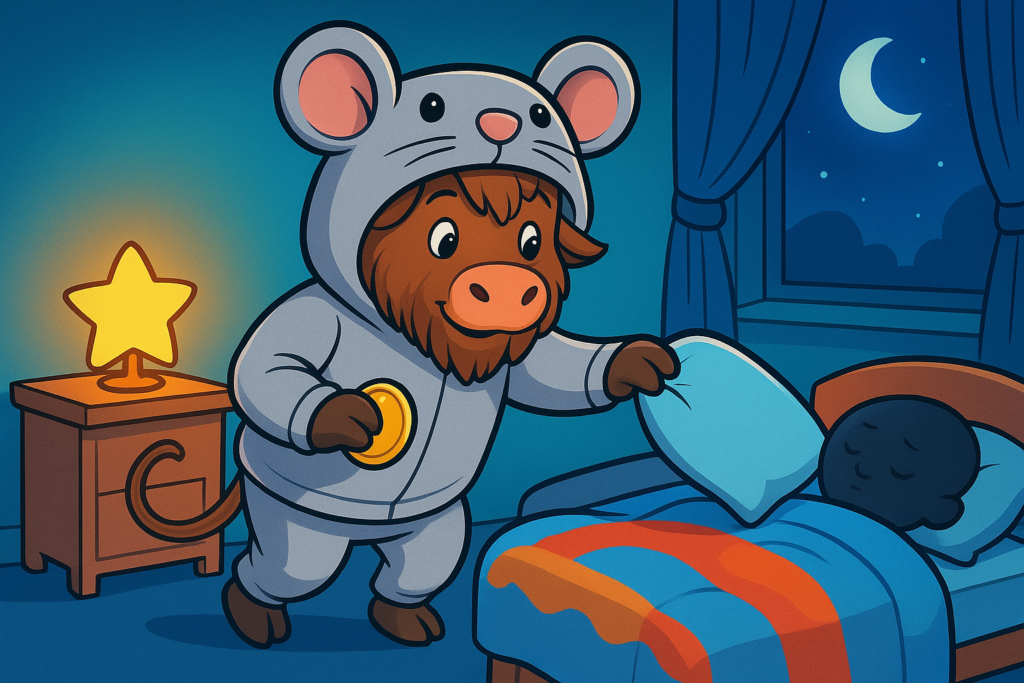
Un ratoncito en la habitación. el diente. "¡Qué diente tan bonito!" dice el ratoncito. el diente y una moneda.
Por la mañana, Luis debajo de la almohada. una moneda. "¡Gracias, Ratoncito!" dice .
Luis is six years old. One day, his tooth wiggles.
"Mom, Mom!" Luis shouts. "My tooth is falling out!"
Mom smiles. "Tonight, put the tooth under the pillow. The Tooth Mouse comes."
At night, Luis puts the tooth under the pillow. He falls asleep.
A little mouse enters the room. He sees the tooth. "What a beautiful tooth!" says the mouse. He takes the tooth and leaves a coin.
In the morning, Luis looks under the pillow. He finds a coin. "Thank you, Tooth Mouse!" he says happily.
This sweet story introduces some important words for talking about family, bedtime, and small surprises. Let’s look at the ones that appear most often.
- el diente – tooth
- la almohada – pillow
- mamá – mom / mum
- la moneda – coin
- busca – he/she looks for (from buscar)
You can pick up whole phrases that are immediately useful in daily conversations. Listen to how the family talks to each other.
- ¡Qué diente tan bonito! – What a beautiful tooth!
- pon el diente debajo de la almohada – put the tooth under the pillow
- ¡Gracias, Ratoncito! – Thank you, little mouse!
- se duerme – he/she falls asleep
Notice how the story describes Luis’s actions: -Luis busca debajo de la almohada.- -Encuentra una moneda.- These verbs are in the present tense, third-person singular (the he/she form). This pattern is very common, so it’s worth learning early.
For many verbs, the ending tells you who is doing the action. In the story, most action words end in -a or -e.
- busca – looks for (regular -ar verb buscar → busca)
- encuentra – finds (stem-changing -ar verb encontrar → encuentra)
- deja – leaves (regular -ar verb dejar → deja)
- You’ll see the same form used for informal commands later—like in -pon el diente- (put the tooth).
You’ve just experienced a charming cultural tradition through Spanish. Try using these new words and patterns to describe your own bedtime routines or to retell the story to a friend.
Small steps like these will build your confidence. Keep listening for -busca- and -encuentra- in other Spanish songs or stories.
- Practice: say -Busco…- (I look for…) with objects around you.
- Next time you lose a tooth, tell someone about the Ratoncito de los Dientes!
- Explore more A1 stories with animals and daily routines.
El Ratoncito de los Dientes comes from an older public-domain story tradition and is best known as a public_domain_children_story_retelling. This Yak Yacker article is an original learner retelling based on public-domain source material, so the wording here is simplified for modern learners rather than copied from one old edition.
Older printings, translations, and retellings of this story can vary quite a bit. This version is adapted for A1 Beginner learners studying Spanish.
If you want to keep going, browse more in our Spanish section and review the A1 Spanish Vocabulary List. After that, try Basic Questions in Spanish for another useful next step.