


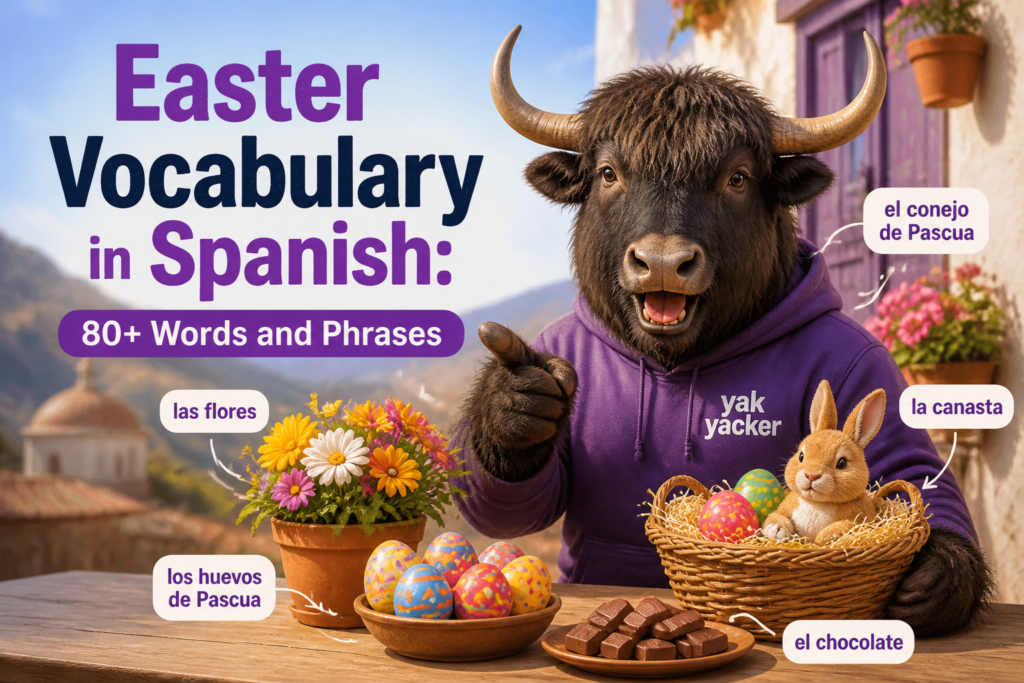
Easter vocabulary in Spanish is one of those topics that looks easy until you try to say “Holy Week,” “Easter egg,” and “procession” without sounding like you got lost on the way to a grammar book. The good news: Spanish has plenty of useful, real-life words for talking about Easter, family meals, church traditions, trips, and spring holiday plans.
This guide gives you more than 80 practical Easter words and phrases in natural Spanish, with pronunciation help, meanings, and example sentences. Most of the vocabulary works across Latin America and Spain, and where the differences matter, you’ll see them clearly. Also, yes, Easter in Spanish is not just one neat little word. Spanish likes to spread the holiday across a whole week. Of course it does.
If you want a broader language-learning hub, you can also browse the main Learn Spanish page for more themed vocabulary guides.
Core Easter Words In Spanish
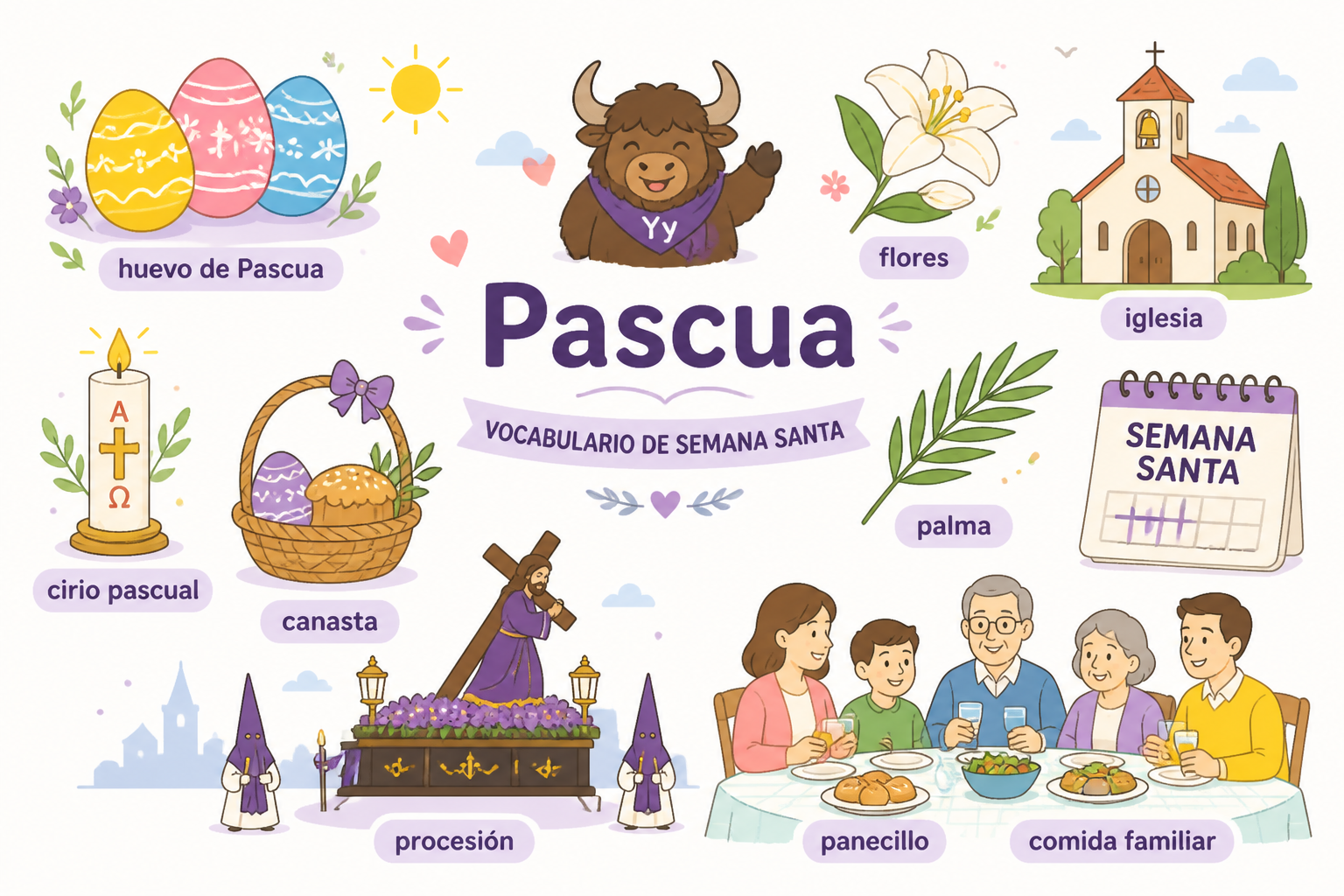
Here are the main words you’ll hear most often. The big thing to know is that many Spanish-speaking countries use Semana Santa for the full Holy Week celebration, while Pascua can mean Easter, Passover, or simply “the Easter season,” depending on context. Spanish loves context. Very generous of it.
| Spanish | Pronunciation | Meaning | Example Sentence | Translation | Learner Note |
|---|---|---|---|---|---|
| Semana Santa | seh-MAH-nah SAHN-tah | Holy Week | La Semana Santa es muy importante en muchos países. | Holy Week is very important in many countries. | Common in Latin America and Spain. |
| Pascua | PAHS-kwah | Easter; Passover | Vamos a pasar Pascua con la familia. | We’re going to spend Easter with the family. | Can mean different holidays depending on context. |
| la Pascua de Resurrección | lah PAHS-kwah deh reh-soo-rrek-SYON | Resurrection Easter | Algunas personas dicen Pascua de Resurrección. | Some people say Resurrection Easter. | More formal or religious. |
| el Domingo de Resurrección | deh ree-soo-rrek-SYON | Easter Sunday; Resurrection Sunday | El Domingo de Resurrección es el último día de la Semana Santa. | Easter Sunday is the last day of Holy Week. | Very useful in church or calendar contexts. |
| el Jueves Santo | HWEH-behs SAHN-toh | Holy Thursday; Maundy Thursday | El Jueves Santo muchas tiendas cierran temprano. | On Holy Thursday many stores close early. | Important holiday in Spain and many Latin American countries. |
| el Viernes Santo | BYEHR-nehs SAHN-toh | Good Friday | El Viernes Santo suele ser un día festivo. | Good Friday is usually a holiday. | Often a public holiday. |
| el Sábado Santo | SAH-bah-doh SAHN-toh | Holy Saturday | El Sábado Santo hay procesiones en algunos lugares. | On Holy Saturday there are processions in some places. | Also called “Sábado de Gloria” in some regions. |
| el Domingo de Ramos | deh RAH-mohs | Palm Sunday | El Domingo de Ramos comienza la Semana Santa. | Palm Sunday begins Holy Week. | Often includes palm branches. |
| la procesión | proh-seh-SYON | procession | La procesión pasó por el centro de la ciudad. | The procession went through the city center. | Very common in Spain and religious festivals. |
| la iglesia | ee-GLEH-syah | church | La familia fue a la iglesia el domingo. | The family went to church on Sunday. | Silent h? Not here, but watch Spanish vowels: clean and clear. |
Quick pronunciation note: in Spanish, vowels stay clean and steady. Semana is not “seh-MAN-uh.” It’s more like “seh-MAH-nah.” Spanish vowels do not do dramatic American yoga stretches.
People, Religious Roles, And Church Words
These words are helpful if you’re talking about church services, traditions, or religious celebrations. Even if you’re not especially religious, you’ll still see many of these words in news stories, local schedules, and travel guides.
| Spanish | Pronunciation | Meaning | Example Sentence | Translation | Learner Note |
|---|---|---|---|---|---|
| Jesús | heh-SOOS | Jesus | Jesús es una figura central en la Pascua cristiana. | Jesus is a central figure in Christian Easter. | The j sounds like a strong English “h.” |
| la resurrección | reh-soo-rrek-SYON | resurrection | La resurrección es el tema principal del domingo. | Resurrection is the main theme of Sunday. | Accent on the final syllable. |
| el sacerdote | sah-sehr-DOH-teh | priest | El sacerdote habló durante la misa. | The priest spoke during Mass. | Common religious vocabulary. |
| la misa | MEE-sah | Mass | La misa empezó a las siete. | Mass began at seven. | Simple and very frequent. |
| el creyente | kreh-YEN-teh | believer | Muchos creyentes participan en las celebraciones. | Many believers take part in the celebrations. | Useful in general religious contexts. |
| la fe | feh | faith | La fe es muy importante para muchas personas. | Faith is very important for many people. | Short, common, and useful. |
| la bendición | behn-dee-SYON | blessing | Recibieron la bendición al final de la misa. | They received the blessing at the end of Mass. | Notice the written accent on -ción. |
| la confesión | kohn-feh-SYON | confession | La confesión es parte de algunas tradiciones católicas. | Confession is part of some Catholic traditions. | Also ends in -ción. |
| el altar | ahl-TAHR | altar | El altar estaba lleno de flores. | The altar was full of flowers. | Same word as English, but Spanish pronunciation is smoother. |
| la cruz | kroos | cross | Vimos una cruz grande en la plaza. | We saw a big cross in the square. | Notice the z sound in Latin America and Spain. |
| la oración | oh-rah-SYON | prayer | La oración empezó antes de la ceremonia. | The prayer began before the ceremony. | Often used in religious settings. |
| la ceremonia | seh-reh-MOH-nyah | ceremony | La ceremonia fue breve pero emotiva. | The ceremony was short but moving. | Handy for formal events too. |
Food And Treats For Easter
Easter can be delicious in Spanish-speaking countries. That’s the core lesson. You may hear about family meals, sweets, seafood, and special holiday desserts. In Spain, for example, people often talk about las torrijas. If you’ve never had them, imagine French toast that decided to become a holiday celebrity.
| Spanish | Pronunciation | Meaning | Example Sentence | Translation | Learner Note |
|---|---|---|---|---|---|
| la torrija | toh-RREE-hah | sweet Easter-style French toast | Mi abuela hace torrijas en Semana Santa. | My grandmother makes torrijas during Holy Week. | Very typical in Spain. |
| el chocolate | choh-koh-LAH-teh | chocolate | Compramos chocolate para los niños. | We bought chocolate for the children. | Useful for Easter eggs and treats. |
| el huevo de Pascua | WEH-voh deh PAHS-kwah | Easter egg | El niño recibió un huevo de Pascua. | The child received an Easter egg. | Common in many places, especially for gifts and sweets. |
| los dulces | DOOL-sehs | sweets, candy | Los dulces desaparecieron muy rápido. | The sweets disappeared very quickly. | Plural only when talking about multiple treats. |
| el postre | POS-treh | dessert | El postre fue pastel de chocolate. | Dessert was chocolate cake. | Useful beyond Easter too. |
| la comida familiar | koh-MEE-dah fah-mee-LYAHR | family meal | La comida familiar reunió a todos. | The family meal brought everyone together. | Common holiday phrase. |
| el pescado | pehs-KAH-doh | fish | Muchas familias comen pescado en Semana Santa. | Many families eat fish during Holy Week. | Very common tradition in some places. |
| el marisco | mah-REE-skoh | seafood | En la costa, el marisco es muy popular. | On the coast, seafood is very popular. | Useful for holiday menus. |
| el ayuno | ah-YOO-noh | fasting | El ayuno es una práctica religiosa para algunas personas. | Fasting is a religious practice for some people. | Formal and religious. |
| la abstinencia | ahs-tee-NEN-syah | abstinence; refraining | La abstinencia de carne es tradicional en algunos lugares. | Abstaining from meat is traditional in some places. | Often refers to not eating meat. |
If you like themed vocabulary sets like this, the patterns will feel familiar in other holiday guides too, such as New Year’s Spanish vocabulary, where you’ll also meet food, celebrations, and time-related phrases. Holidays really do reuse the same social battery pack.
Easter Activities And Traditions
This section is the useful one if you’re describing what people do during Holy Week: attending services, decorating, traveling, walking in processions, or spending time with family. Some words are religious; others are just everyday life with a holiday costume on.
| Spanish | Pronunciation | Meaning | Example Sentence | Translation | Learner Note |
|---|---|---|---|---|---|
| celebrar | seh-leh-BRAHR | to celebrate | Muchas familias celebran la Pascua juntas. | Many families celebrate Easter together. | Very common verb. |
| asistir | ah-sees-TEER | to attend | Vamos a asistir a la misa. | We’re going to attend Mass. | Often used with events and classes. |
| participar | pahr-tee-see-PAHR | to participate | Los niños participaron en la actividad. | The children participated in the activity. | Works for church and school events. |
| rezar | reh-SAHR | to pray | La familia rezó antes de cenar. | The family prayed before dinner. | Simple and very useful. |
| caminar | kah-mee-NAHR | to walk | La gente caminó en la procesión. | People walked in the procession. | Useful for describing movement. |
| cantar | kahn-TAHR | to sing | Todos cantaron en la iglesia. | Everyone sang in the church. | Good for choir or religious music. |
| decorar | deh-koh-RAHR | to decorate | Decoramos la mesa para la comida familiar. | We decorated the table for the family meal. | Useful for home traditions. |
| preparar | preh-pah-RAHR | to prepare | Mi madre preparó la cena de Pascua. | My mother prepared the Easter dinner. | Very frequent verb. |
| viajar | bee-ah-HAHR | to travel | Muchas personas viajan en Semana Santa. | Many people travel during Holy Week. | Big holiday travel season in many places. |
| descansar | dehs-kahn-SAHR | to rest | El lunes vamos a descansar en casa. | On Monday we’re going to rest at home. | Holiday phrase, not specifically religious. |
| la tradición | trah-dee-SYON | tradition | Es una tradición de la familia. | It’s a family tradition. | Useful in every holiday topic. |
| la costumbre | kohs-TOOM-breh | custom, habit | Es una costumbre muy antigua. | It’s a very old custom. | Close to “tradition,” but not identical. |
Religious And Cultural Symbols
These are the symbols and objects that often show up in Easter conversations, photos, and local celebrations. If you travel during Semana Santa, you’ll hear or see many of them in signs, programs, and church notices.
| Spanish | Pronunciation | Meaning | Example Sentence | Translation | Learner Note |
|---|---|---|---|---|---|
| la palmera | pahl-MEH-rah | palm branch; palm tree | Llevaron palmeras al templo. | They brought palm branches to the temple. | Context decides whether it means branch or tree. |
| la palma | PAHL-mah | palm branch, palm | La palma se usa en el Domingo de Ramos. | The palm branch is used on Palm Sunday. | Often used in religious contexts. |
| la vela | BEH-lah | candle | Encendimos una vela en la iglesia. | We lit a candle in the church. | Also means “sailing” in other contexts, so be careful. |
| la luz | looths | light | La luz simboliza esperanza. | Light symbolizes hope. | In Spain, z sounds like “th.” In Latin America, like “s.” |
| la cruz de madera | kroos deh mah-DEH-rah | wooden cross | Vimos una cruz de madera en la plaza. | We saw a wooden cross in the square. | Simple descriptive phrase. |
| la imagen | ee-MAH-hen | image; statueMore Spanish to explore Best graded readers for Spanish The Boy and the Sheep: A1 Beginner Spanish Story with Audio Martina the Little Cockroach: A1 Beginner Spanish Story with Audio Marianela: A B1 Intermediate Spanish Story with Audio |