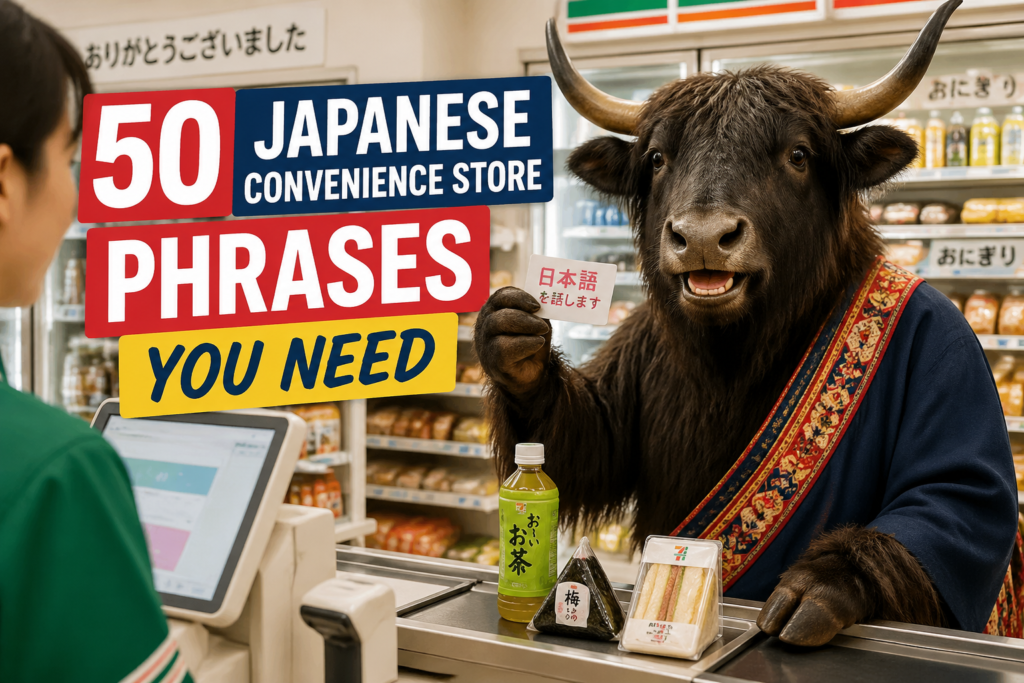
If you visit Japan, you will hear the same store phrases again and again. That is good news. You do not need wizard-level Japanese. You just need the right few words, a little listening practice, and the courage to say something before panic-buying egg sandwiches in silence.
This guide gives you 50 useful Japanese convenience store phrases for everyday situations, with clear meanings and real example sentences. If you want to build more daily survival Japanese after this, learn Japanese here and keep the momentum going.
Konbini Japanese is not fancy Japanese. It is practical, fast, and wildly useful. That makes it beautiful.
Useful Phrases And Real-Life Sentences
| Kanji | Rōmaji | Meaning | Example (JP) | Example (Rōmaji) | Translation (EN) |
|---|---|---|---|---|---|
| いらっしゃいませ | Irasshaimase | Welcome | いらっしゃいませ、何をお探しですか。 | Irasshaimase, nani o osagashi desu ka. | Welcome, what are you looking for? |
| お願いします | Onegaishimasu | Please | これを一つお願いします。 | Kore o hitotsu onegaishimasu. | One of these, please. |
| ありがとうございます | Arigatō gozaimasu | Thank you | ありがとうございます。助かりました。 | Arigatō gozaimasu. Tasukarimashita. | Thank you. That helped a lot. |
| すみません | Sumimasen | Excuse me / Sorry | すみません、お箸はどこですか。 | Sumimasen, ohashi wa doko desu ka. | Excuse me, where are the chopsticks? |
| はい | Hai | Yes | 袋はご利用ですか。はい、はい。 | Fukuro wa goriyō desu ka. Hai, hai. | Do you need a bag? Yes, yes. |
| いいえ | Iie | No | 温めますか。いいえ、大丈夫です。 | Atatamemasu ka. Iie, daijōbu desu. | Shall I heat it up? No, I’m okay. |
| 大丈夫です | Daijōbu desu | It’s okay / No thank you | レシートは必要ですか。大丈夫です。 | Reshīto wa hitsuyō desu ka. Daijōbu desu. | Do you need the receipt? I’m okay. |
| ありますか | Arimasu ka | Do you have…? | ATMはありますか。 | Ētīemu wa arimasu ka. | Do you have an ATM? |
| どこですか | Doko desu ka | Where is it? | トイレはどこですか。 | Toire wa doko desu ka. | Where is the restroom? |
| これ | Kore | This | これをください。 | Kore o kudasai. | This one, please. |
Those first ten do a ridiculous amount of work. You can survive a lot with just すみません (sumimasen), これ (kore), and a polite face that says “I am trying, please spare me.” For more all-purpose basics, popular Japanese phrases is a very handy next stop.
| Kanji | Rōmaji | Meaning | Example (JP) | Example (Rōmaji) | Translation (EN) |
|---|---|---|---|---|---|
| ください | Kudasai | Please give me… | コーヒーをください。 | Kōhī o kudasai. | Coffee, please. |
| 一つ | Hitotsu | One item | 肉まんを一つください。 | Nikuman o hitotsu kudasai. | One meat bun, please. |
| 二つ | Futatsu | Two items | おにぎりを二つお願いします。 | Onigiri o futatsu onegaishimasu. | Two rice balls, please. |
| 温めますか | Atatamemasu ka | Would you like it heated? | この弁当、温めますか。 | Kono bentō, atatamemasu ka. | Would you like this lunch box heated? |
| 温めてください | Atatamete kudasai | Please heat it up | このパスタを温めてください。 | Kono pasuta o atatamete kudasai. | Please heat up this pasta. |
| 袋 | Fukuro | Bag | 袋をお願いします。 | Fukuro o onegaishimasu. | A bag, please. |
| 袋は要りません | Fukuro wa irimasen | I don’t need a bag | 袋は要りません。 | Fukuro wa irimasen. | I don’t need a bag. |
| レシート | Reshīto | Receipt | レシートをください。 | Reshīto o kudasai. | Please give me the receipt. |
| レシートは大丈夫です | Reshīto wa daijōbu desu | I don’t need the receipt | レシートは大丈夫です。 | Reshīto wa daijōbu desu. | I’m okay without the receipt. |
| 箸 | Hashi | Chopsticks | 箸を一膳ください。 | Hashi o ichizen kudasai. | One pair of chopsticks, please. |
At the register, staff may ask very short questions at machine-gun speed. Do not panic. Listen for one keyword: 袋 (fukuro), 温め (atatame), or レシート (reshīto). Catch the noun, answer simply, and suddenly you look much more prepared than you feel.
| Kanji | Rōmaji | Meaning | Example (JP) | Example (Rōmaji) | Translation (EN) |
|---|---|---|---|---|---|
| スプーン | Supūn | Spoon | プリン用にスプーンをください。 | Purin-yō ni supūn o kudasai. | Please give me a spoon for the pudding. |
| フォーク | Fōku | Fork | サラダにフォークをお願いします。 | Sarada ni fōku o onegaishimasu. | A fork for the salad, please. |
| ストロー | Sutorō | Straw | ジュースにストローをください。 | Jūsu ni sutorō o kudasai. | Please give me a straw for the juice. |
| おしぼり | Oshibori | Wet towel | おしぼりはありますか。 | Oshibori wa arimasu ka. | Do you have a wet towel? |
| お弁当 | Obentō | Boxed meal | このお弁当を買います。 | Kono obentō o kaimasu. | I’ll buy this boxed meal. |
| おにぎり | Onigiri | Rice ball | 鮭のおにぎりはありますか。 | Sake no onigiri wa arimasu ka. | Do you have salmon rice balls? |
| 飲み物 | Nomimono | Drink | 冷たい飲み物はどこですか。 | Tsumetai nomimono wa doko desu ka. | Where are the cold drinks? |
| トイレ | Toire | Restroom | トイレを使ってもいいですか。 | Toire o tsukatte mo ii desu ka. | May I use the restroom? |
| ATM | Ētīemu | ATM | ATMは店内にありますか。 | Ētīemu wa tennai ni arimasu ka. | Is there an ATM in the store? |
| コピー機 | Kopīki | Copy machine | コピー機はどこですか。 | Kopīki wa doko desu ka. | Where is the copy machine? |
Paying, Asking, And Getting Through The Register Without Drama
| Kanji | Rōmaji | Meaning | Example (JP) | Example (Rōmaji) | Translation (EN) |
|---|---|---|---|---|---|
| いくらですか | Ikura desu ka | How much is it? | これ、いくらですか。 | Kore, ikura desu ka. | How much is this? |
| 現金 | Genkin | Cash | 現金で払います。 | Genkin de haraimasu. | I’ll pay in cash. |
| カード | Kādo | Card | カードは使えますか。 | Kādo wa tsukaemasu ka. | Can I use a card? |
| 電子マネー | Denshi manē | E-money | 電子マネーでお願いします。 | Denshi manē de onegaishimasu. | E-money, please. |
| ポイントカード | Pointo kādo | Point card | ポイントカードはありません。 | Pointo kādo wa arimasen. | I don’t have a point card. |
| 支払い | Shiharai | Payment | 公共料金の支払いをしたいです。 | Kōkyō ryōkin no shiharai o shitai desu. | I want to pay a utility bill. |
| 領収書 | Ryōshūsho | Receipt / invoice receipt | 領収書をお願いします。 | Ryōshūsho o onegaishimasu. | A formal receipt, please. |
| 小銭 | Kozeni | Coins / small change | 小銭があります。 | Kozeni ga arimasu. | I have coins. |
| ちょうどです | Chōdo desu | Exact amount | 五百円、ちょうどです。 | Gohyaku-en, chōdo desu. | It’s exactly 500 yen. |
| チャージ | Chāji | Top up / recharge | このカードに千円チャージしてください。 | Kono kādo ni sen-en chāji shite kudasai. | Please add 1,000 yen to this card. |
Japanese convenience stores often accept cash, cards, and transport IC payment, but the exact options vary by store and machine. If you want your polite requests to sound smoother, this guide to saying please in Japanese helps a lot.
| Kanji | Rōmaji | Meaning | Example (JP) | Example (Rōmaji) | Translation (EN) |
|---|---|---|---|---|---|
| 使えますか | Tsukaemasu ka | Can I use it? | このクーポンは使えますか。 | Kono kūpon wa tsukaemasu ka. | Can I use this coupon? |
| 見せてください | Misete kudasai | Please show me | 身分証を見せてください。 | Mibunshō o misete kudasai. | Please show me your ID. |
| 年齢確認 | Nenrei kakunin | Age verification | お酒には年齢確認が必要です。 | Osake ni wa nenrei kakunin ga hitsuyō desu. | Alcohol requires age verification. |
| 少々お待ちください | Shōshō omachi kudasai | Please wait a moment | 少々お待ちください、確認します。 | Shōshō omachi kudasai, kakunin shimasu. | Please wait a moment, I’ll check. |
| かしこまりました | Kashikomarimashita | Certainly | 袋ですね。かしこまりました。 | Fukuro desu ne. Kashikomarimashita. | A bag, certainly. |
| お待たせしました | Omatase shimashita | Thanks for waiting | お待たせしました、こちらです。 | Omatase shimashita, kochira desu. | Thanks for waiting, here you go. |
| もう一度お願いします | Mō ichido onegaishimasu | One more time, please | すみません、もう一度お願いします。 | Sumimasen, mō ichido onegaishimasu. | Sorry, one more time, please. |
| ゆっくりお願いします | Yukkuri onegaishimasu | Please speak slowly | 日本語が少しだけです。ゆっくりお願いします。 | Nihongo ga sukoshi dake desu. Yukkuri onegaishimasu. | I only know a little Japanese. Please speak slowly. |
| 英語 | Eigo | English | 英語のメニューはありますか。 | Eigo no menyū wa arimasu ka. | Do you have an English menu? |
| 日本語がわかりません | Nihongo ga wakarimasen | I don’t understand Japanese | すみません、日本語がわかりません。 | Sumimasen, Nihongo ga wakarimasen. | Sorry, I don’t understand Japanese. |
Food, Drinks, And Late-Night Konbini Missions
| Kanji | Rōmaji | Meaning | Example (JP) | Example (Rōmaji) | Translation (EN) |
|---|---|---|---|---|---|
| 温かい | Atatakai | Warm | 温かいお茶はありますか。 | Atatakai ocha wa arimasu ka. | Do you have warm tea? |
| 冷たい | Tsumetai | Cold | 冷たい水をください。 | Tsumetai mizu o kudasai. | Cold water, please. |
| おすすめ | Osusume | Recommendation | 何がおすすめですか。 | Nani ga osusume desu ka. | What do you recommend? |
| 新商品 | Shinshōhin | New product | この新商品は人気ですか。 | Kono shinshōhin wa ninki desu ka. | Is this new product popular? |
| 売り切れ | Urikire | Sold out | すみません、それは売り切れです。 | Sumimasen, sore wa urikire desu. | Sorry, that is sold out. |
| まだあります | Mada arimasu | We still have it | ツナマヨのおにぎりはまだあります。 | Tsunamayo no onigiri wa mada arimasu. | We still have tuna mayo rice balls. |
| 人気です | Ninki desu | It’s popular | このデザートは人気です。 | Kono dezāto wa ninki desu. | This dessert is popular. |
| 辛い | Karai | Spicy | これは辛いですか。 | Kore wa karai desu ka. | Is this spicy? |
| 甘い | Amai | Sweet | あまり甘い物は食べません。 | Amari amai mono wa tabemasen. | I do not eat very sweet things. |
| おいしい | Oishii | Delicious | このサンドイッチはおいしいです。 | Kono sandoitchi wa oishii desu. | This sandwich is delicious. |
A lot of konbini food labels are easy to decode once you know a few key words. 辛い (karai) saves you from accidental spice drama, and 売り切れ (urikire) explains why the one thing you wanted vanished five minutes before you arrived. Tragic. Very Japanese. Very efficient.
Quick Notes That Make These Phrases Easier
1. ください (kudasai) and お願いします (onegaishimasu) are both useful.
ください is direct and very common when asking for an item. お願いします feels a bit softer and broader. Both work well in convenience stores.
2. 大丈夫です (daijōbu desu) can mean “I’m fine” or “No thank you.”
Context matters. If staff ask about a bag or receipt, 大丈夫です usually means you do not need it.
3. You do not need perfect grammar.
トイレ、どこですか (Toire, doko desu ka) is short, natural, and completely useful. Full textbook elegance is nice. Finding the bathroom is nicer.
4. Listen for repeated register phrases.
Japanese retail language can sound fast because it is very fixed. Once you hear the same questions a few times, your brain starts catching them. Slowly. Then suddenly. Like a microwave beep of enlightenment.
Mini Reference Tables
Useful Item Words
| Kanji | Rōmaji | Meaning | Example (JP) | Example (Rōmaji) | Translation (EN) |
|---|---|---|---|---|---|
| 水 | Mizu | Water | 水はありますか。 | Mizu wa arimasu ka. | Do you have water? |
| お茶 | Ocha | Tea | 温かいお茶をください。 | Atatakai ocha o kudasai. | Warm tea, please. |
| コーヒー | Kōhī | Coffee | ホットコーヒーをお願いします。 | Hotto kōhī o onegaishimasu. | A hot coffee, please. |
| サンドイッチ | Sandoitchi | Sandwich | このサンドイッチを買います。 | Kono sandoitchi o kaimasu. | I’ll buy this sandwich. |
| デザート | Dezāto | Dessert | おすすめのデザートは何ですか。 | Osusume no dezāto wa nan desu ka. | What dessert do you recommend? |
Useful Register Answers
| Kanji | Rōmaji | Meaning | Example (JP) | Example (Rōmaji) | Translation (EN) |
|---|---|---|---|---|---|
| はい、お願いします | Hai, onegaishimasu | Yes, please | 温めますか。はい、お願いします。 | Atatamemasu ka. Hai, onegaishimasu. | Would you like it heated? Yes, please. |
| いいえ、大丈夫です | Iie, daijōbu desu | No, thank you | 袋はご利用ですか。いいえ、大丈夫です。 | Fukuro wa goriyō desu ka. Iie, daijōbu desu. | Do you need a bag? No, thank you. |
| 現金で | Genkin de | By cash | お支払いは。現金で。 | Oshiharai wa. Genkin de. | Payment method? Cash. |
| カードで | Kādo de | By card | お支払いは。カードで。 | Oshiharai wa. Kādo de. | Payment method? By card. |
| 袋をお願いします | Fukuro o onegaishimasu | A bag, please | 袋をお願いします。 | Fukuro o onegaishimasu. | A bag, please. |
Common Mistakes And Easy Fixes
- Using English only and freezing up: Start with すみません (sumimasen). It buys you a second and sounds polite.
- Saying long sentences too early: Short is better. ATM はどこですか (Ētīemu wa doko desu ka) works perfectly.
- Missing the bag question: If you hear 袋 (fukuro), they are probably asking about a bag.
- Thinking 大丈夫です always means yes: Nope. In shops it often means “No, I’m fine.” Sneaky little phrase.
- Panicking when staff speak fast: Use もう一度お願いします (Mō ichido onegaishimasu) or ゆっくりお願いします (Yukkuri onegaishimasu).
Practice These Tiny Konbini Dialogues
買い物
Kaimono
Shopping
客: すみません、トイレはどこですか。
Kyaku: Sumimasen, toire wa doko desu ka.
Customer: Excuse me, where is the restroom?
店員: あちらです。
Ten’in: Achira desu.
Clerk: It’s over there.
客: ありがとうございます。
Kyaku: Arigatō gozaimasu.
Customer: Thank you.
会計
Kaikei
Checkout
店員: 温めますか。
Ten’in: Atatamemasu ka.
Clerk: Would you like it heated?
客: はい、お願いします。
Kyaku: Hai, onegaishimasu.
Customer: Yes, please.
店員: 袋はご利用ですか。
Ten’in: Fukuro wa goriyō desu ka.
Clerk: Do you need a bag?
客: いいえ、大丈夫です。
Kyaku: Iie, daijōbu desu.
Customer: No, thank you.
If questions are your weak spot, this guide to questions in Japanese will make these store exchanges much easier to decode.
Yak Takeaway
Japanese convenience stores are one of the easiest places to practice real Japanese because the interactions are short, repeated, and practical. Learn these 50 phrases, and suddenly buying lunch, finding the ATM, asking for a spoon, or refusing a bag feels much less mysterious. Start with the tiny core: すみません (sumimasen), これをください (kore o kudasai), お願いします (onegaishimasu), and 大丈夫です (daijōbu desu). That small set gets you very far.
And once konbini Japanese starts feeling easy, everyday Japanese gets less scary too. For another practical next lesson, keep building with this Japanese guide.