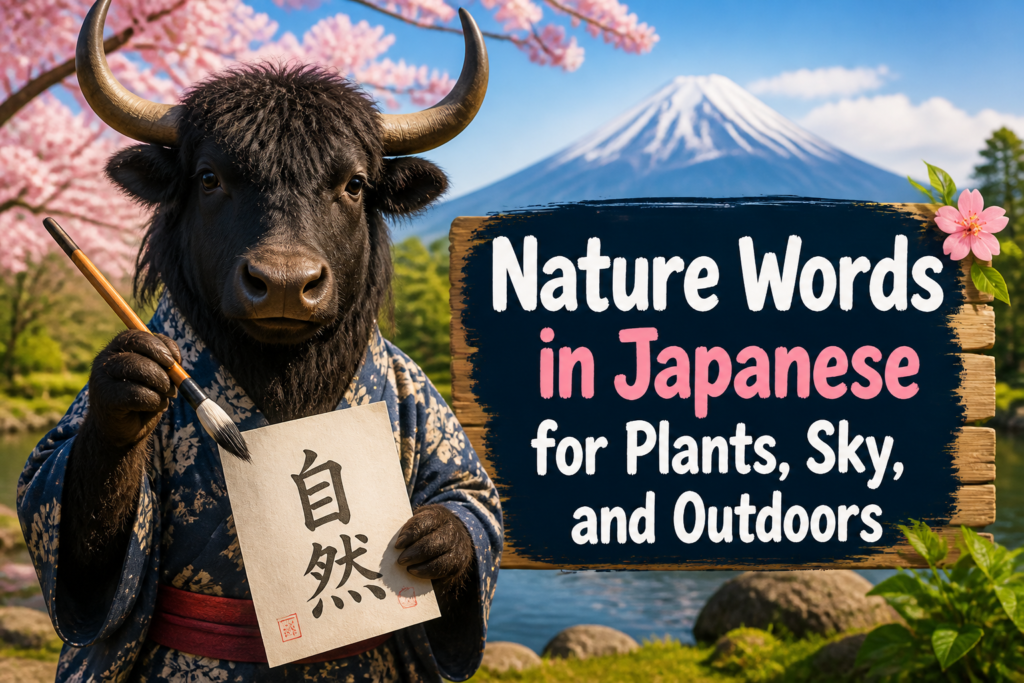
If you like talking about the world outside, Nature Words in Japanese are a nice place to start. Japan has four seasons that love to show off, so words for flowers, trees, weather, and scenery come up all the time. Convenient for learners. Slightly unfair for everyone else who still has to remember them.
This guide gives you useful nature vocabulary with Kanji, Rōmaji, and clear English meanings. You will also see real example sentences, because words are much easier to remember when they are doing actual work instead of sitting around in a list looking important.
For a broader Japanese-learning path, you can also visit Learn Japanese and, if you want more everyday topic vocabulary, check out Hobbies in Japanese.
Essential Nature Words
| Kanji | Rōmaji | Meaning | Example | Rōmaji | English Translation |
|---|---|---|---|---|---|
| 自然 | shizen | nature | 自然が好きです。 | Shizen ga suki desu. | I like nature. |
| 山 | yama | mountain | 山が見えます。 | Yama ga miemasu. | I can see the mountain. |
| 川 | kawa | river | 川の音がきれいです。 | Kawa no oto ga kirei desu. | The sound of the river is beautiful. |
| 海 | umi | sea, ocean | 海で泳ぎます。 | Umi de oyogimasu. | I swim in the sea. |
| 空 | sora | sky | 空が青いです。 | Sora ga aoi desu. | The sky is blue. |
| 森 | mori | forest | 森を歩きました。 | Mori o arukimashita. | I walked through the forest. |
| 木 | ki | tree, wood | 木の下で休みます。 | Ki no shita de yasumimasu. | I rest under the tree. |
| 花 | hana | flower | 花が咲いています。 | Hana ga saite imasu. | The flowers are blooming. |
| 葉 | ha | leaf | 葉が黄色いです。 | Ha ga kiiroi desu. | The leaves are yellow. |
| 草 | kusa | grass | 草の上に座りました。 | Kusa no ue ni suwarimashita. | I sat on the grass. |
| 空気 | kūki | air | 空気がさわやかです。 | Kūki ga sawayaka desu. | The air is refreshing. |
| 景色 | keshiki | scenery, view | 景色がとてもきれいです。 | Keshiki ga totemo kirei desu. | The scenery is very beautiful. |
Useful Phrases For Talking About Nature
| Kanji | Rōmaji | Meaning | Example | Rōmaji | English Translation |
|---|---|---|---|---|---|
| 自然が豊か | shizen ga yutaka | rich in nature, full of nature | この町は自然が豊かです。 | Kono machi wa shizen ga yutaka desu. | This town is rich in nature. |
| 山に登る | yama ni noboru | to climb a mountain | 週末に山に登ります。 | Shūmatsu ni yama ni noborimasu. | I climb a mountain on the weekend. |
| 海を眺める | umi o nagameru | to look at the sea | 夕方に海を眺めました。 | Yūgata ni umi o nagamemashita. | I looked at the sea in the evening. |
| 空が広い | sora ga hiroi | the sky is wide | ここは空が広いです。 | Koko wa sora ga hiroi desu. | The sky is wide here. |
| 花が咲く | hana ga saku | flowers bloom | 春に花が咲きます。 | Haru ni hana ga sakimasu. | Flowers bloom in spring. |
| 木陰で休む | kokage de yasumu | to rest in the shade of a tree | 木陰で少し休みました。 | Kokage de sukoshi yasumimashita. | I rested in the shade of a tree for a bit. |
| 森の中 | mori no naka | inside the forest | 森の中は静かです。 | Mori no naka wa shizuka desu. | It is quiet inside the forest. |
| 風が気持ちいい | kaze ga kimochi ii | the breeze feels nice | 今日は風が気持ちいいです。 | Kyō wa kaze ga kimochi ii desu. | The breeze feels nice today. |
| 星が見える | hoshi ga mieru | the stars are visible | 夜に星が見えます。 | Yoru ni hoshi ga miemasu. | You can see the stars at night. |
| 雨が降る | ame ga furu | it rains | 午後から雨が降ります。 | Gogo kara ame ga furimasu. | It will rain from the afternoon. |
| 晴れの日 | hare no hi | sunny day | 晴れの日は散歩します。 | Hare no hi wa sanpo shimasu. | I go for a walk on sunny days. |
| 緑が多い | midori ga ōi | there is a lot of greenery | この公園は緑が多いです。 | Kono kōen wa midori ga ōi desu. | This park has a lot of greenery. |
Plants And Garden Words
| Kanji | Rōmaji | Meaning | Example | Rōmaji | English Translation |
|---|---|---|---|---|---|
| 植物 | shokubutsu | plant | 植物を育てています。 | Shokubutsu o sodatete imasu. | I am growing plants. |
| 木 | ki | tree | 大きな木があります。 | Ōkina ki ga arimasu. | There is a big tree. |
| 花 | hana | flower | 赤い花が好きです。 | Akai hana ga suki desu. | I like red flowers. |
| 葉 | ha | leaf | 葉が風でゆれます。 | Ha ga kaze de yuremasu. | The leaves sway in the wind. |
| 根 | ne | root | 根が土の中にあります。 | Ne ga tsuchi no naka ni arimasu. | The roots are in the soil. |
| 芽 | me | bud, sprout | 芽が出ました。 | Me ga demashita. | A sprout came out. |
| 草 | kusa | grass | 草が高くなりました。 | Kusa ga takaku narimashita. | The grass grew tall. |
| 花壇 | kadan | flower bed | 花壇に水をあげます。 | Kadan ni mizu o agemasu. | I water the flower bed. |
| 庭 | niwa | garden, yard | 庭で犬が遊んでいます。 | Niwa de inu ga asonde imasu. | The dog is playing in the yard. |
| 種 | tane | seed | 種をまきました。 | Tane o makimashita. | I planted seeds. |
Sky, Weather, And Outdoor Words
| Kanji | Rōmaji | Meaning | Example | Rōmaji | English Translation |
|---|---|---|---|---|---|
| 空 | sora | sky | 空が明るいです。 | Sora ga akarui desu. | The sky is bright. |
| 雲 | kumo | cloud | 雲が多いです。 | Kumo ga ōi desu. | There are many clouds. |
| 雨 | ame | rain | 雨がやみました。 | Ame ga yamimashita. | The rain stopped. |
| 風 | kaze | wind, breeze | 風が強いです。 | Kaze ga tsuyoi desu. | The wind is strong. |
| 雪 | yuki | snow | 雪が降っています。 | Yuki ga futte imasu. | It is snowing. |
| 星 | hoshi | star | 星が光っています。 | Hoshi ga hikatte imasu. | The stars are shining. |
| 月 | tsuki | moon, month | 月がきれいです。 | Tsuki ga kirei desu. | The moon is beautiful. |
| 太陽 | taiyō | sun | 太陽がまぶしいです。 | Taiyō ga mabushii desu. | The sun is bright. |
| 晴れ | hare | clear weather, sunny | 今日は晴れです。 | Kyō wa hare desu. | Today is sunny. |
| 曇り | kumori | cloudy | 午後は曇りです。 | Gogo wa kumori desu. | This afternoon is cloudy. |
| 雷 | kaminari | thunder | 雷が鳴りました。 | Kaminari ga narimashita. | Thunder sounded. |
| 虹 | niji | rainbow | 虹が出ました。 | Niji ga demashita. | A rainbow appeared. |
Common Nature Phrases That Sound Natural
Here are a few phrases that learners actually use. The pattern is usually simple: a noun plus が and a descriptive word. Japanese likes to keep things neat. No extra drama required.
- 自然がきれいです。 — Shizen ga kirei desu. — Nature is beautiful.
- この公園は木が多いです。 — Kono kōen wa ki ga ōi desu. — This park has many trees.
- 川の近くを歩きます。 — Kawa no chikaku o arukimasu. — I walk near the river.
- 山の空気はさわやかです。 — Yama no kūki wa sawayaka desu. — The mountain air is refreshing.
- 花の色が明るいです。 — Hana no iro ga akarui desu. — The flower colors are bright.
- 海の音が好きです。 — Umi no oto ga suki desu. — I like the sound of the sea.
- 森の中は静かです。 — Mori no naka wa shizuka desu. — It is quiet in the forest.
- 空が広く見えます。 — Sora ga hiroku miemasu. — The sky looks wide.
- 朝の風が気持ちいいです。 — Asa no kaze ga kimochi ii desu. — The morning breeze feels nice.
- 雨の後に虹が出ました。 — Ame no ato ni niji ga demashita. — A rainbow appeared after the rain.
- 木の下で休みたいです。 — Ki no shita de yasumitai desu. — I want to rest under the tree.
- 春は花がたくさん咲きます。 — Haru wa hana ga takusan sakimasu. — Many flowers bloom in spring.
Useful Nuances And Easy Confusions
Some nature words look simple but behave a little differently from English. Annoying? A bit. Useful? Very.
| Word | Rōmaji | Small Note |
|---|---|---|
| 山 | yama | Can mean a mountain or mountains in general, depending on context. |
| 川 | kawa | Usually means river, not stream specifically. |
| 海 | umi | Sea or ocean. Both are okay in everyday speech. |
| 空 | sora | Sky. It can also appear in poetic or emotional expressions. |
| 木 | ki | Can mean tree and also wood depending on context. |
| 花 | hana | Flower, but sometimes used broadly in cultural or decorative settings. |
自然(shizen)is a great umbrella word. If you are not sure whether to say tree, flower, sky, or forest first, start with 自然 and build from there.
Quick Practice
Try swapping the nature word while keeping the sentence pattern the same. This is one of the fastest ways to train your brain without making it sigh dramatically.
- ___がきれいです。 — Try: 花, 空, 景色
- ___が見えます。 — Try: 山, 海, 星
- ___が多いです。 — Try: 木, 雲, 草
- ___で休みます。 — Try: 木陰, 庭, 森の中
- ___が咲きます。 — Try: 花, 芽
Simple Reference Summary
| Category | Key Words |
|---|---|
| Land | 山、川、海、森、庭 |
| Plants | 木、花、葉、草、根、芽 |
| Sky And Weather | 空、雲、雨、風、雪、星、月、太陽 |
| Descriptive Words | 自然が豊か、空が広い、風が気持ちいい、緑が多い |
Once you know these words, Japanese nature descriptions become much easier to read and say. Start with the big ones like 山、海、空、and 花, then add the smaller details. That way, your vocabulary grows like a well-watered garden instead of a random weed situation.