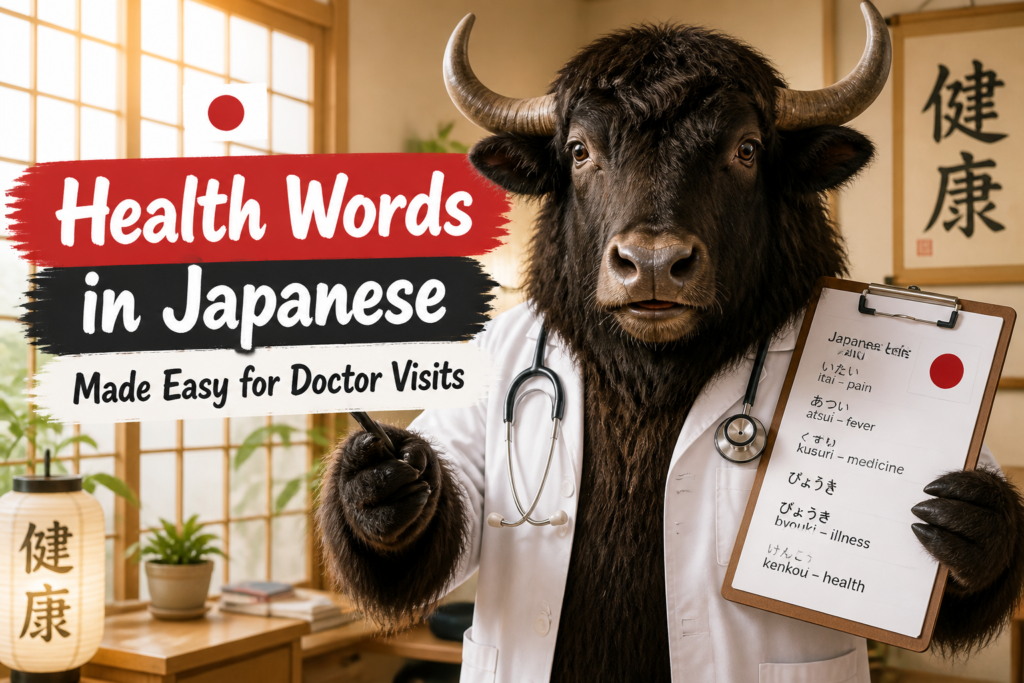
Health Words in Japanese can feel a little intimidating at first, because suddenly you need words for pain, fever, medicine, and the extremely unfunny business of explaining symptoms while half-sick. Charming. But the good news is that the most useful health vocabulary is quite learnable, and you do not need medical-level Japanese to survive a clinic visit.
This guide focuses on the words and phrases that matter most in real life: what hurts, how long it has hurt, and how to ask for help politely. If you can say even a few of these out loud, doctor visits get much less mysterious and much more manageable.
For a quick grammar helper on politeness, you may also want Say Please in Japanese. And if you want the bigger picture, the main Learn Japanese page is a good place to keep going.
Essential Health Words You Will Actually Use
| Kanji | Rōmaji | English Meaning | Example Sentence | Rōmaji | English Translation |
|---|---|---|---|---|---|
| 病気 | byōki | illness, sickness | 私は病気です。 | Watashi wa byōki desu. | I am sick. |
| 痛い | itai | painful, hurts | 頭が痛いです。 | Atama ga itai desu. | My head hurts. |
| 熱 | netsu | fever | 少し熱があります。 | Sukoshi netsu ga arimasu. | I have a slight fever. |
| 咳 | seki | cough | 咳が出ます。 | Seki ga demasu. | I have a cough. |
| 鼻水 | hanamizu | runny nose | 鼻水が止まりません。 | Hanamizu ga tomarimasen. | My runny nose will not stop. |
| 喉 | nodo | throat | 喉が痛いです。 | Nodo ga itai desu. | My throat hurts. |
| 頭 | atama | head | 頭が痛いです。 | Atama ga itai desu. | I have a headache. |
| お腹 | onaka | stomach, belly | お腹が痛いです。 | Onaka ga itai desu. | My stomach hurts. |
| 背中 | senaka | back | 背中が痛いです。 | Senaka ga itai desu. | My back hurts. |
| めまい | memai | dizziness | めまいがします。 | Memai ga shimasu. | I feel dizzy. |
| 吐き気 | hakike | nausea | 吐き気があります。 | Hakike ga arimasu. | I feel nauseous. |
| 薬 | kusuri | medicine | 薬を飲みます。 | Kusuri o nomimasu. | I take medicine. |
Notice how many symptom words pair naturally with 〜が痛いです (~ ga itai desu, “~ hurts”). Japanese loves a simple structure when life gets complicated. Rude, honestly, but convenient.
Useful Phrases For A Doctor Visit
| Kanji | Rōmaji | English Meaning | Example Sentence | Rōmaji | English Translation |
|---|---|---|---|---|---|
| 具合が悪い | guai ga warui | feel unwell | 今日は具合が悪いです。 | Kyō wa guai ga warui desu. | I feel unwell today. |
| 病院 | byōin | hospital, clinic | 病院に行きます。 | Byōin ni ikimasu. | I will go to the hospital. |
| 診察 | shinsatsu | medical examination | 診察を受けます。 | Shinsatsu o ukemasu. | I will get an examination. |
| 先生 | sensei | doctor, teacher | 先生に話します。 | Sensei ni hanashimasu. | I will talk to the doctor. |
| 受付 | uketsuke | reception, front desk | 受付で名前を言います。 | Uketsuke de namae o iimasu. | I say my name at reception. |
| 保険証 | hokenshō | health insurance card | 保険証を見せます。 | Hokenshō o misemasu. | I show my insurance card. |
| 予約 | yoyaku | reservation, appointment | 予約があります。 | Yoyaku ga arimasu. | I have an appointment. |
| 待合室 | machiaishitsu | waiting room | 待合室で待ちます。 | Machiaishitsu de machimasu. | I wait in the waiting room. |
| 検査 | kensa | test, examination | 検査をします。 | Kensa o shimasu. | I will have a test. |
| 注射 | chūsha | injection, shot | 注射はこわいです。 | Chūsha wa kowai desu. | Shots are scary. |
| 処方箋 | shohōsen | prescription | 処方箋をもらいます。 | Shohōsen o moraimasu. | I will get a prescription. |
| 市販薬 | shihanyaku | over-the-counter medicine | 市販薬を買います。 | Shihanyaku o kaimasu. | I buy over-the-counter medicine. |
Real-Life Sentences For Explaining Symptoms
| Kanji | Rōmaji | English Meaning | Example Sentence | Rōmaji | English Translation |
|---|---|---|---|---|---|
| 三日 | mikkka / mikka | three days | 三日前から痛いです。 | Mikka mae kara itai desu. | It has hurt since three days ago. |
| 昨日 | kinō | yesterday | 昨日から熱があります。 | Kinō kara netsu ga arimasu. | I have had a fever since yesterday. |
| 今朝 | kesa | this morning | 今朝から咳が出ます。 | Kesa kara seki ga demasu. | I started coughing this morning. |
| 毎日 | mainichi | every day | 毎日痛みます。 | Mainichi itamimasu. | It hurts every day. |
| 食べる | taberu | to eat | 食べるとお腹が痛いです。 | Taberu to onaka ga itai desu. | My stomach hurts when I eat. |
| 飲む | nomu | to drink, take medicine | 薬を飲んでもいいですか。 | Kusuri o nonde mo ii desu ka. | Can I take medicine? |
| 眠れない | nemurenai | cannot sleep | 痛くて眠れないです。 | Itakute nemurenai desu. | It hurts so much I cannot sleep. |
| 寒い | samui | cold | とても寒いです。 | Totemo samui desu. | I feel very cold. |
| 暑い | atsui | hot | 体が暑いです。 | Karada ga atsui desu. | My body feels hot. |
| だるい | darui | sluggish, tired | 体がだるいです。 | Karada ga darui desu. | My body feels sluggish. |
| かゆい | kayui | itchy | 皮膚がかゆいです。 | Hifu ga kayui desu. | My skin is itchy. |
| 息苦しい | ikigurushii | hard to breathe | 少し息苦しいです。 | Sukoshi ikigurushii desu. | It is a little hard to breathe. |
When you are describing symptoms, short and clear beats dramatic and poetic. A clinic is not the time for your best novel.
Polite Phrases That Make Everything Easier
- お願いします — onegai shimasu — please / I ask for your help
- すみません — sumimasen — excuse me / sorry / pardon me
- 大丈夫です — daijōbu desu — I am okay / it is fine
- もう一度お願いします — mō ichido onegai shimasu — please say it one more time
- ゆっくりお願いします — yukkuri onegai shimasu — please speak slowly
- 英語はできますか — Eigo wa dekimasu ka — can you speak English?
- これを見てください — kore o mite kudasai — please look at this
- どこが痛いですか — doko ga itai desu ka — where does it hurt?
- 少し痛いです — sukoshi itai desu — it hurts a little
- とても痛いです — totemo itai desu — it hurts a lot
If you learn only two polite helpers, make them すみません (sumimasen) and お願いします (onegai shimasu). They open doors, soften requests, and make you sound much more natural. Convenient little magic words, basically.
Common Health Word Patterns
| Pattern | Meaning | Example | Rōmaji | English |
|---|---|---|---|---|
| 〜が痛いです | ~ hurts | 頭が痛いです | Atama ga itai desu | My head hurts |
| 〜があります | I have ~ / there is ~ | 熱があります | Netsu ga arimasu | I have a fever |
| 〜が出ます | ~ comes out / occurs | 咳が出ます | Seki ga demasu | I have a cough |
| 〜がします | I feel ~ / experience ~ | めまいがします | Memai ga shimasu | I feel dizzy |
| 〜前から | since ~ ago | 一週間前からです | Ishūkan mae kara desu | Since one week ago |
| 〜てもいいですか | Is it okay to ~ ? | 薬を飲んでもいいですか | Kusuri o nonde mo ii desu ka | Can I take medicine? |
Mini Practice
- Say “My throat hurts” using 喉 and 痛い.
- Say “I have a fever since yesterday” using 昨日 and 熱.
- Say “Please speak slowly” using ゆっくりお願いします.
- Say “I feel dizzy” using めまい.
- Say “I have a cough and a runny nose” using 咳 and 鼻水.
Answers:
- 喉が痛いです。 — Nodo ga itai desu. — My throat hurts.
- 昨日から熱があります。 — Kinō kara netsu ga arimasu. — I have had a fever since yesterday.
- ゆっくりお願いします。 — Yukkuri onegai shimasu. — Please speak slowly.
- めまいがします。 — Memai ga shimasu. — I feel dizzy.
- 咳と鼻水があります。 — Seki to hanamizu ga arimasu. — I have a cough and a runny nose.
Easy Mistakes To Avoid
| Wrong Idea | Better Way | Why It Helps |
|---|---|---|
| Using only one vague word like “sick” for everything | 熱があります, 咳が出ます, 頭が痛いです | Specific symptoms help the doctor understand faster |
| Forgetting politeness | お願いします, すみません | Polite phrases make requests smoother |
| Trying to translate everything word for word | Use simple patterns like 〜が痛いです | Japanese clinic language is often beautifully simple |
| Speaking too fast when nervous | ゆっくりお願いします | You can slow the conversation down and breathe |
| Not mentioning when it started | 昨日から, 三日前から | Time expressions matter a lot in medical situations |
What If I Do Not Know The Exact Word?
Use a simple sentence with a body part and 痛いです (itai desu) or 具合が悪いです (guai ga warui desu). That is usually enough to start. You can also point to the area and say ここが痛いです (koko ga itai desu) — “This area hurts.” Helpful, direct, no drama required.
Quick Reference Summary
- 病気 — byōki — illness
- 痛い — itai — hurts
- 熱 — netsu — fever
- 咳 — seki — cough
- 鼻水 — hanamizu — runny nose
- 喉 — nodo — throat
- お腹 — onaka — stomach
- 薬 — kusuri — medicine
- 病院 — byōin — hospital, clinic
- 受付 — uketsuke — reception
- 保険証 — hokenshō — insurance card
- お願いします — onegai shimasu — please
Health vocabulary in Japanese does not have to be overwhelming. Start with the body part, add the symptom, and use a polite phrase or two to keep the conversation smooth. That combination is the real survival kit. Once you can say 頭が痛いです, 熱があります, and ゆっくりお願いします, you are already doing better than many nervous travelers with a full phrasebook and zero confidence.