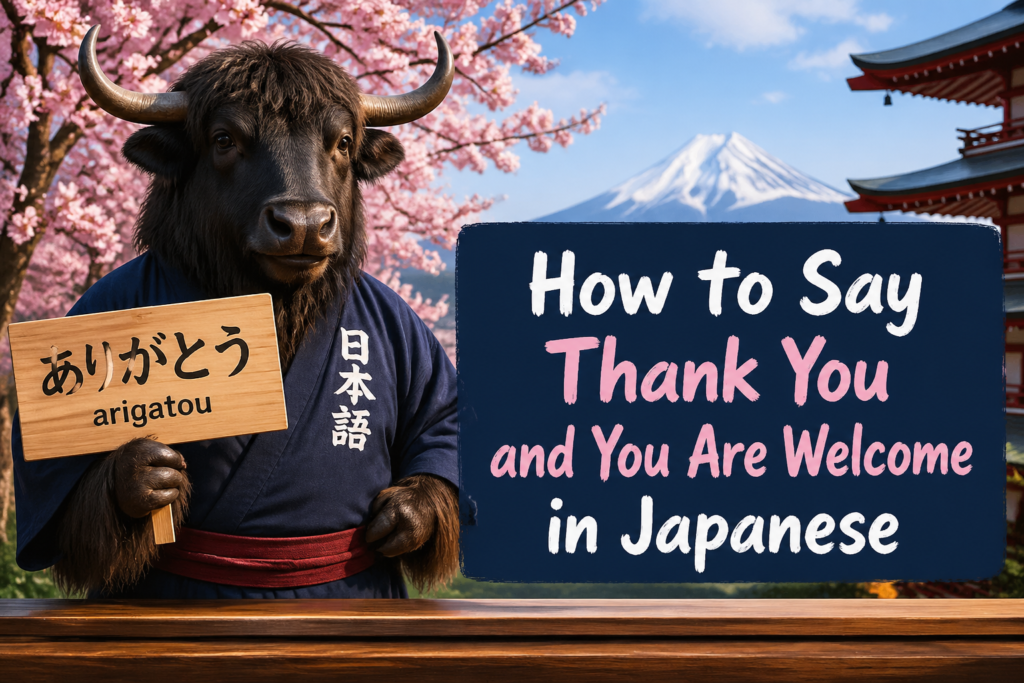
Japanese has a lot of ways to say “thank you” and “you’re welcome,” and the version you choose matters more than many beginners expect. A quick ありがとう works with friends. A careful ありがとうございます fits teachers, coworkers, customers, and basically anyone you do not want to accidentally sound weird around.
And “you’re welcome”? That one is sneakier. English uses it all the time. Japanese often does not. Native speakers frequently reply with something softer, humbler, or more indirect. Polite? Yes. A tiny bit confusing at first? Also yes.
If you are building everyday Japanese, this guide gives you the useful versions first, then shows how to sound casual, polite, formal, and not like a textbook from 1987.
If you want more everyday basics after this, you can also learn Japanese phrases for daily life, plus how to say excuse me, goodbye, and good luck.
The Core Idea: Casual Vs Formal
Here is the simple version:
- ありがとう — Arigatō — casual “thanks”
- ありがとうございます — Arigatō gozaimasu — polite “thank you”
- どうもありがとうございます — Dōmo arigatō gozaimasu — “thank you very much”
- どういたしまして — Dō itashimashite — “you’re welcome”
That last one is correct and useful, but not always the most natural reply in every situation. Japanese often prefers answers like “not at all,” “it was nothing,” or “no problem.” We will get there in a minute.
Useful Thank You Phrases And Real-Life Sentences
| Kanji | Rōmaji | Meaning | Example (JP) | Example (Rōmaji) | Translation (EN) |
|---|---|---|---|---|---|
| ありがとう | Arigatō | Thanks; thank you | 手伝ってくれて、ありがとう。 | Tetsudatte kurete, arigatō. | Thanks for helping me. |
| ありがとうございます | Arigatō gozaimasu | Thank you; polite | 今日はありがとうございます。 | Kyō wa arigatō gozaimasu. | Thank you for today. |
| どうもありがとう | Dōmo arigatō | Thanks a lot | プレゼント、どうもありがとう。 | Purezento, dōmo arigatō. | Thanks a lot for the gift. |
| どうもありがとうございます | Dōmo arigatō gozaimasu | Thank you very much | ご親切に、どうもありがとうございます。 | Goshinsetsu ni, dōmo arigatō gozaimasu. | Thank you very much for your kindness. |
| 本当にありがとうございます | Hontō ni arigatō gozaimasu | Thank you very much; sincerely thank you | 助けていただいて、本当にありがとうございます。 | Tasukete itadaite, hontō ni arigatō gozaimasu. | Thank you so much for helping me. |
| ありがとうございました | Arigatō gozaimashita | Thank you very much for what you did; past polite | 昨日はありがとうございました。 | Kinō wa arigatō gozaimashita. | Thank you for yesterday. |
The big thing to notice is this: ございます makes the phrase polite, and ございました points to something completed. If someone just finished helping you, ありがとうございました can sound especially natural.
Yes, Japanese can make gratitude feel grammatically elegant. English just throws “thanks” at the wall and hopes for the best.
ありがとう
Arigatō
Thanks; thank you
Use this with friends, family, classmates, and people you know well. It is warm and common, but too casual for many formal situations.
メッセージくれて、ありがとう。
Messēji kurete, arigatō.
Thanks for sending me a message.
ありがとうございます
Arigatō gozaimasu
Thank you
This is the safest everyday choice. If you are not sure which version to use, use this one. It sounds polite without feeling stiff.
教えてくれて、ありがとうございます。
Oshiete kurete, arigatō gozaimasu.
Thank you for teaching me.
どうもありがとうございます
Dōmo arigatō gozaimasu
Thank you very much
This adds extra warmth and appreciation. Good for customer service, hospitality, work settings, or anytime someone really helped you out.
お忙しいところ、どうもありがとうございます。
Oisogashii tokoro, dōmo arigatō gozaimasu.
Thank you very much for your time while you are busy.
本当にありがとうございます
Hontō ni arigatō gozaimasu
Thank you so much; I truly appreciate it
This sounds more heartfelt. Use it when you really mean it, not just because you learned a longer phrase and want to flex a little.
来てくださって、本当にありがとうございます。
Kite kudasatte, hontō ni arigatō gozaimasu.
Thank you so much for coming.
ありがとうございました
Arigatō gozaimashita
Thank you for what you did
This is the past form, often used after an event, lesson, meeting, meal, visit, or completed favor.
レッスン、ありがとうございました。
Ressun, arigatō gozaimashita.
Thank you for the lesson.
どうも
Dōmo
Thanks; much appreciated
This can mean “thanks” by itself in casual, quick situations. It is short, common, and a bit blunt if used too much. Think of it like a fast “thanks.”
あ、どうも。
A, dōmo.
Ah, thanks.
感謝します
Kansha shimasu
I appreciate it; I am grateful
This sounds more formal and less conversational. You may see it in speeches, business communication, or writing.
皆様のご協力に感謝します。
Minasama no gokyōryoku ni kansha shimasu.
I appreciate everyone’s cooperation.
Useful You Are Welcome Phrases And Real-Life Sentences
| Kanji | Rōmaji | Meaning | Example (JP) | Example (Rōmaji) | Translation (EN) |
|---|---|---|---|---|---|
| どういたしまして | Dō itashimashite | You’re welcome | 「ありがとうございます。」「どういたしまして。」 | “Arigatō gozaimasu.” “Dō itashimashite.” | “Thank you.” “You’re welcome.” |
| いえいえ | Ie ie | No, no; not at all | 「助かりました。」「いえいえ。」 | “Tasukarimashita.” “Ie ie.” | “That really helped.” “Not at all.” |
| とんでもないです | Tondemo nai desu | Not at all; don’t mention it | 「ありがとうございました。」「とんでもないです。」 | “Arigatō gozaimashita.” “Tondemo nai desu.” | “Thank you very much.” “Not at all.” |
| 気にしないでください | Ki ni shinaide kudasai | Please don’t worry about it | 「すみません、助かりました。」「気にしないでください。」 | “Sumimasen, tasukarimashita.” “Ki ni shinaide kudasai.” | “Sorry, that really helped.” “Please don’t worry about it.” |
| お役に立ててうれしいです | O-yaku ni tatete ureshii desu | I’m glad I could help | お役に立ててうれしいです。 | O-yaku ni tatete ureshii desu. | I’m glad I could help. |
| こちらこそ | Kochira koso | No, thank you; likewise | 「今日はありがとうございました。」「こちらこそ、ありがとうございました。」 | “Kyō wa arigatō gozaimashita.” “Kochira koso, arigatō gozaimashita.” | “Thank you for today.” “No, thank you as well.” |
Here is the key cultural note: どういたしまして is correct Japanese for “you’re welcome,” but in many everyday situations, Japanese speakers may reply with いえいえ, とんでもないです, or こちらこそ instead. The reply often softens the praise or returns the gratitude.
In Japanese, the most natural reply is often not a direct “you’re welcome,” but a softer “not at all” or “thank you too.”
どういたしまして
Dō itashimashite
You’re welcome
This is the standard textbook answer. It is correct, polite, and easy to understand. Still, it can sometimes feel a little formal or stiff compared with more natural everyday replies.
「ありがとうございます。」「どういたしまして。」
“Arigatō gozaimasu.” “Dō itashimashite.”
“Thank you.” “You’re welcome.”
いえいえ
Ie ie
No, no; not at all
This is soft, friendly, and very common. It says, “No problem, really.” Great in everyday speech.
「助かりました。」「いえいえ、いつでもどうぞ。」
“Tasukarimashita.” “Ie ie, itsu demo dōzo.”
“That really helped.” “Not at all, anytime.”
とんでもないです
Tondemo nai desu
Not at all; don’t mention it
This is polite and modest. It often works better than どういたしまして in customer service, work, or respectful situations.
「本当にありがとうございました。」「とんでもないです。」
“Hontō ni arigatō gozaimashita.” “Tondemo nai desu.”
“Thank you very much.” “Not at all.”
気にしないでください
Ki ni shinaide kudasai
Please don’t worry about it
Use this when someone thanks you for a small favor or feels like they troubled you. It sounds kind and reassuring.
「急にお願いしてすみません。」「気にしないでください。」
“Kyū ni onegai shite sumimasen.” “Ki ni shinaide kudasai.”
“Sorry for asking suddenly.” “Please don’t worry about it.”
お役に立ててうれしいです
O-yaku ni tatete ureshii desu
I’m glad I could help
This is a polished, helpful reply. It is especially good in service, teaching, or work situations.
ご質問にお答えできて、お役に立ててうれしいです。
Goshitsumon ni okotae dekite, o-yaku ni tatete ureshii desu.
I’m glad I could help by answering your question.
こちらこそ
Kochira koso
No, thank you; likewise
This one is gold. Use it when the other person thanks you, but you also feel grateful to them. It is very common after meetings, introductions, shared meals, or help going both ways.
「今日はありがとうございました。」「こちらこそ、ありがとうございました。」
“Kyō wa arigatō gozaimashita.” “Kochira koso, arigatō gozaimashita.”
“Thank you for today.” “No, thank you as well.”
When To Use Each Phrase
| Situation | Best Japanese | Rōmaji | Meaning |
|---|---|---|---|
| Friend gives you a snack | ありがとう | Arigatō | Thanks |
| Store clerk helps you | ありがとうございます | Arigatō gozaimasu | Thank you |
| Teacher explains something | どうもありがとうございます | Dōmo arigatō gozaimasu | Thank you very much |
| After a lesson ends | ありがとうございました | Arigatō gozaimashita | Thank you for the lesson |
| Someone thanks you casually | いえいえ | Ie ie | Not at all |
| Someone thanks you politely | とんでもないです | Tondemo nai desu | Not at all |
| You both feel grateful | こちらこそ | Kochira koso | Likewise; no, thank you |
Mini Dialogues You Can Actually Use
友だち同士
Tomodachi dōshi
Between friends
「ノート貸してくれて、ありがとう。」
“Nōto kashite kurete, arigatō.”
“Thanks for lending me your notes.”
「いえいえ。」
“Ie ie.”
“No problem.”
店で
Mise de
At a shop
「ありがとうございます。」
“Arigatō gozaimasu.”
“Thank you.”
「ありがとうございました。」
“Arigatō gozaimashita.”
“Thank you very much.”
Shops often reply with another thank-you rather than “you’re welcome.” Yes, really. Japanese likes gratitude ping-pong.
仕事で
Shigoto de
At work
「ご対応ありがとうございます。」
“Go-taiō arigatō gozaimasu.”
“Thank you for your support.”
「とんでもないです。」
“Tondemo nai desu.”
“Not at all.”
会議の後で
Kaigi no ato de
After a meeting
「今日はありがとうございました。」
“Kyō wa arigatō gozaimashita.”
“Thank you for today.”
「こちらこそ、ありがとうございました。」
“Kochira koso, arigatō gozaimashita.”
“No, thank you as well.”
Common Mistakes And Easy Fixes
- Using ありがとう with everyone
Arigatō with strangers, teachers, or bosses can sound too casual.
Better: ありがとうございます
Arigatō gozaimasu
Thank you. - Using どういたしまして all the time
It is correct, but sometimes a softer reply sounds more natural.
Better options: いえいえ / とんでもないです
Ie ie / Tondemo nai desu
Not at all. - Forgetting the past form after an event
After a class, meeting, or visit, ありがとうございました often fits better.
昨日はありがとうございました。
Kinō wa arigatō gozaimashita.
Thank you for yesterday. - Translating English too directly
English says “you’re welcome” constantly. Japanese often uses modest replies instead.
こちらこそ
Kochira koso
No, thank you too.
Optional Nuance That Actually Helps
すみません
Sumimasen
Excuse me; sorry; thank you
This is not a direct “thank you,” but Japanese speakers often use it when receiving help, especially from strangers. It carries a feeling of “sorry to trouble you, and thank you.”
道を教えてくれて、すみません。
Michi o oshiete kurete, sumimasen.
Thank you for telling me the way.
That may look odd if you think only in English, but it is very normal in Japanese. If you want to explore that phrase more, the guide on how to say excuse me in Japanese is worth a look.
Variants Table
| Kanji | Rōmaji | Meaning | Nuance | Example (JP) | Translation (EN) |
|---|---|---|---|---|---|
| ありがとう | Arigatō | Thanks | Casual | 今日はありがとう。 | Thanks for today. |
| ありがとうございます | Arigatō gozaimasu | Thank you | Polite standard | ご連絡ありがとうございます。 | Thank you for contacting me. |
| ありがとうございました | Arigatō gozaimashita | Thank you | Polite, after something ended | 先日はありがとうございました。 | Thank you for the other day. |
| どうも | Dōmo | Thanks | Very casual, quick | どうも、助かったよ。 | Thanks, that helped. |
| どういたしまして | Dō itashimashite | You’re welcome | Standard, a bit textbook-ish in some contexts | どういたしまして。またどうぞ。 | You’re welcome. Please come again. |
| いえいえ | Ie ie | Not at all | Friendly and natural | いえいえ、大丈夫です。 | Not at all, it’s fine. |
| こちらこそ | Kochira koso | Likewise; no, thank you | Mutual gratitude | こちらこそ、よろしくお願いします。 | No, thank you, and I look forward to working with you. |
Quick Reference Summary
- ありがとう
Arigatō
Thanks - ありがとうございます
Arigatō gozaimasu
Thank you - どうもありがとうございます
Dōmo arigatō gozaimasu
Thank you very much - ありがとうございました
Arigatō gozaimashita
Thank you for what you did - どういたしまして
Dō itashimashite
You’re welcome - いえいえ
Ie ie
Not at all - とんでもないです
Tondemo nai desu
Not at all - こちらこそ
Kochira koso
No, thank you too
Yak Takeaway
If you remember only a few phrases, make them these: ありがとうございます
Arigatō gozaimasu
Thank you, and いえいえ
Ie ie
Not at all. Those two alone will carry you through a lot of everyday Japanese without drama.
Then add ありがとう for friends, ありがとうございました after finished events, and こちらこそ for those lovely moments when both people are being polite at each other like champions.
And that, thankfully, is one of the nicest habits Japanese can teach.