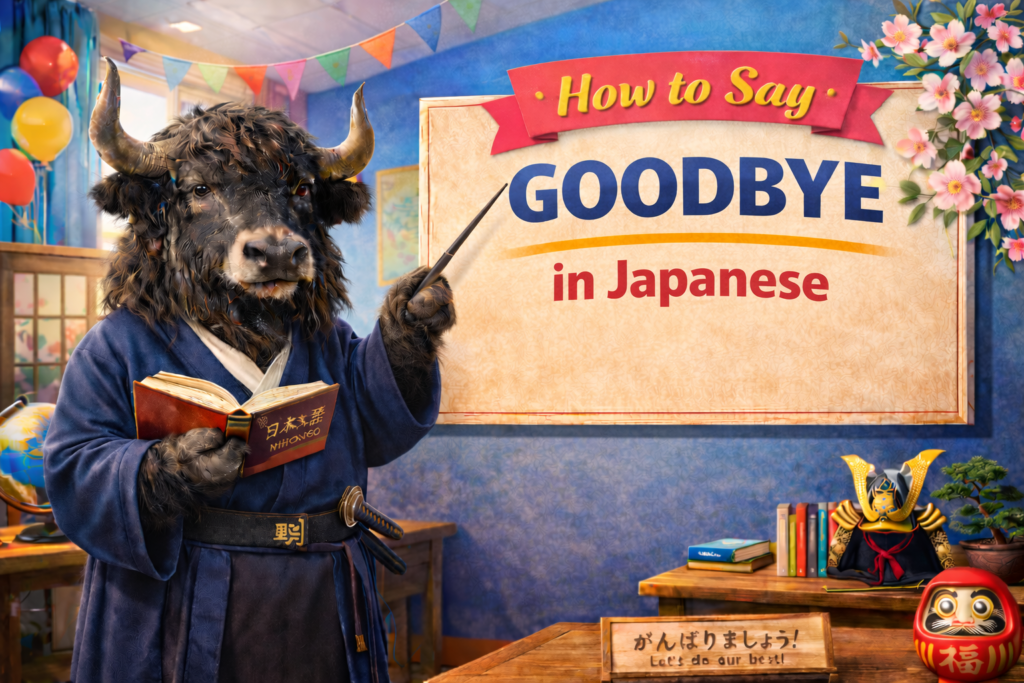
How To Say Goodbye In Japanese Without Accidentally Sounding Like A Movie Breakup
The beginner-safe guide to さようなら (sayōnara), またね (mata ne), workplace exits, home phrases, restaurant goodbyes, and the little social nuance that saves you from awkward silence.
The first time I left a Japanese office, I smiled, waved, and said さようなら (sayōnara) like I was exiting the final scene of a drama. Nobody was rude. Nobody panicked. But the pause in the room had a very specific flavor: “Well, that was weirdly intense.” I only meant “see you tomorrow.” What I actually said felt more like “farewell, old friends, may fate be kind.”
That is the whole trick with Japanese goodbyes: the words change with the situation. Friends, teachers, coworkers, dinner hosts, phone calls, bedtime, and leaving the house all have different “goodbye” language. This guide starts with the safest phrases first, then gives you 50 real-life options with Japanese, romaji, meanings, and example sentences so you can stop guessing and start sounding normal. A surprisingly good life goal, honestly.
Using さようなら (sayōnara) for every goodbye is like wearing a tuxedo to buy toothpaste. Technically possible. Not the usual choice.
Start Here: The 8 Goodbyes Beginners Actually Need
またね
Romaji: mata ne
Meaning: see you / later
例: またね。明日話そう。
mata ne. ashita hanasō.
See you. Let’s talk tomorrow.
じゃあね
Romaji: jaa ne
Meaning: bye then / see ya
例: じゃあね。気をつけて。
jaa ne. ki o tsukete.
Bye then. Take care.
また明日
Romaji: mata ashita
Meaning: see you tomorrow
例: また明日。八時に会おう。
mata ashita. hachiji ni aō.
See you tomorrow. Let’s meet at eight.
失礼します
Romaji: shitsurei shimasu
Meaning: excuse me / I’ll take my leave
例: 失礼します。先に帰ります。
shitsurei shimasu. saki ni kaerimasu.
Excuse me. I’m heading home first.
お疲れ様です
Romaji: otsukaresama desu
Meaning: good work / thanks for your work
例: お疲れ様です。では、また明日。
otsukaresama desu. dewa, mata ashita.
Good work. See you tomorrow.
行ってきます
Romaji: itte kimasu
Meaning: I’m off (and I’ll come back)
例: 行ってきます。夕方に帰るね。
itte kimasu. yūgata ni kaeru ne.
I’m off. I’ll be back this evening.
おやすみなさい
Romaji: oyasuminasai
Meaning: good night
例: おやすみなさい。良い夢を。
oyasuminasai. yoi yume o.
Good night. Sweet dreams.
さようなら
Romaji: sayōnara
Meaning: goodbye / farewell
例: さようなら。しばらく会えませんね。
sayōnara. shibaraku aemasen ne.
Goodbye. We won’t meet for a while.
Why さようなら (sayōnara) is not your everyday default
Most beginners learn さようなら (sayōnara) first, but in everyday life it often feels heavier than plain English “bye.” Use it for a longer separation, a serious farewell, or certain school-style situations. For regular daily goodbyes, phrases like またね (mata ne), じゃあね (jaa ne), また明日 (mata ashita), and 失礼します (shitsurei shimasu) will sound much more natural.
Casual Goodbyes With Friends
These are the goodbyes you will use all the time with friends, siblings, classmates, and people you are comfortable with. Not with your boss. Your boss does not want “see ya, buddy” energy from the weekly report meeting.
| Japanese | Romaji | Meaning | Example (JP) | Example (Romaji) | Translation (EN) |
|---|---|---|---|---|---|
| またね | mata ne | See you / later | またね。明日カフェで。 | mata ne. ashita kafe de. | See you. Tomorrow at the café. |
| じゃあね | jaa ne | Bye then / see ya | じゃあね。気をつけて。 | jaa ne. ki o tsukete. | Bye then. Take care. |
| じゃね | ja ne | Bye / later | じゃね。あとでメッセージする。 | ja ne. atode messēji suru. | Bye. I’ll message you later. |
| バイバイ | bai bai | Bye-bye | バイバイ。授業がんばって。 | bai bai. jugyō ganbatte. | Bye-bye. Good luck in class. |
| またあとで | mata atode | See you later | またあとで。三時に戻る。 | mata atode. sanji ni modoru. | See you later. I’ll be back at three. |
| また今度 | mata kondo | See you another time / maybe next time | また今度、一緒に行こう。 | mata kondo, issho ni ikō. | Next time, let’s go together. |
| また明日 | mata ashita | See you tomorrow | また明日。八時に会おう。 | mata ashita. hachiji ni aō. | See you tomorrow. Let’s meet at eight. |
| また来週 | mata raishū | See you next week | また来週。月曜日にね。 | mata raishū. getsuyōbi ni ne. | See you next week. On Monday. |
| じゃあまた | jaa mata | Alright, see you | じゃあまた。連絡して。 | jaa mata. renraku shite. | Alright, see you. Message me. |
| また会おう | mata aō | Let’s meet again | また会おう。時間ができたら。 | mata aō. jikan ga dekitara. | Let’s meet again when you have time. |
School, Home, And Everyday Routine Goodbyes
This is where Japanese gets more specific. Leaving the house, saying good night, leaving a teacher’s room, and seeing someone off each have their own natural phrase. Tiny differences, big payoff.
| Japanese | Romaji | Meaning | Example (JP) | Example (Romaji) | Translation (EN) |
|---|---|---|---|---|---|
| 行ってきます | itte kimasu | I’m off (and I’ll come back) | 行ってきます。夕方に帰るね。 | itte kimasu. yūgata ni kaeru ne. | I’m off. I’ll be back this evening. |
| 行ってらっしゃい | itterasshai | See you later / have a good one | 行ってらっしゃい。気をつけてね。 | itterasshai. ki o tsukete ne. | See you later. Take care. |
| おやすみ | oyasumi | Night / good night (casual) | おやすみ。もう寝るね。 | oyasumi. mō neru ne. | Night. I’m going to sleep. |
| おやすみなさい | oyasuminasai | Good night (polite) | おやすみなさい。良い夢を。 | oyasuminasai. yoi yume o. | Good night. Sweet dreams. |
| 気をつけて | ki o tsukete | Take care | 気をつけて。雨が強いよ。 | ki o tsukete. ame ga tsuyoi yo. | Take care. The rain is strong. |
| 気をつけて帰ってね | ki o tsukete kaette ne | Get home safe | 気をつけて帰ってね。遅いから。 | ki o tsukete kaette ne. osoi kara. | Get home safe. It’s late. |
| 先生、失礼します | sensei, shitsurei shimasu | Excuse me, teacher (goodbye as you leave) | 先生、失礼します。 | sensei, shitsurei shimasu. | Excuse me, teacher. |
| また学校で | mata gakkō de | See you at school | また学校で会おう。 | mata gakkō de aō. | See you at school. |
| また授業で | mata jugyō de | See you in class | また授業で会いましょう。 | mata jugyō de ai mashō. | See you in class. |
| また部活で | mata bukatsu de | See you at club practice | また部活で会おう。 | mata bukatsu de aō. | See you at club practice. |
Workplace And Formal Goodbyes
This is where beginners often get tripped up. In formal settings, Japanese goodbyes are usually less about “bye” and more about politely taking your leave, thanking people, or acknowledging work. Very elegant. Very useful. Slightly unfair to the word “goodbye,” which is doing way too much in English.
| Japanese | Romaji | Meaning | Example (JP) | Example (Romaji) | Translation (EN) |
|---|---|---|---|---|---|
| 失礼します | shitsurei shimasu | Excuse me / I’ll take my leave | 失礼します。先に帰ります。 | shitsurei shimasu. saki ni kaerimasu. | Excuse me. I’m heading home first. |
| 失礼いたします | shitsurei itashimasu | Please excuse me (very polite) | 失礼いたします。本日はありがとうございました。 | shitsurei itashimasu. honjitsu wa arigatō gozaimashita. | Please excuse me. Thank you for today. |
| では、失礼します | dewa, shitsurei shimasu | Well then, I’ll take my leave | では、失礼します。また来週お願いします。 | dewa, shitsurei shimasu. mata raishū onegai shimasu. | Then I’ll take my leave. See you next week. |
| お先に失礼します | osaki ni shitsurei shimasu | Excuse me for leaving before you | お先に失礼します。お疲れ様です。 | osaki ni shitsurei shimasu. otsukaresama desu. | I’m heading out before you. Good work. |
| お疲れ様です | otsukaresama desu | Good work / thanks for your effort | お疲れ様です。今日はここまでですね。 | otsukaresama desu. kyō wa koko made desu ne. | Good work. That’s all for today. |
| お疲れ様でした | otsukaresama deshita | Good work today | お疲れ様でした。明日もよろしくお願いします。 | otsukaresama deshita. ashita mo yoroshiku onegai shimasu. | Good work today. See you tomorrow. |
| 本日はこれで失礼します | honjitsu wa kore de shitsurei shimasu | That’s all for today; goodbye | 本日はこれで失礼します。資料は明日送ります。 | honjitsu wa kore de shitsurei shimasu. shiryō wa ashita okurimasu. | That’s all for today. I’ll send the materials tomorrow. |
| またご連絡します | mata go-renraku shimasu | I’ll contact you again | またご連絡します。よろしくお願いいたします。 | mata go-renraku shimasu. yoroshiku onegai itashimasu. | I’ll be in touch again. Thank you. |
| 本日はありがとうございました | honjitsu wa arigatō gozaimashita | Thank you for today | 本日はありがとうございました。お気をつけてお帰りください。 | honjitsu wa arigatō gozaimashita. o-ki o tsukete o-kaeri kudasai. | Thank you for today. Please get home safely. |
| お世話になりました | osewa ni narimashita | Thank you for all your help | お世話になりました。本当にありがとうございました。 | osewa ni narimashita. hontō ni arigatō gozaimashita. | Thank you for all your help. I truly appreciate it. |
Long-Gap, Caring, And Slightly More Emotional Goodbyes
These are for travel, illness, moving away, long breaks, or moments when the goodbye carries a little more weight. Not every farewell needs emotional fireworks, but sometimes you do need something warmer than a plain “later.”
| Japanese | Romaji | Meaning | Example (JP) | Example (Romaji) | Translation (EN) |
|---|---|---|---|---|---|
| お元気で | ogenki de | Take care / stay well | お元気で。日本での生活を楽しんでください。 | ogenki de. nihon de no seikatsu o tanoshinde kudasai. | Take care. Enjoy life in Japan. |
| お大事に | o-daiji ni | Take care / get well soon | お大事に。早くよくなってね。 | o-daiji ni. hayaku yoku natte ne. | Take care. Get well soon. |
| またいつか | mata itsuka | See you someday | またいつか。どこかで会おう。 | mata itsuka. dokoka de aō. | See you someday. Let’s meet again somewhere. |
| また会いましょう | mata ai mashō | Let’s meet again | また会いましょう。落ち着いたら連絡してください。 | mata ai mashō. ochitsuitara renraku shite kudasai. | Let’s meet again. Contact me when things settle down. |
| じゃあ、元気でね | jaa, genki de ne | Okay, take care | じゃあ、元気でね。無理しないで。 | jaa, genki de ne. muri shinaide. | Okay, take care. Don’t push yourself. |
| 良い旅を | yoi tabi o | Have a good trip | 良い旅を。写真を送ってね。 | yoi tabi o. shashin o okutte ne. | Have a good trip. Send photos. |
| お気をつけて | o-ki o tsukete | Please take care | お気をつけて。空港は混みますよ。 | o-ki o tsukete. kūkō wa komimasu yo. | Please take care. The airport gets crowded. |
| ごきげんよう | gokigenyō | Farewell / good day (very formal) | ごきげんよう。またお目にかかれればうれしいです。 | gokigenyō. mata o-me ni kakarereba ureshii desu. | Farewell. I’d be glad to see you again. |
| さようなら | sayōnara | Goodbye / farewell | さようなら。しばらく会えませんね。 | sayōnara. shibaraku aemasen ne. | Goodbye. We won’t meet for a while. |
| また次回 | mata jikai | See you next time | また次回。続きは来月にしましょう。 | mata jikai. tsuzuki wa raigetsu ni shimashō. | See you next time. Let’s continue next month. |
Phone, Restaurant, Shop, And House-Visit Goodbyes
This is one of the biggest gaps in weaker articles: sometimes Japanese “goodbye” is not a goodbye phrase at all. When leaving a restaurant, a shop, or someone’s home, gratitude often sounds more natural than a direct farewell.
| Japanese | Romaji | Meaning | Example (JP) | Example (Romaji) | Translation (EN) |
|---|---|---|---|---|---|
| また電話します | mata denwa shimasu | I’ll call again | また電話します。都合のいい時に出てください。 | mata denwa shimasu. tsugō no ii toki ni dete kudasai. | I’ll call again. Pick up when it suits you. |
| じゃ、また電話するね | ja, mata denwa suru ne | Okay, I’ll call again | じゃ、また電話するね。あとで話そう。 | ja, mata denwa suru ne. atode hanasō. | Okay, I’ll call again. Let’s talk later. |
| では、またお電話します | dewa, mata o-denwa shimasu | I’ll call again then | では、またお電話します。失礼します。 | dewa, mata o-denwa shimasu. shitsurei shimasu. | I’ll call again then. Goodbye. |
| またメールします | mata mēru shimasu | I’ll email again | またメールします。詳細を送ります。 | mata mēru shimasu. shōsai o okurimasu. | I’ll email again. I’ll send the details. |
| また連絡するね | mata renraku suru ne | I’ll get in touch again | また連絡するね。日程が決まったら。 | mata renraku suru ne. nittei ga kimattara. | I’ll get in touch when the date is set. |
| 楽しかったです | tanoshikatta desu | I had fun | 楽しかったです。今日はありがとうございました。 | tanoshikatta desu. kyō wa arigatō gozaimashita. | I had fun. Thanks for today. |
| ごちそうさまでした | gochisōsama deshita | Thank you for the meal | ごちそうさまでした。とてもおいしかったです。 | gochisōsama deshita. totemo oishikatta desu. | Thanks for the meal. It was very delicious. |
| お邪魔しました | ojama shimashita | Thanks for having me / sorry to intrude | お邪魔しました。すてきなお家ですね。 | ojama shimashita. suteki na o-uchi desu ne. | Thanks for having me. Your home is lovely. |
| ありがとうございました | arigatō gozaimashita | Thank you very much | ありがとうございました。また来ます。 | arigatō gozaimashita. mata kimasu. | Thank you very much. I’ll come again. |
| どうもありがとうございました | dōmo arigatō gozaimashita | Thank you very much indeed | どうもありがとうございました。助かりました。 | dōmo arigatō gozaimashita. tasukarimashita. | Thank you very much indeed. That really helped. |
The Fast Rule: Which Goodbye Should You Pick?
- Friend or classmate: またね (mata ne), じゃあね (jaa ne), また明日 (mata ashita)
- Teacher, boss, or formal room exit: 失礼します (shitsurei shimasu)
- Leaving work before others: お先に失礼します (osaki ni shitsurei shimasu)
- End of the workday: お疲れ様です / お疲れ様でした (otsukaresama desu / otsukaresama deshita)
- Leaving home: 行ってきます (itte kimasu)
- Seeing someone off from home: 行ってらっしゃい (itterasshai)
- Going to bed: おやすみ / おやすみなさい (oyasumi / oyasuminasai)
- Leaving a restaurant or shop: often ごちそうさまでした (gochisōsama deshita) or ありがとうございました (arigatō gozaimashita) sounds better than a direct “bye”
- Long separation: お元気で (ogenki de) or sometimes さようなら (sayōnara)
Common Mistakes And Quick Fixes
| Awkward Move | Better Choice | Why |
|---|---|---|
| Using さようなら (sayōnara) for every daily goodbye | またね, じゃあね, また明日, 失礼します | さようなら can sound heavier or more final |
| Saying じゃね (ja ne) to your boss | 失礼します (shitsurei shimasu) | Casual friend language does not fit formal hierarchy |
| Using ご苦労様でした (gokurōsama deshita) upward | お疲れ様でした (otsukaresama deshita) | ご苦労様でした is not the safe default for a superior |
| Leaving a restaurant with only a wave | ごちそうさまでした (gochisōsama deshita) | Gratitude sounds natural when leaving after a meal |
| Leaving someone’s house with just “bye” | お邪魔しました (ojama shimashita) | It politely acknowledges that you were a guest |
Bonus Variants You Should Recognize, Even If You Do Not Use Them First
| Japanese | Romaji | Meaning | Example (JP) | Example (Romaji) | Translation (EN) |
|---|---|---|---|---|---|
| さらば | saraba | Farewell (dramatic, old-fashioned) | さらば、友よ。 | saraba, tomo yo. | Farewell, my friend. |
| あばよ | abayo | See ya (rough, old-school) | あばよ、またな。 | abayo, mata na. | See ya, later. |
| ご苦労様でした | gokurōsama deshita | Thanks for your work | 皆さん、ご苦労様でした。 | minasan, gokurōsama deshita. | Everyone, good work. |
| 左様なら / さようなら | sayōnara | Goodbye / farewell | 左様なら、またいつか。 | sayōnara, mata itsuka. | Farewell, until someday. |
Yak note: these are good to understand, but not your best first choices for everyday beginner Japanese. Learn the safe, boringly useful phrases first. Boring is underrated when the goal is sounding natural.
Quick Practice
- You are leaving work before your coworkers: お先に失礼します (osaki ni shitsurei shimasu)
- You will see your friend tomorrow: また明日 (mata ashita)
- You are leaving home in the morning: 行ってきます (itte kimasu)
- Your family member is heading out: 行ってらっしゃい (itterasshai)
- You are going to bed: おやすみなさい (oyasuminasai)
- You are leaving a restaurant after eating: ごちそうさまでした (gochisōsama deshita)
- You are leaving your teacher’s office: 失礼します (shitsurei shimasu)
- You are saying a more serious, longer goodbye: さようなら (sayōnara)
Final Yak Box
If you only memorize six things today, make them these: またね (mata ne), また明日 (mata ashita), 失礼します (shitsurei shimasu), お先に失礼します (osaki ni shitsurei shimasu), 行ってきます (itte kimasu), and ごちそうさまでした (gochisōsama deshita). That tiny set covers friends, work, home, and food. Not bad for six phrases and one less accidental soap-opera farewell.