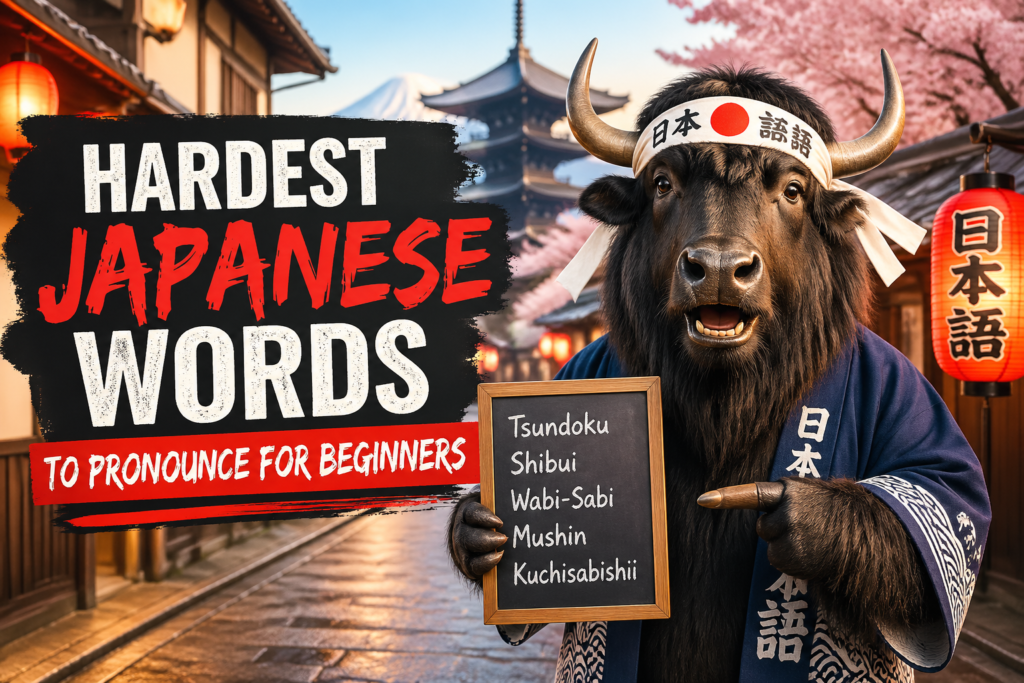
Japanese pronunciation is often described as “easy.” That is cute. It is also only half true. The sound system is smaller than English, sure, but beginners quickly run into tiny traps: double consonants, long vowels, the sneaky ん, and words that look innocent until your mouth trips over them in public.
A lot of learners have that moment where they can read a word just fine, then try saying it and suddenly sound like a malfunctioning GPS. Normal. Very normal. This guide walks through some of the hardest Japanese words to pronounce for beginners, what makes them tricky, and how to say them without wrestling your own tongue.
If you want a wider beginner base first, start with these common Japanese words and phrases. For the bigger learning hub, head over to Learn Japanese. If pronunciation practice is your main pain point, this related guide also helps: Japanese pronunciation basics.
Why Some Japanese Words Feel Weird To Say
Most pronunciation problems for beginners come from a few repeat offenders:
- Long vowels like おばさん and おばあさん sounding very different
- Double consonants like in きって, where you pause before the next sound
- The ん sound, which changes slightly depending on what comes after it
- R sounds, which are not quite English R and not quite English L either
- Fast sound combinations that make your mouth do cardio
In Japanese, tiny sound differences can create totally different words. One extra beat is not “basically the same.” It is the whole point.
Useful Phrases And Real-Life Sentences
Here are some famously tricky words and phrases for beginners. Each one includes what it means, why it causes trouble, and an example sentence you might actually use.
切手
kitte
stamp
This is hard because of the small っ. You need a tiny pause before て. Not “ki-te.” More like “kit-te.” Small pause, big difference.
切手を一枚ください。
kitte o ichimai kudasai.
Please give me one stamp.
学校
gakkō
school
Another double consonant, plus a long お sound at the end. The pause matters, and the last vowel should stretch a little.
学校は八時に始まります。
gakkō wa hachiji ni hajimarimasu.
School starts at eight o’clock.
旅行
ryokō
travel / trip
The ryo sound is a classic beginner struggle. English speakers often separate it too much. Keep it smooth and compact: ryo-kō.
来月、京都へ旅行します。
raigetsu, Kyōto e ryokō shimasu.
Next month, I will travel to Kyoto.
留学生
ryūgakusei
international student
This one packs in a long vowel and the tricky ryū sound. Beginners often flatten it or rush through the first part.
彼は日本の大学の留学生です。
kare wa Nihon no daigaku no ryūgakusei desu.
He is an international student at a Japanese university.
新幹線
shinkansen
bullet train
The tricky bit here is the ん before か. Many learners blur it too much. Keep the sounds clean: shin-kan-sen.
新幹線で大阪へ行きます。
shinkansen de Ōsaka e ikimasu.
I am going to Osaka by bullet train.
新聞
shinbun
newspaper
The ん changes how it feels before ぶ. Some learners say “shin-boon,” which is not quite it. Keep it short and crisp.
父は毎朝、新聞を読みます。
chichi wa maiasa, shinbun o yomimasu.
My father reads the newspaper every morning.
結婚式
kekkonshiki
wedding ceremony
This word stacks a double consonant with しき at the end. It is very easy to mush it into one blob. Try saying each beat clearly.
来週、友だちの結婚式があります。
raishū, tomodachi no kekkonshiki ga arimasu.
Next week, my friend has a wedding ceremony.
抹茶
matcha
matcha green tea
Yes, this famous one. The small っ creates that brief stop before ちゃ. If you skip the pause, it sounds off right away.
抹茶アイスが大好きです。
matcha aisu ga daisuki desu.
I love matcha ice cream.
東京特許許可局
Tōkyō tokkyo kyokakyoku
Tokyo Patent Office
This is a famous tongue twister. It is not a normal beginner word to use every day, but it is great practice for double consonants and repeating kyo sounds. It is basically pronunciation boot camp with no snacks.
東京特許許可局は早口言葉で有名です。
Tōkyō tokkyo kyokakyoku wa hayakotoba de yūmei desu.
“Tokyo Patent Office” is famous as a tongue twister.
早口言葉
hayakotoba
tongue twister
This one is not awful once slow, but beginners often swallow the middle. Keep the rhythm even: ha-ya-ko-to-ba.
日本語の早口言葉を練習しています。
Nihongo no hayakotoba o renshū shiteimasu.
I am practicing Japanese tongue twisters.
雰囲気
fun’iki
atmosphere / mood
This word is a legendary trap. Many learners want to say something like “fuinki,” skipping a sound. Slow it down: fu-n-i-ki. The ん matters.
このカフェは雰囲気がいいです。
kono kafe wa fun’iki ga ii desu.
This cafe has a nice atmosphere.
一緒
issho
together
Small っ again, plus しょ. The pause before sho is tiny but important.
一緒に帰りましょう。
issho ni kaerimashō.
Let’s go home together.
必要
hitsuyō
necessary
The tsu sound causes trouble for many beginners, especially when it appears inside a longer word.
パスポートが必要です。
pasupōto ga hitsuyō desu.
A passport is necessary.
美術館
bijutsukan
art museum
Another good tsu practice word. Beginners often turn it into “bijusukan,” which is close-ish but not quite right.
土曜日に美術館へ行きました。
doyōbi ni bijutsukan e ikimashita.
I went to the art museum on Saturday.
六月
rokugatsu
June
The problem here is often the r sound plus the quick flow into kugatsu. Also, months in Japanese love ambushing beginners in general.
六月は雨の日が多いです。
rokugatsu wa ame no hi ga ōi desu.
There are many rainy days in June.
Tables Of Words
Here is a compact reference table for the words above. Read the Japanese first, then the rōmaji immediately after. That habit helps your mouth and eyes work together instead of arguing.
| Kanji | Rōmaji | Meaning | Example (JP) | Example (Rōmaji) | Translation (EN) |
|---|---|---|---|---|---|
| 切手 | kitte | stamp | 切手を一枚ください。 | kitte o ichimai kudasai. | Please give me one stamp. |
| 学校 | gakkō | school | 学校は八時に始まります。 | gakkō wa hachiji ni hajimarimasu. | School starts at eight o’clock. |
| 旅行 | ryokō | trip, travel | 来月、京都へ旅行します。 | raigetsu, Kyōto e ryokō shimasu. | Next month, I will travel to Kyoto. |
| 留学生 | ryūgakusei | international student | 彼は日本の大学の留学生です。 | kare wa Nihon no daigaku no ryūgakusei desu. | He is an international student at a Japanese university. |
| 新幹線 | shinkansen | bullet train | 新幹線で大阪へ行きます。 | shinkansen de Ōsaka e ikimasu. | I am going to Osaka by bullet train. |
| 新聞 | shinbun | newspaper | 父は毎朝、新聞を読みます。 | chichi wa maiasa, shinbun o yomimasu. | My father reads the newspaper every morning. |
| 結婚式 | kekkonshiki | wedding ceremony | 来週、友だちの結婚式があります。 | raishū, tomodachi no kekkonshiki ga arimasu. | Next week, my friend has a wedding ceremony. |
| 抹茶 | matcha | matcha | 抹茶アイスが大好きです。 | matcha aisu ga daisuki desu. | I love matcha ice cream. |
| Kanji | Rōmaji | Meaning | Example (JP) | Example (Rōmaji) | Translation (EN) |
|---|---|---|---|---|---|
| 東京特許許可局 | Tōkyō tokkyo kyokakyoku | Tokyo Patent Office | 東京特許許可局は早口言葉で有名です。 | Tōkyō tokkyo kyokakyoku wa hayakotoba de yūmei desu. | “Tokyo Patent Office” is famous as a tongue twister. |
| 早口言葉 | hayakotoba | tongue twister | 日本語の早口言葉を練習しています。 | Nihongo no hayakotoba o renshū shiteimasu. | I am practicing Japanese tongue twisters. |
| 雰囲気 | fun’iki | atmosphere | このカフェは雰囲気がいいです。 | kono kafe wa fun’iki ga ii desu. | This cafe has a nice atmosphere. |
| 一緒 | issho | together | 一緒に帰りましょう。 | issho ni kaerimashō. | Let’s go home together. |
| 必要 | hitsuyō | necessary | パスポートが必要です。 | pasupōto ga hitsuyō desu. | A passport is necessary. |
| 美術館 | bijutsukan | art museum | 土曜日に美術館へ行きました。 | doyōbi ni bijutsukan e ikimashita. | I went to the art museum on Saturday. |
| 六月 | rokugatsu | June | 六月は雨の日が多いです。 | rokugatsu wa ame no hi ga ōi desu. | There are many rainy days in June. |
What Makes These Words Hard
If you look closely, these difficult words are not random. They usually fall into a few pronunciation patterns. Once you know the pattern, the word stops feeling cursed.
| Pattern | What To Notice | Example |
|---|---|---|
| Small っ | Pause briefly before the next consonant | 切手 kitte, 抹茶 matcha, 一緒 issho |
| Long Vowels | Hold the vowel one beat longer | 学校 gakkō, 必要 hitsuyō |
| Rya/Ryu/Ryo Sounds | Keep the sound tight and smooth | 旅行 ryokō, 留学生 ryūgakusei |
| ん Before Another Sound | Do not swallow it or skip it | 新聞 shinbun, 新幹線 shinkansen, 雰囲気 fun’iki |
| Tsu Inside A Word | Keep つ clear, not blurred | 必要 hitsuyō, 美術館 bijutsukan |
Optional Curious Bit
One of the funniest beginner mistakes is mixing up short and long sounds. For example:
- おばさん
obasan
aunt / middle-aged woman - おばあさん
obāsan
grandmother / elderly woman
That extra あ is doing a lot of work. Tiny vowel length, huge social consequences. Language is generous like that.
Common Beginner Mistakes And Fast Fixes
| Mistake | Better Fix |
|---|---|
| Saying kitte like “kite” | Add a tiny pause: kit-te |
| Saying gakkō too flat | Pause at kk and stretch the final ō slightly |
| Saying ryokō as “ree-yo-koh” | Blend ryo into one compact sound |
| Skipping the ん in fun’iki | Say it slowly first: fu-n-i-ki |
| Turning bijutsukan into “bijusukan” | Practice the つ sound clearly: bi-ju-tsu-kan |
| Rushing long words like kekkonshiki | Break them into beats: kek-kon-shi-ki |
Quick Practice Drills
Try reading these slowly, then a little faster, while keeping the same rhythm.
- 切手
kitte
stamp - 学校
gakkō
school - 抹茶
matcha
matcha - 一緒
issho
together - 旅行
ryokō
trip - 雰囲気
fun’iki
atmosphere
Now say these sentence pairs and focus on one feature at a time:
- 学校へ行きます。
gakkō e ikimasu.
I go to school. - 一緒に行きます。
issho ni ikimasu.
I go together with someone. - 京都へ旅行します。
Kyōto e ryokō shimasu.
I travel to Kyoto. - この店は雰囲気がいいです。
kono mise wa fun’iki ga ii desu.
This place has a nice atmosphere.
Optional Variants Table
| Word | Rōmaji | Meaning | Close Variant | Rōmaji | Meaning |
|---|---|---|---|---|---|
| 旅行 | ryokō | trip, travel | 観光 | kankō | sightseeing |
| 新聞 | shinbun | newspaper | ニュース | nyūsu | news |
| 学校 | gakkō | school | 大学 | daigaku | university |
| 必要 | hitsuyō | necessary | 大切 | taisetsu | important |
| 一緒 | issho | together | 同じ | onaji | same |
Yak Takeaway
The hardest Japanese words to pronounce for beginners are usually hard for very predictable reasons: small pauses, long vowels, compact blended sounds, and tiny differences that English likes to ignore. Japanese does not ignore them. Not even a little.
The good news is that pronunciation improves fast when you train your ear and mouth together. Read the kanji, say the rōmaji right after, and repeat short sentences out loud until the rhythm feels natural. Slow is fine. Slow is smart. Slow is how fast eventually stops being a mess.