Most beginners start with “nice,” “funny,” or “tall,” then suddenly freeze when they want to say something a little more real, like “She is quiet but kind” or “He looks serious, but he’s actually friendly.” Very normal. Very annoying. Luckily, Japanese gives you a bunch of simple patterns that work beautifully once you stop trying to translate every English sentence word for word.
A lot of everyday descriptions in Japanese are short, clean, and surprisingly flexible. You can describe appearance, personality, mood, and general vibe without sounding robotic. If you want to build a stronger base first, the main Learn Japanese hub is a nice place to keep nearby.
And yes, “vibe” absolutely counts. Languages live there.
The Basic Pattern You Will Use Again And Again
The easiest pattern is:
人は〜です
Hito wa 〜 desu
As for the person, they are 〜
For example:
| Pattern | Rōmaji | Meaning | Example | Example Rōmaji | English |
|---|---|---|---|---|---|
| 彼は親切です | Kare wa shinsetsu desu | He is kind | 彼は親切です。 | Kare wa shinsetsu desu. | He is kind. |
| 彼女は元気です | Kanojo wa genki desu | She is energetic | 彼女はいつも元気です。 | Kanojo wa itsumo genki desu. | She is always energetic. |
| あの人は静かです | Ano hito wa shizuka desu | That person is quiet | あの人はとても静かです。 | Ano hito wa totemo shizuka desu. | That person is very quiet. |
You can also say 〜な人 for many personality words.
親切な人
Shinsetsu na hito
A kind person
Example:
彼は親切な人です。
Kare wa shinsetsu na hito desu.
He is a kind person.
Useful Words For Describing Personality
Here are some common, actually useful words for describing people without sounding like a textbook escaped into the wild.
| Kanji | Rōmaji | Meaning | Example (JP) | Example (Rōmaji) | Translation (EN) |
|---|---|---|---|---|---|
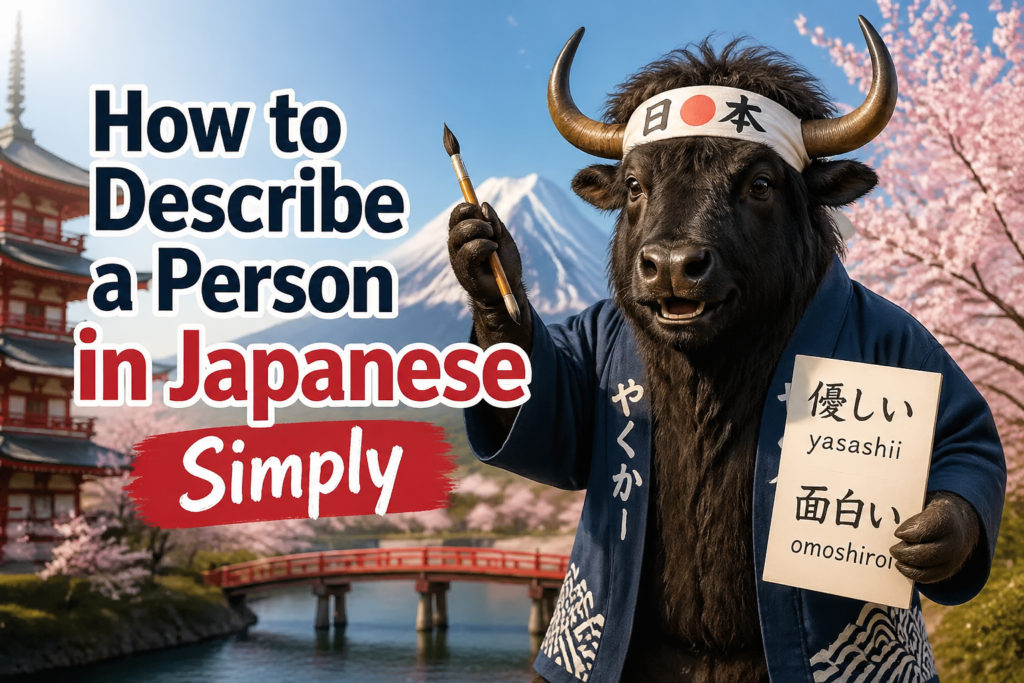
| 優しい | Yasashii | Kind; gentle | 私の母はとても優しいです。 | Watashi no haha wa totemo yasashii desu. | My mother is very kind. |
| 親切 | Shinsetsu | Kind; helpful | 駅で親切な人に会いました。 | Eki de shinsetsu na hito ni aimashita. | I met a kind person at the station. |
| 面白い | Omoshiroi | Interesting; funny | 彼は本当に面白いです。 | Kare wa hontō ni omoshiroi desu. | He is really funny. |
| 明るい | Akarui | Cheerful; bright | 彼女は明るい性格です。 | Kanojo wa akarui seikaku desu. | She has a cheerful personality. |
| 元気 | Genki | Energetic; lively | 弟はいつも元気です。 | Otōto wa itsumo genki desu. | My younger brother is always energetic. |
| 静か | Shizuka | Quiet | あの学生は静かです。 | Ano gakusei wa shizuka desu. | That student is quiet. |
| Kanji | Rōmaji | Meaning | Example (JP) | Example (Rōmaji) | Translation (EN) |
|---|---|---|---|---|---|
| 真面目 | Majime | Serious; diligent | 田中さんは真面目です。 | Tanaka-san wa majime desu. | Mr. Tanaka is serious. |
| 有名 | Yūmei | Famous | その先生は有名です。 | Sono sensei wa yūmei desu. | That teacher is famous. |
| 親しみやすい | Shitashimiyasui | Friendly; approachable | 新しい店員さんは親しみやすいです。 | Atarashii tenin-san wa shitashimiyasui desu. | The new clerk is friendly. |
| 厳しい | Kibishii | Strict | 私の父は少し厳しいです。 | Watashi no chichi wa sukoshi kibishii desu. | My father is a little strict. |
| やさしい | Yasashii | Kind; gentle | あの犬の飼い主はやさしいです。 | Ano inu no kainushi wa yasashii desu. | That dog owner is kind. |
| おとなしい | Otonashii | Calm; quiet; gentle | 彼女の妹はおとなしいです。 | Kanojo no imōto wa otonashii desu. | Her younger sister is quiet and calm. |
Useful Words For Appearance
Describing what someone looks like is also very common. Just be a little careful with tone, because some words can sound blunt if the situation is sensitive. Language is fun, but social damage is not.
| Kanji | Rōmaji | Meaning | Example (JP) | Example (Rōmaji) | Translation (EN) |
|---|---|---|---|---|---|
| 背が高い | Se ga takai | Tall | 兄は背が高いです。 | Ani wa se ga takai desu. | My older brother is tall. |
| 背が低い | Se ga hikui | Short | 彼は背が低いです。 | Kare wa se ga hikui desu. | He is short. |
| きれい | Kirei | Pretty; beautiful; neat | 彼女はとてもきれいです。 | Kanojo wa totemo kirei desu. | She is very beautiful. |
| ハンサム | Hansamu | Handsome | あの俳優はハンサムです。 | Ano haiyū wa hansamu desu. | That actor is handsome. |
| かわいい | Kawaii | Cute | 妹はかわいい帽子をかぶっています。 | Imōto wa kawaii bōshi o kabutte imasu. | My younger sister is wearing a cute hat. |
| 若い | Wakai | Young | その先生はまだ若いです。 | Sono sensei wa mada wakai desu. | That teacher is still young. |
| Kanji | Rōmaji | Meaning | Example (JP) | Example (Rōmaji) | Translation (EN) |
|---|---|---|---|---|---|
| 年上 | Toshiue | Older | 彼は私より年上です。 | Kare wa watashi yori toshiue desu. | He is older than me. |
| 年下 | Toshishita | Younger | あの子は私の弟より年下です。 | Ano ko wa watashi no otōto yori toshishita desu. | That child is younger than my brother. |
| 髪が長い | Kami ga nagai | Has long hair | 彼女は髪が長いです。 | Kanojo wa kami ga nagai desu. | She has long hair. |
| 髪が短い | Kami ga mijikai | Has short hair | 彼は髪が短いです。 | Kare wa kami ga mijikai desu. | He has short hair. |
| 眼鏡をかけている | Megane o kakete iru | Wearing glasses | 先生は眼鏡をかけています。 | Sensei wa megane o kakete imasu. | The teacher is wearing glasses. |
| 笑顔 | Egao | Smile; smiling face | 彼女は笑顔がすてきです。 | Kanojo wa egao ga suteki desu. | She has a lovely smile. |
Useful Phrases For Real-Life Descriptions
These are the kinds of sentences people actually use when introducing friends, talking about coworkers, or trying to explain who someone is without waving their arms and saying “uh, that one.”
| Phrase | Rōmaji | Meaning | Example (JP) | Example (Rōmaji) | Translation (EN) |
|---|---|---|---|---|---|
| 優しい人です | Yasashii hito desu | Is a kind person | 山田さんは優しい人です。 | Yamada-san wa yasashii hito desu. | Mr. Yamada is a kind person. |
| 面白い人です | Omoshiroi hito desu | Is a funny person | 私の友だちは面白い人です。 | Watashi no tomodachi wa omoshiroi hito desu. | My friend is a funny person. |
| 静かな人です | Shizuka na hito desu | Is a quiet person | 彼は静かな人です。 | Kare wa shizuka na hito desu. | He is a quiet person. |
| 真面目な人です | Majime na hito desu | Is a serious person | 部長は真面目な人です。 | Buchō wa majime na hito desu. | The manager is a serious person. |
| 元気な人です | Genki na hito desu | Is an energetic person | あの子は元気な人です。 | Ano ko wa genki na hito desu. | That kid is energetic. |
| 明るい人です | Akarui hito desu | Is a cheerful person | 新しい同僚は明るい人です。 | Atarashii dōryō wa akarui hito desu. | The new coworker is a cheerful person. |
| Phrase | Rōmaji | Meaning | Example (JP) | Example (Rōmaji) | Translation (EN) |
|---|---|---|---|---|---|
| 親切な人です | Shinsetsu na hito desu | Is a helpful person | 受付の人は親切な人でした。 | Uketsuke no hito wa shinsetsu na hito deshita. | The receptionist was a helpful person. |
| 少し厳しいです | Sukoshi kibishii desu | Is a little strict | 私の先生は少し厳しいです。 | Watashi no sensei wa sukoshi kibishii desu. | My teacher is a little strict. |
| 背が高いです | Se ga takai desu | Is tall | 彼女の兄は背が高いです。 | Kanojo no ani wa se ga takai desu. | Her older brother is tall. |
| 髪が長いです | Kami ga nagai desu | Has long hair | あの人は髪が長いです。 | Ano hito wa kami ga nagai desu. | That person has long hair. |
| 眼鏡をかけています | Megane o kakete imasu | Is wearing glasses | あの男性は眼鏡をかけています。 | Ano dansei wa megane o kakete imasu. | That man is wearing glasses. |
| 笑顔がすてきです | Egao ga suteki desu | Has a lovely smile | 彼女は笑顔がすてきです。 | Kanojo wa egao ga suteki desu. | She has a lovely smile. |
How To Combine Two Descriptions
This is where your Japanese starts sounding more natural.
You can connect two adjectives like this:
- 優しくて、面白いです
Yasashikute, omoshiroi desu
Kind and funny - 静かで、真面目です
Shizuka de, majime desu
Quiet and serious
Examples:
| Japanese | Rōmaji | English |
|---|---|---|
| 彼女は優しくて、面白いです。 | Kanojo wa yasashikute, omoshiroi desu. | She is kind and funny. |
| 彼は静かで、真面目です。 | Kare wa shizuka de, majime desu. | He is quiet and serious. |
| 私の上司は厳しいですが、親切です。 | Watashi no jōshi wa kibishii desu ga, shinsetsu desu. | My boss is strict, but kind. |
| あの学生は若くて、元気です。 | Ano gakusei wa wakakute, genki desu. | That student is young and energetic. |
How To Sound Softer And More Natural
In real conversation, people often soften descriptions. This helps you avoid sounding too direct, especially when you do not know the person well.
| Kanji | Rōmaji | Meaning | Example (JP) | Example (Rōmaji) | Translation (EN) |
|---|---|---|---|---|---|
| 少し | Sukoshi | A little | 彼は少し静かです。 | Kare wa sukoshi shizuka desu. | He is a little quiet. |
| とても | Totemo | Very | 彼女はとても親切です。 | Kanojo wa totemo shinsetsu desu. | She is very kind. |
| いつも | Itsumo | Always | あの先生はいつも元気です。 | Ano sensei wa itsumo genki desu. | That teacher is always energetic. |
| ちょっと | Chotto | A bit | 私の兄はちょっと真面目です。 | Watashi no ani wa chotto majime desu. | My older brother is a bit serious. |
ちょっと
Chotto
“A bit” is one of those tiny words that makes you sound more human and less like a personality report written by a hallway robot.
Common Description Patterns You Can Reuse
These sentence frames are gold. Reuse them shamelessly.
| Pattern | Rōmaji | Meaning | Example (JP) | Example (Rōmaji) | Translation (EN) |
|---|---|---|---|---|---|
| 〜は優しいです | ~ wa yasashii desu | ~ is kind | 母は優しいです。 | Haha wa yasashii desu. | My mother is kind. |
| 〜は静かな人です | ~ wa shizuka na hito desu | ~ is a quiet person | 父は静かな人です。 | Chichi wa shizuka na hito desu. | My father is a quiet person. |
| 〜は背が高いです | ~ wa se ga takai desu | ~ is tall | 彼は背が高いです。 | Kare wa se ga takai desu. | He is tall. |
| 〜は髪が長いです | ~ wa kami ga nagai desu | ~ has long hair | 彼女は髪が長いです。 | Kanojo wa kami ga nagai desu. | She has long hair. |
| 〜は面白くて、親切です | ~ wa omoshirokute, shinsetsu desu | ~ is funny and kind | 私の友だちは面白くて、親切です。 | Watashi no tomodachi wa omoshirokute, shinsetsu desu. | My friend is funny and kind. |
| 〜ですが、〜です | ~ desu ga, ~ desu | ~ but ~ | 彼は静かですが、優しいです。 | Kare wa shizuka desu ga, yasashii desu. | He is quiet, but kind. |
Common Mistakes And Easy Fixes
- 静かい人
Shizukai hito
Wrong
静かな人
Shizuka na hito
Quiet person
彼は静かな人です。
Kare wa shizuka na hito desu.
He is a quiet person. - 親切いです
Shinsetsu i desu
Wrong
親切です
Shinsetsu desu
Is kind
彼女は親切です。
Kanojo wa shinsetsu desu.
She is kind. - 高いです alone for a person’s height can sound odd in this context.
Use 背が高いです
Se ga takai desu
Is tall
兄は背が高いです。
Ani wa se ga takai desu.
My older brother is tall. - Do not overuse あなた
Anata
You
When describing someone in conversation, using their name is often more natural.
田中さんは明るいです。
Tanaka-san wa akarui desu.
Mr. Tanaka is cheerful.
Quick Practice
Try saying these out loud. Yes, out loud. Whispering counts if dignity is currently fragile.
- 私の友だちは優しいです。
Watashi no tomodachi wa yasashii desu.
My friend is kind. - あの人は背が高いです。
Ano hito wa se ga takai desu.
That person is tall. - 先生は真面目で、親切です。
Sensei wa majime de, shinsetsu desu.
The teacher is serious and kind. - 彼女は静かですが、面白いです。
Kanojo wa shizuka desu ga, omoshiroi desu.
She is quiet, but funny. - 弟は元気な人です。
Otōto wa genki na hito desu.
My younger brother is an energetic person.
Extra Useful Description Words
| Kanji | Rōmaji | Meaning | Example (JP) | Example (Rōmaji) | Translation (EN) |
|---|---|---|---|---|---|
| 忙しい | Isogashii | Busy | 彼は最近忙しいです。 | Kare wa saikin isogashii desu. | He has been busy lately. |
| 疲れている | Tsukarete iru | Tired | 彼女は少し疲れています。 | Kanojo wa sukoshi tsukarete imasu. | She is a little tired. |
| お腹がすいている | Onaka ga suite iru | Hungry | 弟はお腹がすいています。 | Otōto wa onaka ga suite imasu. | My younger brother is hungry. |
| 遅い | Osoi | Late; slow | 彼はいつも少し遅いです。 | Kare wa itsumo sukoshi osoi desu. | He is always a little late. |
If you want more words for people’s temporary condition, this guide on hungry, tired, busy, and late in Japanese fits really nicely with person descriptions.
A Handy Mini Comparison
| Japanese | Rōmaji | Meaning | Nuance |
|---|---|---|---|
| 優しい | Yasashii | Kind; gentle | Warm and soft feeling |
| 親切 | Shinsetsu | Kind; helpful | More about helpful action |
| 静か | Shizuka | Quiet | Neutral, calm, not noisy |
| おとなしい | Otonashii | Quiet; gentle | Softer and more personality-based |
| 面白い | Omoshiroi | Funny; interesting | Can mean humorous or interesting |
| 明るい | Akarui | Cheerful | Bright personality, upbeat vibe |
For another useful stepping stone, this related Japanese guide pairs well with the patterns here and helps expand your everyday descriptions.
Yak Takeaway
If you want to describe a person in Japanese simply, start with a few reliable patterns: 〜は優しいです (is kind), 〜は静かな人です (is a quiet person), and 〜は背が高いです (is tall). Then level up by combining ideas like 優しくて、面白いです or softening them with 少し and ちょっと. That alone lets you say a lot more than most beginners expect.
The trick is not memorizing every adjective on earth. It is learning a few common ones and using them again and again until they feel normal. Nice, simple, useful. A suspiciously good deal, honestly.