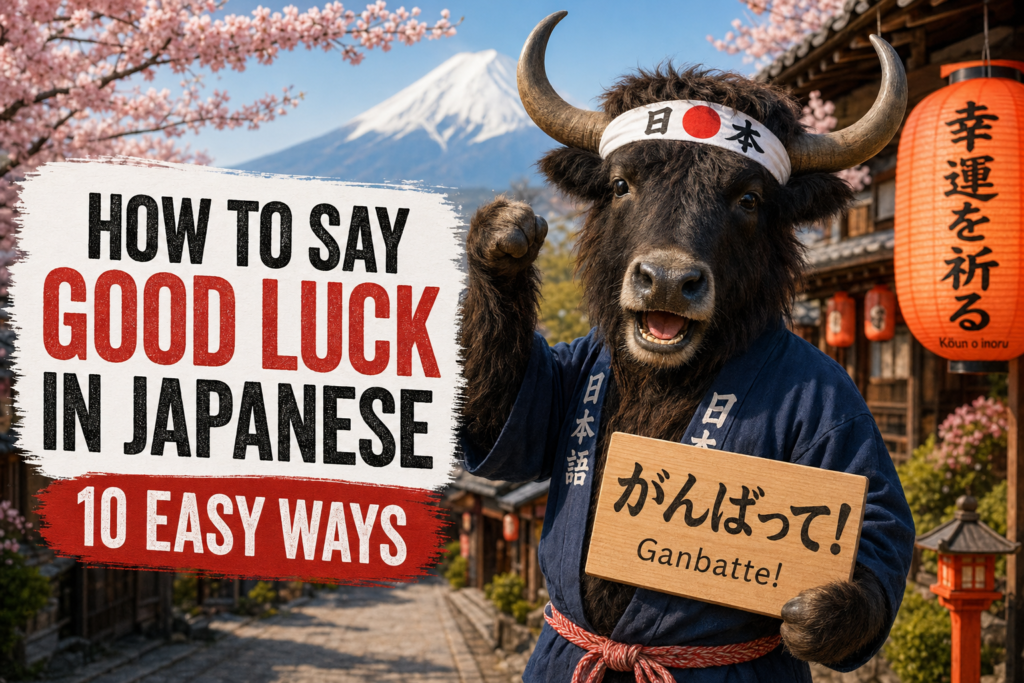
Here is the sneaky little truth: Japanese does not have one perfect, magical phrase that matches English “good luck” every single time. Instead, Japanese uses several expressions depending on whether someone is taking a test, starting a game, going into surgery, giving a speech, or trying not to completely melt down before an interview. So yes, context matters. Annoying? A bit. Useful? Very.
The most common phrase is 頑張って — Ganbatte, which really means “do your best.” That sounds more active than English “good luck,” and honestly, that is kind of the vibe in Japanese. Luck is nice. Effort is better. Very on-brand.
If you are building your everyday Japanese, learning these small encouragement phrases will make you sound much more natural. And if you want a broader language hub after this, you can also explore language learning guides here.
The Most Common Way To Say Good Luck
頑張って — Ganbatte — Good luck / Do your best
This is the go-to phrase. You can say it to friends, classmates, coworkers, teammates, and basically anyone who is about to do something challenging.
試験、頑張って!
Shiken, ganbatte!
Good luck on the exam!
明日の面接、頑張ってね。
Ashita no mensetsu, ganbatte ne.
Good luck with tomorrow’s interview.
The little ね — ne softens the phrase and makes it friendlier.
10 Easy Ways To Say Good Luck In Japanese
頑張って — Ganbatte
Kanji: 頑張って
Rōmaji: Ganbatte
Meaning: Good luck; do your best
This is casual, flexible, and extremely common.
大会で頑張って!
Taikai de ganbatte!
Good luck in the tournament!
頑張ってください — Ganbatte Kudasai
Kanji: 頑張ってください
Rōmaji: Ganbatte kudasai
Meaning: Please do your best; good luck
This is more polite than 頑張って. Good for teachers, coworkers, customers, or someone you do not know well.
プレゼン、頑張ってください。
Purezento, ganbatte kudasai.
Good luck with your presentation.
頑張れ — Ganbare
Kanji: 頑張れ
Rōmaji: Ganbare
Meaning: Go for it; do your best
This is stronger, more direct, and often used in sports or emotional moments. It can sound encouraging, but also a little intense if you use it with the wrong person. So maybe do not bark it at your boss.
最後まで頑張れ!
Saigo made ganbare!
Keep going until the end! / Give it your all till the end!
うまくいきますように — Umaku Ikimasu Yō Ni
Kanji: うまくいきますように
Rōmaji: Umaku ikimasu yō ni
Meaning: I hope it goes well
This one feels softer and more thoughtful. It is less “go do it” and more “I hope things work out well.”
手術がうまくいきますように。
Shujutsu ga umaku ikimasu yō ni.
I hope the surgery goes well.
幸運を祈る — Kōun O Inoru
Kanji: 幸運を祈る
Rōmaji: Kōun o inoru
Meaning: I wish you good luck
This is a more direct translation of “wish you good luck,” but it is less common in everyday speech than 頑張って. It can sound formal, literary, or dramatic depending on the situation.
あなたの幸運を祈ります。
Anata no kōun o inorimasu.
I wish you good luck.
成功を祈っています — Seikō O Inotte Imasu
Kanji: 成功を祈っています
Rōmaji: Seikō o inotte imasu
Meaning: I’m wishing you success
This is useful for formal messages, business situations, and polite written encouragement.
新しい仕事の成功を祈っています。
Atarashii shigoto no seikō o inotte imasu.
I’m wishing you success in your new job.
ご武運を — Gobuun O
Kanji: ご武運を
Rōmaji: Gobuun o
Meaning: Best of luck; may fortune be with you
This phrase has an old-fashioned, dramatic flavor. Historically it has military roots, but today people may use it jokingly before a challenge, game, or difficult mission. A bit theatrical. In a fun way.
健闘を祈る。ご武運を。
Kentō o inoru. Gobuun o.
I wish you a good fight. Best of luck.
うまくいくといいね — Umaku Iku To Ii Ne
Kanji: うまくいくといいね
Rōmaji: Umaku iku to ii ne
Meaning: Hope it goes well
Very natural in casual conversation. Warm, soft, and supportive.
デート、うまくいくといいね。
Dēto, umaku iku to ii ne.
Hope your date goes well.
健闘を祈ります — Kentō O Inorimasu
Kanji: 健闘を祈ります
Rōmaji: Kentō o inorimasu
Meaning: I wish you the best in the contest; good luck
This is often used for competitions, elections, matches, and other serious efforts. It sounds formal and respectable.
皆さんの健闘を祈ります。
Minasan no kentō o inorimasu.
I wish everyone the best of luck.
応援しているよ — Ōen Shite Iru Yo
Kanji: 応援しているよ
Rōmaji: Ōen shite iru yo
Meaning: I’m rooting for you
Not a direct translation of “good luck,” but often a better choice. It sounds personal and supportive, especially when someone is nervous or working hard over time.
試合、応援しているよ。
Shiai, ōen shite iru yo.
I’m rooting for you in the match.
In Japanese, “good luck” is often less about random luck and more about effort, support, and hoping things go well. That is why 頑張って shows up everywhere.
Useful Real-Life Phrases You Can Actually Say
Here are practical phrases for everyday life. These are the ones you will actually want in your brain when somebody is about to take a test, perform on stage, or panic-smile through a job interview.
- 試験、頑張ってね。
Shiken, ganbatte ne.
Good luck on the test. - 面接、頑張ってください。
Mensetsu, ganbatte kudasai.
Good luck with the interview. - 明日の発表、うまくいくといいね。
Ashita no happyō, umaku iku to ii ne.
Hope tomorrow’s presentation goes well. - 試合、頑張れ!
Shiai, ganbare!
Good luck in the game! - 新しい仕事の成功を祈っています。
Atarashii shigoto no seikō o inotte imasu.
I’m wishing you success in your new job. - オーディション、頑張って!
Ōdishon, ganbatte!
Good luck at the audition! - 旅行がうまくいきますように。
Ryokō ga umaku ikimasu yō ni.
I hope your trip goes well. - みんな、健闘を祈ります。
Minna, kentō o inorimasu.
I wish everyone the best of luck. - ずっと応援しているよ。
Zutto ōen shite iru yo.
I’m cheering for you all the way. - 頑張ってください。きっとうまくいきます。
Ganbatte kudasai. Kitto umaku ikimasu.
Good luck. I’m sure it will go well. - 今日は大事な日だね。頑張って。
Kyō wa daiji na hi da ne. Ganbatte.
It’s an important day today. Good luck. - 手術が無事に終わりますように。
Shujutsu ga buji ni owarimasu yō ni.
I hope the surgery ends safely.
When To Use Each One
| Kanji | Rōmaji | Meaning | Best Use |
|---|---|---|---|
| 頑張って | Ganbatte | Good luck / Do your best | Everyday casual encouragement |
| 頑張ってください | Ganbatte kudasai | Please do your best | Polite encouragement |
| 頑張れ | Ganbare | Go for it | Strong cheering, sports, close friends |
| うまくいきますように | Umaku ikimasu yō ni | I hope it goes well | Gentle, thoughtful situations |
| 幸運を祈る | Kōun o inoru | Wish you good luck | Formal or dramatic wording |
| 成功を祈っています | Seikō o inotte imasu | Wishing you success | Business or formal messages |
| ご武運を | Gobuun o | Best of luck | Dramatic, joking, heroic tone |
| うまくいくといいね | Umaku iku to ii ne | Hope it goes well | Casual and warm |
| 健闘を祈ります | Kentō o inorimasu | I wish you the best | Competitions, formal support |
| 応援しているよ | Ōen shite iru yo | I’m rooting for you | Personal encouragement |
Grouped Vocabulary Tables
Everyday Encouragement
| Kanji | Rōmaji | Meaning | Example (JP) | Example (Rōmaji) | Translation (EN) |
|---|---|---|---|---|---|
| 頑張って | Ganbatte | Good luck / Do your best | 明日のテスト、頑張って。 | Ashita no tesuto, ganbatte. | Good luck on tomorrow’s test. |
| 頑張ってください | Ganbatte kudasai | Please do your best | お仕事、頑張ってください。 | Oshigoto, ganbatte kudasai. | Good luck with your work. |
| 頑張れ | Ganbare | Go for it | あと少しだ、頑張れ! | Ato sukoshi da, ganbare! | You’re almost there, go for it! |
Hope Things Go Well
| Kanji | Rōmaji | Meaning | Example (JP) | Example (Rōmaji) | Translation (EN) |
|---|---|---|---|---|---|
| うまくいきますように | Umaku ikimasu yō ni | I hope it goes well | 会議がうまくいきますように。 | Kaigi ga umaku ikimasu yō ni. | I hope the meeting goes well. |
| うまくいくといいね | Umaku iku to ii ne | Hope it goes well | 引っ越し、うまくいくといいね。 | Hikkoshi, umaku iku to ii ne. | Hope the move goes well. |
| 無事に終わりますように | Buji ni owarimasu yō ni | I hope it ends safely | イベントが無事に終わりますように。 | Ibento ga buji ni owarimasu yō ni. | I hope the event finishes safely. |
Formal And Written Encouragement
| Kanji | Rōmaji | Meaning | Example (JP) | Example (Rōmaji) | Translation (EN) |
|---|---|---|---|---|---|
| 幸運を祈る | Kōun o inoru | Wish you good luck | ご幸運を祈ります。 | Gokōun o inorimasu. | I wish you good luck. |
| 成功を祈っています | Seikō o inotte imasu | Wishing you success | 皆様の成功を祈っています。 | Minasama no seikō o inotte imasu. | I’m wishing everyone success. |
| 健闘を祈ります | Kentō o inorimasu | I wish you the best | 参加者の健闘を祈ります。 | Sankasha no kentō o inorimasu. | I wish the participants the best. |
Supportive Alternatives
| Kanji | Rōmaji | Meaning | Example (JP) | Example (Rōmaji) | Translation (EN) |
|---|---|---|---|---|---|
| 応援しているよ | Ōen shite iru yo | I’m rooting for you | ずっと応援しているよ。 | Zutto ōen shite iru yo. | I’m rooting for you the whole time. |
| ご武運を | Gobuun o | Best of luck | いざ本番、ご武運を。 | Iza honban, gobuun o. | The real thing begins now, best of luck. |
Common Confusions You Can Avoid
- 頑張って is not literally about luck. It means “do your best,” but it often functions like “good luck.”
- 頑張れ is stronger than 頑張って. Use it with friends, teammates, or in cheering situations.
- 頑張ってください is safer in polite contexts.
- 幸運を祈る sounds more formal or literary. It is not the most common everyday phrase.
- 応援しているよ is sometimes better than “good luck” because it sounds personal and warm.
If someone is nervous, soft encouragement usually works better than shouting 頑張れ like they are charging into medieval battle.
Mini Practice
Pick the best phrase for each situation.
- Your friend has a math exam tomorrow.
Best answer: 試験、頑張ってね。
Shiken, ganbatte ne.
Good luck on the exam. - Your coworker is giving a formal presentation.
Best answer: プレゼン、頑張ってください。
Purezento, ganbatte kudasai.
Good luck with the presentation. - Your close friend is entering a big race and loves high energy support.
Best answer: 頑張れ!
Ganbare!
Go for it! - Someone is going through a delicate medical procedure.
Best answer: うまくいきますように。
Umaku ikimasu yō ni.
I hope it goes well. - Your friend has been working hard for months on a goal.
Best answer: 応援しているよ。
Ōen shite iru yo.
I’m rooting for you.
Quick Reference Summary
- 頑張って — Ganbatte — the most common everyday “good luck”
- 頑張ってください — Ganbatte kudasai — polite version
- 頑張れ — Ganbare — stronger, more forceful encouragement
- うまくいきますように — Umaku ikimasu yō ni — I hope it goes well
- うまくいくといいね — Umaku iku to ii ne — casual “hope it goes well”
- 応援しているよ — Ōen shite iru yo — I’m rooting for you
- 成功を祈っています — Seikō o inotte imasu — formal “wishing you success”
- 健闘を祈ります — Kentō o inorimasu — best for contests and serious efforts
- 幸運を祈る — Kōun o inoru — direct but less common in daily conversation
- ご武運を — Gobuun o — dramatic, old-school, or joking “best of luck”
Yak Takeaway
If you remember only one phrase, make it 頑張って — Ganbatte. It is natural, useful, and works in a huge number of situations. Then add 頑張ってください — Ganbatte kudasai for politeness and 応援しているよ — Ōen shite iru yo when you want to sound more human and less like a phrasebook from 1997. That little trio will carry you surprisingly far.
So the next time someone has a test, interview, match, audition, date, speech, or one of those suspiciously cheerful “team-building” events, you are ready. 頑張って — Ganbatte. Yes, you too.