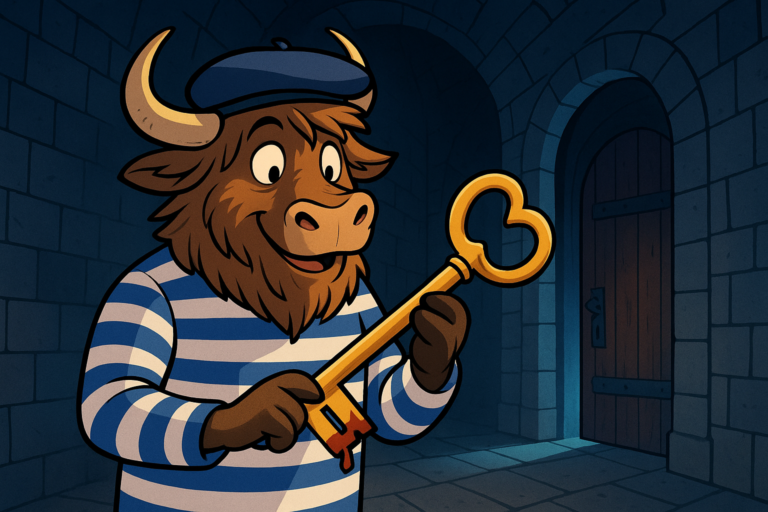
This B1 Intermediate retelling of Les Misérables keeps the plot clear for learners while still giving the story some atmosphere and momentum. C'est l'histoire de Jean Valjean, un homme qui a passé dix-neuf ans en prison. Parce qu'il a volé un morceau de pain pour nourrir les enfants de sa sœur.
This version teaches French through English and includes clickable word help inside the story, full story audio, and lesson notes after the reading. It is free to use on Yak Yacker and is designed to feel natural, readable, and manageable for learners.
C'est l'histoire de Jean Valjean, un homme qui a passé en prison.
Pourquoi ? Parce qu'il a un morceau de pain pour les enfants de sa sœur.
Quand il sort de prison, tout le monde le . Personne ne veut lui donner à manger ou un endroit pour dormir.
Un soir, il l'évêque Myriel. L'évêque l' avec un sourire.
« , monsieur, vous êtes le bienvenu. »
Jean Valjean est . « Vous savez qui je suis ? Je suis un ancien . »
« Je le sais, répond l'évêque, mais ici, vous êtes . »
Pendant la nuit, Jean Valjean des couverts en argent et s'enfuit. La police le et le ramène chez l'évêque.
L'évêque regarde Jean Valjean et dit : « Ah, vous voilà ! Je vous avais aussi donné les . Pourquoi ne les avez-vous pas pris ? »
« Vous êtes , ajoute l'évêque. Utilisez cet argent pour devenir un homme. »
Jean Valjean repart, . Cette change sa vie.
Quelques années plus tard, il est devenu Monsieur Madeleine, un maire et .
Un jour, une ouvrière de sa fabrique, Fantine, est . Elle a une petite fille, Cosette, qu'elle confie à des aubergistes .
Fantine, et sans argent, est arrêtée pour une . Jean Valjean, en tant que maire, la libère.
« Ne vous inquiétez pas, . Je vais retrouver votre Cosette. »
Mais un homme, Javert, le comme l'ancien forçat. Javert est un inspecteur de police par la loi.
Jean Valjean s' et part à la recherche de Cosette, une petite fille et maltraitée.
Il la trouve dans une auberge . « Viens, Cosette. Tu es libre maintenant. »
Cosette prend sa main. Pour la première fois, elle . Ensemble, ils commencent une nouvelle vie.
Les années passent. Cosette grandit et d'un jeune homme, Marius.
Marius se bat sur une lors d'une . Jean Valjean, qui n'aime pas la violence, le suit pour le protéger.
Quand Marius est , Jean Valjean le sauve en le portant à travers les de Paris.
Finalement, Marius et Cosette se marient. Jean Valjean, vieux et fatigué, leur son passé.
« J'ai essayé d'être bon, dit-il. C'était la faite à l'évêque. »
Il meurt en paix, entouré de Cosette et Marius, qui comprennent la de son cœur.
This story is built around a few unforgettable people. Jean Valjean changes from a punished ex-convict into a generous protector, while Bishop Myriel shows how one kind act can open a new path. Javert, by contrast, represents strict law without much mercy.
When you read or retell the story, notice how each character has a clear role. That makes the plot easier to follow and helps the moral message stand out.
- Jean Valjean: a man who tries to rebuild his life
- Bishop Myriel: kindness, trust, and forgiveness
- Javert: law, order, and rigid thinking
- Cosette and Marius: hope, love, and a future
A few French words carry a lot of the story's emotion. An ancien forçat is a former convict, and être le bienvenu means to be welcome. You also meet words like évêque, aubergiste, and barricade, which help place the story in its historical world.
Try learning these as little story chunks, not just as isolated words. That way, they are easier to remember and reuse.
- un ancien forçat = a former convict
- être le bienvenu = to be welcome
- un évêque = a bishop
- une barricade = a street barrier used in a revolt
This story uses the past tense a lot, especially the passé composé and the imperfect. The passé composé moves the action forward: il a volé, il est sorti, il a retrouvé. The imperfect gives background or repeated states: tout le monde le rejetait, Javert était obsédé.
A useful pattern in French stories is to mix the two. Use the passé composé for events, and the imperfect for setting, feelings, or ongoing situations. That contrast makes the story feel smooth and clear.
- Passé composé = completed actions
- Imperfect = background, habits, descriptions
- Look for signal words like un soir, quelques années plus tard, finalement
- This mix is very common in French storytelling
Les Misérables is not just a sad story; it is a story about dignity, mercy, and second chances. Notice how the language often contrasts coldness and warmth, rejection and welcome, law and compassion. That contrast is part of the emotional power.
If you want to retell the story in French, keep the tone simple and serious. Short sentences work well, especially when you want to show surprise, kindness, or change.
- Kindness changes the direction of the story
- Simple French can sound powerful and natural
- Contrast words help: mais, pourtant, alors, finalement
- The heart of the story is not action alone, but transformation
Les Misérables comes from the French / Victor Hugo tradition and is best known as a novel. This Yak Yacker article is an original learner retelling based on Victor Hugo, 1862; public domain, so the wording here is simplified for modern learners rather than copied from one old edition.
Older printings, translations, and retellings of this story can vary quite a bit. The original audience was usually adult/general, but this version is adapted for B1 Intermediate learners studying French. Use famous episodes; avoid trying to compress whole novel into one reader.
If you want to look into the source tradition, start with Project Gutenberg.
If you want to keep going, browse more in our French section and review the B1 French Vocabulary List. After that, try Basic Questions in French for another useful next step.