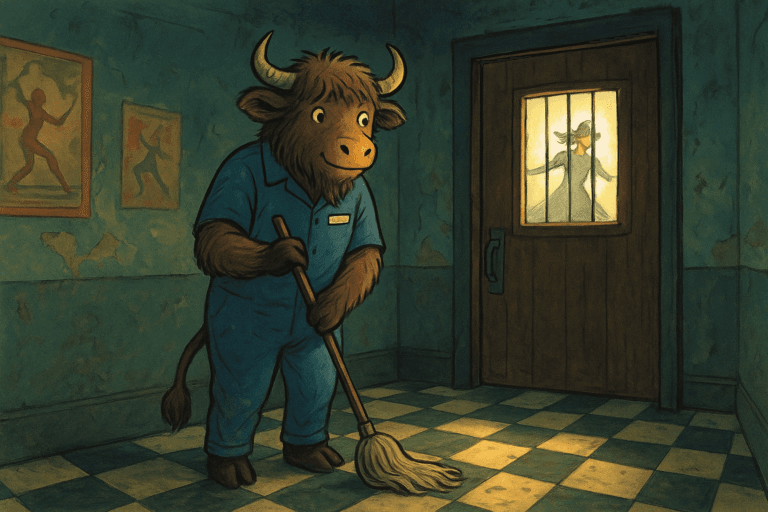
This B1 Intermediate retelling of The Yellow Wallpaper keeps the plot clear for learners while still giving the story some atmosphere and momentum. My husband John and I are spending the summer in a beautiful old house. He tells me, 'You are sick.
This version is written for English-speaking learners and includes clickable word help inside the story, full story audio, and lesson notes after the reading. It is free to use on Yak Yacker and is designed to feel natural, readable, and manageable in English.
My husband John and I are spending the summer in a . He is a . He tells me, 'You are sick.' I am tired and sad, but I know I need to . John disagrees.
'You must ,' he says. 'No writing, no work.' I love him, but I feel . He is so sure about everything. I don't argue. I am too .
Our bedroom is a . It was once a children's playroom. The windows have , like a . And the wallpaper… the wallpaper is the worst.
The wallpaper is a dirty yellow. Its is . I lie in bed and watch it for hours. At first, I hate it. The pattern seems to . It looks like broken necks and eyes that follow me.
I tell John, 'I don't like this room. The wallpaper me.' He laughs. 'You're just , my dear. Fresh air will help you.' Then he leaves to visit his patients.
When John is away, I write in this . I hide it when I hear footsteps. Writing makes me feel . It's my quiet .
Day after day, I the wallpaper. The pattern . Now I see something new. There is a woman behind the pattern. She is . She tries to get out, but she cannot.
'At night, she ,' I whisper to myself. 'She wants to be .'
I tell John, 'I think there is a woman in the wallpaper.' He looks . 'You mustn't let your imagination . We'll leave soon. Rest now.'
But I cannot stop thinking about her. The woman becomes . She . Sometimes I see many women, all trapped. I want to them.
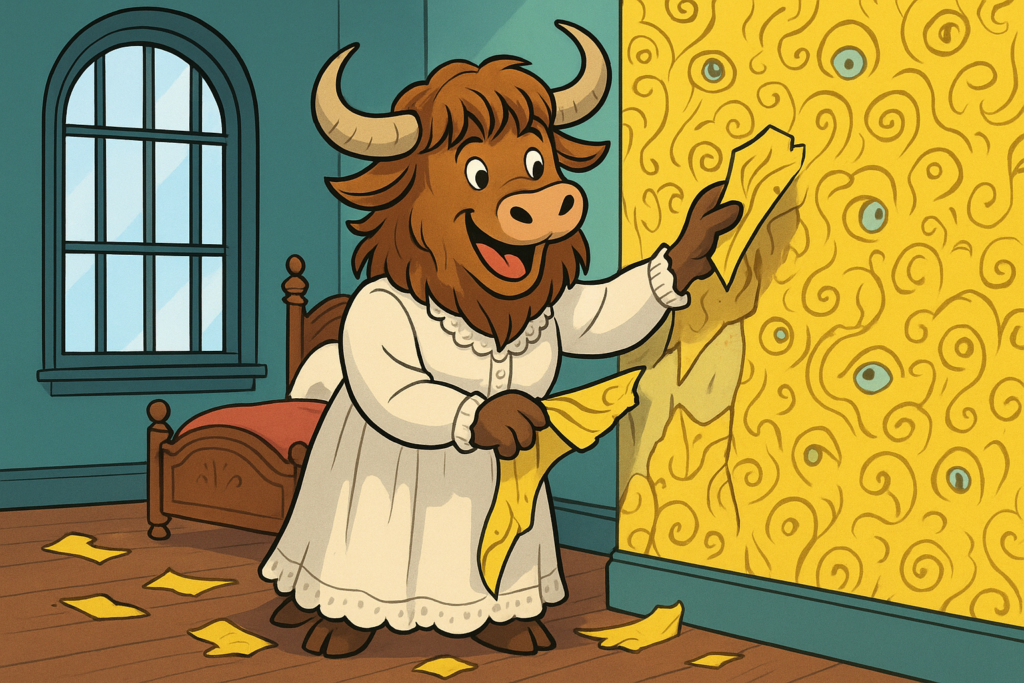
One day, I begin to the wallpaper. I want to . John's sister, Jennie, catches me. 'What are you doing?' she asks. 'The paper is dirty,' I say. She looks at me .
The last night, I lock the door. I am . I tear down all the yellow paper. The room is full of . 'I'm coming out!' I shout. I feel strong and .
John breaks open the door. He stares at me on the floor, along the wall. 'What have you done?' he cries. I laugh. 'I've got out at last! I've most of the paper. You can't put me back!'
John falls to the ground. I creep over him. 'I am ,' I say. 'The woman is free too.' The yellow scraps fly around me, and I am for the first time in months.
John, my doctor husband, and I are staying in a pretty old house for the summer. He says I'm sick. I feel tired and sad, but I need to write and think. He doesn't want me to.
He orders me to rest completely, with no writing or work. I love him but feel caged. He's very confident. I'm too weak to argue.
Our bedroom is a big upstairs room that used to be a playroom. The windows have bars, making it feel like a cage. The wallpaper is terrible.
The wallpaper is a dirty yellow with a confusing pattern. I stare at it from bed for hours. I hate it. The pattern seems to move, forming broken necks and staring eyes.
I tell John the room and wallpaper upset me. He laughs, says I'm just nervous, and suggests fresh air. Then he goes to see patients.
While John is out, I secretly write in a notebook. I hide it when anyone comes. Writing makes me feel alive-it's my silent protest.
Day after day, I examine the wallpaper. The pattern repeats endlessly. I now see a woman behind it. She's trapped and struggling to escape.
I whisper to myself that at night, she shakes the bars, wanting freedom.
I tell John I see a woman in the wallpaper. He looks concerned and tells me not to let my imagination go wild, promising we'll leave soon, and to rest.
But I can't stop thinking about her. She becomes clearer, creeping and crawling. Sometimes I see many trapped women. I want to free them.
One day, I start peeling the wallpaper to free her. John's sister Jennie catches me and asks what I'm doing. I say the paper is dirty. She gives me a strange look.
On the last night, I lock the door and determinedly tear down all the yellow paper. The room fills with scraps. I shout that I'm coming out, feeling strong and free.
John breaks the door open and finds me creeping along the wall. He cries out, but I laugh and say I've finally gotten out, having pulled off most of the paper, and he can't put me back.
John faints. I creep over him, saying I am free and so is the woman. Yellow scraps fly, and I am happy for the first time in months.
The story uses simple but powerful words to describe the narrator's emotions and situation. As she moves from feeling tired and sad to a fierce desire for freedom, her vocabulary shifts to match her inner change.
Let's look at some key words that express her conflict and growing rebellion.
- **trapped** (adj.): unable to escape a place or situation. *The narrator feels trapped in her room and in her life.*
- **rebellion** (n.): an act of fighting against authority or rules. *Writing in her secret notebook is her quiet rebellion.*
- **determined** (adj.): wanting to do something very much and not letting anyone stop you. *On the last night, she is determined to tear down the paper.*
- **imagination** (n.): the ability to create pictures in your mind. *John warns her not to let her imagination 'run wild'.*
Modal verbs like *must*, *mustn't*, *need to* and *can't* are all over this story. John uses them to control the narrator, while she uses them to express her own deep needs.
Understanding the difference between an outside order and an inner drive is key to using modals naturally.
- **must / mustn't** - strong obligation or prohibition from an authority. *'You must rest completely.' 'You mustn't let your imagination run wild.'*
- **need to** - expresses a personal necessity. *'I need to write and think.'* It's not a rule; it's what she feels is essential.
- **can't** - shows impossibility or strong refusal. *'You can't put me back!'* Here, it's an emotional statement of her new power.
One reason the story feels so alive is its vivid, unusual descriptions. The narrator doesn't just say the wallpaper is ugly - she brings it to life with terrifying images.
This kind of writing uses metaphor, personification, and strong action verbs to pull the reader inside the character's mind.
- **Personification**: 'The pattern seems to move and change… looks like broken necks and eyes that follow me.' The wallpaper becomes a living thing.
- **Metaphor**: The woman behind the pattern represents the narrator herself - both are trapped and trying to break free.
- **Dynamic verbs**: *creep, crawl, tear down, shake* - these small, precise words build a feeling of restless, desperate movement.
The narrator finds a secret way to express herself, even when everyone says she should stay silent. Is there something you do - a journal, a sketch, a private walk - that gives you breathing room?
Try writing a few sentences about your own 'secret notebook' moment. Use a modal verb (*must*, *need to*, *can't*) and one vivid sensory detail. The simpler the words, the stronger the feeling.
The Yellow Wallpaper comes from the American / Charlotte Perkins Gilman tradition and is best known as a psychological horror short story. This Yak Yacker article is an original learner retelling based on Charlotte Perkins Gilman, 1892; public domain, so the wording here is simplified for modern learners rather than copied from one old edition.
Older printings, translations, and retellings of this story can vary quite a bit. The original audience was usually adult, but this version is adapted for B1 Intermediate learners studying English. Adult mental-health/oppression themes.
If you want to look into the source tradition, start with Project Gutenberg.
If you want to keep going, browse more in our English section and review the B1 English Vocabulary List. After that, try 1,200 English Phrases and Expressions for another useful next step.