This B1 Intermediate retelling of The Wendigo keeps the plot clear for learners while still giving the story some atmosphere and momentum. Last winter, my family went camping in the snowy forests of Canada. My father loved telling old stories around the fire.
This version is written for English-speaking learners and includes clickable word help inside the story, full story audio, and lesson notes after the reading. It is free to use on Yak Yacker and is designed to feel natural, readable, and manageable in English.
Last winter, my family went camping in the snowy forests of Canada. My father loved around the fire.
One night, he said, 'Do you know the of the Wendigo?' We all shook our heads.
'It is a ,' he explained. 'It people who get lost in the woods. It brings cold and a terrible smell.'
I laughed. 'That's just a story to kids!' I said. My little sister .
Later, I could not sleep. I decided to take a . The moon was bright, and the snow looked beautiful.
But soon, I did not know where I was. The trees all looked the same. It got much , and I something bad, like dead leaves and old meat.
Then I heard behind me. Crack, crack, crack on the snow. A voice , 'Tom…'
I turned. A stood in the . It had on its head and eyes that yellow like a cat's.
My heart beat fast, but I said, 'I know who you are. You're the Wendigo. I am not of you!'
The creature , showing many sharp teeth. 'You should be scared,' it said in a voice. 'You are lost, and I am hungry.'
Suddenly, I had an . I made the face I could and .
The Wendigo stared. Then it made a terrible sound-it was ! Its laugh was like old metal doors.
'You are a boy,' it said at last. And then it , like smoke in the wind.
Soon, I smelled something else: the warm smoke of our campfire. I it and found the path back.
When I reached the camp, my father was awake. 'Tom! Where were you?' he cried. I told him .
He looked serious. 'You were . The Wendigo did not like your joke, but perhaps it your courage.' We packed our things and left at sunrise.
Last winter, my family camped in snowy forests in Canada. My father liked telling old stories by the campfire.
One night, he asked, "Do you know the Wendigo legend?" We all said no.
He said, "It's a tall, thin monster. It hunts lost people in the forest. It brings cold and a bad smell."
I laughed. "That's just a scary story for children!" I said. My little sister held her knees.
Later, I couldn't sleep. I went for a short walk. The moon was bright, and the snow was pretty.
But soon, I was lost. All the trees looked the same. It got very cold, and I smelled something bad, like rotting leaves and old meat.
Then I heard footsteps behind me. Crack, crack, crack in the snow. A voice whispered, "Tom..."
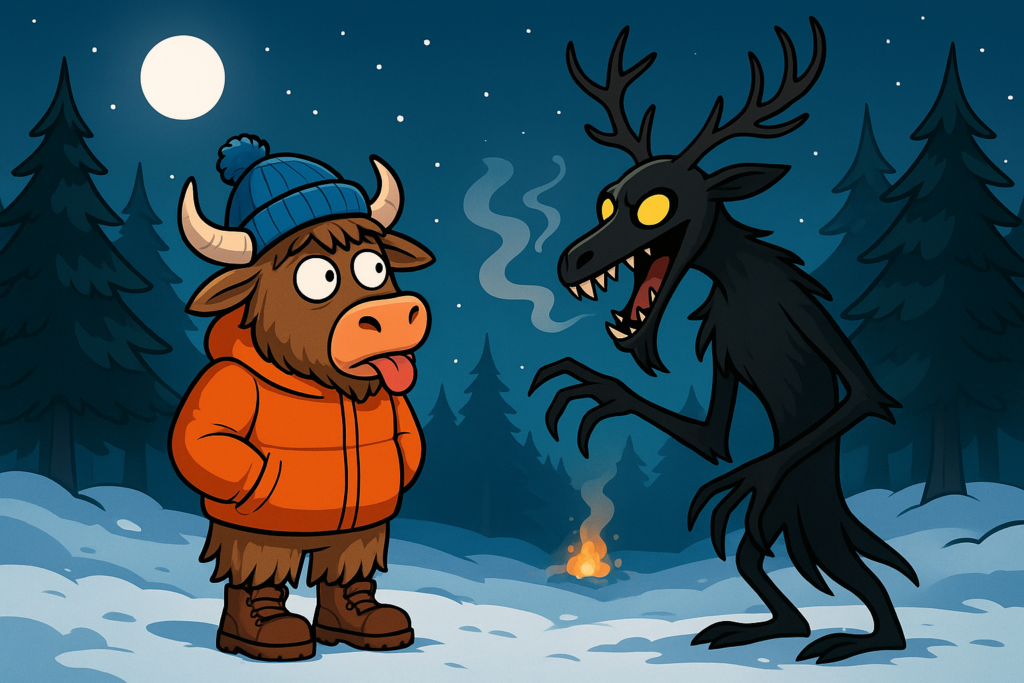
I turned around. A tall, thin shape stood in the dark. It had antlers on its head and yellow glowing eyes like a cat.
My heart raced, but I said, "I know you. You're the Wendigo. I'm not afraid!"
The creature smiled, showing many sharp teeth. "You should be scared," it said in a creaky voice. "You are lost, and I am hungry."
Suddenly, I had an idea. I made a very silly face and stuck out my tongue.
The Wendigo stared. Then it made a horrible sound-it laughed! Its laugh sounded like old metal doors.
"You are a strange boy," it said finally. Then it vanished like smoke in the wind.
Soon, I smelled something else: the warm smoke from our campfire. I followed it and found the way back.
When I got back to camp, my father was awake. "Tom! Where were you?" he cried. I told him everything.
He looked serious. "You were lucky. The Wendigo didn't like your joke, but maybe it respected your bravery." We packed up and left at sunrise.
This story uses a classic campfire-legend feeling: dark woods, strange sounds, and a creature that seems half myth and half nightmare. Even if the Wendigo is fictional, the story makes it feel believable by using strong sensory details like cold air, bad smells, and footsteps in the snow.
When you read or hear stories like this, notice how the setting helps build fear. The forest is not just a place; it becomes part of the danger.
- Look for details that appeal to the senses: smell, sound, sight, and touch.
- A legend is a traditional story people tell, often to warn or entertain.
- The mood is spooky, but the language stays simple and clear.
A few words do a lot of work in this story. A creature is an animal-like being, often imaginary. To hunt means to search for and chase something or someone. To glow means to give off light, like the Wendigo's yellow eyes.
The story also uses words that create atmosphere: shadows, footsteps, whisper, and creaking. These words help you picture the scene and feel the tension.
- legend = a traditional story passed from person to person
- lost = unable to find your way
- shadows = dark areas where you cannot see clearly
- creaking = making a long, rough, squeaky sound
The writer uses short, direct sentences when the danger gets closer. That makes the action feel faster and more urgent. For example, "I turned." and "It smiled." are very simple, but they create a strong effect.
Notice the pattern of calm, then fear: the moon is beautiful, then the narrator is lost, then he hears footsteps, then he sees the creature. This step-by-step build is a common storytelling style in English.
- Short sentences can increase tension.
- Contrast is powerful: beautiful snow vs. frightening danger.
- Repetition of sounds, like "crack, crack, crack," makes the scene vivid.
The narrator does not defeat the Wendigo with strength. Instead, he uses humor and courage. Saying "I am not scared of you!" and making a silly face shows confidence, even when he is afraid. That mix of fear and bravery feels very human.
A useful phrase here is "You were lucky." It means the result was good, but only by chance. The father's final comment adds a thoughtful ending: courage matters, but luck matters too.
- "I am not scared of you" is a strong, direct way to show bravery.
- "You were lucky" is often used when something dangerous ends well.
- Stories often end with a lesson, even if the lesson is a little spooky.
The Wendigo comes from the English / Algernon Blackwood tradition and is best known as a supernatural horror novella. This Yak Yacker article is an original learner retelling based on Algernon Blackwood, 1910; public domain, so the wording here is simplified for modern learners rather than copied from one old edition.
Older printings, translations, and retellings of this story can vary quite a bit. The original audience was usually adult/general, but this version is adapted for B1 Intermediate learners studying English. Use cautiously; Indigenous folklore sensitivity.
If you want to look into the source tradition, start with Project Gutenberg.
If you want to keep going, browse more in our English section and review the B1 English Vocabulary List. After that, try English Adjectives and Adverbs for another useful next step.