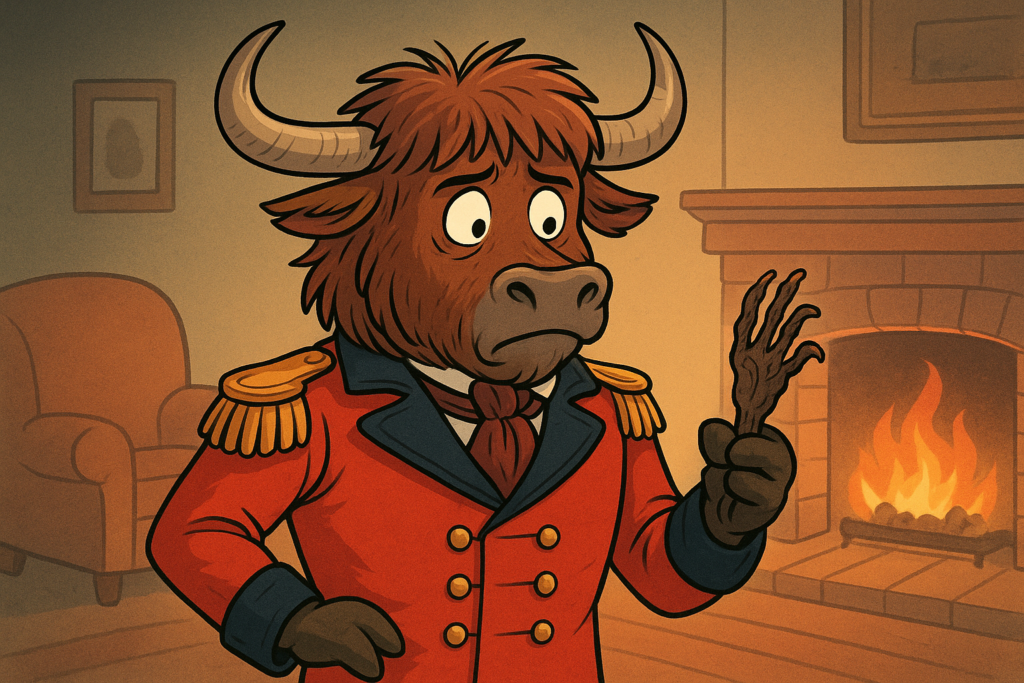
This B1 Intermediate retelling of The Monkey's Paw keeps the plot clear for learners while still giving the story some atmosphere and momentum. It was a cold, wet night. White sat by the fire in their small living room.
This version is written for English-speaking learners and includes clickable word help inside the story, full story audio, and lesson notes after the reading. It is free to use on Yak Yacker and is designed to feel natural, readable, and manageable in English.
It was a night. Mr. and Mrs. White sat by the fire in their . Their son, Herbert, played with his father.
"Listen to that ," Mrs. White said. "I don't think Sergeant-Major Morris will ."
Just then, there was a . Herbert to answer it.
Sergeant-Major Morris stood there, . "Come in, come in!" said Mr. White. "Sit by the fire."
The old soldier and began to tell stories of . Mr. White . "Tell us about the monkey's paw you mentioned before."
Morris . "It's nothing special," he said quietly. But then he took a small, monkey's paw from his pocket.
Mrs. White . "What an ugly thing!" she said.
Morris nodded. "An old put a on it. It gives three wishes to three different men." He paused. "But there's a . A terrible cost."
"Has anyone ?" asked Herbert.
"The first man had his wishes," Morris said. "I don't know the first two. But his was for ." He .
Mr. White quickly it. "Don't destroy it! If you don't want it, give it to me."
Morris held out his hand. "Throw it away. It will bring you ."
But Mr. White kept it. Morris left soon after. The family sat around the table, looking at the paw.
"Wish for something, Father," Herbert. "Wish to be a king!"
Mr. White smiled. "I don't think so. Perhaps… I wish for ."
He made the wish. The paw seemed to in his hand. He and dropped it. "It moved!" he said.
They , but nothing happened. "The money must be on its way," Herbert joked. They all laughed and went to bed.
The next morning, Herbert went to work as . "Don't spend the money before it arrives!" he called back, still joking.
Later that day, a stranger came to the door. It was a man from Herbert's factory. He sat down , his face .
"Mrs. White, Mr. White," he said. "There has been an . Your son… your son died in a machine." Both parents .
"The company is not responsible," the man continued. "But they want to help. They offer you two hundred pounds."
Mrs. White . Mr. White fell to the floor. For days after, the house was silent with .
Then, one night, Mrs. White suddenly . "The paw!" she cried. "We still have it! Wish for Herbert to come back!"
"But he's been dead ten days," said Mr. White. "What would we ?"
"I don't care! !" she repeated, her eyes wild.
With , Mr. White took the monkey's paw and made the wish. They waited in the dark.
At first, nothing. Then… a . Soft at first, then loud and .
Mrs. White ran toward the door. "It's Herbert! It must be!" she cried.
But Mr. White grabbed her arm. "Think! What is out there? It's been ten days! !"
She struggled free and reached for the . "I must let him in!"
Frantically, Mr. White searched for the paw in the dark. He found it and made his . A wish for .
The knocking stopped instantly. The street outside was . Mrs. White threw open the door, but there was nothing there. Only the .
"The Monkey's Paw" is packed with words that build its eerie, suspenseful mood. Let's pick out a few you might have noticed and add them to your active vocabulary.
- gasped (verb): to take a sudden sharp breath from shock or surprise. Example: Mrs. White gasped when she saw the ugly paw.
- hesitated (verb): to pause before doing something, often from doubt or fear. Example: Morris hesitated before talking about the paw.
- grief (noun): very deep sadness, especially after someone dies. Example: The house was silent with grief after Herbert's death.
- dripping wet (phrase): completely wet, with water falling off. Example: The sergeant came in dripping wet from the rain.
The whole story turns on wishes, so it's the perfect time to look at how English uses the word 'wish'. There are two common patterns: expressing a strong desire for something, and talking about unreal situations you regret.
- wish for + noun: a simple, strong desire for something specific. 'He wished for two hundred pounds.' (The paw grants things directly.)
- wish + past simple: used for present or future situations we want but can't have. 'I wish I had a million dollars.' (I don't have it now.)
- wish + past perfect: used for past regrets. 'I wish I had never made that wish.' (I did make it, and now I feel sorry.)
There's a famous saying that fits this story perfectly: 'Be careful what you wish for, because you might just get it.' This idiom warns that getting exactly what you want can bring unexpected trouble.
- Meaning: Desires can have hidden, harmful consequences.
- Story example: Mr. White wishes for money and receives it - as payment for his son's death.
- Real-life example: You wish for excitement, then get caught in a dangerous storm on holiday.
- Usage: Use it when someone is chasing a goal without thinking about possible downsides.
"The Monkey's Paw" doesn't just teach language - it makes us think about choices and consequences. Playing with the new words and grammar will help you remember them better.
- Write two sentences: one using 'wish for' to express a desire, and one using 'wish + past perfect' to express a regret.
- Think of a time you (or someone you know) wanted something badly but later regretted it. Explain it using the idiom 'be careful what you wish for'.
The Monkey's Paw comes from the English / W. W. Jacobs tradition and is best known as a horror short story. This Yak Yacker article is an original learner retelling based on W. W. Jacobs, 1902; public domain, so the wording here is simplified for modern learners rather than copied from one old edition.
Older printings, translations, and retellings of this story can vary quite a bit. The original audience was usually general/adult, but this version is adapted for B1 Intermediate learners studying English. Excellent B1 horror reader.
If you want to look into the source tradition, start with Project Gutenberg.
If you want to keep going, browse more in our English section and review the B1 English Vocabulary List. After that, try English Question Words for another useful next step.