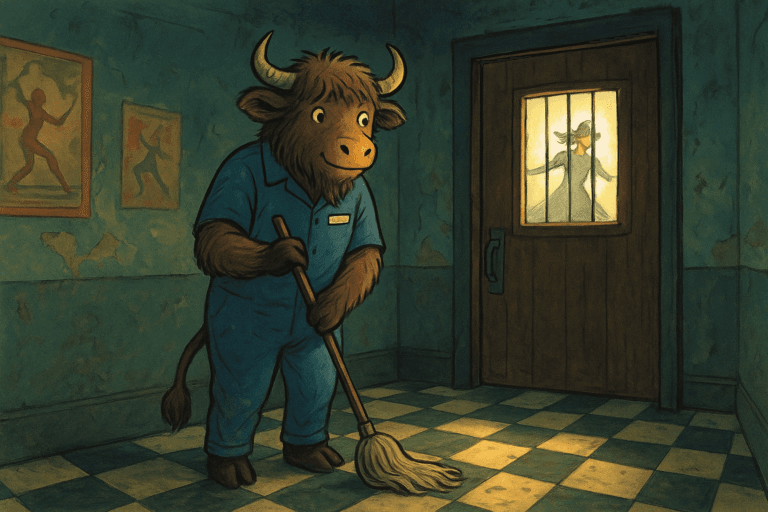
This B1 Intermediate retelling of The Man Who Was Thursday keeps the plot clear for learners while still giving the story some atmosphere and momentum. Gabriel Syme was a poet, but not the usual kind. He did not like wild dreams of anarchy.
This version is written for English-speaking learners and includes clickable word help inside the story, full story audio, and lesson notes after the reading. It is free to use on Yak Yacker and is designed to feel natural, readable, and manageable in English.
Gabriel Syme was a poet, but not the usual kind. He did not like of . He believed in and . One evening at a party, he met another poet named Lucian Gregory.
'Anarchy is poetry!' Gregory cried. 'It will all these !'
Syme laughed. 'You are only . Do you truly know any real anarchists?'
'I am a real anarchist,' Gregory whispered, his face . 'Come with me, and I will .' And so Syme followed him to a secret underground room.
But Syme had a secret of his own. He was a police detective, to stop anarchists. At the meeting, Gregory tried to join the high council of anarchists, but the council members did not him. Instead, they listened to Syme speak, and they liked his clever words. He was elected as Thursday, one of the seven leaders.
The next day, Syme went to a strange hotel for a breakfast meeting. The other council members were there: Monday, a calm man with a long beard; Tuesday, a young man with ; Wednesday, a thin, dark Frenchman; Friday, an old professor; Saturday, a doctor who never smiled; and Sunday, the president. Sunday was -like a mountain in a suit.
Sunday's voice was and slow. 'We are the men of the new world. We will everything old.' But his eyes , and Syme felt a strange .
After the meeting, Syme decided to Wednesday. In a dark street, he the man's arm. 'You are not an anarchist!' Syme said. Wednesday smiled and softly replied, 'Neither are you. I am a detective.'
Syme could not it. 'You are police?'
'Yes,' Wednesday said. 'And I think the others are too.' They went to find Tuesday, and he the same. One by one, the council members revealed their true identities. Monday, Tuesday, Wednesday, Friday, Saturday-all of them were detectives! Their secret mission had been the same: to Sunday.
But who was Sunday? The giant president was still a . When they went back to the hotel, Sunday was gone. A strange began. Through London they ran, following Sunday's trail. Once, he threw a note from a : 'You cannot catch me. I am the secret that all secrets point to.'
They chased him into the countryside, and at last they came to a beautiful garden. There was Sunday, in ordinary clothes. He looked at them with a .
'You thought you were chasing an enemy,' Sunday said. 'But you were only chasing the . I am the man you were all looking for-the man who order when no one is watching.'
The detectives stood still, but peaceful. Syme felt as if a great weight from his heart. 'Then the whole war was just a game?' he asked.
Sunday's laughter filled the garden. 'A game, yes. But the most game in the world. Now , my friends. The world is safe, and you have all done very well.'
Gabriel Syme was a poet who valued order and cleverness, not anarchy. At a party, he met poet Lucian Gregory.
Gregory exclaimed that anarchy is poetry and will destroy ugly rules.
Syme laughed, questioning if Gregory actually knew any real anarchists.
Gregory, blushing, claimed he was a real anarchist, and he took Syme to a secret underground room.
Syme, secretly a police detective, infiltrated the anarchists. At a meeting, Gregory tried to join the high council but was distrusted. Syme spoke cleverly, and was elected Thursday, one of the seven leaders.
The next day, Syme met the other council members at a strange hotel: Monday (calm, long beard), Tuesday (wild hair), Wednesday (thin, dark Frenchman), Friday (old professor), Saturday (unsmiling doctor), and Sunday, the huge president.
Sunday spoke of destroying the old world, but his twinkling eyes made Syme doubt.
Syme followed Wednesday, grabbed him, and accused him of not being an anarchist. Wednesday smiled and revealed he was a detective.
Syme was shocked that Wednesday was police.
Wednesday suspected the others were also detectives. They questioned Tuesday, who confessed, and then all revealed they were detectives investigating Sunday.
Sunday, the giant president, remained a mystery. He disappeared, leading them on a chase through London, taunting them with a note: 'You cannot catch me. I am the secret behind all secrets.'
They chased him to a garden where Sunday sat calmly in ordinary clothes, smiling gently.
Sunday explained they weren't chasing an enemy but the light at their journey's end. He was the hidden protector of order.
The detectives felt confused but peaceful. Syme asked if the whole conflict was just a game.
Sunday laughed, calling it the most important game. He told them to rest; the world was safe and they did well.
This story is full of words that build suspense, show character, and add a touch of philosophical flavour. Below are some useful ones you can steal for your own stories or conversations.
Pay attention to how these words shape the mood: a 'detective' isn't just a job-it carries secrets and surprise; 'anarchy' hints at chaos and rebellion; 'confess' suggests something hidden coming to light.
- anarchy - a belief in having no government or rules; often linked to chaos
- detective - someone who investigates secrets or crimes; used figuratively for anyone uncovering hidden truths
- council - a group of people chosen to make decisions or lead
- confess - to admit something you have kept secret, often something wrong or surprising
The story mixes conversation and narration. When characters speak directly, we see their exact words in quotation marks: "'Anarchy is poetry!' Gregory cried." But when the narrator reports speech, the grammar shifts: "He whispered that he was a real anarchist."
Notice the changes: pronouns (I → he/she), verb tense (am → was), and time/place words (now → then, here → there). This is called 'reported speech' or 'indirect speech', and it's a must-know for telling people about past conversations.
- Direct: "I am a detective," Wednesday said.
- Reported: Wednesday said that he was a detective.
- After a past reporting verb, you usually move the main verb one step into the past: is → was, have → had, can → could.
- No quotation marks in reported speech-just a clause starting with 'that' (though 'that' is often optional in speech).
Good mystery writing often uses short, punchy sentences to quicken the heartbeat. In the story, you find lines like "A strange chase began. Through London they ran…" The brevity echoes the characters' urgency and draws you in.
Combining these with descriptive adjectives (enormous, dark, gentle) and elusive details (Sunday's eyes twinkled, a strange doubt) creates a layer of unanswered questions that keeps you turning the page.
- Short sentences create a sense of speed or shock.
- Vivid adjectives paint quick, memorable pictures in the reader's mind.
- Unanswered questions and contradictions (e.g., a giant man with a gentle smile) raise suspense naturally.
Now that you've followed Syme's journey from secret policeman to peaceful revelation, why not practise these language tools? Try retelling the story to a friend using reported speech, or write a short mystery snippet of your own with the vocabulary you've met.
If the philosophical twist intrigued you, the original novel by G. K. Chesterton is a rewarding next step-full of wordplay, wit, and even more surprises. Happy investigating!
- Rewrite a scene from the story using only reported speech. Compare the effect.
- Create a three-sentence mystery story, using at least two of the style tricks from this lesson.
- Look up the original book and read the first chapter-you'll see how the language is dressed up for a classic audience.
The Man Who Was Thursday comes from the English / G. K. Chesterton tradition and is best known as a mystery/philosophical thriller. This Yak Yacker article is an original learner retelling based on G. K. Chesterton, 1908; public domain, so the wording here is simplified for modern learners rather than copied from one old edition.
Older printings, translations, and retellings of this story can vary quite a bit. The original audience was usually adult/general, but this version is adapted for B1 Intermediate learners studying English. Strange secret-police/anarchist story.
If you want to look into the source tradition, start with Project Gutenberg.
If you want to keep going, browse more in our English section and review the B1 English Vocabulary List. After that, try 1,200 English Phrases and Expressions for another useful next step.