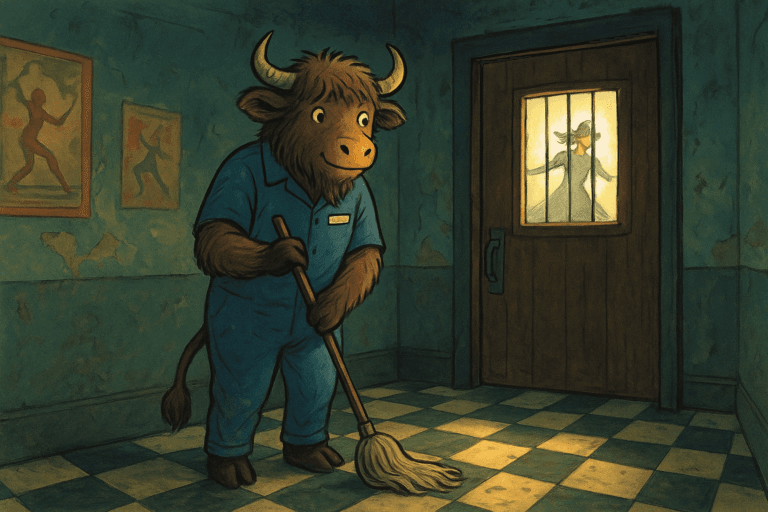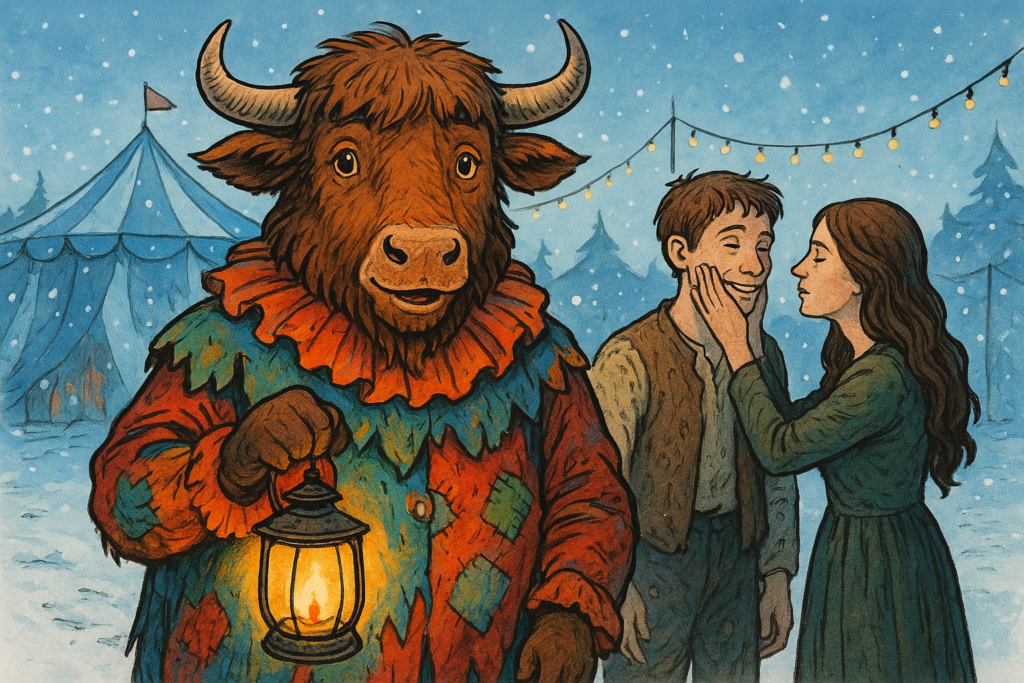
Victor Hugo's classic tale tells the story of Gwynplaine, a boy abandoned as a child with a terrible secret: his face has been carved into a permanent, frightening grin. He grows up travelling with a small group of performers, becoming famous as 'The Man Who Laughs'.
Despite his frightening smile, Gwynplaine is kind and gentle. He loves a blind girl named Dea, who cannot see his face but feels his good heart. But when his true identity as a nobleman is discovered, his life changes forever.
This B1 intermediate English retelling keeps the power of the original story but uses simpler language. You can click any word for a quick definition, listen to the full story audio, and read our free lesson notes to improve your English while you enjoy this unforgettable tale.
Gwynplaine had a face. When he was a boy, cut his mouth into a . They left him in the snow, .
He the storm. At last, he saw a . He the door of a small house.
Ursus the door. He saw a child with a . "Why are you smiling?" he asked.
"I am not smiling," Gwynplaine said. "My face cannot . It is always like this." Ursus felt him and let him inside.
Years passed. Gwynplaine and with Ursus and a blind girl named Dea. Dea had beautiful long hair, but she could not .
They plays for crowds. Gwynplaine made everyone laugh with his . Dea sang .
One night, after a show, Dea Gwynplaine's face. "You are ," she said. "I can feel it."
Gwynplaine held her hands. "But my face is only a to the world," he whispered. "Not to me," Dea replied. "I ."
But Gwynplaine had a . A rich duchess told him the truth: he was not a poor performer. He had been born a .
His enemies had his face when he was a baby so that no one would know him. Now he could be .
Gwynplaine his new home. But the rich people laughed at his face, just like the crowds. He felt more .
He realized that he Dea and Ursus. Money did not make him happy. He to his friends.
Dea was sitting when he came back. "I had to who I really was," Gwynplaine told her.
"And who are you?" she asked. "I am the man who you," he said. "That is enough." They .
Together, they the city and went back to the . Gwynplaine's face still smiled, but now it did not feel like a .
For the first time, he understood that true is found in the people who , not your face.
Gwynplaine had a weird face. As a child, cruel men cut his mouth into a permanent smile. They abandoned him in the snow.
He walked in the storm. Finally, he saw a light and knocked on a cottage door.
Ursus opened it. He saw a boy with a fixed grin. "Why are you smiling?" he asked.
"I'm not smiling," Gwynplaine said. "My face is stuck this way." Ursus felt sorry and let him in.
Years later, Gwynplaine grew up. He traveled with Ursus and a blind girl, Dea, who had lovely long hair.
They put on shows. Gwynplaine's odd face made crowds laugh. Dea sang beautifully.
One night after a show, Dea felt his face. "You are beautiful," she said. "I can feel it."
Gwynplaine held her hands. "But the world sees my face as a joke," he whispered. "Not to me," Dea said. "I see with my heart."
But Gwynplaine had a secret past. A wealthy duchess told him he was not a poor actor-he was born a lord.
His enemies disfigured him as a baby to hide his identity. Now he could reclaim wealth and power.
Gwynplaine went to his new home. But the rich laughed at his face too. He felt lonelier than ever.
He realized he missed Dea and Ursus. Money didn't bring happiness. He went back to them.
Dea was sitting sadly when he returned. "I needed to discover who I really am," he said.
"And who are you?" she asked. "I'm the man who loves you," he said. "That's enough." They hugged.
Together they left the city for quiet roads. Gwynplaine's face still smiled, but now it felt truthful.
At last, he understood: true joy comes from those who see your heart, not your face.
Gwynplaine's world is full of strong, descriptive words that bring the winter night and the carnival stage to life. Look closely at a few gems from the text.
These words don't just describe-they carry emotion. Learning them will help you tell your own stories more vividly.
- strange: unusual or unexpected. "Gwynplaine had a strange face."
- frozen laugh: a smile that cannot move-here, a horrifying permanent grin.
- crowds: large groups of people, often gathered for a show.
- embraced: held closely in arms, showing love or comfort.
Notice how the story moves through time using three narrative tenses. Past simple drives the action: "He knocked on the door. Ursus opened it." Past continuous sets the scene: "He walked through the storm." Past perfect reveals hidden backstory: "He had been born a lord."
Using these tenses together makes your storytelling clear and dramatic. Try it: the past perfect gives past events that happened before the main story. Without it, the secret would fall flat.
- Past simple: series of completed actions-"Gwynplaine grew up and traveled."
- Past continuous: background description-"Dea was sitting sadly when he came back."
- Past perfect: earlier past events-"His enemies had cut his face when he was a baby."
This tale is built on images that aren't literal but feel deeply true. A 'frozen laugh' is a smile that can't change-a perfect symbol for joy trapped by cruelty. When Dea says, 'I see with my heart,' she means she understands love beyond sight.
At the end, Gwynplaine's face 'still smiled, but now it did not feel like a lie.' The metaphor shows that his fixed expression finally matches a real happiness inside. Look for these moments in your own reading to catch the real message.
- 'frozen laugh': a permanent grin hiding sadness.
- 'see with my heart': feel or understand deeply without physical sight.
- 'did not feel like a lie': the smile now reflects true emotion, not a mask.
Now you have the vocabulary and grammar to shape your own dramatic tale. Think of a time someone's appearance didn't match their feelings, or imagine a secret identity like Gwynplaine's.
Write a short paragraph using past tenses and at least two new words from the lesson. Share it with a friend or language partner-stories are always better when they're told.
- Retell Gwynplaine's story in your own words, using past perfect for the backstory.
- Describe a character with a 'strange' feature that hides a truth.
- Write three sentences, each using a different narrative tense, about a surprise meeting.
The Man Who Laughs comes from the American / public-domain screen or print culture tradition and is best known as a silent drama/horror film. This Yak Yacker article is an original learner retelling based on 1928 film; public domain in U.S., so the wording here is simplified for modern learners rather than copied from one old edition.
Older printings, translations, and retellings of this story can vary quite a bit. The original audience was usually adult/general, but this version is adapted for B1 Intermediate learners studying English. Based on Victor Hugo; adult melodrama.
If you want to look into the source tradition, start with Project Gutenberg.
If you want to keep going, browse more in our English section and review the B1 English Vocabulary List. After that, try 1,200 English Phrases and Expressions for another useful next step.