English Grammar (Grammar) That Actually Helps You Speak

Quick, beginner-friendly grammar—plus Traditional Chinese notes (英文文法 yīngwén wénfǎ) so things click faster.

If English grammar feels like a pile of rules that exist purely to ruin your day, this page is your shortcut. We’ll focus on the grammar that helps you say real sentences—not grammar trivia you’ll forget immediately.

This is the Grammar sub-pillar inside Learn English. If you’re brand new, hop to Start Here first. If you’re building speaking power, pair this with Phrases and Vocabulary.

Yak Snark Box: Grammar isn’t the goal. Clear meaning is the goal. Grammar is just the tool that stops your sentence from sounding like a fridge magnet disaster.

Your Grammar Roadmap

Step 1: Build One Clean Sentence

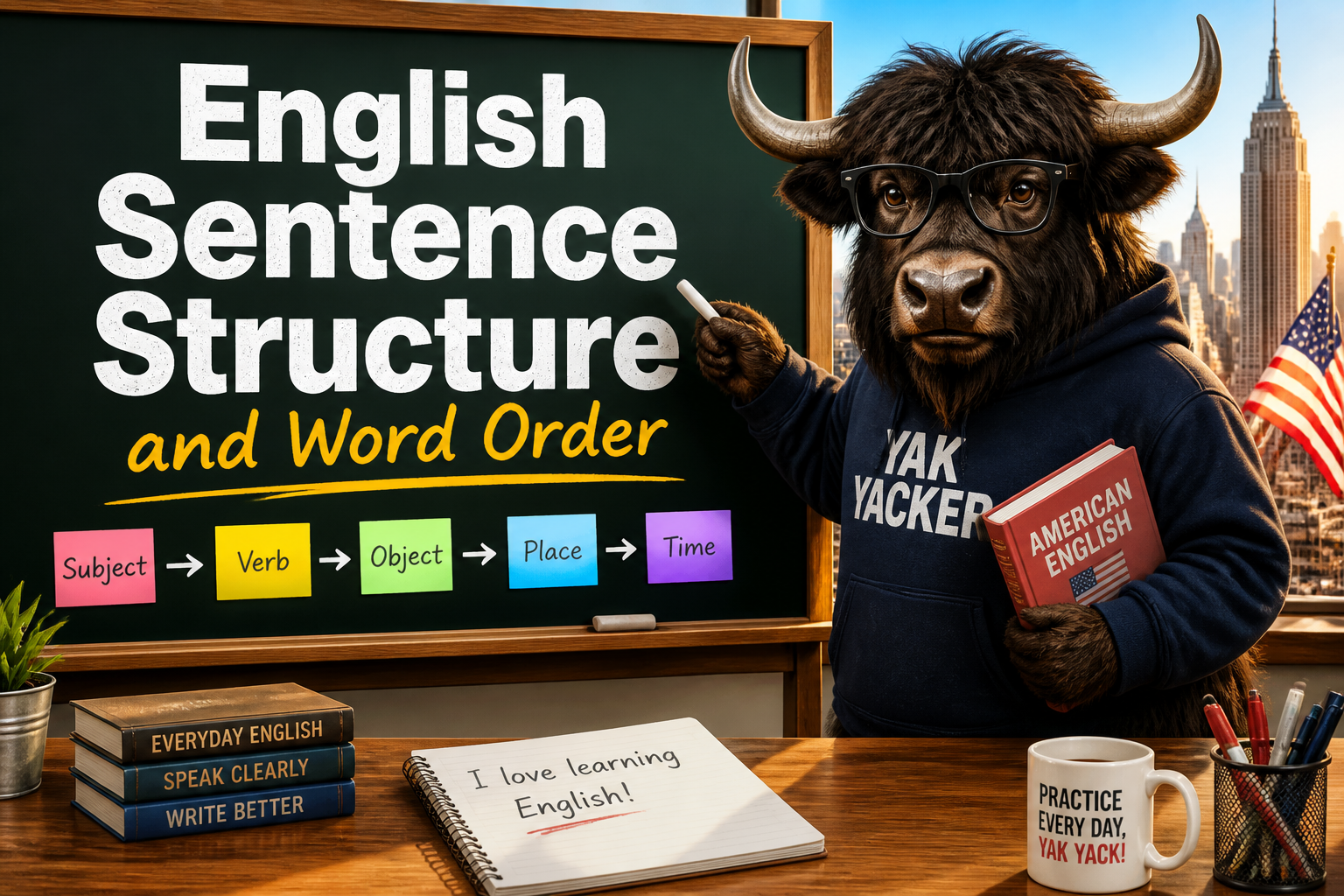
Start with the backbone: subject + verb + object, plus the “to be” verb.

Step 2: Control Time (Tenses)

Learn the “Big Four” first. Most daily English lives here.

Step 3: Upgrade Clarity & Style

Add the grammar that makes you sound more natural (and less “textbook robot”).

Core Grammar Lessons To Read Next

These are the highest “return on effort” grammar topics on YakYacker. If you only study a few things this week, make it these.

When you’re ready to go beyond the basics, explore Past Continuous, Future Tenses, Conditionals, and Reported Speech.

Visual “Grammar Cards” (The Big Ideas)

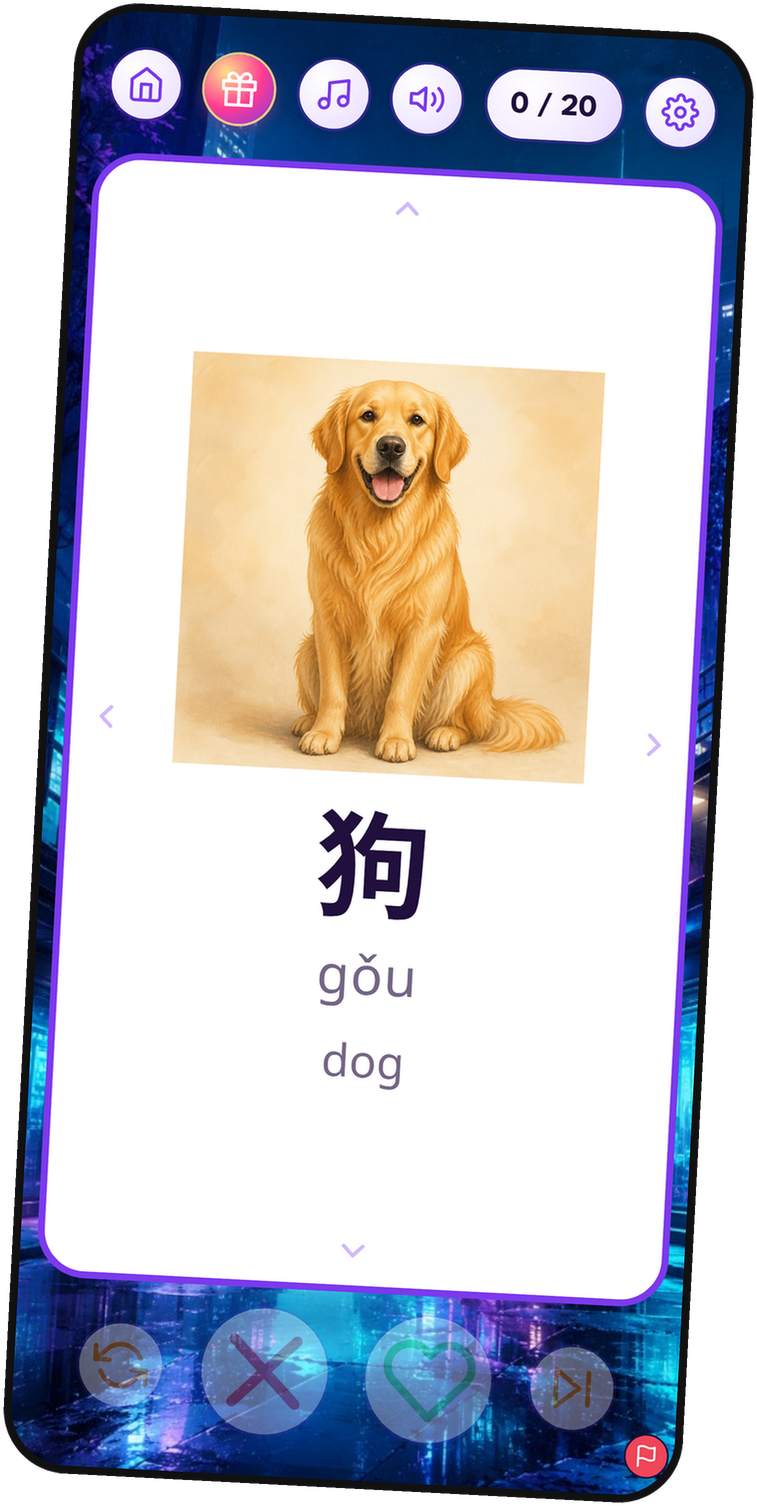
Traditional Chinese labels can help you organize English grammar in your head. Each card has: Hanzi + pinyin + meaning, plus a matching English example.

現在簡單式

xiànzài jiǎndān shì — present simple (habits, facts)

Example (ZH): 我每天喝咖啡。
wǒ měitiān hē kāfēi.
EN: I drink coffee every day.

Learn it: Present Simple Tense

現在進行式

xiànzài jìnxíng shì — present continuous (happening now)

Example (ZH): 我正在學英文。
wǒ zhèngzài xué yīngwén.
EN: I am studying English.

Learn it: Present Continuous

過去簡單式

guòqù jiǎndān shì — past simple (finished past)

Example (ZH): 昨天我看了一部電影。
zuótiān wǒ kàn le yí bù diànyǐng.
EN: I watched a movie yesterday.

Learn it: Past Simple Tense

現在完成式

xiànzài wánchéng shì — present perfect (experience, “up to now”)

Example (ZH): 我去過日本。
wǒ qù guò Rìběn.
EN: I have been to Japan.

Learn it: Present Perfect

情態動詞

qíngtài dòngcí — modal verbs (can, should, must)

Example (ZH): 你應該早點睡。
nǐ yīnggāi zǎo diǎn shuì.
EN: You should go to bed earlier.

Learn it: Modal Verbs

介系詞

jièxìcí — prepositions (in/on/at…)

Example (ZH): 我們在咖啡店見。
wǒmen zài kāfēidiàn jiàn.
EN: Let’s meet at the coffee shop.

Learn it: Prepositions (Place/Time)

連接詞

liánjiēcí — connectors (because, but, so…)

Example (ZH): 我想去,但我沒時間。
wǒ xiǎng qù, dàn wǒ méi shíjiān.
EN: I want to go, but I don’t have time.

Learn it: Linking Words & Connectors

被動語態

bèidòng yǔtài — passive voice (focus on the result)

Example (ZH): 這個蛋糕被吃完了。
zhè gè dàngāo bèi chī wán le.
EN: The cake was eaten.

Learn it: Passive Voice

Key Grammar Terms In Traditional Chinese (So You Don’t Get Lost)

These labels help you map English grammar to something familiar. Each entry includes a quick Chinese example sentence, plus the English meaning.

冠詞

guàncí — articles (a/an/the)

Example (ZH): 我想要一個蘋果。
wǒ xiǎng yào yí gè píngguǒ.
EN: I want an apple.

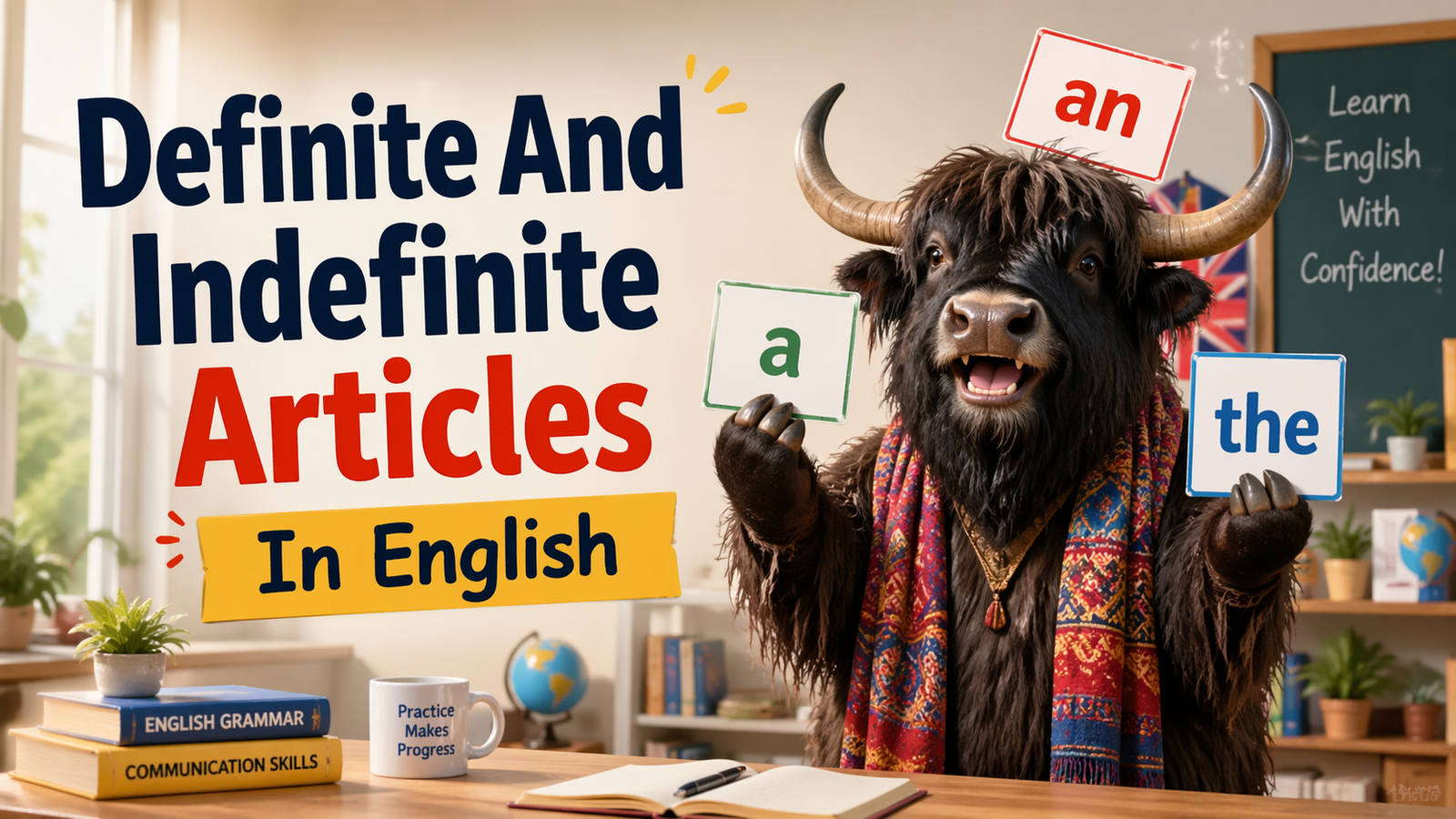
Go deeper: Definite & Indefinite Articles

代名詞

dàimíngcí — pronouns (I/me/my, he/him/his…)

Example (ZH): 他把他的手機給我了。
tā bǎ tā de shǒujī gěi wǒ le.
EN: He gave me his phone.

Go deeper: Subject, Object & Possessive Pronouns

複數

fùshù — plurals (cat → cats, city → cities)

Example (ZH): 我有兩隻貓。
wǒ yǒu liǎng zhī māo.
EN: I have two cats.

Go deeper: Plural Nouns

不規則動詞

bù guīzé dòngcí — irregular verbs (go/went, buy/bought…)

Example (ZH): 我昨天去了台北。
wǒ zuótiān qù le Táiběi.
EN: I went to Taipei yesterday.

Go deeper: Irregular Verbs

Sentence Frames You Can Steal Today

Memorize a few frames, then swap words. That’s how grammar becomes speaking.

Frame (English)MeaningExample (ZH)Example (Pinyin)Translation (EN)
I am ___ing.Action happening now我正在做作業。wǒ zhèngzài zuò zuòyè.I am doing homework.
I usually ___.Habit / routine我通常七點起床。wǒ tōngcháng qī diǎn qǐchuáng.I usually get up at 7.
I went to ___ yesterday.Finished past我昨天去了超市。wǒ zuótiān qù le chāoshì.I went to the supermarket yesterday.
I have never ___.Life experience我從來沒吃過生蠔。wǒ cónglái méi chī guò shēngháo.I have never eaten oysters.
Can you ___?Polite request你可以幫我嗎?nǐ kěyǐ bāng wǒ ma?Can you help me?
We should ___.Advice / suggestion我們應該早點出發。wǒmen yīnggāi zǎo diǎn chūfā.We should leave earlier.
Because ___, I ___.Reason + result因為下雨,我沒去。yīnwèi xiàyǔ, wǒ méi qù.Because it was raining, I didn’t go.
If I ___, I will ___.Real condition (likely)如果我有時間,我會去。rúguǒ wǒ yǒu shíjiān, wǒ huì qù.If I have time, I will go.
It was ___ed.Passive result門被打開了。mén bèi dǎkāi le.The door was opened.
There is/are ___.Existence這裡有很多人。zhèlǐ yǒu hěn duō rén.There are many people here.

Practice Without Crying (Small Drills)

Short drills beat long “study sessions.” Pick one, do it for 5–10 minutes, then go live your life like a functional human.

Drill 1: Tense Swap (Present → Past)

Take 5 present sentences and switch them to past.

  • I walk to school. → I walked to school.
  • I watch TV. → I watched TV.
  • I go to the store. → I went to the store. (irregular)

If verbs are hurting your feelings, start here: Irregular Verbs

Drill 2: Make One Sentence Longer (Add Details)

Start with a tiny sentence. Add one detail at a time.

  • I eat. → I eat lunch. → I eat lunch at 12. → I eat lunch at 12 in the office.

Need structure help? Read: Word Order

Drill 3: Connector Challenge (Because/But/So)

Write 3 sentences with each connector: because, but, so.

Get your connector list here: Linking Words & Connectors

Common Mistakes (And The Fix)

Grammar Works Best With Phrases And Vocabulary

Grammar is the structure. But you still need words and ready-made phrases to speak smoothly. Pair your grammar study with:

Phrases To Use In Real Life

If you want instant speaking wins, go to Phrases, then try these:

Vocabulary That Makes Grammar Easier

When you have the right words, grammar practice becomes effortless. Browse Vocabulary and start with:

Resources To Study Smarter

If you want a plan (and fewer random tabs), visit Resources and use these practical guides:

Quick FAQs (Beginner-Friendly)

Do I Need To Memorize All The Rules?

No. Learn a rule, use it in 10 sentences, then move on. You’ll remember what you actually use. For speaking-first learning, keep Phrases open in another tab and steal sentence patterns.

What’s The Fastest Grammar To Learn First?

Start with: Verb “To Be”, Word Order, and Present Simple. That trio builds a shocking amount of real English.

I’m Intermediate. What Should I Study Here?

Upgrade your accuracy and nuance with Present Perfect, Conditionals, and Reported Speech. Then use connectors to sound fluent: Linking Words.

Final Yak Box: Your “Minimum Viable Grammar”

  • Learn 1 tense → write 10 sentences → say them out loud.
  • Keep one “frame” for requests: “Can you…?” + “Could you…?”
  • Use connectors daily: because / but / so.
  • When lost, go back up to Learn English and follow the path again (yes, repetition is the secret sauce).