



I booked my first online Spanish tutor on a Tuesday night, from the couch, with a coffee going cold beside me. I figured it would take twenty minutes.
Two weeks later I’d done discounted trials with three different tutors, nearly paid for a lesson I cancelled twenty hours out, and settled into regular sessions with a woman in Bogotá who corrects my subjunctive without making a production of it. This is what I wish someone had told me before I started tapping through profiles.
My Spanish had stalled. I could read a menu, limp through an old Duolingo streak, and freeze whenever a real person spoke to me.
I wanted a live human on a video call, and I wanted to learn how to work with one instead of clicking the first smiling face with five stars.
So I spent about two weeks actually booking and trying tutors. Two discounted trials on italki (one professional teacher, one community tutor), one Preply trial lesson, then regular sessions with the person who clicked.
Not a lab study. Three trials, a handful of real lessons, and a cancellation policy that still makes me check the clock.
I’m not ranking platforms here. The platform barely matters.
The person on the screen does. If you want the comparison, it’s on our best online language tutors page, and the longer italki write-up lives at the italki review.
This piece is how to work with a tutor once you’ve found one, and how to find one worth the hour.
What an online tutor actually is
Strip away the marketplace branding and an online language tutor is a person on a video call whose job is to make you talk, notice what you get wrong, and fix it. Sometimes they have a lesson plan and homework.

Sometimes they’re just someone who’ll chat in Spanish for thirty minutes and tell you that you said embarazada when you meant avergonzado. That one has consequences.
It’s not a school. It’s not a course with a certificate.
It’s not an AI chat with a face. A tutor is a human with a calendar, a video connection, and (if you’re lucky) opinions about how you should be learning.
The platforms handle the money, the scheduling, the call, and the reviews. Some tutors teach full time.
Others are students or expats picking up extra hours. Neither type is automatically better.
I had a good trial with a community tutor and a dull one with a certified professional, which is roughly the opposite of what the badges primed me to expect.
A weekly lesson is a spine, not a whole body. More on that in the homework section, because that’s where most people quietly waste the money.
Finding a tutor
The tutor matters more than the platform
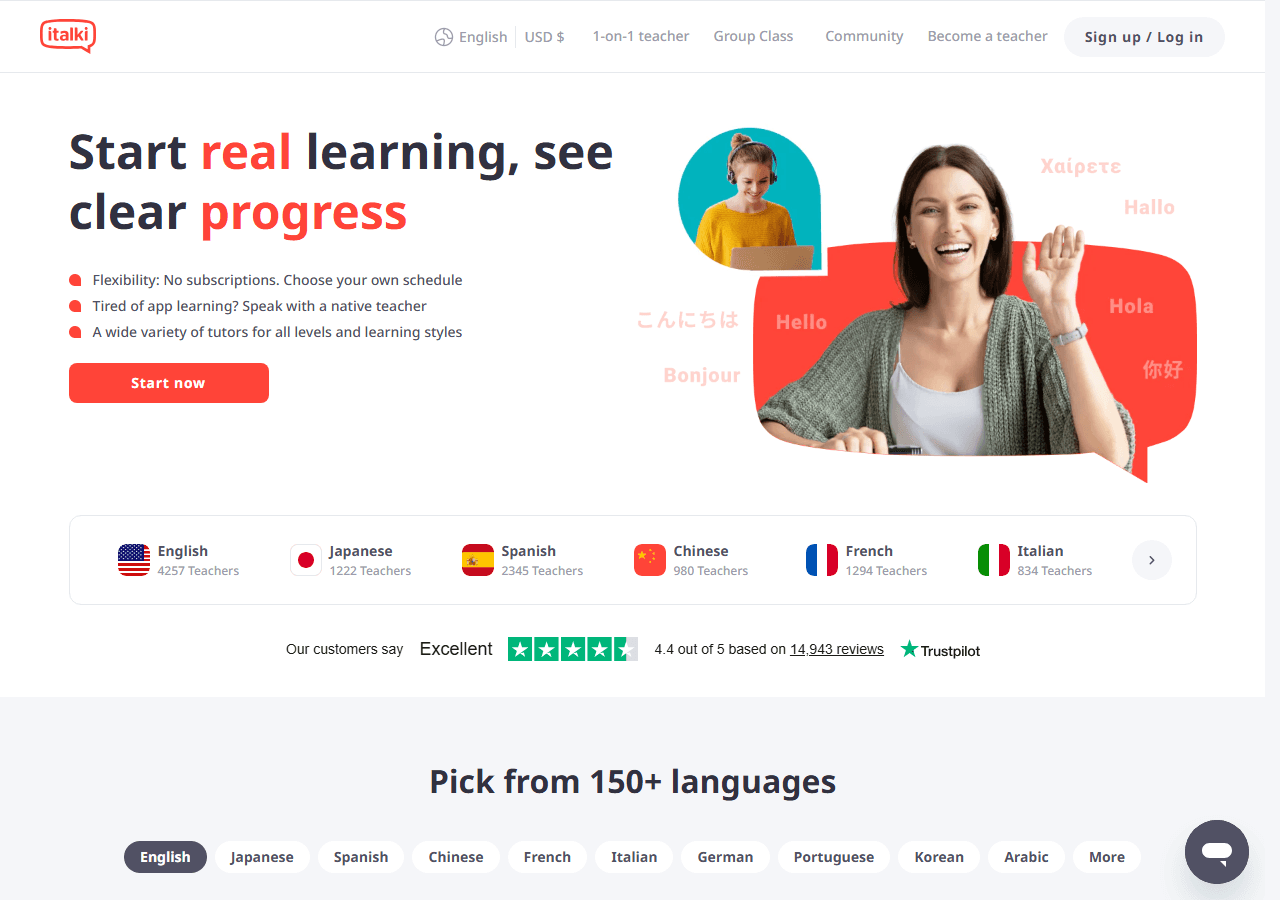
The quality of your experience is the tutor, not the brand. People have brilliant lessons on italki and flat ones on Preply, and the reverse.
The sites sell access to overlapping pools of independent humans with webcams. Pick the marketplace you can live with, then put the energy into picking the person.
Trial-shop. Book two or three people before you commit.
The discounted trial exists for this. Skipping it because the intro video seemed nice is how you end up in a subscription with someone you don’t gel with.
Understanding the badges
italki splits tutors into two groups. Professional teachers have submitted credentials (certificates, degrees, teaching paperwork).
Community tutors haven’t, or chose not to. Preply doesn’t split things the same way, but it has its own verification layers.
The professional badge is paperwork. It tells you someone has credentials, not that they can teach you.
Our professional-teacher trial was with a woman who knew her grammar, and the lesson was a march through a worksheet that made my eyes wander. The community tutor (no badge, lower price) asked about my week, caught three mistakes I make constantly, and wrote them down afterward.
Guess who got the regular booking.
If you’re a true beginner who needs structure, a professional with a real curriculum is a safer bet. If you’re past A2 and mostly need speaking volume, community tutors are often the better value.
More reps per dollar.
Reading between the ratings
Every tutor on these platforms has a 4.9 or a 5.0. That is not a meritocracy of stars.
A bad review hurts a tutor’s livelihood, so everybody’s nice. The star is nearly useless as a differentiator.
What actually tells you something:
- Repeat students. A tutor with 400 lessons from 60 students has people coming back. A tutor with 400 lessons from 390 students is a revolving door.
- Review wording. Skip “great lesson!” and read the ones that mention specifics: she corrected pronunciation without interrupting, he sent notes after class, they remembered last week. Specific praise is data. Generic praise is politeness.
- The intro video. Can you understand their accent, and do you want to talk to this person for an hour a week. Gut reaction counts.
Practical filters that save time
Three settings people skip:
Filter by country if you care about dialect. I wanted Latin American Spanish, so I filtered for Colombia and Mexico. If you learn Spanish in Madrid and then spend time in Mexico City you’ll mostly be fine, but the accent and some vocabulary will feel off.
Same logic for French (France vs Quebec), English, Arabic, whatever.
Set your timezone before you browse. Nothing worse than finding someone good whose open hours are 3 a.m. your time.
Sort by availability, not just rating. A 4.9 tutor with no evening slots is useless if you have a day job.
Pricing, quickly: on italki, tutors set their own rates and you buy Credits, pay per lesson, no subscription. The cluster sits around $10 USD an hour, with a range of roughly $4 to $30.
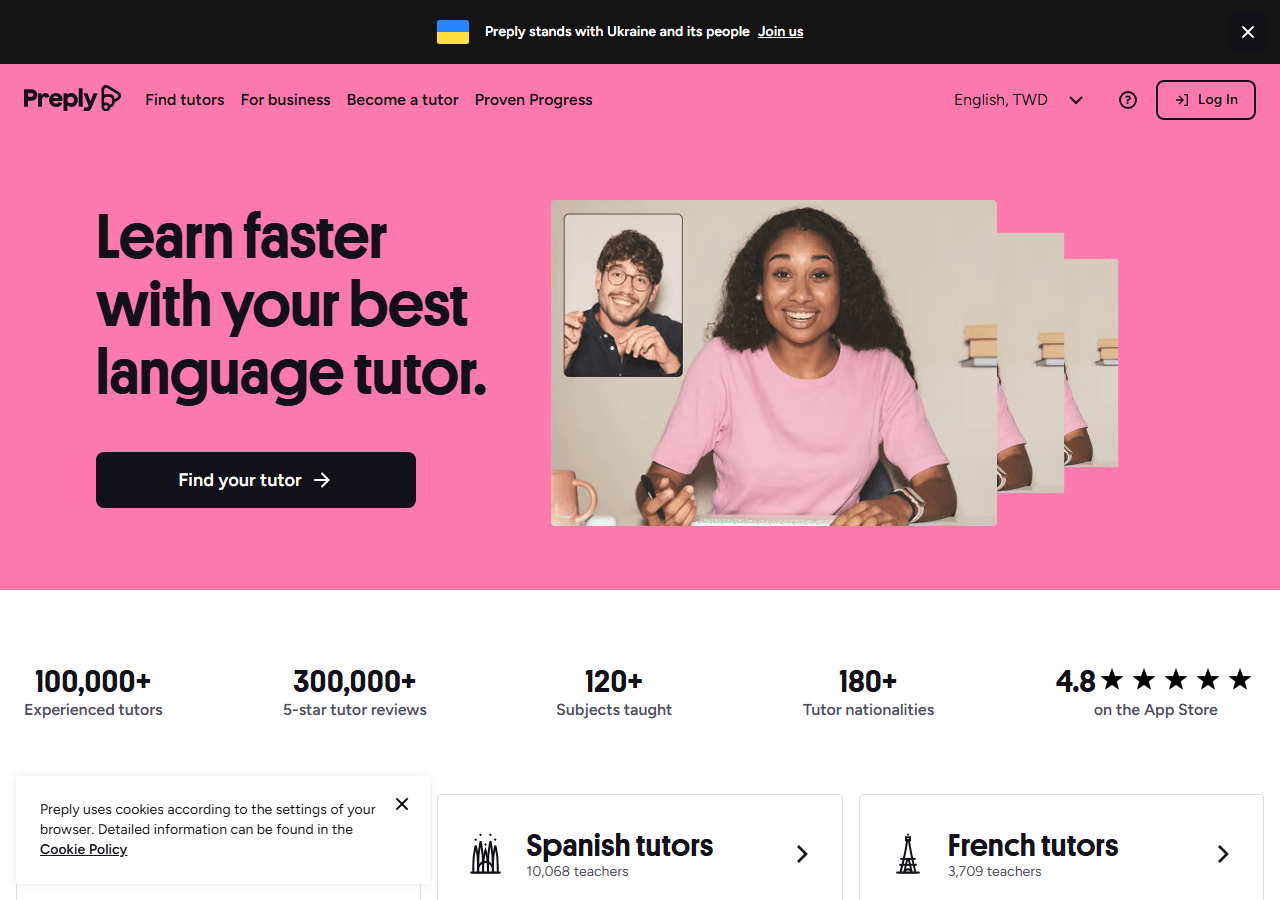
On Preply you pay for a trial, then it shifts into a 28-day subscription usually tied to one tutor. The full money picture is on the tutor roundup.
Cheap tutors are plentiful and often excellent.
Trial lessons
The trial is an audition of them, and of you.
italki’s trials are discounted, not free. Usually about 30 minutes, often up to three with different teachers. Use them.
We used two and I still slightly regret not using the third.
Preply’s trial is paid too, and then the subscription is waiting. That changes the stakes.
More in the cancellation section, because Preply’s rules have teeth.
What I’d do again:
1. Book two or three trials in the same week. Your memory of tutor one fades fast. Back-to-back is how you notice differences. 2. Send the same pre-lesson message to each of them, so the comparison is fair. 3. Bring the same goal to every trial. Mine was: intermediate Spanish, stalled speaking, want a conversational push. Then the differences were the tutors, not a shifting brief. 4. Take notes right after. Five minutes, before the glow fades: did I talk a lot? Did they correct me? Did I feel stupid, or productively stretched? Would I book again at full price?
Do not buy a package or start a subscription after one trial. Even if it was great.
Especially if it was great. One good 30-minute session tells you the ceiling, not the floor.
You want to know what their Tuesday looks like when you’re tired and your Spanish is worse than usual. Book a second regular-price lesson before any commitment.
Tutors know it’s a trial and they’re (understandably) selling. Some will run their best material.
A tutor who’s relaxed and just teaches during a trial is often a better sign than one who performs.
Prep
The prep that matters is one message.
Before each trial I sent something like this through the platform:
Hi. I’m probably A2–B1, understand more than I can say. Goal: conversational Spanish. I freeze when speaking. I like corrections after I finish the sentence, then the right word. Happy to try Spanish-only if you’re patient. First-lesson topic: my week, food, why I’m learning this.
Five lines. Level, goal, correction style, language policy, one concrete topic.
The tutor who got that message showed up with a plan. She’d noted the food line and opened by asking me about it, which got me talking in ninety seconds instead of thirty minutes of “so… what do you want to learn?”
The correction-style line matters. Some tutors interrupt every error mid-sentence.
Some never correct at all. Neither default is wrong, but one of them will drive you up the wall.
Say which you want. I said “let me finish, then correct.”
A friend of mine asked for in-the-moment correction because she’d rather be broken and rebuilt. Both fine.
You have to say it.
Target-language-only is worth deciding too. Full immersion is great once you can limp along, brutal at the very start.
If you’re A0, a shared language in the first weeks helps. If you’re A2 or better, push for Spanish-only (or whatever you’re learning) and keep a dictionary tab open.
Also check your setup. Decent lighting, headphones with a mic (laptop mics echo), a quiet room.
Bad audio wastes paid minutes. Half the tutor’s corrections become “sorry, what?”
Cancellation windows

I nearly paid for this section, so here’s the clock.
About a week in I had a Saturday morning session booked with my italki tutor. Friday evening, plans changed.
I messaged her to cancel, then fumbled around the app to cancel properly, and found the rule: cancel inside roughly 24 hours of the start time and you still pay. The lesson was 20 hours away. If I’d waited until Saturday morning I’d have eaten the full fee for a class I never attended.
Cancel in the system, as early as you can, not just by chat. On italki that 24-hour-ish window is the line.
Outside it, Credits go back. Inside it, the tutor gets paid anyway, which is fair (they held the slot) and still stings.
One more italki quirk: Credits can lapse after around 12 months of inactivity. Don’t fund a small fortune and then disappear.
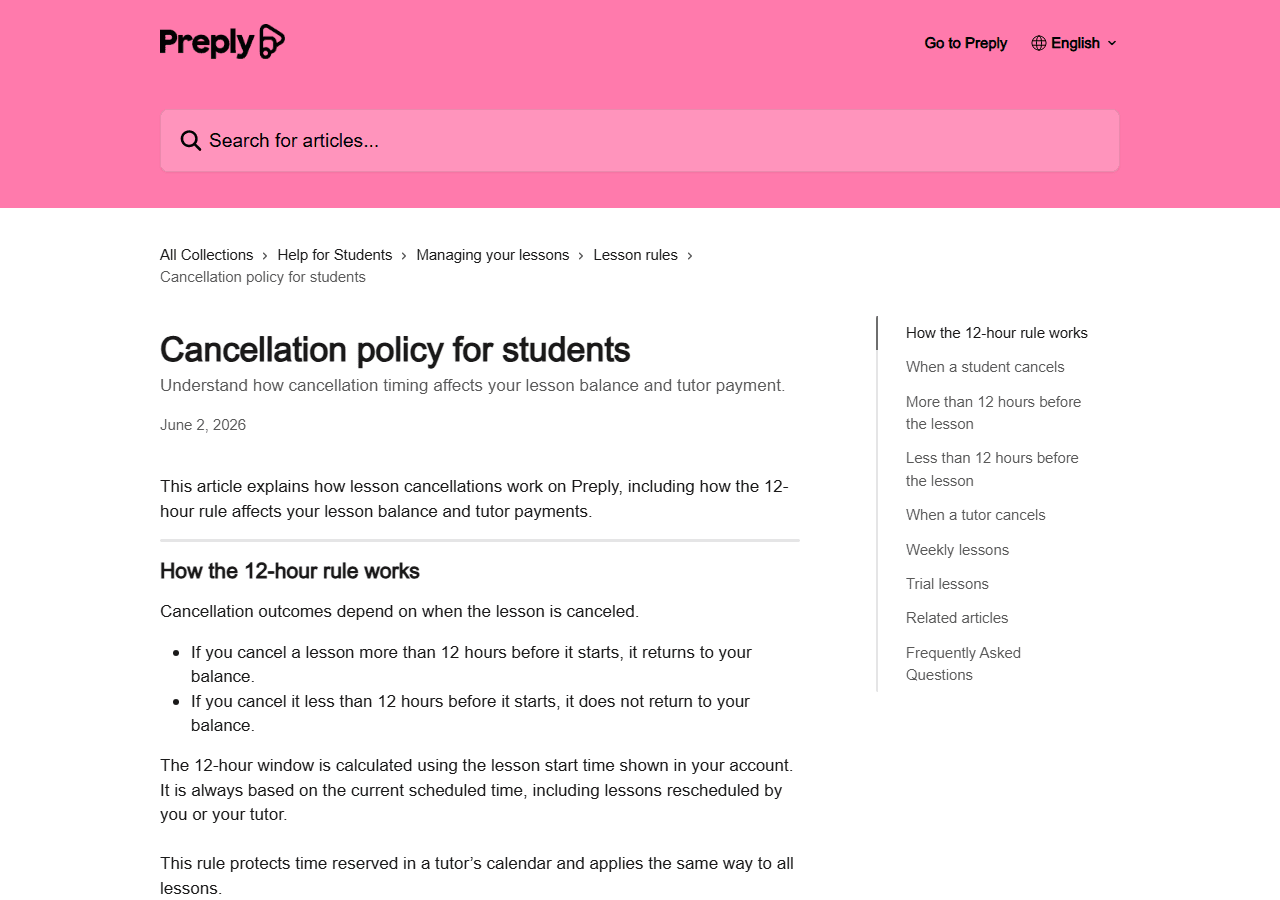
Preply’s rules are different. Their official student help (checked 2026) uses a 12-hour window. Cancel more than 12 hours before start and the lesson returns to that tutor’s balance.
Cancel inside 12 hours and it doesn’t. The tutor is paid on regular lessons.
Trials follow the same 12-hour rule. Messaging your tutor does not stop the charge.
They have to reschedule in the system. A sympathetic “no worries” in chat does nothing to billing.
If you’re cutting it close, get the reschedule done in the platform, then message.
Forum lore on Preply used to say something like 4 hours. We checked the actual help page and it’s 12 now.
Don’t trust a 2021 thread with your money.
The clock runs to lesson start time, not to when you sent the message. “I texted an hour before” is not a defence.
And because Preply trials lead into a 28-day auto-renewing subscription, a fumbled cancel costs more there. One more reason not to rush that subscription after a single trial.
If you ever land on a school-style site like Lingoda instead of a marketplace, the window is longer: about three days / 72 hours to get class credit back. Different product, different clock.
Check it before you book a pack.
The first session

Trial or first regular lesson, same rule: you should talk more than they do. If you finish and realize they talked 70% of the time (grammar speeches, hometown stories, slides), you didn’t get a language lesson. You got a presentation.
You can watch YouTube for free. The product you’re paying for is your own mouth moving.
The common miss is the tutor who opens with “so, what do you want to talk about?” Fine for a confident intermediate.
A cliff for a shaky beginner. If you sent the pre-lesson message, this mostly doesn’t happen.
If it does, say “can you ask me questions about my week?” and hand them the wheel. A good tutor takes it.
A tutor who keeps bouncing it back is telling you something.
What to check, in rough order:
Did you speak a lot? If you’re not sure, you didn’t.
Did they correct you the way you asked? You sent the message. Did they honor it?
Mine wrote corrections in the chat while I spoke, which I like. I get the record without being interrupted.
If they ignore the preference, mention it once. If they ignore it again, that’s a data point.
Did they take notes or send anything after? A short recap (new words, repeated mistakes) is the strongest predictor of whether I’d rebook. Not mandatory.
Very telling.
Ask before recording. If you want a file to review later, ask. It’s their face and voice too.
Mine said yes immediately. I now have an archive of me saying fui wrong.
Chemistry. Could you do this weekly? Not “best teacher alive.”
Just “would I show up next Tuesday without dread.” Someone you click with at 80% skill beats a brilliant person you find cold, because you’ll keep booking the first one.
One awkward first lesson is not a firing offense. Everyone’s nervous, the tech sometimes fights you, and their first read of your level can be off.
Book a second one and watch. Patterns are evidence.
Single events mostly aren’t.
By the end of our trials the picture was clear. The professional was competent and worksheet-shaped.
The Preply tutor was fine, but the subscription math didn’t fit how I wanted to learn. The italki community tutor (cheap, no badge) had me talking more, laughing once, and leaving with a note file.
The badge told me nothing. The lesson told me everything.
Homework and the days in between
The tutor is one hour a week. The other 167 hours are on you.
A good tutor sends you out with something. A shared doc of mistakes.
A worksheet. “Review those ten words you butchered.”
Do it. One lesson you actually review is worth more than three you walk away from and forget by Tuesday.
I kept a running fix list. Every session, the errors that came up more than once.
Not everything. Just the repeats.
A friend of mine had a habit of saying me gusta when she meant me gustan, and that line lived on the list for a week before it died. You’re not learning “Spanish.”
You’re unlearning eight specific bad habits, which is a smaller fight.
New vocabulary went straight into Yak Cards. Session ends, eleven new words are floating around, and if you don’t capture them that night they’re gone by the weekend.
Cards with coffee, session later, fix list before bed. Not fancy.
A loop that doesn’t leak.
If you’re learning English, the same loop applies. We’ve got 139 free English lessons.
Do Lesson 1 of 139 on your own, take the bits you got stuck on to your tutor, and you’ve got a lesson plan without paying anyone to invent one.
If you do nothing between lessons, a weekly session is maintenance. If you do twenty minutes a day, that same hour becomes the most useful one of the week, because you show up with material instead of a blank stare.
When to fire a tutor
Firing a tutor feels dramatic the first time. It isn’t.
You’re paying for a service. They have other students.
Fire immediately for:
Bad audio. If you’re straining through their laptop mic, the hour is half wasted. There is no amount of good teaching that survives “sorry, what?” fifteen times.
No notes. Session ends and you have nothing written down, no chat log of corrections, nothing to review. You bought an hour of chat.
Chat is cheaper.
Talking over you. You should be talking more than they are. If they’re at 70% airtime, they’re performing.
No chemistry after three or four sessions. Give it a fair shot. Lesson one is nervous for both of you.
If by session three or four you dread the calendar ping, that’s data. You will not learn from someone you secretly resent.
Not a firing offence: an accent you didn’t expect (you should have filtered by country, but it’s fixable), a slow start, a lesson that went sideways because you were unprepared. Own that one.
Keep two tutors once you’re settled, if you can. Not forever.
Insurance. Calendars vanish.
People go back to school, get full-time jobs, or stop answering messages, and it happens with zero notice. If your whole pipeline runs through one human in another timezone, that’s a single point of failure.
Two regulars means when one disappears you lose a week, not a month of trial-shopping again.
Online vs in-person
We’ve got a sibling guide on working with an in-person tutor. Short version from the online side:
Online wins on price. A cluster of solid tutors sits around ten bucks an hour, $4 to $30 depending on language and teacher.
In-person in a mid-size Ontario city you’re often looking at $30 to $50 for the same hour, if you can find someone at all.
Online wins on dialect access. Want someone in Medellín, Seville, and Buenos Aires to compare?
This afternoon. Try that in person outside a major city.
Online wins on commute. The lesson starts when the lesson starts.
No bus, no parking, no winter.
In-person wins on one real thing: being in the room. Someone watching your mouth form the words, catching the body language, the accountability of another person across a table.
Some people just learn better that way. Convenience doesn’t beat that if you’re one of them.
There’s a middle path if you want more structure around either option. A self-paced language course can carry the grammar so tutor hours go to conversation, which is the expensive thing you actually need a human for.
Broader map: how to learn a language. Spanish-specific starting points live on the Spanish hub.
What I liked, and what wore me down
What I liked
Liked: the access. Two weeks in, a professional in one timezone and a community tutor in another, both better than anything within driving distance.
The trial system meant we could shop cheaply. Pay-per-lesson on italki meant no subscription guilt when one week got busy.
What wore me down
Wore me down: the booking logistics. Timezones, cancellation windows, the low-level worry of “did that lesson actually get cancelled or is it going to charge me.”
Small per lesson. Constant.
Also, every review section looks identical: a wall of 4.9s and 5s. Useless as a signal.
You end up reading wording and counting repeat students like a detective. It works.
It’s still work.
Who this is for, and who should skip
This is for you if:
- You’re A2 or above and want cheap conversation volume. Talk, get corrected, talk more.
- You’re a beginner, and you pick a professional who brings structure. Beginners need a plan, not a chat buddy. Pay the extra few dollars.
- Your local options are thin or expensive. That’s most people.
Skip it, or delay it, if:
- You can’t do anything between lessons. You’d be paying for maintenance.
- You’re between A0 and A1 and want to “figure out the language” in sessions. Tutors are a bad textbook. Get a course or free lessons first, then bring in a human.
- You know you learn better with someone physically present. Don’t fight that to save $20.
What we'd use with it
The tutor is one piece.
- Yak Cards for capturing session vocabulary before it evaporates
- A fix list (any notes app) for recurring errors
- A structured course or lessons for grammar, so tutor time goes to speaking. Spanish: the Spanish hub. English: the free 139-lesson series
- Platform pages if you’re still choosing where to book: the online tutor roundup and the italki review
What others are saying
We’re two weeks of booking, not a decade of tutoring. Here’s how that lined up with named write-ups.
On Reddit, How to Best Utilize Italki is the plan-and-goal thread: speaking on the clock, homework off it, shop around. The 60+ hours guide is the high-volume version of the same idea.
FAQ
Prices, plan names, and features below are as of September 2026.
Do I need to subscribe to book online tutors?
Not on italki. You buy Credits, pay per lesson, tutors set prices.
Preply runs a paid trial, then a 28-day auto-renewing subscription usually tied to one tutor. Check current details before you commit.
What happens if I cancel a lesson late?
On italki, cancel inside roughly 24 hours of start and you still pay. On Preply, the official cancellation policy is 12 hours: more than 12 hours ahead, the lesson returns to that tutor’s balance; inside 12 hours it doesn’t, and the tutor gets paid on regular lessons.
Trials follow the same 12-hour rule. Messaging “can’t make it” does nothing.
Cancel or reschedule in the system.
We almost ate a 20-hour cancellation once. Set a reminder until this is muscle memory.
Are trial lessons free?
Usually not. italki trials are discounted 30-minute sessions, often up to three with different teachers. Preply trials are paid too.
Cheap audition tickets, not freebies.
Should I buy a big package after a good trial?
No. One good trial is one data point. Book a few regular-priced lessons first.
Are professional teachers worth the extra cost?
For beginners, usually yes. You need structure.
At A2 and above, community tutors are often the better deal because you need conversation volume. Judge the teacher, not the badge.
Why is every tutor rated 4.9 or 5.0?
Happy students review. Unhappy ones quietly leave.
Read the wording and look for repeat students. “Sixth lesson with X” is the real signal.
Can I record my lessons?
Usually, if you ask. It’s their work and their voice.
How often should I book?
Once or twice a week is the realistic sweet spot for most people. Enough momentum.
Room for the between-lesson work.
Do italki Credits expire?
They can lapse after roughly 12 months of inactivity. Buy what you’ll use in the next month or two.
After two weeks
Two weeks of booking, trialling, cancelling one lesson too close to the window, and settling into a weekly rhythm with a tutor who clicked.
The surprise wasn’t the price or the access. It was how much of the outcome was decided before the lesson started.
The pre-lesson message, the timezone set properly, last week’s fix list sitting open. Those sessions were worth double the ones where I skipped that work, with the same tutor, at the same price, on the same platform.
The tutor provides the hour. You provide the other 167.