


I bought three “how to learn a language” books in one week this spring, which I realize now is the language-learning equivalent of buying a treadmill, a jump rope, and a kettlebell in the same Amazon order. You’re not buying equipment.
You’re buying the feeling of having already started.
The stack sat on my kitchen table for a while, the way these things do. Fluent Forever by Gabriel Wyner on top because it had the nicest cover.
Fluent in 3 Months by Benny Lewis underneath it, title side up so I could feel bad every time I walked past. A borrowed Assimil Spanish book off to the side, plus a collection of Olly Richards short stories I’d been meaning to get to since roughly the Bush administration.
Spanish was the working language, as it usually is for me, since I’ve got tourist-level vocabulary and the grammar of someone who stopped trying in high school.
What got me off the couch was boredom, honestly. Not inspiration.
I’d just cancelled another year of Duolingo (the owl and I needed space) and I wanted to know whether the old-fashioned route, actual paper books with actual methods in them, could beat the app habit. So I cleared two weeks on the calendar, put my phone in a drawer for the study sessions, and ran the stack the way a normal person would.
Not a lab study. No control group.
No family roped into it. Just me, a kitchen table, and a stack of books that promised fluency with varying degrees of shamelessness.
Two weeks later I have opinions. The short version: books work, but no single book works, and the whole “best language learning book” question is kind of broken to begin with.
The best book for you depends entirely on which job you need done, and most people don’t even know the jobs exist. I didn’t, really, until I’d spent fourteen days staring at them.
A stack of books plus easy reading, done honestly, beats another app subscription. That’s my score and I’m sticking to it.
7 out of 10 Yaks


Now let me tell you why it’s not an eight, and why it’s definitely not a five.
What this roundup actually is
The first thing I had to figure out before I could even start: “language learning books” means at least three completely different products, and search results mush them all together into one list.

The first kind is the how-to book. These teach you how to learn, not the language itself.
Fluent Forever is the big one. Fluent in 3 Months is another.
Pimsleur’s paperback, How to Learn a Foreign Language, is a third. These are method books.
Philosophy books, in some cases. None of them will teach you a word of Spanish.
What they’ll do is tell you how to structure your time, how to build flashcards, why pronunciation matters, when to start speaking. If you buy one expecting a curriculum, you’ll be done in a weekend and wondering where the lessons are.
The second kind is the coursebook. This is the actual textbook: Assimil, Teach Yourself, Colloquial, and for Japanese, Genki.
These have lessons, dialogues, grammar explanations, exercises. This is the book that contains the language.
You work through it over months, not days. Almost nobody in North America under fifty uses one anymore, which I find kind of tragic, because they’re the part of the stack that actually does the heavy lifting.
The third kind is the reader: graded stories written for learners, or easy authentic books originally written for natives but simple enough to hack through. Olly Richards’ Short Stories collections are the famous graded example.
Le Petit Prince in French, Tintin-style comics, kids’ classics. This is the input that makes everything stick.
Here’s the uncomfortable truth I bumped into on day one: if you Google “best books for learning a language,” you get listicles full of how-to paperbacks, because that’s what’s in English and easy to rank. But a real learner still needs a language-specific coursebook (or an Assimil volume) plus a pile of easy reading.
The how-to book is the manual. The coursebook is the machine.
The reader is the fuel. Buying only the manual is like buying a recipe book and no groceries.
And the fourth category, which barely qualifies as books at all: digital companions. Anki for flashcards, audio courses, maybe a tutor.
I’ll get to those, but they’re part of any honest book stack in 2025 whether we like it or not.
One more thing this roundup isn’t: it’s not a hunt for “the single best textbook.” That doesn’t exist, because coursebooks are language-specific.
Genki is wonderful for Japanese and completely useless for Spanish. Anyone selling you a universal best language book is selling you a vibe.
How we used the stack for two weeks
So here’s the honest setup. Two weeks, Spanish, my kitchen table, roughly 45 to 60 minutes most days.
I say “we” because I roped in my own past selves, the versions of me who’d tried apps and courses before. That’s a joke, mostly.
It was me.
The stack, concretely:
- Fluent Forever (Gabriel Wyner) as the method book. This was the spine of the whole experiment.
- Fluent in 3 Months (Benny Lewis) as a mindset read only. I skimmed it in the first couple of days, took the attitude, left the timeline.
- Assimil Spanish as the coursebook-style backbone, with a nod to Teach Yourself as the same basic idea.
- Olly Richards’ Short Stories in Spanish as the reading we actually finished, cover to cover.
I didn’t use every book every day, because that’s not how stacks work. The rhythm I settled into by day four:
- Ten minutes of pronunciation work early on, straight from Wyner’s method, making embarrassing mouth shapes at my kitchen table.
- Twenty to thirty minutes of Assimil dialogues, reading and re-listening.
- Fifteen to twenty minutes of an Olly Richards story, no dictionary, just guessing and absorbing.
- Anki at night, building cards Wyner-style, which I’ll describe below because it’s genuinely the interesting part.
I also kept the Fi3M habit of saying something out loud every day, even if it was just narrating my breakfast to an empty room. “Estoy comiendo huevos.”
The dog next door now knows more Spanish than the average cat.
Was this a fair test of the books? Partially.
Two weeks is enough to know whether a method gets traction, not whether it delivers fluency. Nobody’s conversational in two weeks, whatever a certain book title claims.
But two weeks is plenty to learn which books you’ll actually keep using, and that turns out to be the whole ballgame.
One ground rule: I tracked finishing things. If a book survived the two weeks, it earned its keep.
If it became a coaster, I’ll tell you that too.
Method books: the how-to layer

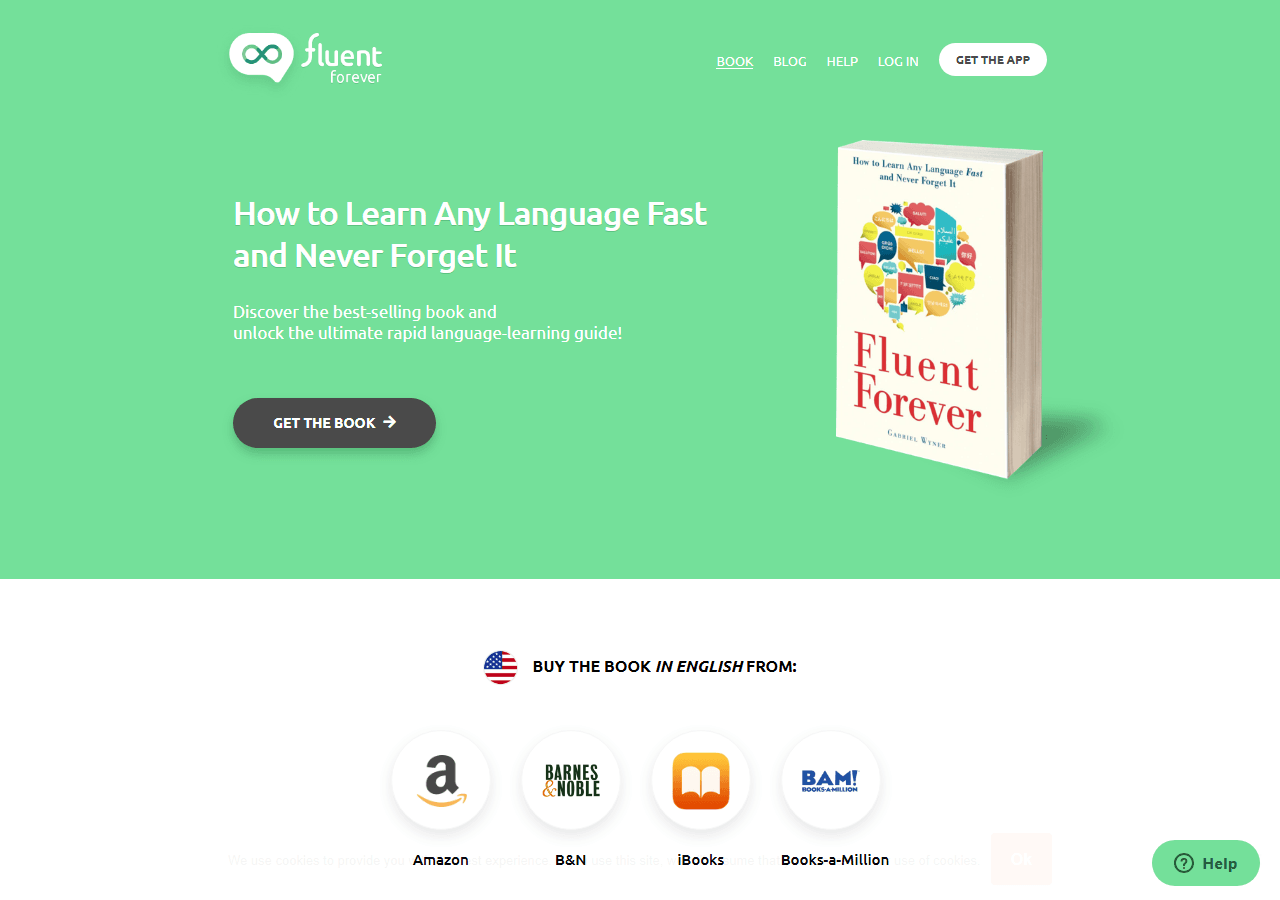
Fluent Forever, by Gabriel Wyner
If you’re going to read one how-to book, this is the one, and I say that as someone who argued with it out loud more than once over the two weeks.
Wyner’s core pitch has three parts. First, train your ear before anything else.
Learn what the sounds of your target language actually are, physically, with your mouth, so you’re not deaf to distinctions. Spanish is actually a forgiving choice here, five vowel sounds, fairly consistent spelling, but I still spent my first three days learning that I’d been pronouncing “t” with a little English puff of air my whole life and Spanish speakers don’t.
Nobody in Ontario had ever told me that. Twenty years of school Spanish and it took a book to point out my own mouth.
Second, image-based flashcards. Never link Spanish to English.
Link Spanish to a picture, a personal memory, a sound. His argument is that translation cards keep you translating forever, and picture cards let you skip the middleman.
I bought in and built about 150 cards this way, mostly food and objects around my kitchen, because that’s what I could photograph at my table. My card for sartén (frying pan) is a photo of my own scratched-up frying pan.
I will never forget that word. My card for puerta is my back door.
This works. It’s slower to build than generic cards but it sticks differently.
Third, spaced repetition with Anki. Wyner is basically an Anki evangelist, and the book walks you through building decks, card layouts, the works.
He’s right that review is where most self-learners fail, and SRS automates the part of your brain that’s bad at scheduling.
What Fluent Forever is not: a curriculum. Zero Spanish lessons.
After the pronunciation chapters, it’s all method, and the method assumes you’ll go find your own content. Wyner also leans heavily on making your own cards rather than downloading shared decks, which is correct but is the single biggest reason people quit his system.
Building 150 image cards took me probably six hours across two weeks. Six hours that produced zero new vocabulary, just infrastructure.
I understand why he says it. I also understand why people bounce off it.
Get it from the library first, then buy it if the method clicks. That’s my honest advice.
The official book page is at fluent-forever.com if you want to look at the pitch yourself. There’s also a Fluent Forever app, which I mostly ignored for this experiment because the book was the point, but it exists if card-building sounds like torture.
Fluent in 3 Months, by Benny Lewis
This one I have to handle carefully, because the title is doing a lot of marketing work, and if you take it literally you’ll be furious by month three.
Benny Lewis’s actual message is: speak from day one, lower the stakes, stop waiting until you’re “ready.” Travel to the language. Make mistakes publicly.
Be a friendly idiot for a while. It’s a mindset book.
It’s a pep talk with a system bolted on. And honestly?
The pep talk part is good. His chapter on how everyone feels like a fraud at a dinner party in their second language is one I wish I’d read at twenty.
What it is not, under any honest reading, is a curriculum, a method, or a schedule. There are no lessons.
There’s no card system, no progression, nothing you’d “work through.” I read it in about two sittings, took exactly one habit from it (daily out-loud speaking, even solo), and never opened it again during the two weeks.
That’s not a knock. A mindset book that gives you one durable habit has done its job.
The knock is the title. “Fluent in 3 months” is possible if you’re unemployed, extroverted, already speak a related language, and physically move to the country.
For me, an Ontario millennial with a job and a kitchen table, it’s a slogan. Treat the title as marketing and the contents as a locker-room speech, and you’ll get your money’s worth.
The site has the vibe if you want to sample it first.
The Pimsleur paperback
Paul Pimsleur’s How to Learn a Foreign Language is a slim little thing, and here’s the twist: almost nobody who says “Pimsleur” means the book. They mean the audio course, the one with the graduated-interval recall where you repeat phrases on a schedule and it drills itself into your skull.
The paperback is the theory behind the course, written decades ago by a genuinely brilliant applied linguist.
As theory it’s clean and still holds up: small chunks, active recall, listening before reading, short daily sessions. If you’ve ever wondered why Pimsleur lessons are 30 minutes and make you answer out loud before the recording does, this book explains the machinery.
But as a modern how-to, it’s thin. Wyner covers similar ground with more modern tools.
I’d call it a read for the curious rather than a necessary part of a stack.
Farber and Kató Lomb
Every book list eventually mentions Barry Farber’s How to Learn Any Language and Kató Lomb’s Polyglot: How I Learn Languages. I didn’t run either of them as part of the two weeks, so I’ll keep this short and honest.
They’re inspiration. Farber is a fast-talking newspaperman from another era, all enthusiasm and old-school hustle.
Lomb was a Hungarian interpreter who learned a pile of languages largely by reading novels she half-understood, with a dictionary, for fun. Her reading-first philosophy is the one that actually aged well; the “just read stuff slightly too hard for you” approach is basically what graded readers formalize now.
Neither one is a lesson plan. Neither will get you through a Tuesday.
But if you’re the kind of person who needs to believe language learning is a life-long, low-drama hobby rather than a 90-day sprint, Lomb in particular is worth an evening. Borrow, don’t buy.
Coursebooks: the actual language
Assimil
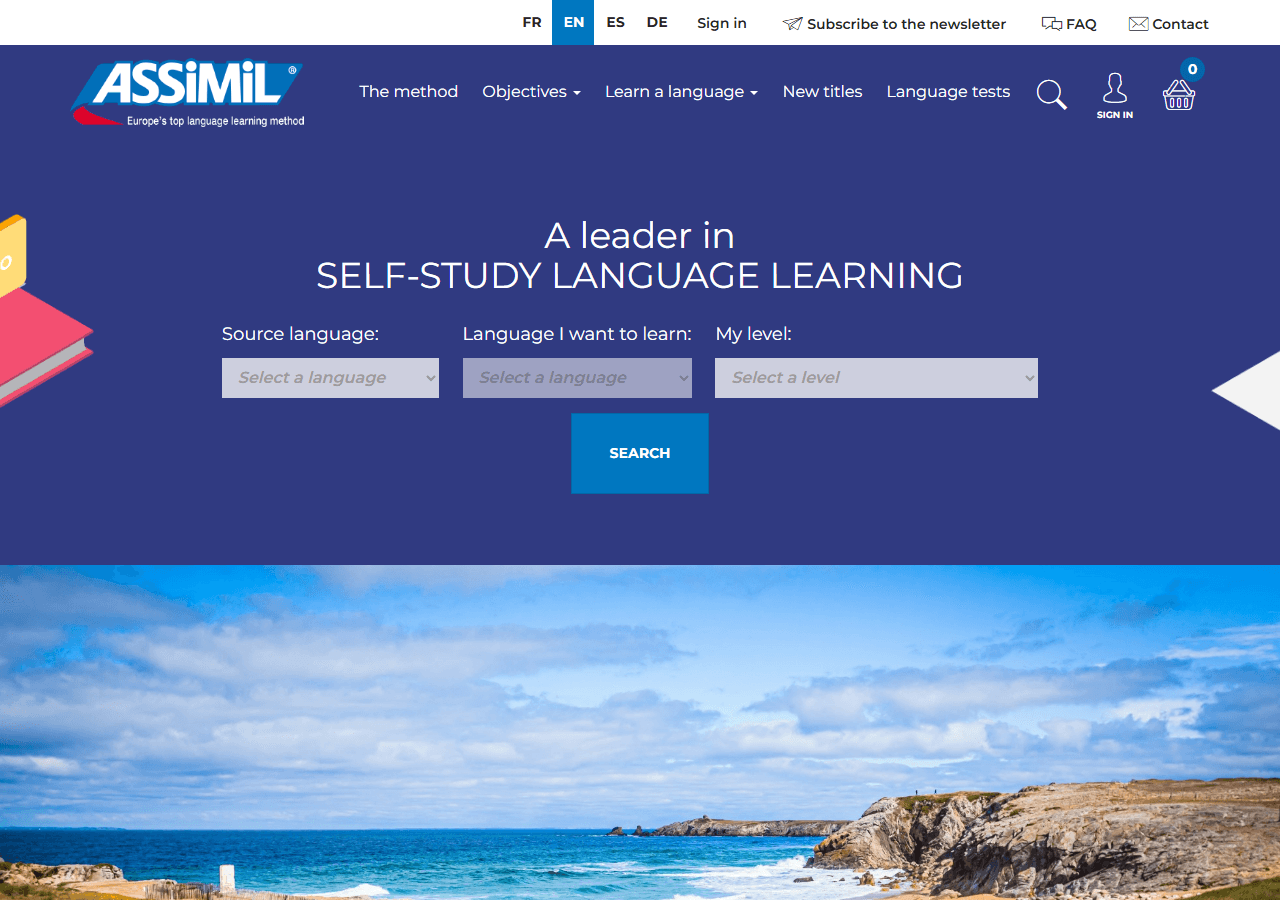
Here’s where the experiment got real. Assimil is the French coursebook giant that most English-speaking learners have never touched, and it’s quietly one of the best-built self-study products ever made.
The format: a short dialogue each day, native-language translation beside it, light notes underneath, audio for everything. First pass, you just absorb.
Halfway through, you start actively producing from the same dialogues. It’s called the “passive then active” wave structure, and it fixes the biggest problem with self-study, which is that people either grind grammar and hate it, or float through content and learn nothing.
My two weeks: I did one dialogue a day, occasionally two, and re-listened to old ones while making coffee. By day ten I could half-follow dialogue eight without looking at the text.
That’s not nothing. That’s more visible progress than three months of casual app streaking gave me.
Assimil’s weakness is the same as its strength: it’s calm. There’s no gamification, no streak, no owl.
Just you and the book. If you need a dopamine drip, it’ll feel like library homework.
assimil.com is the company site; the Spanish volumes are the famous ones, but they publish dozens of languages, with the caveat that some base languages are French-only.
Teach Yourself and Colloquial
These are the Anglophone equivalents, and they’re fine. Same idea: structured lessons, dialogues, grammar, exercises, usually with audio.
Teach Yourself tends to be a bit friendlier, Colloquial a bit more academic. Neither has Assimil’s elegant two-wave structure, but both are easy to find in English for basically any language you’d want.
Which you pick matters less than the fact that you pick one and finish it. That’s the whole review, honestly.
The differences between coursebook families are smaller than the difference between using one consistently and dabbling in three.
Genki (Japanese)
I’m including Genki because it’s the one coursebook that has a genuine personality-cult following, and deservedly so. If your target language is Japanese, Genki is the default and it’s excellent: two volumes, classroom-tested, drills that actually drill.
It’s a university textbook, so it assumes you’re doing it with a class or at least a tutor, and it’s Japanese-only in coverage. The official site has all the volumes and companion workbooks.
The reason I mention it in a Spanish experiment is the principle: pick your coursebook by language, not by brand loyalty. Genki people are Genki people because Genki is the best answer for Japanese, not because Genki is magic.
There’s no Genki of Spanish, and that’s fine.
Graded readers and easy authentic books

Okay. This is the part of the experiment that surprised me, and I want to give it proper room because it’s the thing I’d gotten wrong for years.
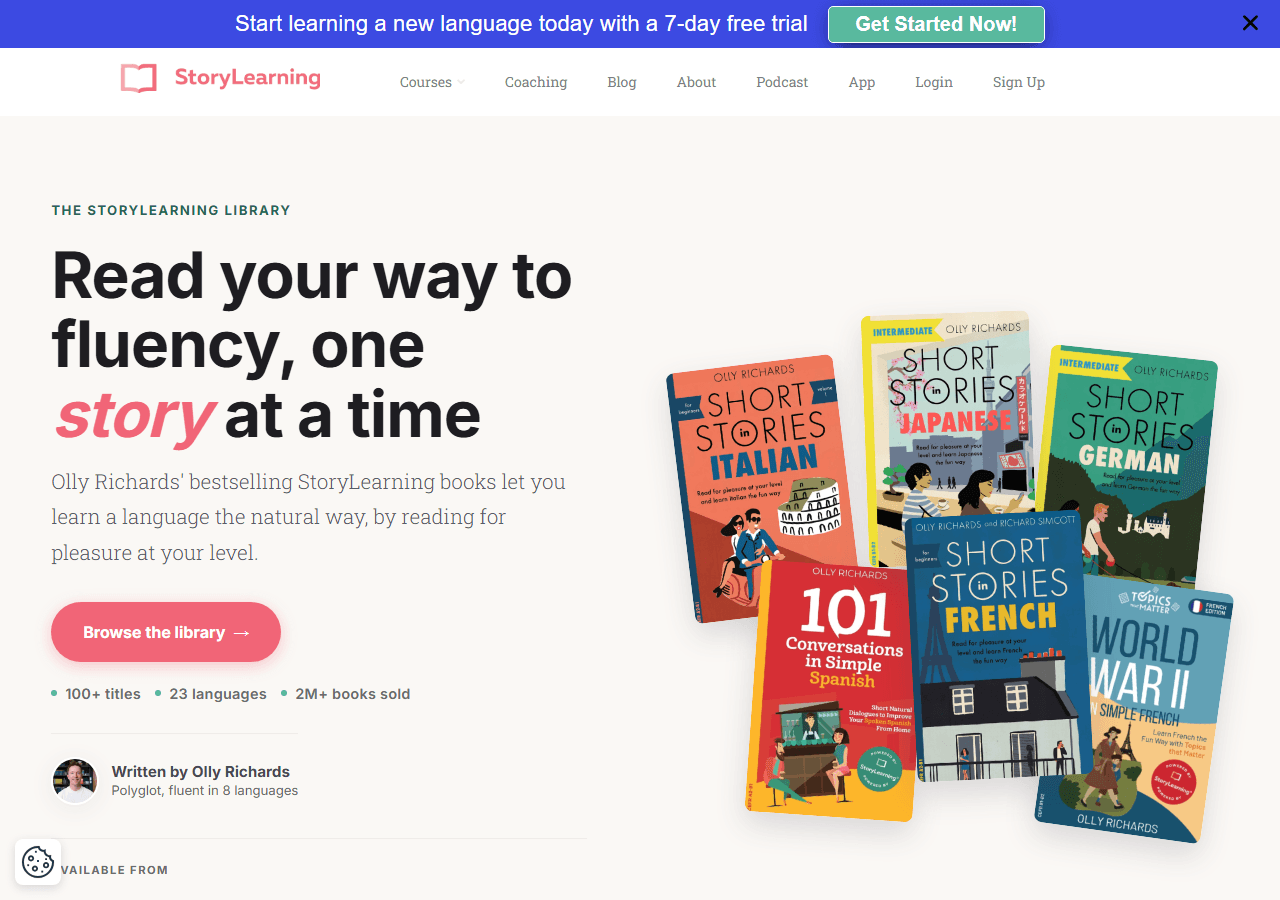
A graded reader is a book written deliberately at your level: limited vocabulary, controlled grammar, a story despite all that. Olly Richards’ Short Stories in Spanish is the best-known series, and it’s what I finished during the two weeks.
Eight stories, each maybe ten pages, with a glossary and comprehension questions after each chapter. The idea is you read without stopping to look things up, let context carry you, and let the repetition inside the story do the teaching.
I finished the whole book in eleven days. Let me say that again, because it’s the most important sentence in this piece: I finished an entire book in Spanish in eleven days.
I have never finished a language product before. Not the Duolingo tree, not the Babbel subscription I mention elsewhere on this site, not the three previous attempts at “real study.”
I finished this one because it was built to be finished. Each story was a complete experience with a beginning, an end, and a mild twist, and the completion itch that apps exploit with fake streaks, this scratched it for real.
Compare that with the Wyner card system. I want to be fair to Wyner, because his method works, but over two weeks I spent about six hours building image cards and reviewing them, and the payoff is 150 words I know very well.
Meanwhile the Olly stories gave me exposure to hundreds more words in context, at speed, plus sentence rhythm, plus the feeling of reading. The cards gave me precision.
The stories gave me volume. You need both, but if I could only keep one from this two-week experiment, I’d keep the stories, and I didn’t expect to be saying that when I started.
The trick with graded readers is picking the right level. Too easy and you’re bored, too hard and you’re doing dictionary push-ups.
I started Short Stories in Spanish for Beginners and it was right at the sweet spot, the “I understand 90 percent and the missing 10 percent is guessable” zone. There’s a whole ecosystem of these now; StoryLearning is Olly’s own site and the hub of the whole method, and if you’re doing Spanish with me, the graded-readers shelf in our Spanish library is where I’d point you first.
The other flavour is easy authentic material: real books written for natives that happen to be simple. Le Petit Prince is the classic move in French.
In Spanish, kids’ comics and Tintin-style bandes dessinées work, and translated childhood favourites are sneaky-good because you already know the story, so the context does half the translating for you. I read four pages of an old Spanish comic collection I found at a used bookstore and it was the most fun Spanish has ever been, even at maybe 70 percent comprehension.
What fails, and I want to flag this clearly: phrasebook-only stacks. People buy a how-to book, a phrasebook, and a dictionary, and call it a stack.
That’s not a stack, that’s a survival kit. You can memorize “where is the bathroom” in nine languages and still be functionally mute in a conversation.
A reader gives you sentences in the wild, doing actual jobs, and that’s what your brain needs to generalize from.
The honest comparison, one more time: Wyner cards taught me precision, and I’m keeping them for the words that matter. But finishing a short story in Spanish every night taught me that reading in another language can be fun, and fun is the only thing I’ve ever seen survive past week six of any of this.
I’ll take the 7-out-of-10 stack that finishes over the theoretically perfect one that becomes a coaster.
That’s the reading story. The stack isn’t done yet though, because paper alone has gaps, and the digital companions are next.
Digital companions (Anki, tutors, audio)
Here’s where the stack stops being a pile of paper and starts being a routine. Every book I mentioned above assumes you’ve got something running alongside it, and after two weeks I can tell you the digital layer is what keeps the whole thing alive.

Or kills it, depending on your tolerance for fiddling.
Anki is the engine room
Anki deserves its own section because it’s the one tool that touched every part of our two weeks. Wyner’s method basically assumes it.
You make image cards, you drill pronunciation, you review on a schedule the app calculates for you, and the app nags you when you’ve been lazy. Which I appreciate, because I have been lazy.
The honest truth about Anki: it’s ugly and the learning curve is real. The first week I spent more time configuring decks and reading forum posts from 2016 than actually studying.
A friend gave up on it twice and went back to paper flashcards, which is technically worse but, in their words, “doesn’t judge me.” Fair.
But once it’s set up, it’s remarkable. Twenty minutes a day and Spanish words I’d normally forget in a week were sticking for two weeks and counting.
If you want a method built around it, Fluent Forever is the book that explains the why. If you want something friendlier out of the box, my Yak Cards exist precisely because Anki’s onboarding is a rite of passage nobody should have to suffer through twice.
Tutors: the expensive but fast part
Books and apps don’t correct you. That sounds obvious, but it took me about nine days of confidently mispronouncing a Spanish vowel before I booked a tutor and got fixed in four minutes.
A real human notices things no card deck ever will.
I’m not saying you need weekly sessions forever. Even two or three sessions over our two-week stretch moved my speaking more than the rest of the stack combined.
If you’re the planning type, our general how-to-learn-a-language guide covers how to slot a tutor into a book-based routine without turning it into a second job.
Audio courses still earn their keep
This is the Pimsleur awkwardness I mentioned earlier. The Pimsleur method as a product is thirty minutes of audio a day, all speaking and listening, no screen.
The paperback version is theory. The actual course is the thing worth owning.
I used audio on walks, in the car, while making dinner. It’s the only part of language learning that fits into time you’d otherwise waste.
Wyner’s book covers pronunciation training but assumes you’ll do it yourself; Pimsleur just makes you talk, repeatedly, until your mouth gives up resisting. After two weeks my “r” went from tragic to merely bad, which I consider a victory.
Apps are snacks
I’ll keep this short because we’ve covered the big ones in our app roundup. Duolingo and Babbel are fine as warmups and streak-keepers.
They are not a stack. If you want my full feelings, the Duolingo review and Babbel review are right there.
Use them for five minutes on the bus. Don’t let them be the whole meal.
What I liked, and what wore me down
What I liked
Two weeks in, here’s the honest ledger.
What I liked. The stack felt like mine. No app deciding what I learn next, no gamified guilt, no owl.
Wyner’s pronunciation-first approach gave me a Spanish accent that didn’t make me wince, which no app had ever managed. The Olly Richards stories gave me that specific thrill of reading a page of Spanish and realizing I understood it without translating.
And Anki, once tamed, quietly held everything together.
I also liked that books don’t ping you. Nothing vibrated.
Nothing notified. For two weeks, studying Spanish felt like a hobby instead of an obligation, and that’s rare.
What wore me down
What wore me down. The setup tax. There’s no way around it: a book stack asks you to be your own curriculum designer, scheduler, and quality-control department.
Some nights I spent fifteen minutes deciding what to study instead of studying. There’s a reason apps took over the world, and it’s not effectiveness, it’s that they make every decision for you.
The other thing that wore me down: no feedback loop from the books themselves. A coursebook can’t hear you.
Halfway through week two I realized I’d been drilling a conjugation pattern that was technically correct but sounded stiff, and only the tutor caught it. Books are cheap per hour of learning, but they’re silent.
And, small thing, the desk footprint. Four books, a phone, headphones, a notebook.
My kitchen table looked like a linguistics seminar for one.
Who this stack is for, and who should skip it
This stack is for you if:
- You’ve outgrown a single app and felt the ceiling. If you’ve done a year of Duolingo and can’t hold a conversation, that’s not your fault. The Babbel review crowd hits the same wall.
- You like reading and don’t need a cartoon mascot to open a book.
- You’re okay spending an evening setting up Anki in exchange for a system that scales.
- You want pronunciation taken seriously from day one, which is Wyner’s whole thing.
Skip it (or at least the method-book half) if:
- You want fluency with zero decisions. Get an audio course and a tutor and let them drive.
- Your target language is your first attempt and you’re not sure you’ll stick with it. Buy one coursebook, not four books of philosophy. Try our language courses overview and pick a single thing first.
- You’re studying Japanese. Genki is the honest answer there, not a Spanish-style stack bolted on. See Genki for what a real, language-specific curriculum looks like.
- You genuinely believe “3 months” is a promise. It’s a title. Marketing. Don’t plan your life around it.
Pros and cons
Pros
- Cheap per hour of learning, especially if you use the library first, like Wyner says
- Pronunciation-first training that no mainstream app offers
- Graded readers give you real reading comprehension, not multiple-choice tap-tapping
- Nothing notifies you, gamifies you, or breaks your streak
- It scales: the same stack works at hour 10 and hour 1,000
- Anki, once set up, is free forever and genuinely effective
Cons
- Heavy setup tax. You’re the teacher, student, and admin
- No feedback. Books can’t hear your accent; only a tutor or audio course can
- Slow start. Week one is mostly plumbing, not Spanish
- Method books overlap. Wyner plus Lewis plus Pimsleur’s book is two books of theory too many
- Easy to accumulate books instead of hours. I speak from experience
- Anki’s interface looks like it was designed during a power outage
What we'd use instead (or with it)
If I rebuilt the stack from scratch for Spanish specifically, here’s what it’d look like:
1. One method book, not three. Fluent Forever, full stop. It’s the only one that’s a method. Read Fluent in 3 Months for a weekend of courage, then put it on the shelf. 2. One coursebook. Assimil for Spanish, or Teach Yourself if you prefer the layout. You don’t need both. Nobody needs both. I have both. Learn from me. 3. Readers from week one. The StoryLearning approach, via Olly Richards’ short story collections, was the single most enjoyable part of our two weeks. If you’re doing Spanish, our Spanish section has the roadmap, and the graded readers library is where I’d start browsing. 4. Anki from day one, but with premade decks. Don’t build your own until you’ve survived a month. 5. A tutor every week or two. Even one session buys more correction than a month of books. 6. One app as a snack, not the meal. Guilty pleasure only.
If you’re doing English instead of Spanish, by the way, we have a full 240-lesson English course that starts at Lesson 1 and does the deciding-for-you part that books can’t.
And if you want the broader landscape of what we’ve tested, everything lives in the reviews section.
What others are saying
I’m not the only one sorting this pile. FluentU’s roundup of the best language learning books leans heavily toward Wyner and Lewis too, and notably reaches the same conclusion I did: a how-to book alone is a mood, not a curriculum. They’re a bit warmer on phrasebooks than I’ll ever be, but their core ranking matches what we lived.
Consensus across all of them, and us: one method book, one coursebook picked by language, and as much easy reading as you can stand. Nobody serious recommends an app alone. Nobody serious recommends five method books either. The boring middle wins again.
FAQ
Prices, plan names, and features below are as of September 2026.
What's the single best book for learning a language?
There isn’t one, and anyone selling you a universal “best textbook” is selling it. Wyner’s Fluent Forever is the best method book I’ve used, but you still need a language-specific coursebook (Assimil, Teach Yourself, Genki for Japanese) and actual reading material.
One book is never a stack.
Do language learning books actually work?
As part of a stack, yes. Alone, no. Books are excellent at method, structure, and reading practice, and completely useless at speaking feedback.
Two weeks of books-plus-Anki-plus-a-tutor moved my Spanish more than a year of casual app use. Books alone would have moved it maybe half that.
Is Fluent in 3 Months a scam?
No, it’s marketing. Benny Lewis’s actual message is speak badly from day one and stop being precious about it, which is genuinely good advice.
The title is a hook. If you read it as a literal promise, that’s on you and also on the publisher.
It’s a mindset book, not a curriculum, and it never pretends otherwise past chapter two.
Anki or paper flashcards?
Anki, if you’ll tolerate the setup. Paper, if you won’t.
The scheduling algorithm is the whole point: Anki shows you words right before you’d forget them, and paper can’t do that. But a paper card you actually review beats a digital card you avoid.
That friend’s paper system outperformed my abandoned week-one Anki deck, so.
How many books should a beginner buy?
Two. One coursebook for your language, one method book for your approach.
That’s it. Add graded readers once you’re a month in.
Everything else is library material.
Are phrasebooks worth buying?
For travel, yes. For learning, no. A phrasebook-only stack fails because you memorize strings without structure, and the moment a sentence goes off-script you’re stranded.
I’ve watched it happen. It wasn’t pretty.
What about Pimsleur's book?
The paperback is interesting theory but the audio course is the product. If you’re choosing one, choose the audio.
Details in the Pimsleur method itself.
After two weeks
So that’s the experiment. Four books, one app, one tutor, a lot of kitchen-table Spanish.
Where we ended up: I can read an Olly Richards story without a dictionary most of the time. My pronunciation doesn’t frighten native speakers, which I credit entirely to Wyner’s front-loaded accent work.
Anki holds about 300 cards and I’ve missed only two days. That friend abandoned Anki, kept the coursebook, and somehow learned just as much, which is an annoying data point I’m choosing to interpret charitably.
What I’d change: fewer method books, an earlier tutor, and I’d have started the graded readers on day three instead of day eight. The reading was the fuel, and I wasted five days thinking I needed to “finish the basics” first.
You don’t. That’s the biggest lesson of the whole two weeks.
The core finding, and the one I’d bet money on: books plus easy reading beats another app. Not because apps are bad, but because a stack you design yourself, with real reading material in it, creates the one thing no app provides, which is ownership.
You built this. You know why each piece is there.
That knowledge turns out to matter more than any algorithm.
It’s not a perfect system. The setup tax is real, the silence of books is real, and the day you’re too tired to be your own curriculum designer, you’ll wish an owl would just tell you what to do.
That’s the day you take a snack break with an app and come back tomorrow.
For the money, for the patience required, and for the results after two weeks: books and easy reading got me further in fourteen days than a year of streaks ever did. The remaining caveats are the setup tax, the lack of feedback, and the fact that I still can’t roll my r’s properly.
Working on it. Slowly.
With feeling.
7 out of 10 Yaks