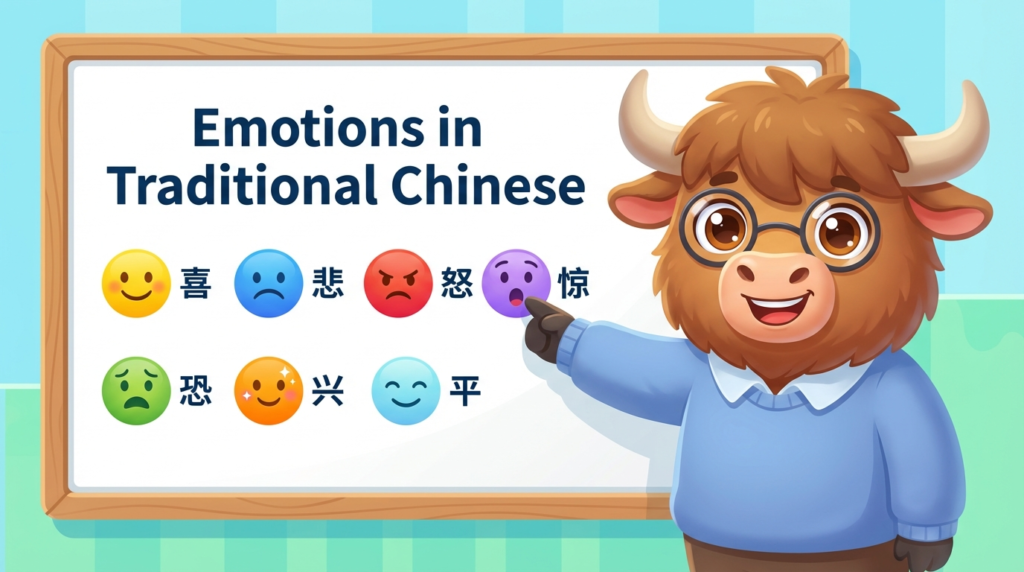
Emotions in Traditional Chinese: 90+ Easy Feeling Words & Phrases for Beginners
情緒與感受(Traditional Chinese topic title, because yes, you’re learning the real stuff)
Here’s a practical list of emotions in Traditional Chinese, with pinyin (tone marks), clear meanings, and real-life example sentences. Every item also has an audio button, so you can stop guessing the pronunciation.
Tip: In Taiwan Mandarin, people often say 好 + adjective to mean “really/so.” Like: 我好累 (I’m sooo tired). You’ll see that pattern a lot below.
Quick-use emotion cards
These 8 show up everywhere. Learn them first, then steal the phrases below like a responsible language learner.
Relevant phrases and sentences you’ll actually say
Copy these patterns. Swap in different emotion words. Sound human instantly.
A useful difference: 情緒 vs 心情 vs 感覺
情緒 is “emotions” (often stronger or more intense). 心情 is “mood” (overall vibe today). 感覺 is “feeling/sensation” (emotion or physical). And 覺得 / 感到 are your go-to “I feel/think” verbs.
Table of words
These tables are grouped so your brain doesn’t rage-quit. Each row has Traditional Chinese, pinyin, meaning, and a real sentence.
| Traditional Chinese | Pinyin | Meaning (EN) | Example (ZH + pinyin) | Translation (EN) | Audio |
|---|---|---|---|---|---|
| 快樂 | kuàilè | happy, joyful | 聽到你的好消息,我很快樂。 tīngdào nǐ de hǎo xiāoxī, wǒ hěn kuàilè. | Hearing your good news makes me happy. | |
| 高興 | gāoxìng | glad, pleased | 你來找我,我很高興。 nǐ lái zhǎo wǒ, wǒ hěn gāoxìng. | I’m glad you came to see me. | |
| 愉快 | yúkuài | pleasant, cheerful | 我們聊得很愉快。 wǒmen liáo de hěn yúkuài. | We had a pleasant chat. | |
| 幸福 | xìngfú | happy (deeply), blessed | 跟家人在一起,我覺得很幸福。 gēn jiārén zài yìqǐ, wǒ juéde hěn xìngfú. | Being with family makes me feel truly happy. | |
| 滿足 | mǎnzú | satisfied, content | 吃完這頓飯,我很滿足。 chīwán zhè dùn fàn, wǒ hěn mǎnzú. | After this meal, I feel satisfied. | |
| 欣慰 | xīnwèi | comforted, gratified | 看到你努力,我很欣慰。 kàndào nǐ nǔlì, wǒ hěn xīnwèi. | Seeing you work hard makes me feel gratified. | |
| 感激 | gǎnjī | grateful (deeply) | 你幫了我很多,我很感激。 nǐ bāng le wǒ hěn duō, wǒ hěn gǎnjī. | You helped me a lot—I’m very grateful. | |
| 感謝 | gǎnxiè | to thank; thankful | 真的很感謝你的提醒。 zhēn de hěn gǎnxiè nǐ de tíxǐng. | Thank you so much for the reminder. | |
| 安心 | ānxīn | at ease, relieved | 你在這裡,我比較安心。 nǐ zài zhèlǐ, wǒ bǐjiào ānxīn. | With you here, I feel more at ease. | |
| 自豪 | zìháo | proud | 你做得很好,我為你感到自豪。 nǐ zuò de hěn hǎo, wǒ wèi nǐ gǎndào zìháo. | You did great—I’m proud of you. | |
| 自信 | zìxìn | confident | 準備充分,我比較自信。 zhǔnbèi chōngfèn, wǒ bǐjiào zìxìn. | With good preparation, I feel more confident. | |
| 樂觀 | lèguān | optimistic | 雖然很難,但我還是很樂觀。 suīrán hěn nán, dàn wǒ háishì hěn lèguān. | Even though it’s hard, I’m still optimistic. | |
| 享受 | xiǎngshòu | to enjoy | 別急,享受這個過程。 bié jí, xiǎngshòu zhège guòchéng. | Don’t rush—enjoy the process. | |
| 喜歡 | xǐhuān | to like | 我很喜歡這首歌。 wǒ hěn xǐhuān zhè shǒu gē. | I really like this song. | |
| 愛 | ài | to love | 我愛我的家人。 wǒ ài wǒ de jiārén. | I love my family. | |
| 佩服 | pèifú | to admire (respectfully) | 你這麼有耐心,我很佩服。 nǐ zhème yǒu nàixīn, wǒ hěn pèifú. | You’re so patient—I really admire that. | |
| 熱情 | rèqíng | enthusiastic, warm | 他對新工作很熱情。 tā duì xīn gōngzuò hěn rèqíng. | He’s very enthusiastic about the new job. | |
| 溫暖 | wēnnuǎn | warm (emotionally) | 她的話讓我覺得很溫暖。 tā de huà ràng wǒ juéde hěn wēnnuǎn. | Her words made me feel warm inside. |
| Traditional Chinese | Pinyin | Meaning (EN) | Example (ZH + pinyin) | Translation (EN) | Audio |
|---|---|---|---|---|---|
| 傷心 | shāngxīn | heartbroken, sad | 想到那件事,我還是會傷心。 xiǎngdào nà jiàn shì, wǒ háishì huì shāngxīn. | Thinking about it still makes me sad. | |
| 沮喪 | jǔsàng | depressed, discouraged | 一直失敗讓我很沮喪。 yìzhí shībài ràng wǒ hěn jǔsàng. | Failing repeatedly makes me discouraged. | |
| 失望 | shīwàng | disappointed | 結果跟我想的不一樣,我很失望。 jiéguǒ gēn wǒ xiǎng de bù yíyàng, wǒ hěn shīwàng. | The result wasn’t what I expected—I’m disappointed. | |
| 絕望 | juéwàng | hopeless, in despair | 別絕望,我們還有方法。 bié juéwàng, wǒmen hái yǒu fāngfǎ. | Don’t lose hope—we still have options. | |
| 憂鬱 | yōuyù | gloomy, depressed | 下雨天我容易覺得憂鬱。 xiàyǔ tiān wǒ róngyì juéde yōuyù. | Rainy days easily make me feel gloomy. | |
| 孤單 | gūdān | lonely | 搬到新城市後,我有點孤單。 bāndào xīn chéngshì hòu, wǒ yǒudiǎn gūdān. | After moving to a new city, I feel a bit lonely. | |
| 寂寞 | jìmò | lonely (more “empty”) | 一個人吃飯的時候會覺得寂寞。 yí gè rén chīfàn de shíhou huì juéde jìmò. | Eating alone can feel lonely. | |
| 無助 | wúzhù | helpless | 我不知道怎麼辦,覺得很無助。 wǒ bù zhīdào zěnme bàn, juéde hěn wúzhù. | I don’t know what to do—I feel helpless. | |
| 委屈 | wěiqū | wronged, upset | 我沒有做錯,卻被罵,覺得很委屈。 wǒ méiyǒu zuòcuò, què bèi mà, juéde hěn wěiqū. | I didn’t do anything wrong, but got scolded—I feel wronged. | |
| 心痛 | xīntòng | heartache | 看到那個畫面,我很心痛。 kàndào nàgè huàmiàn, wǒ hěn xīntòng. | Seeing that scene broke my heart. | |
| 心碎 | xīnsuì | heartbroken | 聽到分手的消息,她覺得心碎。 tīngdào fēnshǒu de xiāoxī, tā juéde xīnsuì. | Hearing the breakup news, she felt heartbroken. | |
| 想哭 | xiǎng kū | feel like crying | 我累到想哭。 wǒ lèi dào xiǎng kū. | I’m so tired I feel like crying. | |
| 想家 | xiǎng jiā | homesick | 出國一個月後,我開始想家。 chūguó yí gè yuè hòu, wǒ kāishǐ xiǎng jiā. | After a month abroad, I started to miss home. | |
| 低落 | dīluò | down, low | 最近我有點低落,需要休息。 zuìjìn wǒ yǒudiǎn dīluò, xūyào xiūxí. | I’ve been a bit down lately and need rest. | |
| 失落 | shīluò | let down, dejected | 沒被選上,我有點失落。 méi bèi xuǎnshàng, wǒ yǒudiǎn shīluò. | Not being chosen made me feel dejected. | |
| 空虛 | kōngxū | empty (emotionally) | 忙完之後反而覺得空虛。 mángwán zhīhòu fǎn’ér juéde kōngxū. | After being busy, I oddly feel empty. | |
| 麻木 | mámù | numb (emotionally) | 太多壓力會讓人變得麻木。 tài duō yālì huì ràng rén biàn de mámù. | Too much stress can make a person feel numb. | |
| 內疚 | nèijiù | guilty | 我說錯話了,覺得很內疚。 wǒ shuōcuò huà le, juéde hěn nèijiù. | I said the wrong thing and feel guilty. | |
| 後悔 | hòuhuǐ | to regret | 我很後悔沒早點開始學中文。 wǒ hěn hòuhuǐ méi zǎodiǎn kāishǐ xué Zhōngwén. | I regret not starting Chinese earlier. |
| Traditional Chinese | Pinyin | Meaning (EN) | Example (ZH + pinyin) | Translation (EN) | Audio |
|---|---|---|---|---|---|
| 憤怒 | fènnù | furious, enraged | 這種不公平讓人很憤怒。 zhè zhǒng bù gōngpíng ràng rén hěn fènnù. | This kind of unfairness makes people angry. | |
| 火大 | huǒdà | mad (casual) | 他一直插隊,我真的很火大。 tā yìzhí chāduì, wǒ zhēn de hěn huǒdà. | He kept cutting in line—I’m really mad. | |
| 不爽 | bùshuǎng | annoyed, not happy (casual) | 被放鴿子當然不爽。 bèi fàng gēzi dāngrán bùshuǎng. | Getting stood up is obviously annoying. | |
| 煩 | fán | annoyed; bothered | 一直被打擾,我好煩。 yìzhí bèi dǎrǎo, wǒ hǎo fán. | Being interrupted nonstop is so annoying. | |
| 厭煩 | yànfán | fed up | 同樣的事一再重複,我有點厭煩。 tóngyàng de shì yízài chóngfù, wǒ yǒudiǎn yànfán. | The same thing repeating again and again makes me fed up. | |
| 不耐煩 | bù nàifán | impatient | 等太久我會不耐煩。 děng tài jiǔ wǒ huì bù nàifán. | If I wait too long, I get impatient. | |
| 討厭 | tǎoyàn | to dislike; annoying | 我討厭被催。 wǒ tǎoyàn bèi cuī. | I hate being rushed. | |
| 反感 | fǎngǎn | to feel turned off | 他說話太刻薄,讓人反感。 tā shuōhuà tài kèbó, ràng rén fǎngǎn. | He talks too harshly—it puts people off. | |
| 噁心 | ěxīn | disgusting; nauseated | 那個味道有點噁心。 nàgè wèidào yǒudiǎn ěxīn. | That smell is kind of gross. | |
| 抱怨 | bàoyuàn | to complain | 我不是想抱怨,只是很累。 wǒ bú shì xiǎng bàoyuàn, zhǐshì hěn lèi. | I’m not trying to complain—I’m just tired. | |
| 生悶氣 | shēng mènqì | to sulk (hold in anger) | 有話就說,別生悶氣。 yǒu huà jiù shuō, bié shēng mènqì. | Say what you mean—don’t sulk. | |
| 氣炸了 | qìzhà le | so angry (literally “exploded”) | 他又忘記約定,我都氣炸了。 tā yòu wàngjì yuēdìng, wǒ dōu qìzhà le. | He forgot the appointment again—I’m furious. | |
| 氣到不行 | qì dào bù xíng | mad beyond words | 看到那個回覆,我氣到不行。 kàndào nàgè huífù, wǒ qì dào bù xíng. | That reply made me unbelievably angry. | |
| 發火 | fāhuǒ | to lose your temper | 我不想發火,但我需要你認真聽。 wǒ bù xiǎng fāhuǒ, dàn wǒ xūyào nǐ rènzhēn tīng. | I don’t want to lose my temper, but I need you to listen. | |
| 火冒三丈 | huǒ mào sān zhàng | furious (idiom) | 他一聽就火冒三丈。 tā yì tīng jiù huǒ mào sān zhàng. | The moment he heard it, he got furious. | |
| 冷淡 | lěngdàn | cold, indifferent | 他突然變得很冷淡,我有點不安。 tā tūrán biàn de hěn lěngdàn, wǒ yǒudiǎn bù’ān. | He suddenly became cold—I feel uneasy. |
| Traditional Chinese | Pinyin | Meaning (EN) | Example (ZH + pinyin) | Translation (EN) | Audio |
|---|---|---|---|---|---|
| 焦慮 | jiāolǜ | anxious | 不知道結果,我有點焦慮。 bù zhīdào jiéguǒ, wǒ yǒudiǎn jiāolǜ. | Not knowing the result makes me anxious. | |
| 擔心 | dānxīn | to worry | 我擔心你太累了。 wǒ dānxīn nǐ tài lèi le. | I’m worried you’re too tired. | |
| 不安 | bù’ān | uneasy | 他沒回訊息,我心裡很不安。 tā méi huí xùnxī, wǒ xīnlǐ hěn bù’ān. | He didn’t reply, so I feel uneasy. | |
| 恐懼 | kǒngjù | fear (strong) | 面對未知會讓人恐懼。 miànduì wèizhī huì ràng rén kǒngjù. | Facing the unknown can be frightening. | |
| 驚恐 | jīngkǒng | panic, terrified | 聽到巨響,他一瞬間很驚恐。 tīngdào jùxiǎng, tā yí shùnjiān hěn jīngkǒng. | Hearing a loud bang, he panicked for a moment. | |
| 心慌 | xīnhuāng | flustered, panicky | 出門忘了帶手機,我有點心慌。 chūmén wàng le dài shǒujī, wǒ yǒudiǎn xīnhuāng. | I forgot my phone and felt flustered. | |
| 壓力 | yālì | stress, pressure | 最近工作壓力很大。 zuìjìn gōngzuò yālì hěn dà. | Work stress has been heavy lately. | |
| 緊繃 | jǐnbēng | tense (body/mood) | 我肩膀很緊繃,該伸展一下。 wǒ jiānbǎng hěn jǐnbēng, gāi shēnzhǎn yíxià. | My shoulders are tense—I should stretch. | |
| 嚇到 | xiàdào | to be startled | 突然有人拍我肩膀,我被嚇到。 tūrán yǒu rén pāi wǒ jiānbǎng, wǒ bèi xiàdào. | Someone tapped my shoulder suddenly—I got startled. | |
| 心驚膽跳 | xīnjīng dǎntiào | heart pounding (scared) | 看恐怖片看到心驚膽跳。 kàn kǒngbùpiàn kàn dào xīnjīng dǎntiào. | The horror movie had my heart pounding. | |
| 毛骨悚然 | máogǔ sǒngrán | creeped out | 他那句話讓我毛骨悚然。 tā nà jù huà ràng wǒ máogǔ sǒngrán. | What he said gave me chills. | |
| 害羞 | hàixiū | shy | 被稱讚的時候我會害羞。 bèi chēngzàn de shíhou wǒ huì hàixiū. | I get shy when I’m complimented. | |
| 尷尬 | gāngà | awkward; embarrassed | 電梯裡太安靜,氣氛很尷尬。 diàntī lǐ tài ānjìng, qìfēn hěn gāngà. | It was so quiet in the elevator—super awkward. | |
| 羞愧 | xiūkuì | ashamed | 我不該那樣說,現在很羞愧。 wǒ bù gāi nàyàng shuō, xiànzài hěn xiūkuì. | I shouldn’t have said that—I feel ashamed now. | |
| 丟臉 | diūliǎn | embarrassing; to lose face | 在大家面前跌倒有點丟臉。 zài dàjiā miànqián diēdǎo yǒudiǎn diūliǎn. | Falling in front of everyone is a bit embarrassing. |
| Traditional Chinese | Pinyin | Meaning (EN) | Example (ZH + pinyin) | Translation (EN) | Audio |
|---|---|---|---|---|---|
| 意外 | yìwài | unexpected | 你也會來?真意外。 nǐ yě huì lái? zhēn yìwài. | You’re coming too? That’s unexpected. | |
| 震驚 | zhènjīng | shocked | 聽到那個數字,我很震驚。 tīngdào nàgè shùzì, wǒ hěn zhènjīng. | Hearing that number, I was shocked. | |
| 好奇 | hàoqí | curious | 我很好奇你怎麼做到的。 wǒ hěn hàoqí nǐ zěnme zuòdào de. | I’m curious how you did it. | |
| 困惑 | kùnhuò | confused | 他的意思我不太懂,有點困惑。 tā de yìsi wǒ bù tài dǒng, yǒudiǎn kùnhuò. | I don’t really get what he means—I’m confused. | |
| 懷疑 | huáiyí | to doubt; suspicious | 我懷疑他忘記了。 wǒ huáiyí tā wàngjì le. | I suspect he forgot. | |
| 不敢相信 | bù gǎn xiāngxìn | can’t believe it | 我不敢相信你記得我的生日! wǒ bù gǎn xiāngxìn nǐ jìde wǒ de shēngrì! | I can’t believe you remembered my birthday! |
| Traditional Chinese | Pinyin | Meaning (EN) | Example (ZH + pinyin) | Translation (EN) | Audio |
|---|---|---|---|---|---|
| 冷靜 | lěngjìng | calm (down) | 先冷靜一下,我們再討論。 xiān lěngjìng yíxià, wǒmen zài tǎolùn. | Let’s calm down first, then discuss. | |
| 平靜 | píngjìng | peaceful, calm | 海邊讓我的心很平靜。 hǎibiān ràng wǒ de xīn hěn píngjìng. | The seaside makes my heart feel calm. | |
| 安寧 | ānníng | tranquil | 這裡很安寧,適合休息。 zhèlǐ hěn ānníng, shìhé xiūxí. | It’s tranquil here—good for resting. | |
| 鬆一口氣 | sōng yì kǒu qì | to breathe a sigh of relief | 問題解決了,我終於鬆一口氣。 wèntí jiějué le, wǒ zhōngyú sōng yì kǒu qì. | The problem is solved—I can finally relax. | |
| 如釋重負 | rú shì zhòng fù | relieved (idiom) | 考完試後,我如釋重負。 kǎo wán shì hòu, wǒ rú shì zhòng fù. | After the exam, I felt a huge relief. | |
| 釋懷 | shìhuái | to let go (emotionally) | 聊開了以後,我就釋懷了。 liáo kāi le yǐhòu, wǒ jiù shìhuái le. | After we talked it out, I let it go. | |
| 忍耐 | rěnnài | to endure, be patient | 再忍耐一下,很快就結束了。 zài rěnnài yíxià, hěn kuài jiù jiéshù le. | Hang in there a bit more—it’ll be over soon. | |
| 振作 | zhènzuò | pull yourself together | 失敗沒關係,振作起來。 shībài méi guānxì, zhènzuò qǐlái. | Failure is okay—pull yourself together. | |
| 打起精神 | dǎ qǐ jīngshén | cheer up; perk up | 喝點水,打起精神再做。 hē diǎn shuǐ, dǎ qǐ jīngshén zài zuò. | Drink some water, perk up, then continue. | |
| 深呼吸 | shēn hūxī | deep breath | 深呼吸三次,會好一點。 shēn hūxī sān cì, huì hǎo yìdiǎn. | Take three deep breaths—it helps. |
Optional variants: How strong is the feeling?
These little words upgrade your emotional accuracy from “meh” to “actually helpful.”
| Traditional Chinese | Pinyin | Meaning (EN) | Example (ZH + pinyin) | Translation (EN) | Audio |
|---|---|---|---|---|---|
| 有點 | yǒudiǎn | a little | 我有點擔心明天的天氣。 wǒ yǒudiǎn dānxīn míngtiān de tiānqì. | I’m a little worried about tomorrow’s weather. | |
| 有些 | yǒuxiē | somewhat | 我有些困惑,可以再說一次嗎? wǒ yǒuxiē kùnhuò, kěyǐ zài shuō yí cì ma? | I’m somewhat confused—can you say it again? | |
| 蠻 | mán | quite (casual) | 今天蠻開心的。 jīntiān mán kāixīn de. | I’m quite happy today. | |
| 很 | hěn | very | 我很緊張,但我會努力。 wǒ hěn jǐnzhāng, dàn wǒ huì nǔlì. | I’m very nervous, but I’ll try my best. | |
| 非常 | fēicháng | extremely (polite/standard) | 我非常感謝你的幫忙。 wǒ fēicháng gǎnxiè nǐ de bāngmáng. | I’m extremely thankful for your help. | |
| 超 | chāo | super (casual) | 我超期待這個週末。 wǒ chāo qīdài zhège zhōumò. | I’m super excited for this weekend. | |
| 超級 | chāojí | super (a bit stronger) | 我超級累,想直接睡。 wǒ chāojí lèi, xiǎng zhíjiē shuì. | I’m super tired—I want to sleep right away. | |
| 太 | tài | too; so (often with 了) | 這也太尷尬了吧。 zhè yě tài gāngà le ba. | This is way too awkward. | |
| 一點也不 | yìdiǎn yě bù | not at all | 我一點也不生氣,真的。 wǒ yìdiǎn yě bù shēngqì, zhēn de. | I’m not angry at all—really. |