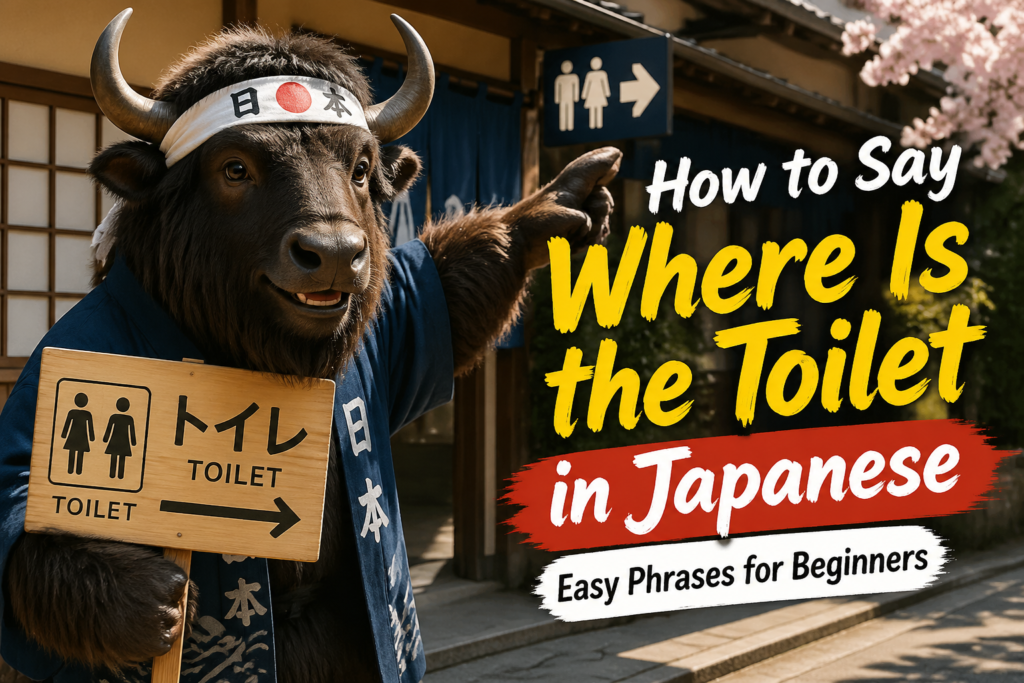
Need a toilet in Japan? This is not the moment for poetry. This is the moment for one useful sentence, clear pronunciation, and maybe a backup phrase if panic has already entered the chat.
The good news: asking where the toilet is in Japanese is very doable, even for beginners. The even better news: Japanese has several common words for “toilet,” and some sound more polite or more casual than others. If you learn a few versions, you will be ready for train stations, restaurants, cafés, shopping malls, and those mysterious department stores with ten floors and zero obvious signs.
If you are building your everyday survival Japanese, it also helps to keep learning from broader beginner guides like Learn Japanese. But for now, let’s focus on the urgent classic: where is the toilet?
The Main Phrase You Need
トイレはどこですか
Toire wa doko desu ka
Meaning: Where is the toilet?
This is the safest, easiest, and most common beginner phrase. トイレ is the everyday word for toilet or restroom. どこ means where. ですか makes it polite.
Example: トイレはどこですか。
Toire wa doko desu ka.
Where is the toilet?
If your brain freezes, just say トイレ?
Not elegant. Very effective.
Toire?
Toilet?
Useful Toilet Words And Phrases
Here are the most useful words and phrases first, from super common to nice backup options.
- トイレ
Toire
toilet; restroom
Example: トイレはあそこです。
Toire wa asoko desu.
The toilet is over there. - お手洗い
Otearai
restroom; washroom; polite word for toilet
Example: お手洗いは二階にあります。
Otearai wa nikai ni arimasu.
The restroom is on the second floor. - 便所
Benjo
toilet; lavatory
Example: 便所はどこですか。
Benjo wa doko desu ka.
Where is the toilet? - 化粧室
Keshōshitsu
powder room; restroom
Example: 化粧室はこちらです。
Keshōshitsu wa kochira desu.
The restroom is this way. - どこですか
Doko desu ka
where is it?
Example: 駅はどこですか。
Eki wa doko desu ka.
Where is the station? - ありますか
Arimasu ka
is there? do you have?
Example: トイレはありますか。
Toire wa arimasu ka.
Is there a toilet? - こちら
Kochira
this way; here; this side
Example: トイレはこちらです。
Toire wa kochira desu.
The toilet is this way. - あそこ
Asoko
over there
Example: トイレはあそこです。
Toire wa asoko desu.
The toilet is over there. - 近い
Chikai
near; close
Example: トイレは近いですか。
Toire wa chikai desu ka.
Is the toilet nearby? - 遠い
Tōi
far
Example: トイレは遠いです。
Toire wa tōi desu.
The toilet is far away. - 男性用
Danseiyō
for men; men’s
Example: 男性用トイレは右です。
Danseiyō toire wa migi desu.
The men’s toilet is on the right. - 女性用
Joseiyō
for women; women’s
Example: 女性用トイレは左です。
Joseiyō toire wa hidari desu.
The women’s toilet is on the left.
The Best Beginner Sentences To Memorize
If you only remember three lines, make them these. They cover most real situations without sounding robotic.
- トイレはどこですか。
Toire wa doko desu ka.
Where is the toilet? - お手洗いはどこですか。
Otearai wa doko desu ka.
Where is the restroom? - トイレはありますか。
Toire wa arimasu ka.
Is there a toilet? - すみません、トイレはどこですか。
Sumimasen, toire wa doko desu ka.
Excuse me, where is the toilet? - すみません、お手洗いはどこですか。
Sumimasen, otearai wa doko desu ka.
Excuse me, where is the restroom? - 近くにトイレはありますか。
Chikaku ni toire wa arimasu ka.
Is there a toilet nearby? - 駅にトイレはありますか。
Eki ni toire wa arimasu ka.
Is there a toilet in the station? - この近くにお手洗いはありますか。
Kono chikaku ni otearai wa arimasu ka.
Is there a restroom near here? - トイレを使ってもいいですか。
Toire o tsukatte mo ii desu ka.
May I use the toilet? - お手洗いを借りてもいいですか。
Otearai o karite mo ii desu ka.
May I use the restroom?
Polite Vs Casual: Which Word Should You Use?
トイレ is the most common and easiest word. You will see it on signs, hear it in daily speech, and use it almost anywhere without causing drama.
お手洗い is more polite and softer. If you are speaking to staff in a restaurant, hotel, shop, or office, this sounds especially nice.
便所 exists, but it can sound blunt or old-fashioned in many situations. It is not always wrong, but beginners do not need it as their main choice. Stick with トイレ or お手洗い and life gets easier.
Safe rule: Use トイレ for easy everyday Japanese. Use お手洗い when you want to sound a bit more polite.
How People Might Answer You
Knowing the question is great. Knowing the answer is better. Here are common replies you might hear when someone tells you where the toilet is.
- あちらです。
Achira desu.
It is over there.
Example: トイレはあちらです。
Toire wa achira desu.
The toilet is over there. - こちらです。
Kochira desu.
It is this way.
Example: お手洗いはこちらです。
Otearai wa kochira desu.
The restroom is this way. - 右です。
Migi desu.
It is on the right.
Example: トイレは右です。
Toire wa migi desu.
The toilet is on the right. - 左です。
Hidari desu.
It is on the left.
Example: お手洗いは左です。
Otearai wa hidari desu.
The restroom is on the left. - まっすぐです。
Massugu desu.
Go straight.
Example: トイレはまっすぐです。
Toire wa massugu desu.
The toilet is straight ahead. - 二階にあります。
Nikai ni arimasu.
It is on the second floor.
Example: お手洗いは二階にあります。
Otearai wa nikai ni arimasu.
The restroom is on the second floor. - 奥にあります。
Oku ni arimasu.
It is in the back.
Example: トイレは奥にあります。
Toire wa oku ni arimasu.
The toilet is in the back. - 階段の近くです。
Kaidan no chikaku desu.
It is near the stairs.
Example: お手洗いは階段の近くです。
Otearai wa kaidan no chikaku desu.
The restroom is near the stairs.
Useful Mini Conversation
Here is a simple real-life exchange. Nothing fancy. Fancy is overrated when you are trying not to explode.
すみません、トイレはどこですか。
Sumimasen, toire wa doko desu ka.
Excuse me, where is the toilet?
あちらです。右に曲がってください。
Achira desu. Migi ni magatte kudasai.
It is over there. Please turn right.
ありがとうございます。
Arigatō gozaimasu.
Thank you very much.
Words You Will See On Toilet Signs
Sometimes no speaking is needed. The sign saves you. A small miracle.
- トイレ
Toire
toilet; restroom
Example: あそこにトイレの表示があります。
Asoko ni toire no hyōji ga arimasu.
There is a toilet sign over there. - お手洗い
Otearai
restroom
Example: お手洗いの案内を見ました。
Otearai no annai o mimashita.
I saw the restroom guide sign. - 男性
Dansei
male; men
Example: これは男性用です。
Kore wa danseiyō desu.
This is for men. - 女性
Josei
female; women
Example: これは女性用です。
Kore wa joseiyō desu.
This is for women. - 空室
Kūshitsu
vacant; empty
Example: 空室なので入れます。
Kūshitsu na node hairemasu.
It is vacant, so you can go in. - 使用中
Shiyōchū
occupied; in use
Example: 使用中です。少し待ってください。
Shiyōchū desu. Sukoshi matte kudasai.
It is occupied. Please wait a moment. - 入口
Iriguchi
entrance
Example: 入口は左です。
Iriguchi wa hidari desu.
The entrance is on the left. - 出口
Deguchi
exit
Example: 出口はあちらです。
Deguchi wa achira desu.
The exit is over there.
Table Of Core Phrases
| Kanji | Rōmaji | Meaning | Example (JP) | Example (Rōmaji) | Translation (EN) |
|---|---|---|---|---|---|
| トイレはどこですか | Toire wa doko desu ka | Where is the toilet? | すみません、トイレはどこですか。 | Sumimasen, toire wa doko desu ka. | Excuse me, where is the toilet? |
| お手洗いはどこですか | Otearai wa doko desu ka | Where is the restroom? | お手洗いはどこですか。 | Otearai wa doko desu ka. | Where is the restroom? |
| トイレはありますか | Toire wa arimasu ka | Is there a toilet? | この店にトイレはありますか。 | Kono mise ni toire wa arimasu ka. | Is there a toilet in this shop? |
| 近くにトイレはありますか | Chikaku ni toire wa arimasu ka | Is there a toilet nearby? | 近くにトイレはありますか。 | Chikaku ni toire wa arimasu ka. | Is there a toilet nearby? |
| トイレを使ってもいいですか | Toire o tsukatte mo ii desu ka | May I use the toilet? | トイレを使ってもいいですか。 | Toire o tsukatte mo ii desu ka. | May I use the toilet? |
Table Of Direction Words
| Kanji | Rōmaji | Meaning | Example (JP) | Example (Rōmaji) | Translation (EN) |
|---|---|---|---|---|---|
| 右 | Migi | right | トイレは右です。 | Toire wa migi desu. | The toilet is on the right. |
| 左 | Hidari | left | お手洗いは左です。 | Otearai wa hidari desu. | The restroom is on the left. |
| まっすぐ | Massugu | straight | まっすぐ行ってください。 | Massugu itte kudasai. | Please go straight. |
| 奥 | Oku | back; inner part | トイレは奥にあります。 | Toire wa oku ni arimasu. | The toilet is in the back. |
| 二階 | Nikai | second floor | お手洗いは二階にあります。 | Otearai wa nikai ni arimasu. | The restroom is on the second floor. |
Common Mistakes And Easy Fixes
- Using only one word with no attention-getter
Better: すみません、トイレはどこですか。
Sumimasen, toire wa doko desu ka.
Excuse me, where is the toilet? - Forgetting the polite ending
どこ? is not terrible with friends, but どこですか is much safer with strangers. - Using 便所 as your main word
It may sound rough or dated. Beginners should usually use トイレ or お手洗い. - Confusing “where is it?” with “is there one?”
トイレはどこですか。
Toire wa doko desu ka.
Where is the toilet?
トイレはありますか。
Toire wa arimasu ka.
Is there a toilet?
Quick Practice
Try saying these out loud once or twice. Yes, out loud. Whispering into your coffee still counts.
- Excuse me, where is the toilet?
すみません、トイレはどこですか。
Sumimasen, toire wa doko desu ka. - Is there a restroom nearby?
近くにお手洗いはありますか。
Chikaku ni otearai wa arimasu ka. - The toilet is on the left.
トイレは左です。
Toire wa hidari desu. - May I use the restroom?
お手洗いを借りてもいいですか。
Otearai o karite mo ii desu ka.
Quick Reference Summary
- トイレはどこですか
Toire wa doko desu ka
Where is the toilet? - お手洗いはどこですか
Otearai wa doko desu ka
Where is the restroom? - トイレはありますか
Toire wa arimasu ka
Is there a toilet? - トイレを使ってもいいですか
Toire o tsukatte mo ii desu ka
May I use the toilet? - 右 / 左
Migi / Hidari
right / left - まっすぐ
Massugu
straight ahead
The best phrase for most beginners is still the champion: トイレはどこですか
Toire wa doko desu ka
It is polite, clear, and useful in almost every situation. Learn that one first, add お手洗いはどこですか as your polished version, and you are already much more prepared than many travelers who just point vaguely and hope for divine intervention.
That is the Yak takeaway: in Japanese, survival phrases do not need to be complicated. They need to work. And this one absolutely does.
More Japanese to explore

The Spider’s Thread: A2 Elementary Japanese Story with Audio

Golden Boy in Japanese: A1 Beginner Story with Audio, Tap-to-Translate Help & Free Lesson Notes

Learn Japanese with The Tale of the Bamboo Cutter – An A2 Graded Reader with Audio